Showing posts with label arts. Show all posts

Friday, May 23, 2014

Arts in the Schools and INK (Interesting Nonfiction for Kids)

While writing today’s piece, I anxiously checked news feeds regarding the fire at the Glasgow School of Art’s Mackintosh Building. By the end of the day, the fire service reported they were able to save 90% of the building and about 70% of it’s contents. Just thinking about the possible loss turned my stomach. Started in 1897, the Mackintosh Building was designed by Scotland's most influential architect and designer, Charles Rennie Mackintosh. Opened in 1909, the art nouveau building signaled the birth of a new style in 20th Century European architecture. A 2009 poll by the Royal Institute of British Architects voted it the best British building of the last 175 years. Imagine what we could have lost today.

About six and a half years ago, Linda Salzman contacted me. She asked if I’d be interested in writing for a kids’ nonfiction blog she was creating. Evidentially, someone noticed all the blogging I’d been writing promoting of art books for kids.  Today, in preparing to write this second-to-last post, I reread all my pieces and perused the books I’ve promoted. I was curious if there has been any change in the educational world in regard to the arts. Here's just a few items that I found. There are many more. I wonder where we will stand in another six years. 

In the last six years, we’ve become accustomed to the terms Common Core, and STEM and STEAM.
  • Common Core State Standards now aim towards a 50% nonfiction and 50% fiction classroom reading text; previously the classroom reading text was around 80% fiction.
  • In 2009, President Obama started White House Science Fairs as part of his Educate to Innovate campaign to inspire more girls and boys to excel in STEM subjects. Next week, on May 27, the 2014 White House Science Fair begins. This year’s fair will include a specific focus on girls and women who are excelling in STEM. The Administration’s $4.35 billion Race to the Top competition grants states competitive preference if they demonstrated efforts to close the STEM gap for girls and other groups that are underrepresented.
  • In February 2013, the bipartisan Congressional STEAM Caucus was created, co-chaired by Congresswoman Suzanne Bonamici (D-OR) and Congressman Aaron Schock (R-IL). “We frequently discuss the importance of STEM education, but we can’t ignore the importance of engaging and educating both halves of the brain,” Bonamici maintains. “Creative, critical thinking leads to innovation. The integration of the arts into STEM curriculum will excite creativity in the minds of our future leaders.”
  • Stanford University began requiring all undergraduates to take two units of "Creative Expression" classes, including design, dance, music, fine arts, drama or creative writing.
  • Sesame Street officially expanded its STEM-themed programming to include arts.
  • Last week, Actress Kerry Washington wrote an impassioned plea for arts in the schools in a Huffington Post blog column titled How to Save Our Schools: The Arts and Music are No Fairytale.

Art-themed nonfiction books introduce young people to the passion and inspiration of artists and creators. Years ago, reading Frida by Jonah Winter to an elementary class was an eye opener for me. The text and illustrations presented the art of Frida Kahlo flawlessly, complimenting my presentation. And, the book even caught everyone's attention in a room full of kindergarteners and a class of fifth graders – no small feat.

As the support for arts in the schools continues to grow, I’ll continue to spread the word about nonfiction art books, including STEM/STEAM, activity and creativity books. Tragically, we could physically lose our treasures, but the passion and creative inspiration is what stays in our hearts. That is what art books set out to accomplish.

Thursday, May 15, 2014

A Celebration of the Arts


As I look back over the last five years of posts by I.N.K. bloggers, I’ve discovered what I suspected all along, which is that this group has covered in our books for young readers an astonishing variety of non-fiction subjects, ranging from biographies of the famous to the obscure to great and small moments in history, from science and math, to inventions, food, and the environment to the wild and wacky. The list is endless. Along with these books we’ve shared our back stories, challenges, classroom activities, some pet peeves and we’ve recommended lists of excellent non-fiction books by other authors. Today, in celebration of us, since the work I do concentrates on the arts, I’d like to offer an I.N.K. blogger feast of books that do the same in dance, music, and visual arts. Since I haven’t read all of them, I’ve  researched reviews and descriptions on Amazon.com and will include some excerpts here.

The Young Musician’s Survival Guide: Tips from Teens and Pros

by Amy Nathan

Learning to play an instrument can be fun and, at times, frustrating. This lively, accessible book helps young people cope with the difficulties involved in learning a new instrument and remaining dedicated to playing and practicing. In this revised and expanded edition, Amy Nathan has updated the book to address today's more technologically-minded young musician. Expanded sections cover the various ways students can use technology to assist in mastering an instrument and in making practice time more productive, from using the Internet to download pieces to be learned and playing along with downloaded tunes to practicing with computer-based practice programs, CDs, and videos/DVDs of musical performances. The book's updated Resource Guide suggests where to get additional help, both online and off.

Meet the Dancers: From Ballet, Broadway and Beyond

By Amy Nathan

Lots of kids enjoy dancing, but what motivates them to push past the sore muscles, early-morning technique classes, and crazy schedule required to become a professional dancer? In this book, dancers from many backgrounds talk about their different paths to success in ballet, modern, jazz, Broadway, and hiphop.
They also share advice and helpful tips, such as:  
 practice interpreting the music and the mood of a movement, even when you’re doing a standard warm-up exercise
• try to be in the front row at auditions so you can see what’s going on and so the judges know you’re eager to be seen

Clara Schumann Piano Virtuoso

By Susanna Reich

A piano prodigy, Clara Schumann made her professional debut at the age of nine and had embarked on her first European concert tour by the time she was twelve. Clara charmed audiences with her soulful playing throughout her life. Music was a constant source of inspiration and support for this strong and resilient woman. After the death of her husband, Robert Schumann, Clara continued her brilliant career and supported their eight children. Clara Schumann's extraordinary story is supplemented with her letters and diary entries, some of which have never before been published in English. Gorgeous portraits and photographs show the members of Clara's famous musical community and Clara herself from age eight to seventy-six. Index, chronology.


Painting the Wild Frontier: The Art and Adventures of George Catlin


By Susanna Reich


George Catlin is one of America’s best-known painters, famous for his iconic portraits of Native Americans. He spent much of his life in the wilderness, sketching and painting as he traveled. A solo trek across 500 miles of uncharted prairie, an expedition to the Andes, harrowing encounters with grizzly bears and panthers, and tours of the royal palaces of Europe were among his many adventures. In an era when territorial expansion resulted in the near annihilation of many indigenous cultures, George Catlin dedicated himself to meeting and writing about the native peoples of the western hemisphere. With his “Indian Gallery” of paintings and artifacts, he toured the United States and Europe, stirring up controversy and creating a sensation.
Award-winning author Susanna Reich combines excerpts from Catlin’s letters and notes with vivid depictions of his far-flung travels. Generously illustrated with archival prints and photos and Catlin’s own magnificent paintings, here is a rollicking, accessible biography that weaves meticulously researched history into a fascinating frontier and jungle adventure story.

Jose! Born to Dance: The Story of Jose Limon

By Susanna Reich

José was a boy with a song in his heart and a dance in his step. Born in Mexico in 1908, he came into the world kicking like a steer, and grew up to love to draw, play the piano, and dream. José's dreaming took him to faraway places. He dreamed of bullfighters and the sounds of the cancan dancers that he saw with his father. Dance lit a fire in José's soul.
With his heart to guide him, José left his family and went to New York to dance. He learned to flow and float and fly through space with steps like a Mexican breeze. When José danced, his spirit soared. From New York to lands afar, José Limón became known as the man who gave the world his own kind of dance.
¡OLÉ! ¡OLÉ! ¡OLÉ!
Susanna Reich's lyrical text and Raúl Colón's shimmering artwork tell the story of a boy who was determined to make a difference in the world, and did. José! Born to Dance will inspire picture book readers to follow their hearts and live their dreams.


Sandy’s Circus: A Story about Alexander Calder

By Tanya Lee Stone and Boris Kulikov

As a boy, Alexander (Sandy) Calder was always fiddling with odds and ends, making objects for friends. When he got older and became an artist, his fiddling led him to create wire sculptures. One day, Sandy made a lion. Next came a lion cage. Before he knew it, he had an entire circus and was traveling between Paris and New York performing a brand-new kind of art for amazed audiences. This is the story of Sandy’s Circus, as told by Tanya Lee Stone with Boris Kulikov’s spectacular and innovative illustrations. Calder’s original circus is on permanent display at the Whitney Museum in New York City.


A Look at Cubism

By Sneed Collard

Cubism was one of the most influential visual art styles of the early twentieth century. The Cubist painters rejected the inherited concept that art should copy nature, or that they should adopt the traditional techniques of perspective. Picasso and Braque, the pioneers of Cubist painting are highlighted in this title, as well as the evolution of the Cubist art form. This title will allow students to distinguish their own point of view from that of the author of a text.

A Listen to Patriotic Music

By Sneed Collard

Patriotic music helps us feel pride for our country. The songs bring a unity and sense of togetherness to the people who live there. Written for many different reasons, and sung everywhere from baseball games to presidential elections, this title lists examples of some of our country's most cherished patriotic songs and information on the people and events that inspired them. This title will allow students to explain events, procedures, ideas, or concepts in a historical, scientific, or technical text, including what happened and why, based on specific information in the text.

Books by Jan Greenberg and Sandra Jordan

The Mad Potter: George E. Ohr Eccentric Genius

Age Level: 7 - 11 | Grade Level: 2 - 6

When George Ohr's trove of pottery was discovered in 1967, years after his death, his true genius was discovered with it. The world could finally see how unique this artist really was! Born in 1856 in Biloxi, Mississippi, George grew up to the sounds of the civil war and political unrest. When he was 22, his boyhood friend introduced him to the pottery wheel. The lost young man suddenly found his calling.
"When I found the potter's wheel I felt it all over like a duck in water." 
He started creating strangely crafted pots and vases, expressing his creativity and personality through the ceramic sculptures. Eventually he had thousands at his fingertips. He took them to fairs and art shows, but nobody was buying these odd figures from this bizarre man. Eventually he retired, but not without hiding hundreds of his ceramics. Jan Greenberg and Sandra Jordan, authors of the award winning Ballet for Martha,  approach this colorful biography with a gentle and curious hand.

Ballet for Martha: Making Appalachian Spring (Illustrated by Brian Floca)

Martha Graham : trailblazing choreographer, Aaron Copland : distinguished American composer, and Isamu Noguchi : artist, sculptor, craftsman  Award-winning authors Jan Greenberg and Sandra Jordan tell the story behind the scenes of the collaboration that created APPALACHIAN SPRING, from its inception through the score’s composition to Martha’s intense rehearsal process. The authors’ collaborator is two-time Sibert Honor winner Brian Floca, whose vivid watercolors bring both the process and the performance to life.

Christo and Jeanne-Claude: Through The Gates and Beyond

In 1981 two artists -- Christo and Jeanne-Claude -- proposed an installation in New York’s Central Park that would span twenty-three miles. They received a 185-page response from the Parks Department that could have been summed up in one single word: “no.” But they persisted. This biography of contemporary artists Christo and Jeanne-Claude is a story of the power of collaboration, and vision, and of the creation of the spectacular Gates and other renowned artworks.Christo and Jeanne-Claude is a 2003 Bank Street - Best Children's Book of the Year.

Action Jackson (Illustrated by Robert Andrew Parker)


One late spring morning the American artist Jackson Pollock began work on the canvas that would ultimately come to be known as Number 1, 1950 (Lavender Mist).
Award-winning authors Jan Greenberg and Sandra Jordan use this moment as the departure point for a unique picture book about a great painter and the way in which he worked. Their lyrical text, drawn from Pollock's own comments and those made by members of his immediate circle, is perfectly complemented by vibrant watercolors by Robert Andrew Parker that honor his spirit of the artist without imitating his paintings.

Vincent Van Gogh: Portrait of an Artist

 Vincent Van Gogh: Portrait of an Artist was named a Robert F. Sibert Honor book by the ALA. This is the enthralling biography of the nineteenth-century Dutch painter known for pioneering new techniques and styles in masterpieces such as Starry Night and Vase with Sunflowers. The book cites detailed primary sources and includes a glossary of artists and terms, a biographical time line, notes, a bibliography, and locations of museums that display Van Gogh’s work. It also features a sixteen-page insert with family photographs and full-color reproductions of many of Van Gogh’s paintings. Vincent Van Gogh was named an ALA Notable Book and an ALA Best Book for Young Adults and has been selected as a Common Core State Standards Text Exemplar (Grades 6–8, Historical/Social Studies) in Appendix B.

Andy Warhol: Prince of POP

The Campbell’s Soup Cans. The Marilyns. The Electric Chairs. The Flowers. The work created by Andy Warhol elevated everyday images to art, ensuring Warhol a fame that has far outlasted the 15 minutes he predicted for everyone else. His very name is synonymous with the 1960s American art movement known as Pop.
But Warhol’s oeuvre was the sum of many parts. He not only produced iconic art that blended high and popular culture; he also made controversial films, starring his entourage of the beautiful and outrageous; he launched Interview, a slick magazine that continues to sell today; and he reveled in leading the vanguard of New York’s hipster lifestyle. The Factory, Warhol’s studio and den of social happenings, was the place to be.
Who would have predicted that this eccentric boy, the Pittsburgh-bred son of Eastern European immigrants, would catapult himself into media superstardom? Warhol’s rise, from poverty to wealth, from obscurity to status as a Pop icon, is an absorbing tale—one in which the American dream of fame and fortune is played out in all of its success and its excess. No artist of the late 20th century took the pulse of his time—and ours—better than Andy Warhol.


Friday, October 18, 2013

Common Core Connections: In the Classroom


The Common Core State Standards, voluntarily adopted by more than 45 states, is, according to Joel Klein, former chancellor of the New York City public schools, “one of the most promising education initiatives of the past half century.”  For those of us who write nonfiction, it is an opportunity to not only continue to write books that provide students with knowledge and inspiration but also to share with teachers ways that our books can be used in the classroom. Here are some suggestions for implementing the Common Core standards with some of my books, by Sylvia M. Vardell, professor of children’s and young adult literature at Texas Woman’s University, and published in Book Links, November 2012.


In the classroom:

Use Ballet for Martha: Making Appalachian Spring, as a springboard for discussing the power of collaboration in creating a work of art. This is the behind-the-scenes story of how the famous Martha Graham ballet, “Appalachian Spring,” came to be from its inception through the composition of the score by Aaron Copland to the design of the innovative sets by Isamu Noguchi. Invite students to identify key moments of interaction between the players in the narrative and in direct quotes (such as when Graham gives Copland a script and he responds with comments that motivate her to rewrite).

But this book provides additional examples of collaboration, too. Check out Greenberg’s web site (jangreenbergsandrajordan.com) for the back-story on her collaboration with writing partner Sandra Jordan, editor Neal Porter, illustrator Brian Floca, and even book designer Jennifer Browne. Or share the audiobook adaptation of the book narrated by actress Sarah Jessica Parker that includes a performance by the Seattle Symphony of the very score that inspired the ballet. As a natural follow up, invite students to form partnerships or small groups for their own collaborative projects, creating a picture book, digital trailer, or audio podcast of their own.


Common Core Connections

RI.5.3. Explain the relationships or interactions between two or more individuals, events, ideas, or concepts in a historical, scientific, or technical text based on specific information in the text.

 In the classroom: Asking questions is a big part of how Jan Greenberg approaches art and writing about art and artists. While she was growing up, her parents encouraged her with questions like these:

“What do you see?”

“What is the feeling expressed in the painting?”

“Which is the best picture in the gallery?”

Even within the narrative of several of her books, she frequently poses questions to invite the reader to wonder, interpret, and speculate. On p. 11 of Frank O. Gehry Outside In, for example, she uses his famous Guggenheim Museum in Bilbao, Spain, to pose a series of questions that guide readers in “breaking down” the building and considering it from multiple “angles.” Walk through these questions with students to talk about the Bilbao Guggenheim or apply the same questions to the buildings that are right there in their own environments (such as their school building) since EVERY building is situated in a specific landscape, made of various materials, and created in certain shapes, evoking different feelings. Compare their responses and viewpoints with one another and with the author.

 
Common Core Connections

RI.3.1. Ask and answer questions to demonstrate understanding of a text, referring explicitly to the text as the basis for the answers.

RI.3.6. Distinguish their own point of view from that of the author of a text.


In the classroom:

Pairing nonfiction and poetry may seem to be an unlikely partnership at first, but these two different genres can complement one another by showing children how writers approach the same topic in very different and distinctive ways, but both strive to convey key concepts in clear language. After sharing some of Greenberg’s picture book biographies (such as Action Jackson, Romare Bearden, Frank O. Gehry Outside In, and Ballet for Martha), guide students in discussing key ideas in the life and work of the book’s subject. Jot those ideas down, focusing on key words that are particularly vivid and descriptive. Then challenge students to create “found” poems by arranging words (of their choosing) from the list into poems. Share the poems and then add them to a library display of the books. For examples of found poems from a variety of nonfiction (and other) sources, see The Arrow Finds its Mark edited by Georgia Heard.

 
Common Core Connections

RI.3.2. Determine the main idea of a text; recount the key details and explain how they support the main idea.

RI.4.2. Determine the main idea of a text and explain how it is supported by key details; summarize the text.

RI.5.2. Determine two or more main ideas of a text and explain how they are supported by key details; summarize the text.


Friday, January 25, 2013

New STEAM Books for Kids

Earlier this week, I was doing a little personal research on STEAM books for kids. I hopped over to Google and entered STEAM books for kids. After looking through the 120+ hits on Mike Mulligan and His Steam Shovel (and a few Steampunk hits), I finally found a reference to a book discussion about STEAM books, and then more pages on Mike Mulligan and His Steam Shovel. When I used quotes, I got one hit… and it wasn’t related to STEAM books.
In November of 2011, in an INK post titled STEM & STEAM – Interesting Nonfiction for Kids, I wrote about the importance of STEM and STEAM in the schools.
I love STEAM books. One of the reasons why I was asked to be a member of this group five years ago was of my outspokenness on art books for kids. So, in regards to my Google search above and going back to my INK roots, I wanted to provide a service to any school, library, teacher, or parent who was interested in STEAM books.

Here are just a few of the latest books that may fall into a Google search for:
STEAM books for Kids
Art books for Kids
Adding art books to library
Awesome art books for kids

It Jes' Happened: When Bill Traylor Started to Draw
by Don Tate, R. Gregory Christie
Lee & Low Books, April 2012

What Is Contemporary Art? A Guide for Kids
by Jacky Klein and Suzy Klein
The Museum of Modern Art, New York October 2012

Sky High
by Germano Zullo illustrated by Albertine
Chronicle Books, September 2012

Colorful Dreamer: The Story of Artist Henri Matisse Marjorie 
by Blain Parker (Author), Holly Berry (Illustrator)
Dial, November 2012

Brushes with Greatness: History Paintings
Brushes with Greatness: Landscapes
By Valerie Boddon
Brushes with Greatness: Portraits
Brushes with Greatness: Still Lifes
By Joy Frisch-Schmoll
Creative Paperbacks, January 2013

A Splash of Red: The Life and Art of Horace Pippin
by Jen Bryant
Alfred A. Knopf, January 2013

Mister Orange
by Truus Matti
Enchanted Lion Books, January 2013

Diego Rivera: An Artist for the People
by Susan Goldman Rubin
Abrams Books for Young Readers, February 2013

And, here's a book to be published soon that my be of interest to teachers, educators, and libraries:


From STEM to STEAM: Using Brain-Compatible Strategies to Integrate the Arts
by David A. Sousa and Thomas J. Pilecki 
Corwin, March 2013


In high school when I read The Agony and the Ecstasy by Irving Stone, Michelangelo's artistic passion moved me like no other and drew me to the arts. It is my wish that every child have the opportunity to find his or her passion in life - hopefully, through a wonderful book. 

Please, if there are some new STEAM books that I have missed, add them to the comments section. 


Tuesday, January 17, 2012

Focus

I'm been thinking lately a lot about FOCUS. It's my New Year's Resolution. I try to come up with one word that says it all to me. One word because then maybe, just maybe, I'll remember what it is. Once in a while it's a phrase. But it has to speak to me and usually somewhere around December 30 it just comes. Last year it was ENJOY (as in, life can bring you hard times, so you really should enjoy the good ones!). The year before it was INTENTION (as in, be truly present for every moment). Each year I don't give up the one from the year before because, theoretically, anyway, I should have figured out over the course of the year how to follow that resolution, and so each year I'm adding on to the ones from the years before. This is the goal, anyway.

So this year's resolution and goal is FOCUS. As in--keep your eye, your heart, your mind on what you have set out to do. Be a bird charting your own course, not a bird who is buffeted this way and that by this breeze, or that change in the wind. Sometimes when I say it to myself I add Hocus Pocus. Focus Hocus Pocus. Because it sure is going to take some real kind of magic to focus, isn't it?!

Focusing in 2012 is not so easy.  There are so many distractions, both external and internal. I know this is true for writers and other artists. I know it's true for teachers and librarians as well. We have so many demands on our attention and our time. We have way too much input from media and social media and supervisors and guidelines and trends and children and parents and readers and it's just so hard to....


That's my arm, by the way. It's a temporary tattoo my friend Rebecca gave me because she knows my resolution. She gave me two. I might have to order some more. Because this is going to take a lot of reminding, and some real Intention. I have a huge nonfiction book to research and write, another one to finish, and a novel that is calling me and demanding I pay attention to it (and I want to!). I have a new book coming out in August, which will mean a lot of external input threatening my focus. Before that I have to update my web site. And then there's life. 

As I write this I know that every single person who is reading this feels the same way. The particulars may be different, but the problems (and I imagine the occasional moments of panic) are the same. 

I'm writing this on Friday morning, and was inspired to write it right now because of an article I read in the New York Times. Did you see it? The story about a cell phone disrupting the last, beautiful, very quiet measures of Mahler's Symphony No. 9? 

Can you imagine? The man was sitting in the first row, and his cell phone went off--the marimba alarm tone. When you read the article, you'll learn that it was a new phone, an Iphone, that his company had given him, and he had silenced it, but he didn't know that his alarm was set. (Yes, your alarm goes off even if you've silenced your phone. I know this from napping. If you do it on purpose, it's a good thing.) 

There are a few things that I like about this story. One is that the conductor, Alan Gilbert, stopped the performance. That sound was disrupting his focus, the focus of his musicians, and, of course, the focus of the audience. We were in London in 2005 at a performance of The History Boys, and the same thing happened. Front row. Awful noise. A crucial scene. Third time. One of the actors, Richard Griffiths (a large and scary man at this particular moment), furiously stopped the scene and said, "I can't compete with these electronic devices." He ordered the man to leave and we all applauded. He then started the scene again, he said, for the second and last time. It was a memorable play and a memorable experience. I imagine the Mahler the other night was, too. I don't think Mr. Gilbert yelled, but he did stop the performance and ask that the phone be turned off. He respected the need for focus, and for the purity of art. 

According to the article the man whose phone it was felt just awful and didn't sleep for two nights.  Venom was spewed at him all over the internet. According to the Times he was a 20-year subscriber to the New York Philharmonic, and has often been irked by noises in Avery Fisher hall--coughs, people who clap at the wrong time, and cell phones.  "It was just awful to have any role in something...so disturbing and disrespectful," he told the Times. When someone from the Philharmonic called him the next day (having figured out who he was) and asked him politely not to do it again, he agreed, of course, and asked if he could apologize to Mr. Gilbert. They talked by phone and the conductor said to him, "I'm really sorry you had to go through this" and accepted his apology. Don't you love it? 

But what I also love is what Patron X (as he is called) said. He said that this underscored (pun intended?) "the very enduring and important bond between the audience and the performers. If it's disturbed in any significant way, it just shows how precious the whole union is." 

So I read that this morning and I thought--same here. If we let cell phones and other "electronic devices" get between us and our focus on our art--whether we are writing, reading, researching, or teaching, then we are violating a sacred bond. 

Tuesday, November 1, 2011

FINE ART FOR KIDS IS STILL LOOKIN’ FINE TO ME


I up and saw something pretty amazing last Thursday night. It was The Original Art Exhibition in New York City at the Society of Illustrators, featuring genuine artwork from lots of the very best children’s book illustrators in the business. Trust me. As every artist on the planet will tell you, no matter how beautifully the artwork in a book is reproduced, the original art is soooo much better and richer and juicier. So blog readers, if you’re anywhere even vaguely near the vicinity of 128 East 63rd Street, you are hereby invited to take a gander….this show will be hanging out on the walls over there until December 29th and then the whole thing will disappear.


Bad news:

In this digital age, free or almost free access to (mostly bad or boring) art is becoming the way of the world. Who wants to pay actual money when you can get pix for next to nothing, even if they’re full of, um, pap? And who knows how long we’ll be able to hold real books made out of real paper in our hot little hands?


Good news:

There are still brilliant illustrators out there who are passionate about using their brains, honing their skills, and inventing something unique, long-lasting, luminous, and memorable with their own two hands. And this show proves it.


Better news:

If you’re one of the lucky ones, illustrating books is among the most interesting jobs you can ever imagine. Why settle for an ordinary livelihood if you can do work you love in the arts? Oh. Did I say “work?” My bad. Despite the long hours and labor-intensive requirements, illustrating books somehow feels a lot more like play to me. (And besides that, you don’t have to drive in rush hour traffic to get to, um, work…)


Preaching-to-the-choir, get-on-your-high-horse type of news:

We dumb down our culture in the worst possible way when we ignore the arts. We put ourselves at risk of losing the very same kinds of creativity that can make us shine. We lose our ability to enrich our day-to-day lives in substantive ways and even—or especially—to have some fun.

Let’s take a quick trip backwards to the days when boatloads of people from around the world began to wander onto these shores. To make a better life for themselves and their families, the rules used to be as follows:


The first generation to come to America had to do hard manual labor to make sure that their children got a good education.


The second generation got the good education so they could become business owners or doctors or lawyers or scientists or engineers.


That way, the third generation could afford to reach the True Summit of Civilization by going into the arts if they were so inclined. I have absolutely nothing against hard manual labor. I have absolutely nothing against becoming a professional. But Choir, let’s make sure the arts survive and grow, OK?

Friday, October 21, 2011

Field Trips, Parties, and Where do I Get my Ideas?


In response to Roz Schanzer’s hilarious post “Writing Right, Right?” about Rules for Writing, Jim Murphy commented, “You have to have some fun writing if you expect me to still be awake when I get to the conclusion.” That reminds me of a funny story.


Most of the books I do with Sandra Jordan begin with a field trip. But not all field trips turn into books. A few years ago Sandra and I had what we thought was a great idea. We set off for the Museum of Modern Art to do some research. After two hours there, we went back to my apartment, sat down, and promptly fell asleep. Later we realized if our great idea put us to sleep, what would it do to our readers?


Where do you get your ideas? That’s the question I’ve been asked hundreds of times for the last thirty years. Some of my ideas seem quite interesting when I come up with them, often in the middle of the night when I can’t sleep. But in the light of day (is that a cliché, Roz?) in the midst of researching, I get so bored I end up eating lunch at 9:30 in the morning or writing frantic e mails to my daughters about nothing.


Here are some of my favorite field trips that did work out:


  1. A drive out to Storm King Sculpture Park resulted in our book “The Sculptor’s Eye.”

  2. On a visit to the National Gallery in Washington DC, Sandra and I stood transfixed in front of Jackson Pollock’s painting Lavender Mist and featured it in “Action Jackson.”

  3. A trip to the Isamu Noguchi Foundation in Long Island City to see his stage sets for dances by Martha Graham sparked our interest in doing a book on collaboration that resulted in “Ballet for Martha.”


Going to a party doesn’t constitute a field trip but it may inspire an idea. I once met the artists Christo and Jeanne-Claude at a cocktail party and she and I struck up a conversation about …no not art…but her Issey Miake dress. She was so charming that when Sandra and I decided to do a book about the Christos, I knew we would enjoy interviewing them.


Although I usually don’t get ideas for books at parties, social events seem to produce a multitude of suggestions by well meaning friends. It usually begins like this: “I’ve got an amazing story that would make a great book for kids. If I had the time, I would write it myself.” Here are some recent offerings:


A children’s book about the Bhagavad Gita from my friend Maxine who’s a Buddhist.


A story about Lucy’s schnauzer Morgan, who recently ran away and went missing for 19 hours.


Stanley’s grandson’s 9th birthday party at Busch Stadium.


And so on…


Occasionally, I’ve felt compelled to explain that I write nonfiction about the arts. This pronouncement is sometimes followed by blank looks, which prompt me to discourse on the dearth of arts education in the schools and the fact that perception in the arts encourages abstract thinking skills and inspires creativity. More blank looks. Perhaps I’m preaching to the wrong audience, which is why I’ve vowed to avoid parties (except on Halloween) this month, and stay home and write (and have fun doing it).

Friday, March 25, 2011

Interesting Nonfiction for Kids: National Youth Art Month Books

March is Youth Art Month. Couldn’t let this month go by without mentioning some of my favorite art books for kids.
Youth Art Month is an annual observance each March to emphasize the value of art education for all children and to encourage support for quality school art programs. Youth Art Month was created in 1961 by ACMI, a non-profit association of art and craft materials manufacturers, in cooperation with the NAEA.  In 1984, ACMI created CFAE to administer the national Youth Art Month program and encourage funding for the program.


Harvesting Dreams: Hundertwasser for Kids
By Barbara Stieff
Prestel USA    August 2008


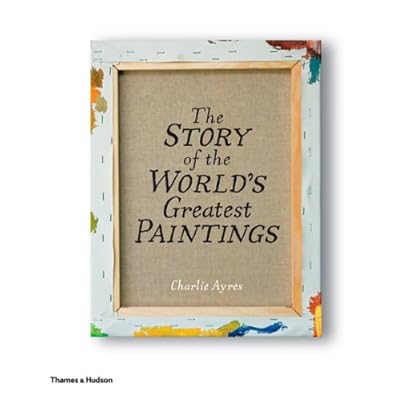
The Story of the World's Greatest Paintings
By Charlie Ayres
Thames & Hudson    November  2010


Art in Action 1: Introducing Young Children to the World of Art with 24 Creative Projects Inspired by 12 Masterpieces (Art in Action Books)
By Maja Pitamic (Author)
Mike Norris (Contributor)
Barron's Educational Series   April  2010


Art and Architecture (Experimenting With Everyday Science)
By Stephen M. Tomecek
Chelsea House Publications June 2010


As always, my goal is to suggest books with these criteria:
1) Nonfiction
2) Published recently
3) Not previously recommended by myself on INK

Linda asked me to write for INK the first month of it's conception based on, I assume, my reputation for promoting art-themed Children's nonfiction books. So, here I am, three years later, still talking about art books. Thanks to INK for giving me the platform to voice my love of art books... and to hang out with an amazing group of nonfiction writers.

Friday, March 18, 2011

Three Schools: Six Questions

In the last week I’ve been the guest author at three elementary schools in the St. Louis area. The first school was across the Missouri River in Wentzville, one of the fastest growing public school districts in America. A fairly new residential area, pristine and suburban. The second school was in South St. Louis, a parochial school attached to a large Catholic Church. A very homogeneous group of kids. The third was a public school in the heart of North St. Louis in a neighborhood of bungalows, run-down apartments, and boarded up buildings. The majority of the students are African American. Each teacher/librarian had read several of my books to the children before my visit. It always makes a big difference if I show up at a school where the kids sort of know who I am.

A Digression: A Letter from Shane after I visited his school:

Dear Jan Greenberg, I always fall asleep during the period right after lunch. But our teacher Mrs. Poetter told us you were coming and to sit up straight. I expected an old lady with gray hair to hobble in. Then WOW, you showed up. You were pretty entertaining, even though most of your books are about girls. By the way, I was the kid in the back row wearing the letter jacket.

So OK, I received that letter-um- 15 years ago.

Anyway. In the first school, the amazing art teacher had done four different art projects, which lined the hallways: collages inspired by Romare Bearden: Collage of Memories, self-portraits based on Chuck Close Up Close, a lively group of Campbell’s Soups a la Andy Warhol: Prince of POP, and splatter paintings in a style similar to Jackson Pollock's Lavender Mist in Action Jackson. At each school I was thrilled to find the students prepared, attentive, and eager to ask questions. What I found interesting was the fact that the three groups of children, all from very different backgrounds, asked me the same questions. In retrospect, I might have been funnier, more articulate, more thoughtful. “If only I had said this,” I told myself later. “If only I’d said that.” So here are some revised responses to the most frequently asked questions from my school visits.

On Martha Graham: Making Appalachian Spring:

“Why did you write a book about that lady?”

Martha Graham was the first great modern American dancer. She didn’t wear toe shoes or tutus. (Power point: A Little Dancer by Degas next to an illustration of one of Martha’s dancers by Brian Floca.) Imagine crouching down and then with your stomach muscles leaping up, breathing in and out. The dancers often had sore muscles and bruised knees but once they understood Martha’s way of dancing, they were happy they’d stuck with it. I work with (collaborate with) Sandra Jordan on most of my books on the arts and we were fascinated by the way Martha worked with her dance troupe, the composer who wrote the music and the artist who created the sets.

“The illustrations are neat. Does the artist (Brian Floca) do the pictures for all of your books?

Only two of our books have illustrations, both in water colors, but they were made by two different illustrators. We loved working with both illustrators, Robert Andrew Parker on Action Jackson and Brian Floca. Often editors don’t want the author to communicate with the illustrator because conflicts can arise. But Brian, who spent a lot of time photographing the Martha Graham dancers rehearsing and also watching an old tape of the first performance of Appalachian Spring in 1944, wanted our input. That doesn’t mean he always took our suggestions. But he was interested in what we had to say. It was fun sitting together with Brian and our editor Neal Porter in his apartment in New York, looking at Brian’s drawings and seeing how they made our story sparkle. In our biographies of artists, we use reproductions of actual paintings, sculpture, or, in the case of Christo and Jeanne-Claude, photographs of their outdoor installations. ( Here is where I show a lot of images on the screen, wall or wherever there’s a big white space.)

On Writing:

“What’s your favorite thing about being a writer?

I love the writing process. But nonfiction requires a lot of research before you can sit down and write the story. When we wrote a biography of Vincent Van Gogh, we read hundreds of letters that he wrote to his brother Theo and more than twenty-five biographies. Finding the heart in the story is vital and sometimes it takes traveling to the places where the main character lived and worked to discover it. It was magical going to the Van Gogh Museum in Amsterdam and to Provence in the south of France where he painted. Driving by fields of sunflowers and walking down the streets of Arles where he made some of his greatest works, including Starry Night, and reading first hand accounts by people who knew him, gave us a deeper sense of the man, of the artist, than any art history text could do. Think of eating an artichoke, peeling off the leaves, one by one, until you get to the delicious heart inside. ( Power point has changed the way I do presentations. No more fumbling with transparencies in overhead projectors. No more slide machines that break in the middle of a talk.)

“What’s your advice on how to be a writer?”

Don’t leave the room. And be prepared to write a million lousy words before you get it right.

“How much money do you make?"

“How old are you?”

Hmmm. I think I’ll answer those two questions next time.

.

Friday, January 28, 2011

Art Curriculum in the Classroom


This week, I received a call from another elementary school looking for Art Appreciation Presentation material.  I recommended that they look at my Art In the Classroom blog and the many links on the sidebar. After hanging up the phone, it occurred to me that I should probably hop over to the blog and check to make sure all the links were working. (Sad to say, the blog is in need of some much needed lovin’. Admittedly, if I could spend all day writing on the blog, I would.) All the links worked and it appears some have been updated since I first added the links. An amazing abundance of Art Appreciation curriculum is available for teachers and educators to use in the classroom – many created by world-class art museums.

Here are a few of the resources available:

This afternoon, after teaching my after-school art class, I had a wonderful discussion with the school principal. The conversation started because I mentioned that, in the twelve years of my teaching art appreciation classes, every class has been filled with insightful, enthusiastic, amazing students. Then, she told me the students didn’t have art at the school – as part of their regular day. What? No art in the school? It was my understanding that Illinois had a state mandate of half an hour per week - shocking in itself and why I started teaching art appreciation. She said that the teachers try to add art lessons that, more often than not, tend to be craft projects. With that being said, the above art curriculum links are a necessity in the schools.

And, of course, here are some new interesting nonfiction books to add to the classroom:

Laban Carrick Hill (Author)
Bryan Collier (Illustrator)
Little, Brown Books for Young Readers (September 2010)
2011 Caldecott Honor Book

Linda L. Osmundson
Pelican Publishing (January 2011)

Don Brown
Houghton Mifflin Books for Children (October 2007)
I love the Portraits of the Presidents at the National Portrait Gallery.

I have to show off the beautiful drawing that one of my students made for me after she finished the class assignment.    ♥


Friday, October 22, 2010

Serendipity


Almost ten years ago I met the writer/illustrator Debra Frasier at a Children’s Literature Festival in Idaho. She told me that one of her greatest moments in her life was narrating her picture book “On the Day You Were Born” accompanied by a full symphony
orchestra. Standing at the podium, hearing the music surrounding her, she said, was an extraordinary experience. I must admit I was a little jealous. I mean I could do that. Stand up there and read one of my books. I could listen to the sound of violins and cellos and flutes washing over me. How wonderful would that be? Alas I hadn’t written a book that would qualify for such a thing. But from time to time I thought about Debra and her story. Remembering it gave me a vicarious thrill.

So you can imagine my excitement when, by chance, I found myself on a plane seated next to David Robinson, the musical director of the St. Louis Symphony Orchestra. Sandra Jordan and I were just finishing the third or fourth draft of Ballet for Martha: Making Appalachian Spring. David and I chatted about the book and the music. He could actually hum the whole score, which Aaron Copland had composed for Martha Graham’s dance first performed in 1944, when America had entered WWII. Isamu Noguchi had designed the sets. It was a great collaboration between choreographer, composer, and artist. I told David we were having trouble describing the last, lingering notes of the music. “They seem to ask ‘What will happen tomorrow?’ ” David said. Yes! I mentioned that I had a vision of the text narrated with illustrations, accompanied by the music. I wanted the book to make a contribution to family concerts, a modern alternative to Peter and the Wolff. I wanted to stand up like Debra and hear the full orchestra playing behind me. (I didn’t tell David that part of it.)

He was enthusiastic about the idea, as one of his interests is showing audiences the way the arts interconnect. Two years from that serendipitous meeting, Ballet for Martha was presented with the St. Louis Symphony performing Appalachian Spring. Brian Floca’s illustrations appeared on an overhead screen. We were all there, Sandra, Brian, and our editor Neal Porter. It was exhilarating! In November there will be four performances for younger audiences of Appalachian Spring, along with the narration and images from Ballet for Martha. I guess you’re wondering if I will be up there narrating. Well, no. David, himself, will read excerpts from the text with the images overhead. The orchestra will play fragments of the music as they relate to the story, followed by the complete symphony. As for me, I’ll be sitting happily in the first row with my grandchildren and humming along. But I’m working on the next performance, which will be in Aspen, Colorado next summer. Maybe that will be my big chance!!!