Showing posts with label Common Core State Standards. Show all posts

Thursday, April 17, 2014

Great Presentations


Last Saturday, I attended a terrific conference put on by the Foundation of Children’s Books (FCB) at Lesley University.  It’s a regular event and this year it concentrated upon nonfiction.  The speakers were nonfiction all-stars including Michael Tougias talking about adapting to write for middle grade after being an adult nonfiction author, Kathy Lasky reflecting upon the evolution of the nonfiction part of her career, Jason Chin finding the narrative arc of science through words and illustrations, and Steve Sheinkin being wildly entertaining while discussing books about very serious subjects.

I was especially pleased, however, to listen to fellow I.N.K. contributor Melissa Stewart.  She appeared in the middle of the lineup, and that’s when you could hear pens scratching on notebooks.  Melissa was there to discuss “Nonfiction Books You’ll Love” from 2013 and 2014.

The way that she presented them would do any nonfiction writer proud.  She organized her info into topics that provided context to her audience.  She gave just enough description about each book to inform and create the desire for further research.  Her enthusiasm for her subject/s was infectious.  She even supplied back matter: a takeaway list of 30 books arranged in alphabetical order by title and by year.

I guess what impressed me most besides Melissa’s careful curation was the generosity of her presentation--praise, yes, but also ways we could appreciate and use the books she mentioned.  That’s why authors in the audience were writing down titles as potential mentor texts while teachers and librarians were listing books to add to their collections.  

I remember a post Melissa did a while ago, saying that Common Core is here to stay and one of the best things writers can do (if they have the time and interest) is to give teachers easy ways to use their books to teach these standards.  Then she helped us further by providing 10 ways to help educators, complete with with examples of these ideas.

During her presentation at the FCB, Melissa showed us a new idea she is using, a multimedia revision timeline that chronicles the very long road she took to finally publish her book, No Monkeys, No Chocolate.  It was a fabulous way to show students and beginning authors that effortless writing takes an enormous amount of steps and work.


Now, she has given us 11 ways to help educators.

Wednesday, February 5, 2014

Road Maps to the Common Core

Sometimes I get the feeling that any change in educational policy doesn’t matter to the providers of educational materials as long as change is mandated. Publishers of texts and testing products make money no matter what.  The objective of No Child Left Behind was basic literacy for all, period.  So the emphasis was on decoding skills.  It set the bar very low and generated lots of new materials to teach phonics, etc.  Now we have the Common Core State Standards which redefine an educated person as someone who can read a text and figure out the main idea, how it was put together by the author, and how knowledge and ideas are integrated.  Moreover, students are supposed to incorporate these standards into their own writing.  The pushback from the educational community is that now the bar is set too high; especially in light of the new standardized tests that show kids failing as expected.  Veteran educations shake their heads in bewilderment.  They know better than most that there is no single panacea for delivering high quality education.  Just ‘cause you state it as policy, doesn’t mean it will happen.
Vicki Cobb and Lucy Calkins
One such veteran educator is Lucy Calkins of Columbia’s Teachers College who is the founder and director of The Columbia Reading and WritingProject. She is an outspoken champion of the CCSS.  She sees it as an opportunity to introduce students to a wealth of nonfiction literature about the real world and she spoke about it at a TC event last week, which I attended.  After decades of imposing rules and packaged lesson plans on teachers, of bashing teachers as the primary problem with education, of sucking the joy of learning out of the classroom, and of attempting to standardize teaching as if children were widgets in a factory, some of us see the CCSS as an opportunity to bring creativity, collaboration, and autonomy back to the teaching profession.

Let’s hope it’s not too late.  Enter the realityof a teacher’s day.  The stress is enormous and now they have to do a great deal of paperwork to justify exactly how they are meeting the CCSS.  Their jobs are now dependent on how well their students perform on the standardized test. Many gifted teachers are speaking up  or throwing in the towel.  Lucy Calkins sees the CCSS as an opening for many approaches to instruction and a diverse curriculum—the opposite of standardization.  Since businesses now say they want creative, self-starting, innovative workers, we have to allow teachers to go back to being creative innovators themselves.  We also have to experiment with different approaches and ideas with the understanding that some will prove better and others and that not everything that is done will be a home run.  In other words, educators, themselves, need room to learn and grow. 

The Columbia Reading and Writing Program states, " ‘the Standards define what all students are expected to know and be able to do, not how teachers should teach’ (CCSS, p 6). What's needed is an all-hands-on-deck effort to study how best to create pathways to achieve the Common Core. There will be no one 'right answer' to the question of how a school or a district needs to shift its priorities and methods so as to bring its students closer to the expectations of the Common Core, as schools and classrooms will come from different places and will have different resources to draw upon.”

Teachers need interesting, well-written materials for the curriculum subjects they teach.  They can also teach reading and writing skills through “mentor” books that are about content.  In addition to books, teachers also need strategies for using books that don’t come with lesson plans.  They need support from curriculum people and from each other.  If the skills of the Common Core are our destination, (and there is no question that we’d have a very well educated nation if everyone met them) we need ways to implement them and try them out.  In other words, we need time to develop road maps through uncharted territory and stop asking, like an annoying  passenger, “are we there yet?”  


Tuesday, December 3, 2013

Eruptions Rock the Globe…Again and Again and Again

Science is an on-going story, an on-going quest. That’s a theme that I explore in all my science books.  But the Earth itself has been making the point for me since the release of my book Eruption! Volcanoes and the Science of Saving Lives
Mount Pinatubo erupts in 1991.
Eruption! tells the story of a small group of volcanologists who help locals predict dangerous volcanic activity so officials can get people out of harm’s way. The eruptions I describe in Colombia, the Philippines, and Mount Merapi in Indonesia are dramatic and might seem extreme but they are far from it.  Since Eruption! came out in June, volcanoes have been erupting all across the globe, testing scientists and endangering lives. Here is a sampling:

In July, 200 people were evacuated when Ecuador’s Tungurahua volcano shot a plume of hot ash, gas and rocks eight miles into the sky.

In the same month, residents of Mexico City woke to find a layer of volcanic ash spread across town from Popocatepetl. Residents were warned to cover water supplies, use face masks and stay indoors. The volcano has been emitting steam and gas intermittently ever since.

Colima, in Western Mexico, experienced some lava flows in July, but in November, activity has ramped up. On November 22, the volcano began exploding every half hour with plumes reaching almost a mile into the sky.

In August, Japan’s Mount Sakurajima shot an ash plume three miles high over the city of Kagoshima (population 600,000), darkening the sky and forcing locals to employ umbrellas, raincoats, and masks to shield themselves from falling debris.

Also in August, nearly 3,000 people were evacuated from Palue Island when Mount Rokatenda in Indonesia erupted, spewing plumes of white and gray smoke and ash. Five people were killed in the evacuation zone when red-hot ash seared a beach.

Mount Merapi, which I cover extensively in the book, has been keeping VDAP and their colleagues busy. In September a volcano observer noted hot glowing material and a hissing sound at the crater. Then on November 18, the volcano rumbled and shot ash and gases more than a mile in the air, which poured down on villages as far as 18 miles away. The volcano shot steam on Sunday Dec 1, but scientist are particularly worried about the recent growth of a large crack in the lava dome, which raises the risk that the dome could collapse, causing an avalanche or dangerous flow of searing hot ash and gases called a pyroclastic flow.

Mount Merapi erupts in 2010.
 Another volcano in Indonesia has been even more threatening.  In September a flurry of eruptions at Mount Sinabung chased 10,000 people from their homes. The volcano settled down for a little while and people returned to their villages.  But Sinabung is back at it again, with strong explosions in early November gaining intensity in mid- November. The volcano erupted eight times on November 24 and more than 18,000 people have been evacuated from a 3-mile radius around the volcano. Though the volcano has thrown coin-sized volcanic rocks, some residents have been returning to their farms from evacuation shelters during the day to check on livestock.

The story of the human quest to understand volcanoes and protect ourselves from them continues.  To me, this means that teachers across the country have many opportunities to share this on-going quest with students. When a volcanic eruption is in the news, teachers could share Eruption! with students so they can learn more about the geologic processes behind the activity and the exciting science done in the field to better understand volcanoes and protect people from their dangerous power. Likewise, after students have read the book, teachers can connect students to recent eruptions. Since the Common Core asks students to look at topics across a variety of media, teacher could send students to these amazing websites:

Earthweek (http://www.earthweek.com/volccat.php), which has a page dedicated to current volcanic eruptions.

Volcano Discovery (http://www.volcanodiscovery.com/volcanoes.html) where students can see a map of recent eruptions, a log of recent volcanic activity around the world, thorough descriptions of ongoing eruptions, and even webcams at active volcanoes.

Smithsonian’s Global Volcanism Program (http://www.volcano.si.edu/) gives weekly updates of volcanic activity around the world and an amazing searchable database of recent and historic eruptions.

Teachers could even ask students to use their research on an active volcano to write another exciting chapter of Eruption! After all, science is an on-going story. By no means do I have the last word.


Elizabeth Rusch

Teaching resources for Eruption!, including a half-page Common Core guide, are available at: http://elizabethrusch.com/ForYou/ForTeachers.aspx

Wednesday, November 13, 2013

Common Core and Nonfiction Photography Part I

As Steve Jenkins discussed in his recent post, informational graphics can contribute much to nonfiction. I agree. Yet it’s not only drawn images and graphs that can elevate nonfiction material.  Photography can elevate and transmit content, as well. 

One of my favorite examples of the power of a photograph for nonfiction impact comes from an article about the lightest metal on Earth. 

Now, I want to know, who had the brilliant idea to put that metal on a dandelion to show it’s lightness? A drawn illustration of that metal on top of a dandelion would not have done the same thing. You need the photo to feel as if you are experiencing that moment, the metal pressing down on the dandelion fluff, the fluff holding up the extremely light metal. 

Photography is powerful even in an age when we admit that some photos can be manipulated with image processing programs. (Understanding the image fully is also easier if you have had contact with real dandelions, i.e. nature, the greatest source of metaphors that reach beyond cultural and language barriers.) 

If Common Core includes deeper study of context and richer critical thinking, then a study of photography in nonfiction could be a rich unit, indeed. To that end, I thought I’d share some of the things I’ve been thinking about as a professional photographer creating images for nonfiction books for children and adults. 


EDITORIAL PURPOSE IMPACTS HOW YOU PHOTOGRAPH A SCENE  

Here’s how I know that purpose matters. My husband is coauthoring a field guide to nature of the midwest for Houghton Mifflin’s Kaufman Guides. As we traveled all over the Midwest to dunes, prairies, forests, and bogs, I soon learned that not just any photo will do for a field guide that promises to help people identify animals and plants. 

His images for the field guide need to be clear and complete, showing every aspect of the lizard, insect, or mushroom to best effect for identification purposes.   No bush in front of the right foot. No tree bisecting the image of the deer.  I call it “Egyptian tomb painting” school of photography. All limbs must show, just like those wonderfully awkward elbows and arms in ancient Egyptian scenes.  You may think you have great photos of animals but if you look through them I bet you’ll find that 99% of them are useless for field guides. 

Yellow warbler, tail hidden, not useful for field guide

A field guide worthy photo, all relevant field marks showing


I’m happy to find raindrop-covered creatures for my rain book (Raindrops Roll, 2015). But that’s not so great for Jeff’s work on field guide photos. Raindrops reflect light, making the image spattered with polka dots. A smattering of pollen changes the color of a hummingbird—not so great for i.d.  If you show a photo of an animal with stripes of mud on it, people might think that it should always have stripes. Some of these variations can be altered in editing software. But, then again, should you show a leaf as is, with all the caterpillar bites in it? Or do you fix it so people won’t think that species of tree has every leaf “holey?” These are the questions that plague field guide photographers. What image will represent the species?

A photo of seagulls that shows preening behavior would make it seem, in a field guide, as though seagulls perpetually have rather awkward necks. Will you show the wren with a relaxed tail? Well, it just wouldn’t look wren-ish although wrens do sometimes put down that perky tail. So, judgments must be made.  Characteristic postures of a creature are as important as coloring.

The other thing is that the photos are keyed out, so it helps to photograph things on uniform, contrasting backgrounds. So Jeff carries around a flag-like piece of cloth which I sometimes have to hold, seemingly forever, behind a plant until the wind stops making the plant move so Jeff can get a good shot. This helps make sure all the needles on a tree will be distinct from the background. Yes, purpose matters. 


CHOICE OF VIEWPOINT MATTERS

Nonfiction authors and illustrators make choices. In my school programs I show kids why this is important in photography.  In the first slide I show them a broad view of the stunningly lovely wings of a polyphemus moth. Ooh! Aahh! the audience coos. Then I show them a closeup of a polyphemus moth face and its hairy, tarantula-like legs. Eeeuw! is the common response. Yup—same moth, same day, different angle. Photographers can make you fawn over an animal or fear an animal. It’s all in the visual choices we make. The same goes with writing. When you choose a metaphor, you are putting an image, albeit made with words, right next to your subject.  Say a spider just covers a medium pizza and people imagine that spider ON their pizza. That makes them feel a certain way. Excited or grossed out. Depends on the audience.

As a book author I often think in terms of a book spread and leave room for my own words/sidebars.

FRAMING MATTERS TO MEANING 

No, I don’t mean the frame around the picture although, yes, the setting of a photo in a book is important. (Book design impacts meaning.) No, I’m talking about psychological framing—the way we digest words and images. Framing is a tad deeper than the impact of viewpoint and metaphor I discussed above. This is a chewy topic for older grades. 

Basically, framing refers to the fact that words and photos do not live on a blank page that floats in space. A single seemingly innocuous image can activate a whole “frame” of beliefs/thoughts about a topic. Then, when you see the next word or image, you’re set up to believe it, not believe it, or take it in an entirely different way.  Just imagine your whole lifetime of experience with an image of a dark alley, a snake, an American flag, a robot, a baby-in-arms, and such.

 Here’s how one program describes the concept. 


Framing can be productive in good and bad ways. On the scary side, you don’t have to be directly insulting or racist or actually say someone is guilty. You just flash up an image or use a word that brings the emotions and thoughts of fear/guilt/protectiveness. Those previous images or words can totally change a person’s viewpoint of seemingly neutral facts or statements that follow it.  Alas, this kind of “framing” is very sophisticated. Its work goes quite below the radar even for people who are educated and think they control their reactions to things. It’s used a lot in political ads.

I’ll never forget the course I took at Duke: Media Power Politics. That brilliant, wild professor blew our minds.  He showed us how newscasts use music, color, lighting to make their newscasters look authoritative, how statistics can be manipulated for best impact in advertisement, how disturbing news images then lead us to the happy solutions—the commercials, where you learn that although you cannot solve war, you can smell better if you buy this soap. He showed us how the Nazis used patriotic films and images to set up the anger and shift the public’s view of certain groups.

Perhaps framing and media power politics don’t directly impact the way I take photos. But it certainly impacts how I read and watch TV. Being a savvy digester of images is going to be just as important as being a critical thinker about words if you care about nonfiction, now and in the future. The more students learn about it, the better they’ll be at sorting truth from manipulation. 

Next month I’ll be discussing some more aspects of photography, such as how to enrich photos with layers that give additional educational content beyond the main focus of the images.  (It’s sort of like what illustrators do with drawing or painting when they include extra symbols, words, and seek-and-find elements.) For now I’m going right back outside to see if I can photograph those warblers that were eluding me this morning. Good day, INK folks!
Sometimes a little blur can convey action.
Not great for field guide but good for  the feel of the scene.

Wednesday, October 30, 2013

Cousin Ida


We are one day from the end of our month’s discussion about Common Core State Standards. Like Steve Sheinkin's blog yesterday, I purposely waited till the end of the month to steal - I mean figure out how to talk about CCSS. I reread the blogs to see if anything is missing. There is. We’ve not yet discussed cousin Ida. This surprises me because cousin Ida is the whole shebang, the common core when it comes to standards.
My cousin, Ida Kravitz, was a teacher and later an administrator in Philadelphia. She still lives in the same house where as a child I spent so many hours learning to love learning. She taught numerous subjects, but history and reading were her babies. Here’s what made her a great teacher:
First, Ida knew her material cold. Say a country, give a range of dates, and off she'd go. Second, she revealed an unapologetic passion for whatever subject she taught. Her enthusiasm was contagious. And third, you couldn’t help but get sucked in by her extraordinary story telling. These three points: facts, passion, and good story telling are what I consider the most important standards for teachers and for writers, and come to think of it, for much of life.

As a kid I was a daydreamer. I spent classroom time in a world of make believe, passing notes to friends, and sneaking tiny pieces of the tuna fish salad sandwich on rye bread that my mother made for lunch. Tuna fish salad is not a good thing to give to a kid who daydreams and sneaks snacks in class. The teacher can smell the tuna when you open the wax paper wrapper. (No baggies back then.) It’s better to give kids peanut butter and jelly, or cheese, or baloney.
In those days classes were taught from very dry textbooks. History covered this king and that, this battle and that. More time was spent learning the chronology of French and English royalty than about slavery. I remember only a half paragraph devoted to Native Americans. When I asked, really, really politely, why, I got into a lot of trouble. A lot of trouble.
I tried hard to concentrate but history especially was bor-ing! Since I was close to failing, a B- was considered failing in my family, my totally panicked parents brought in the top gun: COUSIN IDA.
            Once a week, and before a test, I was driven across town to Ida’s house where she tutored me in history. This was no easy feat because Philadelphia is spread out and the drive took up most of the afternoon.
            Ida would ask what period a test covered. England, 1485 – 1558.  “Ah, the Tudors!” she’d rub her hands gleefully, “Now that’s a family! This will be fun.” She then proceeded to fill my head with stories, stories of sex, intrigue, and murder. There were details, marvelous details – how people dressed, what they ate, how they ate, who they loved. Between roasted wild bore, damask, brocade, bosom-popping dresses, and red stains on bed linen, she threw in the names of royals, laws, and a battle or two. It was unforgettable.
            I started to get top grades in history. After a bit some of my classmates would wait for me to return home from cousin Ida’s. I told them all the super stories I had learned. The retelling of Ida’s stories reinforced learning, and was a way in with the popular kids. It was a win-win. 

When visiting schools it’s heart-warming to meet many a cousin Ida. If Common Core standards help teachers deconstruct our books to benefit their students, I say go for it. But please, please, please don’t overlook cousin Ida standards.
This month some INK writers deftly deconstructed their own books following CCSS key ideas. Others explained why they did not. One thing all the INKers have in common is they are Cousin-Ida-Writers. So let’s keep our eye on the prize: learn the subject, share it with passion, and tell a good story. That’s a common core we can all agree on.


Tuesday, October 29, 2013

Las Vegas, Non-Fiction and the CCSS for Math


I'm just back from Sin City, known to some as Las Vegas. I swear I was sinless. Not a single quarter went from my pocket to the slot. (I've seen the math and I know slot machines are a bad deal -- except for the casino.) I went to Vegas because I gave a talk there at the Western Regional Conference of the National Council of Teachers of Mathematics, and when I wasn't speaking I was attending sessions. I wanted to see what the math people had to say about the Common Core State Standards.

Most of the media spotlight on the CCSS has focused on tests and the scary prospect of falling test scores under the CCSS. Math educators, on the other hand, talk a lot more about teaching students than what will happen when the students (and the standards) fall victim to the latest round of standardized testing. One plank of the CCSS is the Standards for Mathematical Practice; these are the forms of expertise that teachers at all levels should seek to develop in their students. For example, the first one says, "Make sense of problems and persevere in solving them." Can't argue with that.

The other thing I heard a lot was the word "rigor," which is designated as one of the three key instructional shifts of the CCCSS for Mathematics. (I knew you were wondering: the other two are Focus and Coherence.) And, as it turns out, "rigor" is a controversial word in math circles. Can you figure out why?

Well, as with so many things these days, there's the Tea Party crowd and there's the rest of us. To the Tea Party-goers, rigor means "more "(problems), "faster" (answers), "better" (% correct) and "higher "(test scores, of course). To the math educators I heard at NCTM, "rigor" means three elements: "conceptual understanding, procedural skill and fluency, and application with equal intensity," as explained in "Key Instructional Shifts of the Common Core State Standards for Mathematics."  A metaphor proffered by one presenter was that of a three-legged stool. Rigor is the stool and the three legs are those three elements, apportioned equally if the stool is going to stay upright and level.

Wow! Conceptual understanding and application equal to skill and fluency? Yep. I've always thought that was the right equation and now the notion is ascendant with the CCSS. I've been thinking about where non-fiction fits in. My first thought, echoed by those I spoke with, was the "application" component. After all, through stories, readers see how math concepts can be applied to the real world. To pick one classic of the "math-lit" genre, Pat Hutchins's The Doorbell Rang comes to mind. Two children are about to enjoy a plate of twelve cookies when the doorbell rings and a guest arrives ... then another ring and two more guests ... then another two... then six more ... then.... (you'll just have to read the book to find out). Each step of the way, to their long-faced chagrin, they must modify their calculation of how many cookies each of them will get. With an enlightened teacher or parent at the helm, the math will be rampant. Here, in delightful literary form, is an application of addition, division, factors, even algebra.

But what about the other two legs of the stool? Can non-fiction add to their support? You've no doubt figured out my answer: of course. Take conceptual understanding. I'll choose a book of my own,  If Dogs Were Dinosaurs, which is a companion to the earlier If You Hopped Like a Frog. Both are about proportion, The first compares animal abilities to corresponding abilities of animals; the second looks at relative size (scale) through preposterous examples. "If a submarine sandwich were a real submarine. . . a pickle slice could save your life." The math is explained in the back — and it's easy! See the funny examples, read the back matter, try a few examples of your own (thank you, teachers), and voilà: ratio and proportion make sense. Daunting (and boring) no more. Many have told me so.

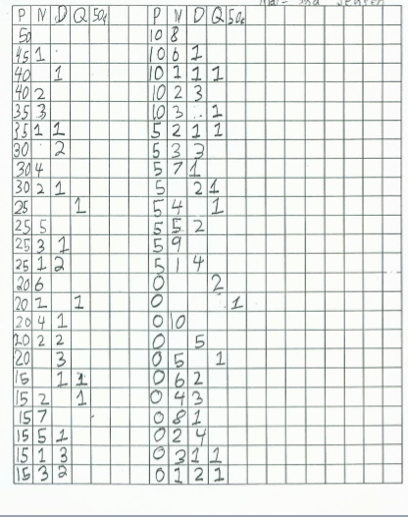
Computational fluency is a tougher nut for an author to crack and I would say that in most cases it should not be the goal of a non-fiction author unless her paycheck comes from a textbook publisher (in which case, she probably doesn't write on this blog!). But I won't disallow the possibility of "procedural skill and fluency" being a side benefit to a "real" book. Take If You Made a Million, my book for young children about the math of money. Five coin combinations equivalent to a quarter are given (one quarter,  two dimes and a nickel, three nickels and a dime, five nickels and 25 pennies). Does that mean there are only five? One second grader explored this question -- and found thirteen. Two students in the same  class determined that there are 49 coin combinations that equal fifty cents. ("We were proud of our work because we finally finished it," they wrote.) Think of all the basic skills practice that went into that determination! It didn't feel like drudgery because it wasn't. But the skills were basic just the same.

So, as is often the case (especially around this blog!), non-fiction is the answer. By no means is it all that's needed to meet the Common Core math standards, but it sure can help the stool stand up proud, tall and well balanced.


Thursday, October 24, 2013

The Joy of Exploring Book Structure with the Common Core

Like many fellow INK bloggers, I don’t think about the Common Core while writing my books. Yet when I read the Common Core anchor reading standards, I get a sense that they are designed to get kids to explore some of the things that I DO think about when I write a book.  Maybe that is not such a bad thing.

Take, for instance, structure. The reading standards (especially CCRA.R.5) ask students to think about how a piece of writing is structured and why the author might have structured it that way.  I think about structure. I obsess about structure.  Considering how to structure a book is the most fun, the most creative, and perhaps the most important part of my writing process.

Structure is a the-world-is-your-oyster kind of thing.  The options for structuring a piece of writing to inspire, entertain, and inform are endless. I can be creative, literary, artistic, poetic, humorous, vivid, and suspenseful. I can use metaphor, imagery, narrative arc, voice, or any other tool I’d like. When I write, I’m like a curator at a museum. I get to decide what to focus on and how to present it. So half the fun is figuring out: What is the best way to tell this story? What interesting or clever structure will make this amazing material come to life for readers?

Let me give you an example. Since the release of two new books this year, I now have three books for young readers on volcanoes. Each has a completely different structure.

VOLCANO RISING, a picture book for young kids, age five to nine, focuses on the creative force of volcanoes, how volcanoes shape the landscape, building mountains and creating islands where there were none before. The book is organized around an idea: creative eruptions. I introduce the concept, explain it, and then give eight vivid examples. The book also has two layers of text. In the first, I employ lyrical language so that it’s lovely to read aloud. The second layer offers more detailed descriptions of fascinating creative eruptions for parents or teachers to share with kids or for independent readers to explore on their own.

WILL IT BLOW? is designed to be a fun, interactive way for kids age six to ten to understand and use cutting-edge volcano monitoring by drawing a playful parallel between volcano monitoring and
detective work. The book introduces Mount St. Helens as the suspect, and the chapters describe
clues that volcanologists gather. Each chapter ends with a real case study from Mount St. Helens’ 2004-2008 eruption where kids apply what they learned about clues to guess what Mount St. Helens might do next. WILL IT BLOW? offers pretty hefty scientific material presented through the lens of detective work.

ERUPTION! VOLCANOES AND THE SCIENCE OF SAVING LIVES is for older readers, kids age ten and up. It’s a no-holds-barred immersion into the destructive power of volcanoes and the intense challenge of predicting deadly violent eruptions. I follow a small team of scientists as they work on the flanks of steaming, quaking, ash-spewing volcanoes all over the world—from Colombia and the Philippines to Chile and Indonesia—as they struggle to predict eruptions and prevent tragedies. I chose some historical eruptions and some current ones to show how the scientists' work has evolved over time, and tried to weave together the scientific process with suspenseful, nail-biting material to pull readers through.

One topic, volcanoes, with three very different structures.  What does this mean for what might happen in the classroom with my volcano books? Teachers could have students look at all three of these books and describe their structures and what they accomplish.  To explore the structure of VOLCANO RISING, a teacher could ask: Why did the author chose the eight volcanoes that she features in this book? What is the purpose of the two different layers of text? How do the layers affect how the book might be used?  To delve deeper into the structure of WILL IT BLOW? a teacher could ask: How is the theme of volcanology-as-detective-work reflected in the structure of the book? How does the opening chapter set the stage for the rest of the book? What is the common structure found in each chapter and what does that structure accomplish? For ERUPTION, students could explore: Why does the author tell the stories of several eruptions? Why those eruptions? What does each add?

Why stop with my volcano books? Students could check out three more volcano books and describe how they are the same and different. Teachers could even ask students to brainstorm ideas for three more ways one could structure a book about volcanoes. To me, structure is about both creativity and synthesizing information, so exploring structure can offer both hard-core analysis and a creative outlet.

I’m a little obsessed with structure, so teachers and students probably have lots to talk about by picking apart the structures of my books.  My nonfiction picturebook biography THE PLANET HUNTER: THE STORY BEHIND WHAT HAPPENED TO PLUTO explains why Pluto is not considered a planet anymore by telling the true story of the astronomer behind it. I use the structure of a narrative arc, which is commonly used in fiction, with a character (astronomer Mike Brown) who wants something (to find more planets in our solar system), rising tension, a climax and a resolution. Teachers can explore narrative arc structure with students by having them find these parts in the story.

In my nonfiction picture book biography of Maria Anna Mozart –Wolfgang Mozart’s older sister who was also a child prodigy – I used the structure of a piano sonata, the type of music Maria Anna played most often, as the structure for the book. So in FOR THE LOVE OF MUSIC, I divided her story into movements and employed other other musical notations to highlight events in Maria Anna’s life.  The Mozart children’s whirlwind musical tour of Europe is in a section called Allegro (the fast tempo of the first movement of a piano sonata). When Wolfgang climbs into a carriage headed for Italy, leaving his sister behind, the section is Coda (an ending.) In a section titled Fermata (in which everything stops), Maria Anna's piano warps in the frigid weather, and in Cadenza (a passage for a soloist to improvise), Maria Anna weeps for Wolfgang, who dies so young. Classroom discussions about this structure could address: How does the sonata structure shape the book? What constraints did using this structure put on the author? What did the structure add?

Basically, I think the standards open the door to asking readers to notice a book’s structure, to think about why a book is structured the way it is, to imagine how it could have been structured differently and to consider a variety of ways to structure their writing, too. 

What might this look like in the classroom more generally? Talk about books with interesting structures. Find books on the same topic or subject matter with different structures and discuss how the structures differ and how that affects the book.

To develop writing skills, kids could brainstorm at least three different possible structures for a piece of writing. (I do this before writing my books, though I don’t limit myself to only three.) Student could write about the same topic more than once, employing very different structures. (I often write multiple drafts of different parts of my books, testing out different structures.)

Encouraging students to consider creative ways to structure a piece of writing can give kids a way to really engage with the material and make it their own. To me any topic becomes more interesting if I ask myself: How could I structure this to be the most interesting and most effective?  If teachers encourage kids to think creatively about structuring their writing, students may engage more deeply with the material and, ultimately, write pieces that are more interesting to read.  

Elizabeth Rusch

P.S. While my books offer good opportunities to discuss structure, I think they can also spur discussions around other elements of the Common Core, such as theme (R.2), word choice (R.4),  and point of view (R.6). To give teachers ideas on how to use my books to support Common Core learning, I have created a short, half-page Common Core Bookmark for each of my books based on the reading anchor standards. Click on a title to get the short guide:


If you happen like the format I created to distill my Common Core-related ideas about my books into a half-page bookmark, please feel free to use this blank version

Monday, October 21, 2013

What Others Have Said Re: Geo. C. + the CCSS Goes For Me 2

"Someone is always taking the joy out of life. For 20 years I proceed blissfully writing stories to keep the wolf from my door and to cause other people to forget for an hour or two the wolves at their doors and up pops [an] editor... and asks me for an article on the Tarzan theme."    
                      Edgar Rice Burroughs


 It's nearly 10 o'clock on the night before the morning upon which (I just realized) my October post is due to appear. A bit frayed and shopworn I am, having spent the last ten hours fussing with a perfectly speculative, i.e. crapshoot [May I say that?] nonfiction manuscript about a completely compelling (to me) subject, time, and place, none of which I shall divulge for fear of the Jinx. And, as I switch gears, wind up for the pitch, and otherwise warm to the subject at hand I confess that, though I was heartened by Deborah Heiligman's thoughtful and diverting consideration of George Clooney, I chew the lower lip a bit [Can one do that whilst biting the proverbial bullet?] at having had to set aside my obsession du jour to write about the Common Core. 

As Tanya Lee Stone pointed out, "standards committees can suck the creativity out of learning." And that great teachers and librarians have been clever prospectors for years, mining the treasures to be found in nonfiction literature. Me, I was reminded of a weary young teacher I met at conference in Texas years ago, at which the subject was testing: "Must they suck every last drop of joy out of the classroom?" Having crashed and burned into shamefaced cinders as a student teacher some four decades ago, my wholehearted admiration is for the creative Classroom Captains. Had I a hat on, I would reverently take it off to them.  I eventually found my way to writing and illustrating historical subjects: a joyous business. But I never gave one thought to curricular standards. As Jim Murphy quoted that which Steve Sheinkin noted re: Barbara Kerley's excellent and clarifying post, "I still hate the idea of thinking about standards."   But now it'so.m.g. nearly 11 o'clock. How did that old quill-scratcher, William Shakespeare put it? By way of Macbeth, Act I Scene 7? Ah: "If it were done when 'tis done, then 'twere well it were done quickly."  Amen to THAT.

As nearly all of my fellow Inksters/bloggers have pointed out, far better than I, we read, write, research, rewrite, and read still more about stories, events, individuals that command our wonderings, our curious attentions. That tempt us to go gallivanting to a museum or some distant library where more answers may await us. So launch an obsession that we find ourselves hunched over a keyboard all day, fussing with just the right way to tell about it all, so the words sing, so the facts are solid and the story rings true. Frustrated if you have to set it aside even for an hour, just because there's a blogpost to write or some four-legger needs to go outside.  
"Yes, I know you're busy doing what-
ever it is you do, and it's the middle
of the night, but how 'bout a walk?" 
Busting to tell about it in such a way that editors will pay us some money, That young readers we may never meet will get why it was/is so cool or such a big deal. Or how it all lead to the way things are now. How it works. Or how it looked and felt at that particular time, at that particular place, with that set of individuals. What was it like. Why it happened in just that way. If you do all of that as you've learned to do, as your imagination and education has directed, as you pray you can still do, as your subject merits and your readers deserve, then your words cannot help but satisfy a worthy roster of curriculum standards. They'll be worth the precious time of some hardworking teacher, who can wrap his or her head around the eye-crossing language of committee-driven directives while juggling the endless needs of his or her paperwork-generating principal, school board, conflicted, tax-strapped, seed-corn-eating government; as well as his or her delightful/tender/cruel/bored/precious students and their parents plus all of their bumptious universe of challenges at their separate-but-manifestly-unequal homes..  

And so we beat on, ignoring the Sirens on the Rocks, whispering about books we'd like to read. The new autumn movies in the theaters. Or those most seductive things: projects one should not be doing. Planting bulbs. Plotting a murder mystery (mine usually involves a dead art director, but I digress) for Nanowrimo coming up. Listing what you'll pack in the camper of one's pickup truck, a la John Steinbeck before heading out to see.... But no: We nonfiction types, we creative cogs in the great literary-education complex have a lot of explaining to do. The standards are high, but the yoke is easy and the burden is light.

Depending on what day you ask, anyway.