Showing posts with label science. Show all posts

Monday, June 9, 2014

Girl Geek Chic: --Let's Change What's Cool


Last month on National Astronomy Day, I was at the Clay Center Observatory signing copies of How Do You Burp in Space? And Other Tips Every Space Tourist Needs to Know.  After inscribing a copy for a young boy, I looked up at his older sister.  
“Do you want to go to space, too?” I asked.

“I did once,” she said.

“What happened?”

She gave me a small smile, a Mona Lisa smile—that is, if Mona L. were a just-budding adolescent proud of her newly acquired sense of condescension. 

“Oh…other things took over,” she said in a tone that implied I couldn’t possibly know what she meant.

Oh…but I do. Having been there and done that, I was actually thinking about something else.  Do these other things that "take over" really have to edge out wanting to go into space or a daily check on favorite animal cams?  Is this really an either/or situation? Do the hormones make us want to pack away those childish things?  Or, despite so many strides, do we still think there’s only one type of girl that does those hormones justice?

This last question still on my mind, I later googled “nerds becoming popular” and immediately clicked on the images page.  I already knew that Sheldon’s chic and Zuckerberg’s billions have brought those three words in close company.  What I wanted to know was how many pictures of girls I would see sprinkled in among the guys wearing pocket protectors and suspenders.

Discounting “popular” girls torturing geeks, here’s the first “nerd girl” picture I came upon.  I was hopeful.  What a fool I was.  Once I clicked through to its home site, here are the words I found:  Who would have thought that being a nerd would be cool?  Well the time has finally come. There is nothing more fashionable that an over-sized pair of geeky glasses.  PS-When I saved the picture to my computer to easily transfer to this post, I noticed it was labeled, "pretty nerd."

Little Mona Lisa Girl at the Clay Center, the deck has been stacked against you.  Come on, STEM books, cool geek girl role models, Neil Degrasse Tyson.  Help girls aspire to go to space and wear cool nail polish in orbit, if that’s what they want.  Help everybody feel as if science and smart is back in fashion and sexy.

I spoke to astronaut Sunita Williams when writing Burp in Space, but never asked her if she felt she had to choose between lipstick and her dreams.  I wish I had. Maybe I would have been primed to say something to this young girl.  Even if she couldn’t hear me now, perhaps it would plant a seed. I know lots of girls get reacquainted with previous interests as women, but I hate to think of what has been lost in the meantime because their intellectual passions couldn’t coexist with the teenage definition of femininity.


On June 20, Liz Rusch is publishing I.N.K.’s last recommended booklist.  This time it focuses on STEM-related topics.  Let’s all take a second look.

 * * * * *


Thank you, Linda.  Thank you, I.N.K. Thanks to all of our readers. It’s been a pleasure.

Tuesday, March 25, 2014

VERY SAME TOPICS, VERY DIFFERENT BOOKS Rosalyn Schanzer


It's pretty impressive to see how many different ways nonfiction authors can present the very same subject matter or the very same people in their books. To get the gist, today I thought it might be fun to compare some examples of books on the same topic--mostly (but not entirely) by our own INK authors and illustrators. I'll be brief, I promise.  


So how about starting with our foremost founding father, George Washington himself. Each of these 3 authors has come up with entirely different hooks to pique your interest, so a young audience could get a pretty well-rounded view of our guy by checking out these true tales.


First up is The Crossing: How George Washington Saved the American Revolution by Jim Murphy.  His hook is to focus on Washington's growth as a leader, obviously leading up to the famous crossing of the Delaware on Christmas in 1776. He's used some very interesting artwork from the period to enhance the tale.

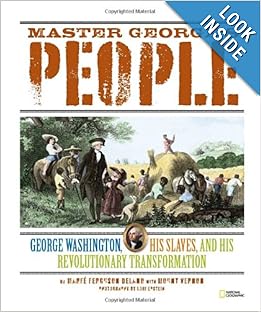
Next comes an entirely different take on George from Marfe Ferguson Delano. Her book, Master George's People, tells the story of George's slaves at Mount Vernon, and she has collaborated with a photographer who shot pictures of reenactors on the scene. 


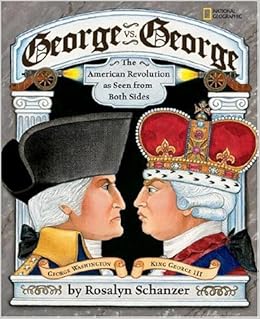
And this one is  (ahem) my version. George vs. George: The American Revolution as Seen from Both Sides shows how there are two sides to every story.  I got to meet George Washington and King George III and paint their pictures myself.
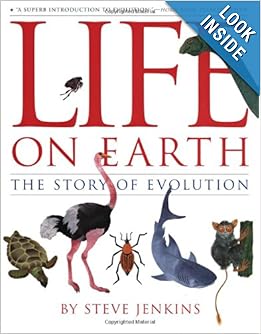
OK, on to the second set.  In one way or another, the next 3 books are all based upon Charles Darwin and his Theory of Evolution. Let's start with Steve Jenkins' handsome book Life on Earth: The Story of Evolution.  With a nod to Darwin, Steve has created a series of stunning collages along with fairly minimal text in order to focus on the history of all the plants and animals on the planet. 
And here's yet another nod to Deb Heiligman for her celebrated true tale of romance between two folks with opposite views of the world. Despite Emma's firm belief in the Bible's version of life on earth, she and Charles enjoy a warm and loving marriage.
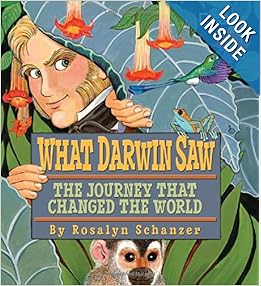
Mine again. What Darwin Saw: The Journey that Changed the World, tells about Darwin's great adventures as a young guy while traveling around the world. We're on board In this colorful graphic novel as he picks up the clues that lead to his Theory of Evolution and then does the experiments that prove it.
And here's series number 3.  Apparently these authors and illustrators were hard at work at the very same time on three very different picture books about the very same person; her name is Wangari Maathai, and she won the Nobel Peace Prize for bringing Kenya's trees back to life after most of them had disappeared. 

The artwork in all three books is outstanding, and each version is truly unique. The writing styles vary enormously too. I strongly recommend that you look at them side by side to prove that there's more than one way to skin a cat.  

Planting the Trees of Kenya was written and illustrated by Claire A. Nivola.


Wangari's Trees of Peace was written and illustrated by Jeanette Winter. 
And Mama Miti was written by Donna Jo Napoli and illustrated by Kadir Nelson.  
I'd bet anything that these folks didn't know they were creating books about the same person until all 3 versions were finally published....writing and illustrating books is a solo occupation if there ever was one. 

OK, that's it--though we could easily go on and on.  Here's hoping that if any kids examine a whole series of books on the same topic written and illustrated in such different ways, they can come up with some unique new versions of their own....and have some fun at the same time. 

Tuesday, February 4, 2014

STRANGER THAN FICTION


OK history buffs (or non-history buffs) - which of the following wild assertions just so happen to be true and which ones are false? Since I have to write about this stuff all the time, I actually know the answers and don’t have to look them up.  See how many you already know….TRUE OR FALSE: 
   
1) Ben Franklin invented the fan chair, which was a rocking chair with a fan on top to blow away flies.

2)  Ben invented a musical instrument that caused dogs to run away and hide and also made people think there were ghosts in their room.

3)  Pocahontas was bald.

4)  She taught her boyfriend, John Smith, how to smoke tobacco.

5)  Before being captured and enslaved, John Smith won a Turkish fortress by making a bunch of explosives and catapulting them into the Turks’ camp while they slept.

6)  George Washington always wore a white wig in public, even as a child.

7)  George Washington chopped down a cherry tree, and when his dad asked him about it, he said “I cannot tell a lie, pa.  I did it with my little ax.”

8)  George Washington had scars on his face from a duel.

9)  During the California Gold Rush, a single piece of paper cost $150 but you could get 12 shirts washed and ironed at the Chinese Laundry for $3.

10) During this gold rush, cooks regularly checked chicken gizzards for small gold nuggets.

11)  Frenzied gold seekers from 37 different countries rushed lickety-split straight toward California to seek their fortunes.

12)  Cowboys traveling on The Old Chisholm Trail used to cross the muddy rivers by running on their cows backs.

13)  The trail was finally closed by barbed wire.

14)  Charles Darwin and Abraham Lincoln were born on the very same day just a few hours apart, and they didn’t always get along with their dads.

15)  When Charles Darwin journeyed around the world by ship, he caught a giant octopus and sent it back to England for scientists to study.

16)   Charles Darwin used to ride on horseback with a wild Gaucho cavalry, ride on the backs of gigantic tortoises, and ride in a box on the back of an elephant in true Indian fashion. 
  
17)  In Salem Massachusetts, some people made medicine by combining boiled snippets of children’s hair, spirits of mummies, and the brains of young men who had died a violent death.

18)  During the Salem Witch Trials, nineteen people were burned for the crime of witchcraft.

19) During this time, people of all ages were accused of turning into a ball of light the size of a bushel basket, choking a woman with nails and eggs, stupefying a boy for 12 years, making a wagon plump down into a hole on flat ground, and killing victims with their evil “eye beams.” (A ghost said so.)

AND THE ANSWERS ARE:

1)  False, but he did have such a chair inside his house.

2)  True.  It was called the glass armonica, and before it went out of style for hurting dogs' ears and sounding spooky during seances, it was so popular that Mozart and Beethoven wrote music for it.

 3)   True.  Pre-pubescent Powhatan Indian girls shaved the tops of their heads, and Pocahontas was between 10 and 12 years old.

4)  False.  Of course she was way too young to be John Smith's girlfriend, and besides, he thought smoking tobacco was disgusting.

5)  True, all true.  He was also great at making fireworks.

6) False.  George hated wigs even though they were in style.  If he absolutely had to, he would powder his hair instead.

7)  False.  Parson Mason Locke Weems made up that fake story to get kids to tell the truth like their hero.  Oh, the irony.

8)  False.  The scars were from smallpox.

9)  All true.

10) True again. One time a chicken gizzard panned out at $12.80

11)  False.  They came from more than 70 countries and set off one of the greatest mass migrations in history.

12)  Yup, that's true.  Those guys had talent.

13)  True.  Barbed wire smarts if you're a traveling cow.

14)  True. Their dads didn't seem to think they'd amount to much.

15)  False, false, false.  He did uncover plenty of humongous fossilized bones from extinct giant animals though.

16)  True.  Darwin perched these various backs in Argentina, the Galapagos, and the Isle of Mauritius.  

17)True.  Guilty as charged.

18)  False.  They were hanged, not burned.  A 19th guy was pressed to death by stones.

19)  True.  People really did tell all of these bald-faced lies in court.  AND THERE ARE NO WITCHES!!!

Didn't I tell you truth is stranger than fiction?  So how did you do? Feel free to try this on your students, friends, and enemies, and if they get all the answers right I will send them a lollipop.  (False.)


Thursday, January 23, 2014

Happy TENTH Anniversary to the Mars rover Opportunity!

On July 7, 2003, tucked into a Delta 2 rocket, the rover Opportunity blasted into space headed to Mars.
On January 24, 2004 PST (Jan. 25 Universal Time), the rover was dropped onto the surface of Mars wrapped in airbags, where it bounced 26 times before coming to rest in a crater.  This little rover, about the size of golf cart, was designed for the three-month mission to find signs of past water on Mars. 

Tomorrow marks the 10-year anniversary of Opportunity’s mission on Mars. TEN YEARS!!! HURRAH! WHOOT WHOOT! I MEAN, CAN YOU BELIEVE IT PEOPLE??? TEN YEARS!!! It was a three-month mission and this little robot, which was not designed to survive even one Martian winter, is STILL EXPLORING MARS TEN YEARS LATER! It is a miracle. This is perhaps the most successful space mission EVER!

I don’t get to write like this, in all caps and with multiple exclamation points, in my books for children, but this is how I feel about this mission and this rover. I am astounded. I am in awe. I cannot believe that a dream and the work of a bunch of scientists and engineers have given us a ten- year tour of another planet.

Opportunity was designed to only travel on flat terrain but has explored crater after crater after crater and is currently climbing the tallest hill of its mission. This is where Opportunity has traveled so far:
 
Opportunity is currently exploring the rim of Endeavour Crater, near an outcrop that may contain clay laid down in a watery past. Signs of past water have been found before, but evidence suggests that unlike the battery-acid-like water present on other parts of the planet, the water here may have been neutral enough to have once sustained life.  LIFE!

I hope you can find a little time to celebrate the incredible success of this mission, especially with your children and students. You can:

Watch a live broadcast from the Jet Propulsion Laboratory today Thursday, Jan. 23, 11 a.m. PST (2 p.m. EST) which will include appearances of two of the heroes from my book The Mighty Mars Rovers, Steve Squyres and John Callas. (Webcast live at http://ustream.tv/NASAJPL and on NASA TV streaming at http://www.nasa.gov/nasatv.)

See Space.com’s slide show of the top ten discoveries from Spirit and Opportunity’s mission.

Enjoy these stunning photos from a decade of exploration.

Check out a slideshow about why the rover lasted so long, at NASA’s 10-year anniversary page. 


Read the story of girl who was in eighth grade when Opportunity landed on Mars and is now an engineer on the mission.

Teachers, there is so much this mission offers to inspire your students. As the mission continues to unfold, Opportunity gives you an incredible opportunity to connect reading, writing, science, history, news, books, videos, and primary source material easily available on the internet. A teachers’ guide to my book The Mighty Mars Rovers offers discussion questions, hands-on activities, and resources. You can also find good ideas in two Common Core guides, one short  and one long.

When I started writing The Mighty Mars Rovers, my husband bought me a little scale model rover to keep on my desk as inspiration. But my model kept falling off my desk and breaking.
Perhaps my desk is a more hazardous place than Mars. 

Or perhaps we humans are capable of much more than we can even imagine.

Long live Opportunity!

Elizabeth Rusch


Images courtesy of NASA/JPL, except for the last one, which I took myself.

Tuesday, December 3, 2013

Eruptions Rock the Globe…Again and Again and Again

Science is an on-going story, an on-going quest. That’s a theme that I explore in all my science books.  But the Earth itself has been making the point for me since the release of my book Eruption! Volcanoes and the Science of Saving Lives
Mount Pinatubo erupts in 1991.
Eruption! tells the story of a small group of volcanologists who help locals predict dangerous volcanic activity so officials can get people out of harm’s way. The eruptions I describe in Colombia, the Philippines, and Mount Merapi in Indonesia are dramatic and might seem extreme but they are far from it.  Since Eruption! came out in June, volcanoes have been erupting all across the globe, testing scientists and endangering lives. Here is a sampling:

In July, 200 people were evacuated when Ecuador’s Tungurahua volcano shot a plume of hot ash, gas and rocks eight miles into the sky.

In the same month, residents of Mexico City woke to find a layer of volcanic ash spread across town from Popocatepetl. Residents were warned to cover water supplies, use face masks and stay indoors. The volcano has been emitting steam and gas intermittently ever since.

Colima, in Western Mexico, experienced some lava flows in July, but in November, activity has ramped up. On November 22, the volcano began exploding every half hour with plumes reaching almost a mile into the sky.

In August, Japan’s Mount Sakurajima shot an ash plume three miles high over the city of Kagoshima (population 600,000), darkening the sky and forcing locals to employ umbrellas, raincoats, and masks to shield themselves from falling debris.

Also in August, nearly 3,000 people were evacuated from Palue Island when Mount Rokatenda in Indonesia erupted, spewing plumes of white and gray smoke and ash. Five people were killed in the evacuation zone when red-hot ash seared a beach.

Mount Merapi, which I cover extensively in the book, has been keeping VDAP and their colleagues busy. In September a volcano observer noted hot glowing material and a hissing sound at the crater. Then on November 18, the volcano rumbled and shot ash and gases more than a mile in the air, which poured down on villages as far as 18 miles away. The volcano shot steam on Sunday Dec 1, but scientist are particularly worried about the recent growth of a large crack in the lava dome, which raises the risk that the dome could collapse, causing an avalanche or dangerous flow of searing hot ash and gases called a pyroclastic flow.

Mount Merapi erupts in 2010.
 Another volcano in Indonesia has been even more threatening.  In September a flurry of eruptions at Mount Sinabung chased 10,000 people from their homes. The volcano settled down for a little while and people returned to their villages.  But Sinabung is back at it again, with strong explosions in early November gaining intensity in mid- November. The volcano erupted eight times on November 24 and more than 18,000 people have been evacuated from a 3-mile radius around the volcano. Though the volcano has thrown coin-sized volcanic rocks, some residents have been returning to their farms from evacuation shelters during the day to check on livestock.

The story of the human quest to understand volcanoes and protect ourselves from them continues.  To me, this means that teachers across the country have many opportunities to share this on-going quest with students. When a volcanic eruption is in the news, teachers could share Eruption! with students so they can learn more about the geologic processes behind the activity and the exciting science done in the field to better understand volcanoes and protect people from their dangerous power. Likewise, after students have read the book, teachers can connect students to recent eruptions. Since the Common Core asks students to look at topics across a variety of media, teacher could send students to these amazing websites:

Earthweek (http://www.earthweek.com/volccat.php), which has a page dedicated to current volcanic eruptions.

Volcano Discovery (http://www.volcanodiscovery.com/volcanoes.html) where students can see a map of recent eruptions, a log of recent volcanic activity around the world, thorough descriptions of ongoing eruptions, and even webcams at active volcanoes.

Smithsonian’s Global Volcanism Program (http://www.volcano.si.edu/) gives weekly updates of volcanic activity around the world and an amazing searchable database of recent and historic eruptions.

Teachers could even ask students to use their research on an active volcano to write another exciting chapter of Eruption! After all, science is an on-going story. By no means do I have the last word.


Elizabeth Rusch

Teaching resources for Eruption!, including a half-page Common Core guide, are available at: http://elizabethrusch.com/ForYou/ForTeachers.aspx

Friday, September 13, 2013

Life Changing Nonfiction...Literally

As other I.N.K. authors have mentioned, there wasn't a great deal of engaging nonfiction for kids in the not-so-distant past. So, we made do. Personally, I gave up on the official children's area of the public library at 8 or 9 and remember wondering if someone would stop me if I dared to enter the adult section. Nobody did, so for years I headed straight for the 636 shelves where all the animal books lived and branched out from there.

Sometime in the early 70s, these books appeared on the big shelf in our family room:
Until seeing this picture, I had forgotten the rainbow-like arrangement you could make with the binding colors of the LIFE Nature Library. There were 25 volumes in all—a few are missing from this photo. One of the great things about this type of collection is the serendipity...it was like browsing in the library but on a smaller scale. It was comprehensive, covering animal behavior, the poles, the insects, evolution, plants, even the universe!

Confession: I didn't read every word. There were many pages with a high text to image ratio, which has never been my favorite approach for this kind of material. Spare me the endless prose…just give me plenty of pictures, you know? Speaking of which, here are some relevant images:
Anyway, time and time again I examined every photograph, drawing, and diagram and read the captions as well as a fair amount of the pontification, ummm, long paragraphs. Despite that complaint, the books provided a remarkable breadth of knowledge of the natural world as did our subscription to National Geographic. The photographs from all over the globe inspired many a drawing by providing exotic models that were otherwise unavailable in suburbia in those pre-Internet times. Want to draw an ocelot or an orchid or a young Tuareg girl in the Sahara desert? No problem!

To zoom up to the present day, I'm still intrigued by anything to do with nature, past or present. The other night we watched The Hunter, a fictional tale about the last Thylacine (aka the Tasmanian tiger/wolf, actually a carnivorous marsupial). In reading more online about the animal afterwards, I came across this photographic comparison of Thylacine and wolf skulls that show a remarkable example of convergent evolution.
The last known Thylacine, Benjamin, c. 1933
Like many of us these days, I do more and more of my knowledge rummaging online, but of course it isn't necessarily very well-organized or presented. Guess that's where authors come in (whew!) Since we're talking about life-changing nonfiction, why not highlight a few books about how life has changed over the eons? In a previous post I made a list of mostly reference books about prehistoric life, from short and sweet to comprehensive in scope.

The newest book in Hannah Bonner's prehistory series is about the Triassic period when dinosaurs first emerged along with the first mammals. When Dinos Dawned, Mammals Got Munched, and Pterosaurs Took Flight: A Cartoon Prehistory of Life in the Triassic looks just as fun as her previous two books. In addition to the fascinating animals, she includes many prehistoric plants as well as liberal doses of humor. As a former Mad Magazine junkie, I love a helping of humor and/or satire stirred into my information soup. Her books are great for ages 8-12 (and older, if you ask me) and are published by National Geographic.
Nat Geo is also the publisher of the Little Kids First Big Book of Dinosaurs, written by Catherine D. Hughes and illustrated by Franco Tempesta. The image shown is not the cover, but I love that little microraptor gliding by. It has a gazillion facts, dino descriptions, fun questions, baby dinos, easy-to-comprehend pronunciations, tips for parents, and outstanding realistic artwork that transports the reader back in time. It is 128 pages and is for ages 4-8.

And one of mine is My Teacher is a Dinosaur and Other Prehistoric Poems, Jokes, Riddles, & Amazing Facts. It gives an overview the history of life in 48 pages, starting from the time when Earth was still molten. There are quite a few dinosaurs, but many, many other fabulous creatures including a few humans. 

In terms of approach it has some of the elements in common with the two books above...plenty of facts, humor, realistic artwork, and pronunciations of those jaw-breaking names...and also limericks, verses, and silly jokes. Several excerpts are shown in this post on my book blog. The age level is 8 and up.

Click image to go to download page
A printable teaching resource with three activities for my book can be downloaded at this link or click the image to the left.

I don't know of any modern equivalent of the LIFE Nature Library with its expansive coverage inside those matching volumes. Most of us compile our libraries piecemeal, which seems to work just fine. In any case, how information is organized and presented is important because different approaches will engage different readers. The prehistoric parallel is that wherever there is rich content for readers, an opportunity may arise to evolve in a new direction.