Showing posts with label Kelly Fineman. Show all posts

Wednesday, January 11, 2012

Real Revision

Tanya Lee Stone. Susan Goodman. Jim Murphy. Kelly Fineman. You know these folks. They’re regular contributors to this blog.

They’re also four of the thirty or so authors featured in Real Revision by award-winning children’s book author Kate Messner. The book is such a gem that you’ll definitely want your very own copy.

Real Revision is published by Stenhouse Publisher, which caters to educators, so this book is written specifically for teachers. That makes it great for all you educators out there. But I know plenty of writers also read this blog. This book is a MUST READ for you, too.

Some chapters focus on fiction-specific revision strategies, but the lion share of the book is useful to nonfiction writers as well. Here are few of my favorite quotations from nonfiction writers.

Kelly Fineman on why she takes time away from a manuscript between writing the rough draft and delving into the revisions:

“It could be as little as half an hour or as long as a year, but I need to have established some sort of distance from it in order to read it at least somewhat objectively and not like a doting author.”

Loree Griffin Burns on the importance of reading widely and carefully considering the structure of nonfiction writing:

“I pay close attention to the structure of the books I am reading all the time, and I compare and contrast them to the structure I’m working with. This is always helpful to me because it gives me confidence . . .or in some cases, helps me see why my own structure is not working.”

Susan Goodman on striking the right balance between sharing information and engaging readers while writing Life on the Ice:

“. . . I was trying to fit in so many facts that I had lost sight of what my book was all about—the excitement on exploration . . . So I sat down at my computer with an imaginary nine-year-old kid beside me. And I simply told that kid an adventure story—one where scientists were the explorers.”

Jim Murphy on finding the proper voice and storytelling technique for his Newbery Honor book The Great Fire.

“I read newspapers and personal recollections of the Chicago fire until I had absorbed the pace and language of the era. . . . I didn’t try to duplicate voices from the past, but I knew I had a faint echo of them in my style.”

Tanya Lee Stone on the importance of sensory details:

“. . . if I interview someone, I will note very specific things about the way they speak, move, dress, smell, etc. These details come in handy when writing a scene that needs to capture the real essence of a person.”

And these great bits or advice are just the tip of the iceberg. Trust me. This is a book you won’t want to miss.

Monday, March 29, 2010

African Acrostics by Avis Harley, photos by Deborah Noyes

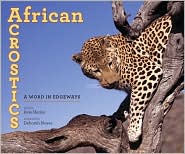
I am fortunate to serve as the poetry coordinator for the CYBILS awards, and in 2009 I was doubly fortunate because I was also on the nominating panel. This meant I got to read all of the eligible books that were nominated in the poetry category. Among my favorites was a wonderful book by poet Avis Harley, which was "illustrated" with wildlife photographs taken by Deborah Noyes, entitled AFRICAN ACROSTICS: A Word in Edgeways.

In addition to providing spectacular photographs of African wildlife including elephants, hippos, crocodiles, giraffes, zebras, impalas and more, the poems include factual information about the animals, all in the form of acrostic poems - a form known by many teachers and children, and one that usually results in rather simplistic poems. Not so with Harley's work - she takes acrostics to a whole new level of clever.

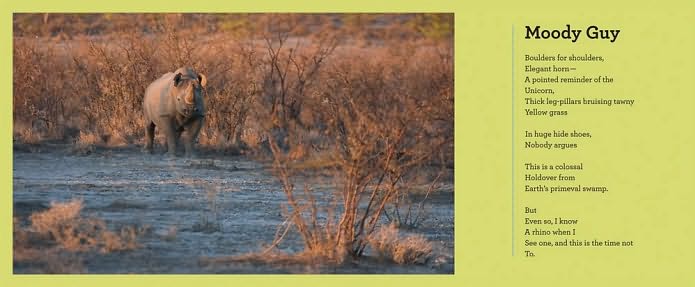
To write an acrostic, you take a word (or phrase) and write it down the left-hand side of the page, then you start each line with the applicable letter. In the case of the poem entitled "A Croc Acrostic", the acrostic is the name of the profiled animal: "CROCODILE". Harley, however, got creative with other animals. The poem about the rhinoceros is not a 10-line poem based on the animal's name. Rather, it is a 16-line poem based on the acrostic "BEAUTY IN THE BEAST".


Interior spread showing the rhinoceros photo

The accompanying poem:

Moody Guy
by Avis Harley

Boulders for shoulders,
Elegant horn --
A pointed reminder of the
Unicorn,
Thick leg-pillars bruising tawny
Yellow grass

In huge hide shoes,
Nobody argues

This is a colossal
Holdover from
Earth's primeval swamp.

But
Even so, I know
A rhino when I
See one, and this is the time not
To.
The book includes fabulous back matter, including an explanation of what an acrostic is and how to write one as well as short, factual paragraphs on each of the species profiled in the book. A must-have for libraries, poetry lovers, and animal lovers - particularly those interested in the wildlife of Africa.

Friday, August 21, 2009

A Pair of Swimming-Related Picture Books

When I was at my (relatively) local independent children's book store earlier this summer, I purchased the two picture books that I'm discussing today. I picked them both up for their cover art, but once I had a look inside, I couldn't help noticing their linked premise (at least in one important respect), and I had to have them to pair them up for you. Particularly when it's still so hot in much of the Northern Hemisphere and there's still swimming to be done.
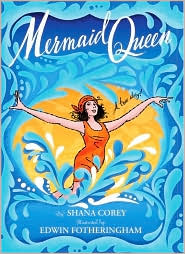
First up is Mermaid Queen: The Spectacular True Story of Annette Kellerman, Who Swam Her Way to Fame, Fortune & Swimsuit History! by Shana Corey, illustrated by Edwin Fotheringham. I'll start with the cover, since that's what had me snatching this up in the first place. The colors are even better than they appear online. The lettering is white, and embossed in very shiny text, and the image of Annette Kellerman is similarly embossed on the cover, as are the whit parts of the waves, which adds both a fun feel and way more "pop" to the cover than is conveyed by pixels. Oh pixels, why do you let us down so?

Annette Kellerman was born in Australia to parents who were music teachers, and who had a house full of music and dance students. Annette wanted to dance, but alas, she had a health condition that affected her legs and caused her to wear heavy braces. A doctor recommended that she swim in order to strengthen them, and it worked. Annette felt graceful in the water. In addition to swimming laps and racing, she "whirled and twirled. She dipped and danced and dived." In point of fact, she invented water ballet.


Annette became a performer, leaving Australia for England to display her prowess, where she couldn't get booked at first because she was a woman. Stunts like swimming in the Thames and trying to swim across the Channel to France got her noticed. She was invited to perform for Royalty at the Bath Club, and Annette "the Mermaid Queen" rapidly became popular throughout Europe.


Her fame spread, and Annette was invited to swim in Boston. Annette turned up in her swim gear that showed her legs only to find that American women bathers were still wearing what amounted to full clothing. (I have a tintype of my great-great-grandparents and their friends in swim wear, and I can assure you that the men look very handsome in their striped sleeveless unitards and the women look overdressed in frilly bathing dresses, bloomers, stockings, shoes and hats.)


Annette was arrested for wearing her more form-fitting bathing suit (that showed her legs, no less). I wish that spread were available online: Fotheringham has cleverly done it as if the artist were out in the water, watching Annette enter. The background is therefore in the shades of orange that are on Annette's suit and around her on the cover, and her suit is two-toned blue like the cover's background. It's all completely made of awesome. But I digress. Annette managed to persuade the judge that attempting to swim in all the many layers of clothing women were wearing at the time was not only difficult, but also potentially dangerous, and she was allowed to proceed. Eventually, other American women followed suit and began wearing swimgear that more resembled Annette's kit.

In addition to a wonderfully understandable account of Annette's story, there's a three-page Author's Note at the end that more fully recounts Annette Kellerman's story as well as explaining why Shana Corey was so drawn to write about her in the first place. "What drew me most to Annette, though, wasn't that she succeeded at so many things - but that she didn't always succeed. Still, she was brave and determined enough to keep trying, even when the rest of the world was telling her not to. To me, that sort of conviction - the courage to believe in yourself even when others doubt you - is one of the most difficult and bravest things of all." Preach it, Shana! Can I get a "you go, girl"?

The Acknowledgments at the back of the book double as a bibliography as well, including as it does the names of researchers and biographers on whose work Corey relied, and listing the sources of specific quotes found throughout the book (including newspapers and other sources).
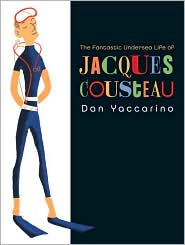
Next up is The Fantastic Undersea Life of Jacques Cousteau by Dan Yaccarino. Again, it was the cover that had me snatching this up in the first instance. I wish I were better able to explain what it is about the art that appeals to me, but alas, I shall just have to wing it, never having learned the proper terms, really. I liked the black and white bits, of course, but it was the style of the image of Cousteau and the colors and jumbled style of the letters that made this cover pop for me.

Yaccarino begins Cousteau's story with a two-page spread showing the adult Cousteau scuba diving over a coral reef. Boy, do I wish I could find that image online for you so you could see how the light plays in that image, but alas I cannot. The text reads "Jacques Cousteau loved the sea. He spent his whole life exploring it. The ocean was the most incredible place he'd ever seen, and he wanted to shar its beauty with the world." Also included in the spread is a small round sidebar (sidecircle?) that includes this lovely quote from Cousteau himself: "The sea, once it casts its spell, holds one in its net of wonder forever." Dear Mr. Yaccarino: You had me at this two-page spread. *swoon*

Cousteau, as it turned out, was weak and sickly as a child, and was encouraged by doctors to swim in order to build up his strength. Like Annette Kellerman, he discovered an affinity for the water. Cousteau also tinkered with machinery and cameras. As a young man, Cousteau was injured in a car accident, and told he'd need arm braces. He returned to the water of the Mediterranean for rehabilitation, and a pair of goggles from a friend changed his life forever.

Wanting to stay under water longer (and to be unconfined by the heavy diving suits of his day), Cousteau and his friend Emile Gagnan invented the Aqua Lung to allow a diver to stay underwater and have some freedom of movement.


In addition to working to develop the Aqua Lung, Cousteau also made advances in underwater lighting and cameras to allow filming below the water's surface. Says another Cousteau quote circle, "It fascinated me to do something that seemed impossible." The following image from Dan Yaccarino's website is NOT in the book, but is similar in coloring and technique to what's there:


Cousteau bought his boat, the Calypso, and sailed the sea engaged in research and filming. He shot The Silent World, the first full-length, full-color underwater film ever made. To obtain still better diving ability, Cousteau and his team invented the Diving Saucer and the Sea Flea, mini-subs that allowed one or two men to go still deeper below the ocean's surface to learn more about the sea. He explored the waters of Antarctica (about that continent, he said "May this continent, the last explored by humankind, be the first one to be spared by humankind.")

Cousteau invented underwater labs, wondering if people could actually live underwater, but he found that it wasn't practicable. Mention is made of his books, films, and his TV series (which I remember watching as a kid), The Undersea World of Jacques Cousteau. In addition to being the oceans' ambassador, Cousteau became an ecological crusader. He founded the Cousteau Society, which has educational and ecological aims. Again, the following image is NOT in the book, but is similar in style to what's there:


At the end of the book is an annotated timeline presenting important events in Cousteau's life as well as a selected bibliography.

Both books present colorful, eye-popping illustrations that ground the reader in the story (sorry for the landlocked reference, but really, despite being watery tales, the reader is never cut adrift by the text or illustrations in these two books). The images enhance and add to the texts, both of which relate their stories in terms that will appeal to child readers. Both books tell the story of pioneers - Annette being a pioneer for women's rights, Cousteau for sea exploration. Both tell the story of children who overcame physical limitations through swimming, who invented new things (the sport of water ballet in one case, and a host of machines in the other) to allow for greater appreciation of the water. And both tell the story of people who were devoted to the idea of education and of shaking off limitations.

As you can probably guess from my purchase and my review, I can't pick just one. And neither should you. I hope you'll seek them both out for their inspirational stories and their excellent artwork. You won't regret it.

Thursday, February 5, 2009

Animals Charles Darwin Saw

Scientists in Colombia have been very busy. One group has recently identified 10 new species of living amphibians, nine kinds of frogs plus one type of salamander, and another group has discovered the skeletal remains of a ginormous snake, so large that it could easily have swallowed something as large as a cow. The snake, Titanoboa cerrejonensis was between 42 and 45 feet long, and weighed more than a ton.

The scientists making news today for their discoveries of species in South America (both living and extinct) are following in the shoes of Charles Darwin, who is featured in a number of children's books this year because 2009 marks the 200th anniversary of his birth in 1809. Back on January 19th, Kathleen Krull talked about One Beetle Too Many: The Extraordinary Adventures of Charles Darwin by Kathryn Lasky, illustrated by Matthew Trueman. Later this month, author/illustrator Rosalyn Schanzer will be posting here at I.N.K., and I can only hope she'll be talking about her new book, What Darwin Saw: The Journey That Changed the World, which incorporates information from Darwin's journals.

But today, I'm talking about Animals Charles Darwin Saw: An Around-the-World Adventure by Sandra Markle, illustrated by Zina Saunders. The book provides a full biography of Charles Darwin's life, with particular focus on his travels and collecting activities while traveling aboard the Beagle, and with his development of what has become known as the theory of evolution (which did not, incidentally, include any reference whatsoever to the evolution of humans).

Want to see one of the two-page spreads so you can be completely wowed by the artwork? I'll bet you do, so here's one:


Each two-page spread contains amazing images, a decent chunk of text, and a text box that includes an interesting detail or bit of trivia.

The book explains what Darwin studied, how he got interested in science, and what his duties aboard the Beagle entailed. When he was in South America, he discovered ancient skeletons of extinct species, which caused him to question what he'd been taught: that animals were created as is, and always had been that way. Later, in the Galapagos Islands, he noted similarities and differences in species of birds, lizards, and tortoises living on various islands. He eventually concluded that the various species had adapted to suit their specific habitat, thereby laying the foundation for his later theories.


The book includes useful tools including a note to parents and teachers, a table of contents, a map of the Beagle's voyage, a glossary, a list of additional resources, and a handy dandy index. In short, it's a teacher's dream, and makes using the book as a source super-easy.

Thursday, December 4, 2008

Holiday Shopping Recommendations

As I posted on my own blog last week, this year I'm mostly buying books for the holidays. And I got to thinking about some of my favorite nonfiction offerings this year. Not that these are the only nonfiction books out there, naturally, but here are some that I found to be knockouts:

For the youngest readers

Swing! by Rufus Butler Seder. I'm counting this one as nonfiction because it accurately depicts the actions taken in a variety of sports. I give this book the highest sort of recommendation: Within hours of its arrival in my house, it was gone, sent off into the world with my children's brother-from-another-mother, who is nearly four. B was willing to hand off his Thomas the Tank Engine trains in order to carry the book, which he has since spent lots of time happily looking through, watching as the player hits a ball and the ball comes right at you, or as the skater pirouettes upon the ice, or the boy shoots a foul-line throw. High praise indeed. This one is a line-blurrer, since it's really for kids older than the baby set. Great for toddlers and the preschool set, as well as young school students.
Attention sports fans

We Are the Ship: The Story of Negro League Baseball by Kadir Nelson. Award-winning illustrator Kadir Nelson proves that he's equally talented as an author. A must-read for anyone with an interest in the history of America's favorite pastime or in the Civil Rights movement, since the book focuses on what the Negro Leagues were, and what it felt like to be a part of them, including being the brunt of name-calling and being subjected to the thousand cuts of segregation (not all of them being small cuts, by the way). For those interested, Nelson offers signed copies of his book on his website at list price, and "remarqué" copies for $100, which feature both a signature and an original piece of artwork.

Civil War/Lincoln buffs

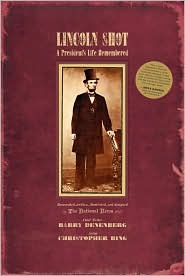
Lincoln Shot: A President's Life Remembered by Barry Denenberg, illustrated by Christopher Bing.
If you're going to buy one new children's book about Abraham Lincoln this year, this is the one to buy. Be prepared to make space for, it, though, because this book is TALL, measuring a foot wide by 18" high. It contains 40 pages, conceived as a newspaper representing the one-year anniversary of Lincoln's assassination and the search for and capture of the assassins, this book looks and feels like nothing you've seen, and will grab and hold your attention start to finish. Wanna see an inside page? Cool, yes?

Recommended for anyone over the age of 8 or so with an interest in American History, particularly the Presidency, the Civil War and/or Abraham Lincoln.


Books for those interested in the Revolutionary War and/or feminism

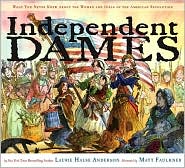
Independent Dames: What You Never Knew About the Women and Girls of the American Revolution by Laurie Halse Anderson, illustrated by Matt Faulkner. My full review can be found elsewhere, but in short, here's what I liked about this history book: All told, 89 women and girls are profiled in the book, including African American and Native American women who fought for the Patriot's cause, whether in word or deed, as well as devoting a bit of attention to the Loyalists as well. This book contains a tremendous amount of information, and it has quite a bit going on in it, but the genius of its set-up is that it never feels heavy or pedantic.

Books for a good cause

Our White House: Looking In, Looking Out is the creation of the National Children's Book and Literary Alliance (NCBLA), and contains contributions by 108 children's writers and illustrators, along with content from a bunch of other folks, including Robert Kennedy's comments following the death of Dr. Martin Luther King, Jr., an essay by Lynda Bird Johnson about her bedroom in the White House, and words from a number of presidents, including Jimmy Carter and George H.W. Bush. Pretty much my only criticism of the book has to do with the failure to include these other folks in the headcount on the front of this wonderful book, which relates the history and stories of the White House.
Wednesday, October 8, 2008

Nikki Giovanni and Laura Godwin on nonfiction

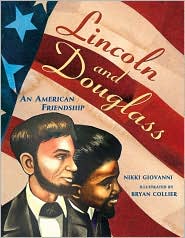
On September 17th, I had the great good fortune to sit down for a telephone interview with award-winning poet and author, Nikki Giovanni, and her editor at Henry Holt, Laura Godwin. Nikki and Laura's most recent collaboration is Lincoln and Douglass: An American Friendship, illustrated by Bryan Collier, which goes on sale this month. We talked about their new book, as well as about the state of nonfiction and poetry in today's market.

Lincoln and Douglass tells a story about the relationship between two men widely credited with abolishing slavery in the United States: President Abraham Lincoln, who was president during the Civil War and eventually signed the Emancipation Proclamation, and Frederick Douglass, a former slave who lobbied tirelessly for an end to slavery and equal rights for people of color. (Side note not found in the book: he was also a supporter of women's suffrage, who attended the first feminist convention in Seneca Falls, New York, and signed onto the Declaration of Sentiments.)
One of the first questions I asked is where the idea of writing about the relationship between the two men came from, as opposed to doing a biography of either individual. Nikki answered that Laura initiated the idea for this project. Showing the importance of timeliness with books, Laura noted the impetus for this project. "I knew there would be a lot of books out for the bicentennial of Lincoln's birth [in February 2009], and I thought it would be interesting to have a book out that wasn't a straight-up biography. I knew Nikki would come up with something great."

The book includes biographical information about Douglass and Lincoln, as well as their relationships with the abolitionist movement, and includes profiles of John Brown and Mary Ellen "Mammy" Pleasant, both of whom were involved directly or indirectly with the raid on the armory at Harper's Ferry. Nikki noted that "the abolitionist movement was really big and it did have breadth, and that's why Mammy Pleasant and John Brown," adding that "Mammy is a forgotten figure of history." As Nikki related, both in person and in the book, Mammy Pleasant is an interesting character who escaped slavery in Maryland and went west to San Francisco, earning a living by doing laundry and running a boarding house. That said, Nikki indicated that she never considered a separate book for either Mammy Pleasant or John Brown.

Her decision to talk about the relationship between Lincoln and Douglass was based on stories she'd learned about the relationship between the two men. Quoting Professor Anna Arnold Hedgeman, an African-American civil rights leader, politician, educator and writer from memory, Nikki said, "The problem with the Lincoln memorial is that they need to have a statue of Frederick Douglass standing there looking over his shoulder."

When I asked whether Nikki and Laura have another biographical project in the works, they indicated that they don't – yet. However, Laura said most enthusiastically that she would love to do another biography with Nikki. In particular, Laura thinks "the way she's able to make connections and focus on an event makes the whole time period make sense."

Nikki talked about her interest in historically-based projects. Although she is currently a professor of English at Virginia Tech and has won several awards for poetry, Nikki said, "I'm a history major. . . . I learned poetry very independently." When I asked Nikki and Laura whether they felt that poetry was a useful form in which to discuss nonfiction subjects (with specific reference to biographies such as The Poet Slave of Cuba by Margarita Engle, Twelve Rounds to Glory: The Story of Muhammad Ali by Charles R. Smith, Jr., A Wreath for Emmitt Till by Marilyn Nelson and the works of Carole Boston Weatherford, I found that neither of them felt that nonfiction poetry texts were new, and that both of them felt that they can work well. Laura said, "From my point of view, these sorts of things come and go. Sometimes a particular book catches the popular imagination, but I feel that it's always been around." Nikki implicitly agreed with that assessment. "I think it's wonderful. I'm a practitioner. I'm aware of what you're talking about, and I've read some. I've been writing prose poetry for years and I see it as the field catching up," she said.

"It's an easier first choice."

One question I had was whether nonfiction and poetry are both considered "other" in children's publishing. Laura answered, " I would have a hard time disagreeing [that it's other] – there's more fiction. It's an easier first choice." That said, Laura was of the opinion that nonfiction is still growing. "So many kids are naturally interested in the world around them. It's a natural part of the literature for kids. If you turn kids loose naturally, they're going to read some of each of these [, fiction and nonfiction]."

During our conversation about nonfiction, I asked about the importance of sources and fact-checking. Nikki agreed that it should be important: "When writing for children, you have to give them the information and it has to be correct." Nikki made clear that she shared the stories she herself had been told. In response to my question as to whether the facts were re-checked in-house, Laura said, "Nikki is coming from a vast store of knowledge. We don't hire her for her fact-checking skills. The book goes through copy-editing." For certain, the publisher documented that Douglass was at the second inaugural after the speech, and they checked to be certain that the venue was correct because the illustrator needed that information as well.

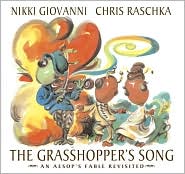
Near the conclusion of our interview, I asked Nikki some questions about her other new title, Hip Hop Speaks to Children, out last month from Sourcebooks Jabberwocky. You can read about that over at my blog, Writing and Ruminating. In addition, we talked about The Grasshopper's Song: An Aesop's Fable Revisited, illustrated by Chris Raschka, which was released this spring. In particular, I was curious as to whether Nikki was trying to make an argument about art, based on the grasshopper's decision to retain lawyers to sue for payment for his music during their summer work season. Nikki said that she grew up hearing Aesop's fables, and that her favorite part of the story was always where the grasshopper says "Am I not worthy of my bread?" Said Nikki, "When the lawyers ask the grasshopper, 'Was there a contract? Did they ask you to perform?' and later, when they say, 'Everybody loves a clown', they're representing the argument that art is just there because it tickles us." But according to Nikki, "art is an integral part of us." Nikki continued, "Every time they cut school budgets, they want to cut art. Art is part of what informs the ethics of the community."
To which we can all say, "Amen."

Wednesday, July 30, 2008

Whither poetry?

One of the things I've noticed during school visits at both the elementary and middle school level is that kids really respond to poetry. The most interesting thing about that? The kids who are the school's "problem" kids often pay the closest attention. They are able to follow long poems such as "Casey at the Bat" by Ernest Lawrence Thayer, and can sort out what's going on in poems with obscure (or nonsense) words in them, such as "Jabberwocky" by Lewis Carroll.

There's no reason that poetry has to be relegated to a one-week unit, assuming that the teacher has time to get to it. And this is because there are poems and poetry collections that fit extremely well into existing school curricula.

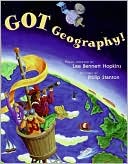
Studying geography? Try Got Geography!, edited by Lee Bennett Hopkins. Studying the planets? Don't miss Douglas Florians Comets, Stars, the Moon, and Mars. Studying explorers or pioneers? Try Trailblazers: Poems of Discovery by Bobbi Katz.
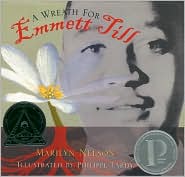
Studying Civil Rights? Try A Wreath for Emmett Till by Marilyn Nelson, Miss Crandall's School for Young Ladies and Little Misses of Color by Elizabeth Alexander and Marilyn Nelson, Birmingham 1963 by Carole Boston Weatherford.
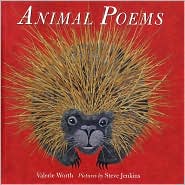
Studying animals and/or habitat? Try Valerie Worth's Animal Poems, illustrated by I.N.K. blogger Steve Jenkins, The Seldom Ever Shady Glades by Sue Van Wassenhove, If Not for the Cat by Jack Prelutsky, Vulture View by April Pulley Sayre (again illustrated by Steve Jenkins), Feathers by Eileen Spinelli or Mites to Mastodons by Maxine Kumin (or one of many more books on the topic).

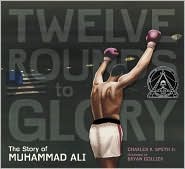
Interested in studying biographies? There's Twelve Rounds to Glory: The Story of Muhammad Ali by Charles R. Smith, Jr., Your Own, Sylvia: a verse portrait of Sylvia Plath by Stephanie Hemphill, The Poet Slave of Cuba: A Biography in Poems of Juan Francisco Manzano by Margarite Engle, or Jazz ABZ by Wynton Marsalis (biographies of jazz greats).
The point is that for nearly any area of study, a poetry collection can be found that relates to it. And it should be found, because kids who have a hard time sitting still for prose lectures pay attention really well to poems. I suspect it's because of the use of lots of imagery and active verbs, the rhythm and, when used, rhyme, that grabs and holds the attention of kids who don't or can't always listen to prose.

Thursday, May 29, 2008

Independent Dames writing nonfiction

I recently had the opportunity to read and review Independent Dames by Laurie Halse Anderson. It's a nonfiction picture book focusing on the contributions of women to the American Revolution. And since Laurie and I are both independent dames who write nonfiction, and I recently interviewed her, I thought I'd discuss some of what I learned from writing biography and from talking to Laurie Halse Anderson about it.

One thing that Laurie does (which works well, I think) is to use approachable language. In fact, the narrator of Independent Dames and Thank You, Sarah has a decidedly irreverent tone. And where other information is presented (as in the bio bubbles in Independent Dames, she provides only the interesting bits, in concise, approachable language.

Another thing Laurie does well is to create a sense of the times by describing not just the actions of a person in isolation, but some of the setting (time, place, and other events) that were taking place, so that a reader understands not just the contribution of a particular woman, but something about the times in which she was living (and whether her actions flouted convention).

The Research Bit

Research is a key component of writing nonfiction (or historical fiction). Getting the details right is an important part of establishing credibility. As Laurie said:

Historical accuracy is vital to my work. My manuscripts have all been reviewed by historians whose special expertise is the time periods or events covered by my story. Most of the characters in my novels are fictional, but they are as true to what people were like back then as possible. When “real” people wander across the pages of my books, like George Washington, they only do or say things that I can prove they did or said. Laurie Halse Anderson, interview with Kelly Fineman


When researching the life of Jane Austen, I read biographies by other people, Austen's novels, Juvenilia and letters, books of literary criticism, historical accounts of life in Georgian and Regency England, books about locations in England, and more. I have spreadsheets to keep track of what books and articles I've read, and notebooks full of copies of articles from periodicals and web pages. I have written notes, often typed and backed up, but always kept together so I can find what I need. Organization is crucial when it comes to research. And so is knowing when enough is enough.

What I do for my Austen project is not unlike what Laurie Halse Anderson does when researching for a historical novel or nonfiction project:

It helps that I read quickly and I am rather compulsive about organization. I read constantly, both popular books about the time periods I care about and specialized historical journals. I belong to a number of history-based listservs and take advantage of the expertise of others. Once I have the broad outline of what I want to accomplish in a book, I delve into academic libraries, looking for the writings of historians who have made my topics their life’s work, and using their bibliographies as my guide to primary source materials. I keep copious notes and often have nightmares in which I am drowning in a sea of citations. Laurie Halse Anderson, interview.

Monday, March 31, 2008

Twelve Rounds to Glory — a biography in poems

When I was a kid, boxing was in one of its golden ages. Reigning champs were Joe Frazier, George Foreman and Muhammad Ali. I watched Ali fight on TV, and talk smack on TV, and make political points on TV. During his smack-talking days, Ali was quite the slam poet. "Float like a butterfly, sting like a bee, your hands can't hit what your eyes can't see" is just one example. Many more can be found in his press conference appearances pre- and post-fights.

Today's post is about a recent biography of Muhammad Ali. It's one of those new biographies that proves that there is more than one way to tell someone's life story. Similar to The Poet Slave of Cuba: A Biography of Juan Francisco Manzano (by Margarita Engle), Twelve Rounds to Glory: The Story of Muhammad Ali is a biography told in poetry.

At the very end of last year, Candlewick Press put out a wonderful biography by Charles R. Smith Jr. called Twelve Rounds to Glory: The Story of Muhammad Ali, illustrated by Bryan Collier. Like the Engle book, this book won awards for its story-telling. Twelve Rounds to Glory won a Coretta Scott King honor as well as a Norman Sugarman Best Biography honor.

The story of Ali's life is told in Ali-like verse that is separated into twelve chapters. Each chapter is a poem that describes an episode in Ali's life - his birth in the segregated south; his childhood and development as a boxer; his early boxing career and his Olympic achievement in Rome; the development of his brash public persona; his boxing bout with Sonny Liston that earned him his first heavyweight championship; his decision to embrace Islam, ditch his birth name (rooted in slavery) in favor of Muhammad Ali, and his position as a conscientious objector during the Vietnam war; the career ramifications of his decision to refuse to fight in the war; his loss in the fight with Frazier in Georgia (where he could fight because there was no boxing commission, including Ali's derision of Frazier as an "Uncle Tom") and subsequent fights setting up his challenge to reclaim the heavyweight championship; the "Rumble in the Jungle" - a title fight against reigning champ George Foreman in Zaire ("Ali! Boo-ma-YAY!" - "Ali, kill him!"); his rematch against Smokin' Joe Frazier and the ferocity of that particular match; a loss by decision to Leon Spinks, making Spinks the new heavyweight champion, followed by a decision to retire; the post-retirement bouts in order to earn a few paychecks, and the reasons for the need for money explained; and his out-of-the ring life as a father and, in later years, man with Parkinson's syndrome. The text of the book ends in 1998, with Ali lighting the Olympic torch in Atlanta. The timeline following the text runs through 2005, and his receipt of a Presidential Medal of Freedom, the opening of the Muhammad Ali Center in his hometown of Louisville, Kentucky, and his being awarded the Otto Hahn Peace Medal in Germany.

All of this could be the stuff of legend, but Charles Smith avoids the book becoming a panegyric. He keeps it real by including some of the bad along with the inspiring and the good. Ali was an inspired fighter and an inspirational speaker, but along with his uplifting words on race and the horrors of war, Ali generated some truly ugly taunts when it came to dealing with other fighters. Along with his dedication to the Muslim faith and his search for peace and integrity, Ali's personal relationships were not always terrific, whether it was with women or some of his staff. Because this biography is geared toward children ages 10 and up (middle school and, I would argue, high school), Smith doesn't go into graphic detail, but enough information is given to present at least the basic facts faithfully, without whitewashing any of it.

Here's a taste of the book. And if you'd like to hear it as well as (or instead of) reading it, Charles is only too happy to oblige, and you can access this (and three other poems) as audio files at his website.

ROUND ONE: The Golden Child
"I always felt like God made Muhammad special,
but I don't know why God chose me to carry this child."
—Odessa Clay, Cassius Clay's mother

Bathed in beautiful light
from parental love,
brown skin shimmers
with a glow from above.
In 1942, the seventeenth of January,
you entered the world
in Louisville, Kentucky.
Whites Only stores
and Whites Only parks
sifted you out
because you were dark.
No Negroes Allowed
and No Colored signs
created separate worlds
and drew color lines,
but your middle-class parents
managed to survive
through hard work and faith
and were able to provide
you, their first child,
and your little brother later,
with food, shelter, clothing,
and something much greater:
love
that was passed
to you from day one,
love
that was passed
to you, the new son
of mother Odessa
and father Cassius Clay,
who also passed the torch
of your name
that birth day,
passed down to you
from a white farmer who
inherited a plantation
and your great-grandfather too.
But Clay freed his forthy slaves
during America's dark days,
then fought to end slavery
and fought to change ways
and laws
and thinking
deep in the South,
using newspapers,
knives,
fists,
and his mouth.
He fought with a spirit
that lives in you today,
reflected in your name,
Cassius Marcellus Clay,
reflecting love from your parents,
who had faith and belief
that God would watch over you
and provide inner strength.


Now, in the actual book, this poem appears on one page, split into three columns, with a piece of art by Collier on the facing page showing the infant Ali lying atop a quilt. It is one of the shortest poems in the book, some of which go on for pages with multiple columns per page, which gives you an idea of the commitment that Smith had to getting the information right. The illustrations throughout the book are a combination of watercolor and collage, and they add a tremendous amount of impact to the text.

This book comes in at 80 pages, and those skinny columns and punchy rhymes (pun intended) push you along at a pretty good clip. And the word choices are wonderful, particularly in the fight scenes which actually get a bit too graphic for really young readers or squeamish girls in places, but I imagine that boys would read those same passages and call their friends over and read them again, looking at each other with awe and in glee and exclaiming "COOL!"

A sample of what I'm talking about, from "Round Seven: "Who You Callin' Tom?":

Out of nowhere like lightning
came a leaping left hook
filled with Uncle Tom anger
as Frazier's fist shook
your brain in your skull,
snapping your neck back,
when his fist met your jaw
with one mighty CRACK!
sending millions of ants
into your body as the mat
rose up to smack
your beaten brown back.


From later in the same chapter, and a fight with Ken Norton:

Ten fights,
ten wins,
all led up to Ken
Norton, a boxer
and former marine who
posed a big problem
for you in round two
when his rock-solid fist,
released from way back,
slingshot your cheek
and broke your jaw with a CRACK,
pooling your mouth with blood,
marinating your mouthpiece;
you continued to fight
using your ring expertise.


In all those 80 pages there are only a handful of what might be considered forced rhymes or manipulated line breaks, and to be honest, they're still in keeping with the nature of Ali's delivery style, which Smith channels extraordinarily well. Here's a quote from Smith's website that gives you an idea how Smith went about writing the poems in this remarkable book:

I wanted the book to represent every part of this remarkable man and do it in such a way that hasn’t been done before. Once I had all the facts, double and triple checked, I then had to put it into verse. Each word was chosen with care, which made each line strong, which made each verse strong, which made each chapter strong, which made the book strong. Since it’s about boxing, I wanted it to feel like a boxing match, so to do the fight scenes, I watched old movies of the actual fights and wrote down what I saw, starting with the introductions of each fighter and where it took place.


Most of the images inside the book include people, usually composed in collage format. The only inside spread I could find available on the 'net, however, is the image at the start of the final chapter, which appears not to involve collage, but to be a straight-up watercolor. Feast your eyes on the image that leads off the last chapter, "Round Twelve: Muhammad on the Mountain":


Charles R. Smith Jr. Boo-ma-YAY!

Friday, February 15, 2008

April Rain Song — Poetic I.N.K. on a Poetry Friday

One of the many excellent anthologies that I own is The Oxford Illustrated Book of American Children's Poems, edited by Donald Hall. The book was put out in 1999 by Oxford University Press, and recently they added shiny gold-foil stickers to the cover that say "Edited by the 2006-2007 POET LAUREATE".

Hall's point in assembling this particular collection was to pull poems written for children over the past few centuries "back into light." Hall believes that "[p]oetry for our children began with Native American cradle songs, moved on to a rhymed alphabet, bloomed in the 19th century with 'A Visit from St. Nicholas,' expanded in the 20th, and continues with vigor into the 21st."

The book opens with three Native American cradle songs and quickly progresses through time to the 20th century, where selections include poems from Frost, Sandburg, T.S. Eliot, Edna St. Vincent Millay, Cummings, Nash, Roethke and more, including three poems from Langston Hughes: "Mother to Son", "Hope", and "April Rain Song", which caught my eye for more reasons than its mention of the months.

"April Rain Song" begins in a way that echoes the priestly blessing found in the book of Numbers 6:24-26: "The Lord bless you and keep you; The Lord make his face shine upon you and be gracious to you; The Lord turn his face toward you and give you peace."

April Rain Song
by Langston Hughes

Let the rain kiss you.
Let the rain beat upon your head with silver liquid drops.
Let the rain sing you a lullaby.

The rain makes still pools on the sidewalk.
The rain makes running pools in the gutter.
The rain plays a little sleep-song on our roof at night --

And I love the rain.


Oh how I adore that very last line, the one that breaks the form, the rule of threes that he's established. The one that takes the poem from general to specific, from a benediction to a description to a personal experience. And I love this poem, as do elementary school children.

When I did elementary school visits last year, this poem was a huge hit with kids in all grades from first on up. Usually, I asked the kids if they thought one part of the poem was more important than the rest, and they all agreed that it was the last line, and a lot of them offered reasons they thought so. What follows is my thoughts on why that is:

1. Like the cheese, that last line stands alone. Setting something apart like that gives it emphasis and weight.

2. It is one of the shortest lines in the poem (tied with the very first line at 5 words). Something that is so much shorter than what is around it stands out, and gains extra importance.

3. It is the only line spoken in first person. The first three are in second person, directing the listener. "Let the rain . . ." The second three are in third person, describing what the rain does. That last line is all about the speaker.

4. It is the only line that isn't about the rain at all: it's about how the speaker feels about the rain. It gets extra weight (again) for being singular in its perspective and emotion.

That last reason was the one that the kids grabbed onto immediately, even if they sometimes phrased it a little differently. They heard that line, "And I love the rain," and they knew that all the rest of the poem was there as a justification for that last line; that the last line was the key to the whole poem. The rest of the poem explains why the speaker loves the rain with its gentle imagery of kisses and lullabyes and the playing of sleep-songs. It talks of what the rain does. But that final, singular, first-person line that tells how the speaker feels about the rain is the reason for the poem.

Thursday, February 7, 2008

We Are The Ship by Kadir Nelson

Ever since I read Moses and Henry's Freedom Box, I've been excited about Kadir Nelson's artwork. And ever since I attended the SCBWI conference in LA, I've been looking forward to getting my hands on Kadir Nelson's first solo book project, We Are the Ship: The Story of Negro League Baseball, ("words and paintings by Kadir Nelson"). The book takes its title from the motto of the Negro National League, taken from a quote from Rube Foster, the League's founder: "We are the ship; all else the sea." About ten days ago, I found the book in my local bookstore. And now that I've read it, I want to shout about it.


From the cover art to the rich brown endpapers to the forward by Hall of Famer Hank Aaron to Nelson's folksy narration of the text to the glorious paintings inside the book (including one amazing double fold-out spread showing the complete lineup for the first Colored World Series), to the author's note to the bibliography to the index, this book is a gem.

Nelson organized the book into ten chapters (nine innings, plus another chapter called "extra innings"). The only thing this book is lacking is (and I hate to be picky, but here it is): a Table of Contents. Just so you get an idea how the book is organized and what the scope is, here's what the annotated Table of Contents would look like:

Foreword by Hank Aaron
p. 1 1st inning: Beginnings Tells of the start of baseball and of the participation of African Americans
p. 17 2nd inning: A Different Brand of Baseball: Negro League Game Play Explains how Negro League play differed from the white leagues with more showmanship and speed, and that stats weren't always kept (and/or weren't always accurate)
p. 23 3rd inning: Life in the Negro Leagues Talks about the traveling conditions, both on the road and off, including discussion of segregation and field conditions
p. 31 4th inning: Racket Ball: Negro League Owners The effect of the depression on baseball and how it was funded (sometimes not quite on the right side of the law), and the development of night games
p. 41 5th inning: The Greatest Baseball Players in the World: Negro League All-Stars Stories about some of the greatest Negro League players, going well beyond household names like Satchel Paige
p. 53 6th inning: Latin America: Baseball in Paradise A discussion of the many Negro League players from Latin America, and of the Negro League tours in Latin America
p. 57 7th inning: Good Exhibition: The Negro Leagues vs. the White Leagues Barnstorming, playing against the House of David, and more
p. 63 8th inning: Wartime Heroes: World War II and the Negro League All-Star Game Some information about African Americans in the service and the upswing of the Negro League All-Star game and the East-West game and how it affected integration.
p. 69 9th inning: Then Came Jackie Robinson Jackie Robinson's decision to play for the Brooklyn Dodgers
p. 77 Extra innings: The End of the Negro Leagues The gradual re-integration of minority players into the major leagues and how it decimated the Negro League.
p. 79 Negro Leaguers Who Made it to the Major Leagues A list of names
p. 79 Negro Leaguers in the National Baseball Hall of Fame A list of names
p. 80 Author's Note How Kadir Nelson got interested in the topic, did his research, created the art, and wrote the book, with a bit of inspiration to boot.
p. 81 Acknowledgements
p. 82 Bibliography & Filmography
p. 83 Endnotes
p. 86 Index

This book is a must-have for (1) all libraries, (2) all baseball fans, (3) all Kadir Nelson fans. That's a lot of categories, but it's true.

We Are The Ship explains what the Negro Leagues were, and what it felt like to be a part of them, including being the brunt of name-calling and being subjected to the thousand cuts of segregation (not all of them being small cuts, by the way). The narrator's matter-of-fact tone and folksy stories is a pleasant companion throughout the text. He tells how the business of the leagues was conducted is examined. He talks about the heroes of the league (many of them in the 5th inning, which features breathtaking pictures). Throughout, the narrator's voice sounds very much like an old Negro League player talking about people he actually knew, good points, bad points, and all.


If you'd like a further look inside the book, Kadir Nelson offers one on his site (it's where I took these images from). But if you're a librarian or a baseball fan or someone who, like me, has a bit of a crush on Kadir Nelson, then you need to BUY THIS BOOK. Now. Before it wins awards next year. Because it's going to win them.