Showing posts with label David Schwartz. Show all posts

Tuesday, October 29, 2013

Las Vegas, Non-Fiction and the CCSS for Math


I'm just back from Sin City, known to some as Las Vegas. I swear I was sinless. Not a single quarter went from my pocket to the slot. (I've seen the math and I know slot machines are a bad deal -- except for the casino.) I went to Vegas because I gave a talk there at the Western Regional Conference of the National Council of Teachers of Mathematics, and when I wasn't speaking I was attending sessions. I wanted to see what the math people had to say about the Common Core State Standards.

Most of the media spotlight on the CCSS has focused on tests and the scary prospect of falling test scores under the CCSS. Math educators, on the other hand, talk a lot more about teaching students than what will happen when the students (and the standards) fall victim to the latest round of standardized testing. One plank of the CCSS is the Standards for Mathematical Practice; these are the forms of expertise that teachers at all levels should seek to develop in their students. For example, the first one says, "Make sense of problems and persevere in solving them." Can't argue with that.

The other thing I heard a lot was the word "rigor," which is designated as one of the three key instructional shifts of the CCCSS for Mathematics. (I knew you were wondering: the other two are Focus and Coherence.) And, as it turns out, "rigor" is a controversial word in math circles. Can you figure out why?

Well, as with so many things these days, there's the Tea Party crowd and there's the rest of us. To the Tea Party-goers, rigor means "more "(problems), "faster" (answers), "better" (% correct) and "higher "(test scores, of course). To the math educators I heard at NCTM, "rigor" means three elements: "conceptual understanding, procedural skill and fluency, and application with equal intensity," as explained in "Key Instructional Shifts of the Common Core State Standards for Mathematics."  A metaphor proffered by one presenter was that of a three-legged stool. Rigor is the stool and the three legs are those three elements, apportioned equally if the stool is going to stay upright and level.

Wow! Conceptual understanding and application equal to skill and fluency? Yep. I've always thought that was the right equation and now the notion is ascendant with the CCSS. I've been thinking about where non-fiction fits in. My first thought, echoed by those I spoke with, was the "application" component. After all, through stories, readers see how math concepts can be applied to the real world. To pick one classic of the "math-lit" genre, Pat Hutchins's The Doorbell Rang comes to mind. Two children are about to enjoy a plate of twelve cookies when the doorbell rings and a guest arrives ... then another ring and two more guests ... then another two... then six more ... then.... (you'll just have to read the book to find out). Each step of the way, to their long-faced chagrin, they must modify their calculation of how many cookies each of them will get. With an enlightened teacher or parent at the helm, the math will be rampant. Here, in delightful literary form, is an application of addition, division, factors, even algebra.

But what about the other two legs of the stool? Can non-fiction add to their support? You've no doubt figured out my answer: of course. Take conceptual understanding. I'll choose a book of my own,  If Dogs Were Dinosaurs, which is a companion to the earlier If You Hopped Like a Frog. Both are about proportion, The first compares animal abilities to corresponding abilities of animals; the second looks at relative size (scale) through preposterous examples. "If a submarine sandwich were a real submarine. . . a pickle slice could save your life." The math is explained in the back — and it's easy! See the funny examples, read the back matter, try a few examples of your own (thank you, teachers), and voilĂ : ratio and proportion make sense. Daunting (and boring) no more. Many have told me so.

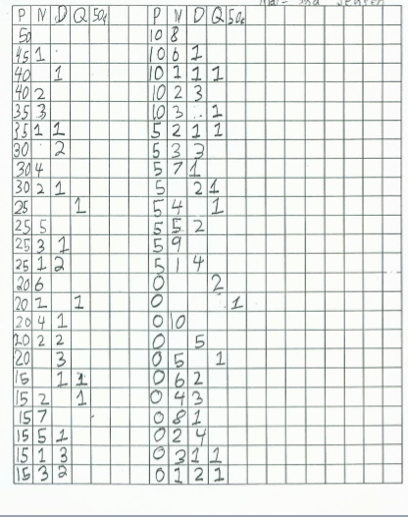
Computational fluency is a tougher nut for an author to crack and I would say that in most cases it should not be the goal of a non-fiction author unless her paycheck comes from a textbook publisher (in which case, she probably doesn't write on this blog!). But I won't disallow the possibility of "procedural skill and fluency" being a side benefit to a "real" book. Take If You Made a Million, my book for young children about the math of money. Five coin combinations equivalent to a quarter are given (one quarter,  two dimes and a nickel, three nickels and a dime, five nickels and 25 pennies). Does that mean there are only five? One second grader explored this question -- and found thirteen. Two students in the same  class determined that there are 49 coin combinations that equal fifty cents. ("We were proud of our work because we finally finished it," they wrote.) Think of all the basic skills practice that went into that determination! It didn't feel like drudgery because it wasn't. But the skills were basic just the same.
So, as is often the case (especially around this blog!), non-fiction is the answer. By no means is it all that's needed to meet the Common Core math standards, but it sure can help the stool stand up proud, tall and well balanced.


Sunday, September 29, 2013

Not JUST the facts, ma'am, but YES, the facts!


David wondering
about ice cream
This month, the INK Bloggers are writing about life-changing non-fiction. 
Some have featured non-fiction that changed their own lives. I cannot recollect any specific titles that molded my young mind so potently as to be "life-changing." Yet I think non-fiction did influence my childhood and the non-fiction I read as a child influenced my adulthood. In my author visits at schools, I show children how some of the books I now write are outgrowths of the questions I asked as a curious child, and the answers I found (or didn't find but tried). I tell them, "Wondering is wonderful."

For me, the process of seeking answers has usually involved books. I aspire to write books that spark children's imaginations yet the books I remember devouring to satisfy my curiosities were often mundane. Reference books. Even encyclopedias! Imagine!! If a reader told me now that a book I'd written reminded him of an encyclopedia, it would ruin my day. Yet, I have fond memories of poring over World Book Encyclopedia to immerse myself in facts that some might consider dry.

But are facts alone dry? In a way, this is an essential question of non-fiction. I would say this: if the reader has no previous investment in a subject, bushels full of facts are dry as dust. But if the subject already thrives in the mind of the reader, the facts can take on a life of their own and enrich the reader's life beyond measure. 
"If you scurried like a spider..."
from If You Hopped Like a Frog

I remember particularly well my fascination with facts about animals and stars. Once learned, the speed of a spider and the distance to Alpha Proxima lived vividly in my mind. Mentally armed with them, I could scurry down the field and rocket into space. Years later, they both figured into books I wrote. 

This is not a call to INKers to abandon our careers writing compelling non-fiction and apply for jobs at encyclopedia publishers. (Never mind that the internet has put most encyclopedias out of business!) In fact, one of my favorite quotes about non-fiction would seem to contradict what I've been saying:

"You can almost divide non-fiction into two categories: non-fiction that stuffs in facts, as if children were vases to be filled, and non-fiction that ignites the imagination, as if children were indeed fires to be lit." Jo Carr

I'm still in favor of lighting the fires but it is worth considering that sometimes the predisposition of the reader allows the facts alone to be the tinder for the blaze. I am seeing now that the question is: how does the reader get such a predisposition? Sometimes it is from books of the "ignites the imagination" category. Other times... who knows?

So, for readers, teachers and authors, I say we're not looking for "the facts, and just the facts, ma'am," but please, let's not forget the facts. They can be tinder for those fires.

A case in point might be what I wrote in this blog last May about a high school student named Alex Grant. He experienced a life change when he read a book called Birds of the World as a mere first-going-on-second grader! I have looked at all the books I can find with that title (there are a few and Alex doesn't remember which one it was) but none of them is what I'd call inspiring non-fiction. And even though I don't know which Birds of the World book turned Alex into a future ornithologist, it's almost certainly a book in the "fact stuffing" category. Yet it was enough to engage him powerfully. I'll close by repeating his story from my May, 2013, post under the title, "The Power of Non-Fiction":


Alex Grant, the young man pictured here, is the subject of this post. We met early on a chilly February morning on a footbridge in the Boyce Thompson Arboretum, 60 mile east of Phoenix. We were among a dozen or so birding enthusiasts who had gathered for the weekly guided bird walk sponsored by the Arboretum. Alex and I discussed two related birds, initially indistinguishable to my eyes. Both were wrens, small songbirds with barred tails and thin bills. Binoculars lifted, Alex pointed out the differences: the canyon wren had more distinct coloration  —  reddish brown wings and back, and a bright white throat, compared with the paler, grayish brown rock wren whose throat lacked the lustrous white. Alex spoke eagerly, with the facts at his command and a confidence that belied his age: 15. Very soon he might be leading walks like this, as his reputation had reached the Arboretum and a ranger had invited him to become a volunteer bird guide — the Arboretum's youngest by far. He and his parents had come on this walk while he considered the offer. 

Rock Wren
Canyon Wren
Later, as the sun finally warmed the air enough for us to shed an outer layer or two, I asked Alex’s mother, Sonja Grant, about her son’s zeal for birds. It had begun during the summer between first and second grade. The catalyst was a book called Birds of the World. Alex had checked it out of the library and it had changed his life. True, he had already shown a keen interest in nature, and he'd owned books about birds as well as sharks, insects and other taxa. He’d read some of them so many times that their pages had fallen out. But with its dazzling photos and engaging text, Birds of the World had taken Alex to a new level of interest that he calls “a deep passion.” Before long, the passion spread to both of his parents, and the family had a new hobby. School vacations became extended birding outings in Arizona, California, Texas and Maine, the trips oriented around an important statistic—the number of species seen between Jan. 1 and Dec. 31 of the year. That number had reached 306 in 2012. Birders refer to a year in which they keep count as "a big year"; the Grants decided to do another big year in 2013, and by mid-May their list was up to 263 species.

Finishing his freshman year at Gilbert High School in Gilbert, AZ, Alex is homing in on a college education and career in ornithology. And it all started with a non-fiction book.


Tuesday, May 28, 2013

The Power of Non-Fiction

Alex Grant, the young man pictured here, is the subject of this post. Before I get to him, I wish to make an announcement that is tangentially, but delightfully, related.


The power of non-fiction, and the myriad ways that educators, authors and other creative people can harness it, will be the subject of The 21st Century Children’s Nonfiction Conference, to be held on June 14-16 at SUNY New Paltz, about 80 miles north of New York City. Among many stellar speakers are INK’s own Vicki Cobb and Melissa Stewart, along with Kent Brown of the Highlights Foundation, Robin Terry of National Geographic Children’s Publishing and other luminaries. The conference includes 23 workshops, three intensives, two panels, six meals and unlimited networking opportunities. Details at http://www.childrensNFconference.com; further information from organizer Sally Isaacs, sisaacs@starconsultinginc.com

Now about Alex. We met early on a chilly February morning on a footbridge in the Boyce Thompson Arboretum, 60 mile east of Phoenix. We were among a dozen or so birding enthusiasts who had gathered for the weekly guided bird walk sponsored by the Arboretum. Alex and I discussed two related birds, initially indistinguishable to my eyes. Both were wrens, small songbirds with barred tails and thin bills. Binoculars lifted, Alex pointed out the differences: the canyon wren had more distinct coloration  —  reddish brown wings and back, and a bright white throat, compared with the paler, grayish brown rock wren whose throat lacked the lustrous white. Alex spoke eagerly, with the facts at his command and a confidence that belied his age: 15. Very soon he might be leading walks like this, as his reputation had reached the Arboretum and a ranger had invited him to become a volunteer bird guide — the Arboretum's youngest by far. He and his parents had come on this walk while he considered the offer. 

Rock Wren
Canyon Wren
Later, as the sun finally warmed the air enough for us to shed an outer layer or two, I asked Alex’s mother, Sonja Grant, about her son’s zeal for birds. It had begun during the summer between first and second grade. The catalyst was a book called Birds of the World. Alex had checked it out of the library and it had changed his life. True, he had already shown a keen interest in nature, and he'd owned books about birds as well as sharks, insects and other taxa. He’d read some of them so many times that their pages had fallen out. But with its dazzling photos and engaging text, Birds of the World had taken Alex to a new level of interest that he calls “a deep passion.” Before long, the passion spread to both of his parents, and the family had a new hobby. School vacations became extended birding outings in Arizona, California, Texas and Maine, the trips oriented around an important statistic—the number of species seen between Jan. 1 and Dec. 31 of the year. That number had reached 306 in 2012. Birders refer to a year in which they keep count as "a big year"; the Grants decided to do another big year in 2013, and by mid-May their list was up to 263 species.

Finishing his freshman year at Gilbert High School in Gilbert, AZ, Alex is homing in on a college education and career in ornithology. And it all started with a non-fiction book.

I am reminded of a quote I once saw from a Jo Carr (if you know who she is, please let me know): “You can almost divide non-fiction into two categories: non-fiction that stuffs in facts, as if children were vases to be filled, and non-fiction that ignites the imagination, as if children were indeed fires to be lit.” I don’t know anything about the book that turned Alex into a bird lover (a fair number of books bear the title Birds of the World). It may even fall in the “stuffs in fact” genus in Jo Carr’s taxonomy but clearly it ignited Alex Grant’s imagination and illuminated the apparent direction of his life. 

Many modalities of non-fiction (in the form of books and other media) will be explored at the New Paltz conference. Perhaps the one you teach or create will ignite a child’s life, or your own.


Monday, March 25, 2013

Happy Pi Day!

I am writing this on Pi Day + 10, which = March 24. On this blog three years ago, I wrote about Pi Day, a "holiday" that was cooked up about a quarter-century ago by the Exploratorium in San Francisco. (I live in Oakland, which is across a bridge and through a snarl of traffic from that splendid hands-on/minds-on museum.) I've decided that in honor of Pi Day 2013, I will rerun my earlier post, below.

This year, I've been thinking about Pi Day and some of the school celebrations I've seen, which could better be described as Pie Day. The connection between the irrational number and the circular comestible is fun (and tasty) but when pi becomes a mere garnish to the main course of pie, I have to question the approach. I'm reminded of the kid I know who memorized pi to something like 200 digits to recite for his Bar Mitzvah: an impressive act of memory training but is it math? (I guess he never said it was, so I should hush up before I disturb the congregation.)

Do my doubts make me a fun-challenged curmudgeon? I hope not, because I love some good mathematical fun, especially when I can eat it!  I'm just asking for balance. And I found it in the video link on this page of numberphile.com in which Matt Parker, the numberphile, calculates pi with pies.  (I only hope he found some hungry middle schoolers to devour the leftovers after they had done their geometrical duty.) Of course Matt could just as well have used Frisbees or even rectangular wooden blocks, so long as they were all the same length, but he got into the spirit of Pi(e) Day by using the genuine article to derive the essential meaning of pi. (Well, pretty close.)

So what does this have to do with children's non-fiction? Just wait and you'll find out. I'm writing to my agent today.

Read on for my Pi Day post of March 22, 2010. (My posting date on the INK blog is the fourth Monday of the month, which is why I am doomed to miss Pi Day by about a week and a half.)


In case you missed it, March 14th was an important international holiday. Every year, math enthusiasts worldwide celebrate the date as Pi Day. March 14th. 3/14. 3.14. Pi. Get it? If you'd like a higher degree of accuracy, you can celebrate Pi Minute at 1:59 on that date (as in 3.14159). Or why not Pi Second at 26 seconds into the Pi Minute (3.1415926)?

“It’s crazy! It’s irrational!” crows the website of the Exploratorium, San Francisco’s famously quirky hands-on science museum. The Exploratorium invented the holiday twenty-one years ago. In a delightful coincidence, Pi Day coincides with Albert Einstein's birthday. Exploratorium revelers circumambulate the "Pi Shrine" 3.14 times while singing Happy Birthday to Albert.

Pi Day celebrations have spread to schools. Just over a year ago, I visited Singapore American School to give a week's worth of presentations and I found parent volunteers serving pie to appreciative students whose math teachers were trying to sweeten their understanding of the world’s most famous irrational number. Just as pi is endless, so is the list of activities, from memory challenges and problem solving to finding how pi is connected to hat size ... and writing a new form of poetry called “pi-ku," which uses a 3-1-4 syllable pattern instead of haiku’s 5-7-5.

It's Pi Day!
Learn
math's mysteries.


It is indeed the mysteriousness of pi that makes it so fascinating. For 3,500 years, according to David Blatner, author of The Joy of Pi, pi-lovers have tried to solve the "puzzle of pi" -- calculating the exact ratio of a circle's circumference to its diameter. But there is no such thing as "exact." No matter how successful, pi can only be estimated.

A refresher course for the pi-challenged: The 16th letter of the Greek alphabet, Ď€ or “pi,” is used to represent the number you get when you divide a circle’s circumference (the distance around) by its diameter (distance across, through the center). Try it on any circle with a ruler and string and you'll get something a little over 3 1/8 or approximately 22/7 (some have therefore proposed the 22nd of July for Pi Day). Measured with a little more precision, the ratio comes out to 3.14. But don’t stop there. Pi is an irrational number, meaning that, expressed as a decimal, its digits go on forever without a repeating pattern. Hence the obsession of some with memorizing pi to 100, even 1,000 places. As a Pi Day gift from 5th graders at a school I visited this year on March 15th, I received a sheet of paper with pi written out to 10,000 digits. In 2002, a computer scientist found 1.24 trillion digits. Never mind that astrophysicists calculating the size of galaxies don't seem to need an accuracy of pi any greater than 10 to 15 digits. Playing with pi offers endless hours of good, clean mathematical fun. So what if it's irrational.

Happy (belated) Pi Day, everybody!

Sunday, February 24, 2013

Panama Numbers, Panama "Wow!"

I've been wondering: Can raw numerical facts be the raw material for creativity in the minds of children? If we just set  them loose on a set of data as if it were paint or clay, and we encourage them to find ways to use that data, will they come up with something that will make them, and you, say "Wow!"? 

Today I went to the Panama Canal. Sounds like a nice Sunday excursion, doesn't it? I am in Panama for school visits next week, and thanks to the generosity of Kathryn Abbott, her husband Tim and their son Alan (an International School of Panama student), a visit to the Gatun Locks was on today's itinerary. Here's proof:
So here are some numerical facts associated with the Panama Canal:

-- Twelve to fifteen thousand ships per year pass through the canal.
-- The 22.5 mile passage takes two hours and saves the ship 7,872 miles and three weeks of sailing around Cape Horn.
-- The London-based ship called CMA CGM Blue Whale, which I watched pass through Gatun Locks, held 5,080 containers. On the basis of its capacity, it paid a toll of $384,000.
-- the lowest toll ever paid was 36 cents. It covered the passage of author-adventurer Richard Halliburton, who had an appetite for publicity stunts. He secured permission to swim the length of the canal in 1928, but no exemption from the toll, which was assessed on the basis of his "tonnage." (I wrote about Halliburton in the March, 1989, issue of Smithsonian magazine.) He swam alongside a rowboat manned by a sharpshooter who kept an eye out for crocodiles. It took him 10 days to complete the passage.
-- 1.8 million cubic meters of concrete were used to construct the Gatun Locks, one of the three lock systems of the canal. 
-- About 5,000 workers lost their lives building the canal in the early 20th Century. Eighty percent of them were Black.
-- The locks lift each ship 85 feet to the highest elevation of the canal (Gatun Lake) and then back down again. Many of the ships weigh 60,000 tons or more.
-- Filling each lock chamber drains 26.7 million gallons of water from Gatun Lake. When the chamber is emptied, the water goes to sea. (The ongoing Panama Canal Expansion Project will change the system so that the water will be recycled.)
-- The width of the locks limits the size of ships that can pass through the canal. This distance, 110 feet, is called "Panamax" and it dictates the dimensions of ships worldwide.  CMA CGM Blue Whale is 106 feet wide. (Locomotives called mulas, mules, ride on tracks alongside the lock, pulling the ships with taut cables that also center the ships in the passageway. These seagoing behemoths must never, ever touch the sides of the lock!) 

There are many, many more but that's enough to run my experiment. The question is: can students take these figures and run with them to discover something interesting, something "Wow!" They can make assumptions. For example, they could assume that the ship I saw is typical of those that pass through the canal. Thus, to use a simple example, they might calculate the annual revenue of the canal by multiplying the toll paid for the Blue Whale by 12,000 or 15,000 (or something in between). Then they could put that into some kind of context. (How many teacher salaries would that pay?)

Here's what I did as an example, using the last bulleted item listed above:

The ship I saw is 106 feet wide and the lock is 110 feet wide, so the clearance is four feet, or two feet on each side. What does that mean in terms we can relate to?  

I scaled the Blue Whale to the size of my kayak, which is about two feet wide. The ship is 50 times as wide as the kayak. So I divided the ship's clearance of 2 feet per side by 50 to find out what my kayak's clearance would be: about half an inch! So... a 110-foot wide ship passing through the lock with two feet of clearance on each side is like my kayak passing through a concrete-walled chamber with a half-inch of clearance on each side, not touching either side, not even once, not even for a zillionth of a second! Is that a "Wow!" moment or what? 

I find it way cool that math can turn a raw fact into a wowful wonder. Of course I'm already planning a book. Maybe teachers of upper elementary, middle school or high school students can plan a class around this. Make it open ended. Give the kids facts, calculators, internet access to look up information, and the time to play. Show them books that turn facts into "Wows!" (May I recommend my If Dogs Were Dinosaurs and How Much Is a Million? for starters, but don't stop there.) See if your young mathematicians can be creative artists. Wow!


Monday, January 28, 2013

A School Where Science (and Non-Fiction) Rule


It’s hard to imagine a teacher prouder than Maria Martinez, or second graders happier with what they're learning and how they're learning it in her classroom. The best part is that I can say the same thing about the other teachers and students I met at Sci-Tech Academy at Knights Landing, in California's Sacramento Valley. They are the Sci-Tech “Robots” at this public charter school where the mascot is not a ferocious animal and the motto is “Hands On—Minds On.”
         In 2009, the Woodland Joint Unified School District closed Kings Landing's only school, Grafton Elementary. The rural community's population was under 1,000 and the district knew it could save $s by shutting the school door and sending students eleven miles to Woodland. It’s a scenario that has befallen rural communities and urban neighborhoods across the country, and usually the teachers and residents sigh and bear it. But a cadre of dedicated teachers in the Woodland district, including Ms. Martinez, came up with another plan. They would form a K-6 charter school focusing on science and technology, and they would petition the district to let them use the Grafton building. After just one year in mothballs, Grafton Elementary was reopened as Science and Technology Academy at Knights Landing. Local parents started enrolling their children as did others from communities nearby, and still others from outside the district  — even some from Davis, 20 back-road miles away, an acutely eco- and education-minded small city boasting blue-ribbon schools and a University of California campus with renowned science programs.
My tip-off to something special going on at Sci-Tech came during my first presentation to primary grade students. I showed my book on animal camouflage, Where In the Wild? Camouflaged Creatures Concealed… and Revealed. The word “camouflage” is often understood by primary grade students but I’d never before met second graders who used the word “adaptation” when describing it.
“We just finished a unit on animal adaptations,” explained Ms. Martinez when we chatted later. The M.O. at Sci-Tech is that science units define the entire curriculum. A unit on adaptations means that students read a range of non-fiction books about ways animals have evolved to meet the demands of their environment. “We do our reading to fit our science units, and everything else comes out of that,” she explained. They explore the vocabulary they find in their reading. Writing, discussions, further explorations ensue. Math gains relevance by being tied to the science units.
Modern digital technology is important in supporting the inquiry-based classroom at Sci-Tech, but not at the expense of low-tech. Not only do print non-fiction books abound, but so do animals in captivity  — live ones, not virtual pets on a smartphone. Every classroom has them. “The students learn what it means, and what’s required, to take care of animals,” says sixth grade teacher Glen Lusebrink, “and we also use the animals to get to other areas of the curriculum.” His room has fish tanks populated by a variety of cichlid species. “This one is from Africa,” he tells me, “and these are from South America.” So we get out the maps, the globes, the books and we learn about Africa, we learn about South America.
         Because of my presentation schedule, I did not get to see any classrooms in action, but I learned about some of the action over lunch in the staff lounge. In all of the conversations, teachers were buzzed about their students' latest hands-on discoveries. First graders had been sifting rocks into size gradations (there’s a math lesson there along with the science) and Kindergarteners had just finished distinguishing between water and identical-looking salt and sugar solutions by testing various properties of the liquids, including taste. “Oh, I wish I’d videotaped them,” said their teacher. “When they were tasting that salt solution—you would have loved the looks on their faces.” And the impressions on their minds.
         Clearly, the hands-on approach touted by the school’s motto is more than a marketing phrase. And it is even more than an impassioned approach to science and the rest of learning. For some students, it’s a matter of do or (academically) die. “Our school makes learning possible for children who do not thrive in an environment of seatwork and workbooks,” says Principal Barbara Herms who holds the view that when hands and bodies are active, so are minds. “And our success is showing.” I asked if she was referring to test scores. “Yes, that among other things.” I’m heartened to know that test scores are up but I’m even happier to know that here tests aren’t the only measure of student success.
         Parents are often the most vociferous critics of schools, so I looked up Sci-Tech Academy on www.greatschools.org and found five (out of five) five-star reviews by parents. One will suffice: “All the teachers, staff, parents and children are excited about learning! This school’s atmosphere is all about helping each child reach their full potential. My children do not even like missing one day of school.”
         Need I say more? Probably not, but I will anyway. A curriculum connected to close readings of non-fiction texts sounds like it has the Common Core State Standards written all over it. But Sci-Tech has been doing it since before those four words were ever strung together.


Monday, November 26, 2012

Googol On!


I had just given an evening program for families at a school in Berkeley when a parent named Steven Birenbaum came up to tell me something remarkable. During the presentation I had introduced my book G Is for Googol: A Math Alphabet Book by projecting this inequality on the screen. (The slashed equal sign means "does not equal.")


No one who has tapped a computer keyboard in the past ten years needs an explanation of the word on the right. The less-known word on the left is the name for the number one followed by one hundred zeros and it appears in the title of my book. Googol, the number, is of enduring interest to myself, to many children and adults who love thinking about big numbers, and to Steven Birenbaum. He is the great-great nephew of Edward Kassner, the mathematician in the story I had told about how this un-numberlike name had been invented:

"A mathematician wrote a one with a hundred zeros after it and showed it to his nine-year old nephew. 'What do you think we should call this number?' he said. The nephew thought a minute and said, 'Googol!" I have no idea why the mathematician asked the question or why the boy answered the way he did, but his name stuck and ever since then we've called this giant number 'googol.'" 


After speaking with Mr. Birenbaum I now know why the storied mathematician was seeking a fanciful name for this enormous number and I have a pretty good idea of why the winning name was "googol."

The mathematician was Edward Kasner, who taught at Columbia University for 39 years during the first half of the 20th Century. He was looking for a striking way to make a point about all whole numbers, no matter how large, because he had been irked by the way people (even scientists) used the words "infinite" and "infinitely" as synonyms for "enormous" or "numerous." In a published lecture, Kasner observed ruefully that people commonly said things like, "It is so large that it is infinite."

Kasner wanted the world to know that no matter how large something may be, "large" cannot mean infinite!

I am reminded of my sixth grade teacher who said, "Tell me any number and I'll tell you one bigger." Whatever number we proffered, he just appended "and one" to it, and he had a bigger number. If you thought the biggest number was "gazillion," he would ask, "What about gazillion and one?" His point was that there is no such thing as the biggest number. Infinity, on the other hand, is not countable and is not a number. As I sometimes tell upper elementary kids in presentations, "Infinity is not a number but numbers are infinite."

Back to Kasner. He wanted an easily-remembered monicker for a gigantic number so he could talk about it. He presented the challenge of naming it to his two young nephews Milton and Edwin Sirotta during a walk in Palisades Park, near Manhattan. As the story goes, Milton blurted out "Googol!"

A few years ago, when the internet company Google* was holding its initial public stock offering, the Wall Street Journal ran a profile of Kasner by Carl Bialik. (You can read it here.) From the article I learned that some of Kasner's living relatives believe that the two brothers should be given equal credit for a collaborative effort. (A number that big can stand to have two namers, I guess.) Denise Sirotta, daughter of Edwin, not only makes that case based on family lore, but she sheds light on the question of why "googol"? She says her father told her that Kasner wanted "a word with a sound that had a lot of O's in it."

Think about it: "googol." Not only is the sound rich with O's but so is the look. Notice those letters. Every one of them except the "l" has an "O" in it (yep, even the "g's").

So, thanks to the serendipity of my encounter with Steven Birenbaum, both of my public musings earlier in the evening—why did Kasner want a name for this basically useless number and why did the boy(s) say "googol"?— have been answered.

I have to mention one other thing about Kasner, which I learned from the Wall Street Journal article. The mathematician never had children but he was adored by his nieces and nephews. It is said that on a walk with some of them in the Palisades, the party encountered tea kettles and matches that he had hidden under rocks and teabags that he had hung from trees. They stopped to make tea!

No wonder Kasner was described by Time magazine in 1940 as a mathematician who was "distinguished but whimsical." What a noble combination!

Googol on!

* Google, the company, is said to have derived its name from "googol," as an implicit reference to the enormous amount of information on the internet. Whether of not the founders changed the spelling deliberately or mistakenly is an open question. But there is no question that the company's headquarter complex is named for another number that the Sirotta boy or boys named: The Googleplex. A googolplex (note the spelling) is a one followed by a googol zeros. Try writing them all.

Monday, October 22, 2012

Guest Blogger: Rebecca Battistoni on Non-Fiction and Global Issues


This month, Rebecca Battistoni is a guest blogger in my place. Rebecca is the librarian at Santa Cruz Cooperative School, an international school with an American curriculum in Bolivia. Previously, for thirteen years, she was a middle school teacher. As you will see, Rebecca is passionate about inspiring students to take action to solve the world's most pressing problems. Two days after I visited SCCS, Rebecca and a group of her students left for Brazil to attend the Global Issues Network Conference.

When I met David Schwartz for the first time, it was at the Santa Cruz airport in Bolivia, around 2:00 am, and still very hot outside.  David had come to Bolivia on the last leg of a three country school tour – first Venezuela, then Peru, and finally, Bolivia.  Our school had invited him to speak to our elementary and middle school students about math, science, and nature – topics that align with one of my other passions, global issues. 

As librarian of our 600+ student, Pre - K through 12th grade school, I am always looking for great non-fiction that helps teach our students about the world around them.  And since taking on sponsorship of the school’s Global Issues Network (GIN) group, I have become even more interested in finding books and resources that will help our students make sense of global issues that will impact their lives. 

One of the components of a GIN conference is using research-based, factual information as a framework to discuss a local problem.  Imagine how important it is, then, to offer students only the best in well-written, well-researched non-fiction in order to complete their projects.  Most of you know this already, just as you know the impact of the Common Core State Standards on the teaching and publishing world.  So why write about it here? 

Maybe you are not aware of the GIN movement.  http://www.global-issues-network.org/
It hasn’t reached the United States in the same way it has in Europe, Asia, Africa, and now South America – namely, through the student conferences held yearly, bringing together hundreds of students from international schools to create networks of global citizens.  But you may have heard of Challenge 20/20, a similar program run by the National Association of Independent Schools.  http://www.nais.org/Articles/Pages/Challenge-20-20.aspx

The goals of both programs are based on the book High Noon: 20 Global Problems and 20 Years to Solve Them by Jean-Francois Rischard, former Vice-President at the World Bank.  The 20 global issues are divided into three main categories: Sharing our planet; Sharing our humanity; and Sharing our rulebook.  The issues range from global warming to water deficits and deforestation, from peacekeeping and the digital divide to illegal drugs and eCommerce, to name just a few.

But how easy is it for students to understand the 20 issues?  How does one go about explaining biotechnology rules to middle school students?  Or what about international labor laws to second graders?  Not an easy thing to do at all.  However, now is the time to tackle these issues, finding quality books written in clear, easy to understand ways that our students can understand.  Now is the time to teach about topics that are not traditionally found on “Easy” bookshelves.  Many teachers, librarians and authors have already begun, and there are many books which are the starting off points for our student researchers.  Authors, please write more of these books. Teachers and librarians, please look for the best of these books and use them with your students!  Please teach the tough topics. Our students are interested in learning, and the world needs them to learn about these subjects. Global issues can be ignored no longer.  

Monday, September 24, 2012

The Problem With Word Problems

Greetings from Lima, Peru. I’m here for a tour of three international schools (in Caracas, Lima and Santa Cruz, Bolivia). I had an experience in Caracas that I’ve had many times before in the USA and it has me thinking… and now blogging.

On a screen, I showed a group of 2nd graders a page from one of my “Look Once, Look Again” books. The idea of that series is that you see a close-up photo of part of an animal (or plant) and text that hints about its identity. Then you turn the page to see the whole organism, and learn a bit about it.

Here’s the text: “This looks feathery but it is not from a bird. It belongs to an animal that flutters around at night.”

Many of the second graders at Escuela Campo Alegre in Caracas said the same exact thing that second (and other) graders at schools all over the United States have said: “Owl.” If I ask what kind of animal an owl is (and I always do), the same child will quickly answer, “A bird.” And if I ask, “What did the book say about it being from a bird,” he or she will recall, “It is not from a bird.”


Yet, they almost always say that this is from an “owl.” The “flutters around at night” seems to overpower the “is not from a bird.” 

Why? I have no answer.


Here’s another one, also shown to second graders. It’s a graph showing how many legs are on the various animals in my book Where In the Wild? Camouflage Creatures Concealed…and Revealed. I’m happy to say that, by and large, with a little guidance second graders everywhere can understand the basics of the graph. When I say, “What number of legs appears most often,” they usually answer, “Four.” My next question, “How many animals in the book have four legs?” usually generates the correct answer, “Five.” Good, they do seem to get it that you look along the “X” (horizontal) axis to see how many legs and you look on the “Y” (vertical) axis to see how many animals have that number of legs. Correct answers to other questions confirm that they get it.


Then comes the stumper. I designed it to be a little harder, but not that hard. “Are there any animals in the book with an odd number of legs?” They almost always say, “Yes.” (I have confirmed that in most cases, they do know the odd numbers from the even numbers.) When I ask a follow-up question, like “How many?” or “What odd number of legs does an animal in the book have?” there is no clear answer. They don’t have one, yet they were quick to say “Yes.”

Why? I have no answer.


I do have a hunch, though. My hunch is that they fail to understand the question, not the graph. I am reminded of a professional book by Char Forsten called The Problem With Word Problems Is the Words. Great title. And so true. Students need to understand the words, deeply and fully, before they can answer word problems.

And how do students get fluent in understanding words? The answer is no secret and no surprise: by reading. And especially by reading non-fiction. Complex non-fiction. The Common Core State Standards place a great emphasis on reading complex non-fiction and informational texts, reading them deeply and integrating related works on the same subject. It is estimated (though no hard data exists) that in elementary schools, children read 80% fiction and 20% non-fiction. Perhaps moving that ratio closer to 50:50, as the CCSS suggests, would help students figure out that the thing that looks feathery but is not from a bird cannot be from an owl but is, in fact, an antenna of a moth … or that no animal in Where in the Wild? (or anywhere, as far as I know) has an odd number of legs.


Monday, June 25, 2012

The Little Darlings

I was going to call this post "Kill the Little Darlings." It sounded oh so ghastly that I decided to drop the first part, but killing them is what this is about. Don't worry, I'm talking words, not people.

Years ago, someone told me that Somerset Maugham, the British novelist and playwright, had said, by way of advice to writers, "Murder the Little Darlings." I've referred to this quote many times but always with the caveat that I have not able to confirm the source or the exact wording. The only Maughamism I could find on writing, courtesy of www.brainyquote.com, is this: "Habits in writing as in life are only useful if they are broken as soon as they cease to be advantageous." Well, I guess it's true but it doesn't have quite the shock value of the non-quote I've been attributing to him all these years.

Shock value is certainly the provenance of a contemporary American novelst, Stephen King who, I've just discovered, has admonished authors to "kill the little darlings." Who better than Mr. King for that? Some say that William Faulkner beat King to it by a few decades, that the iconic Southern writer has been quoted similarly. Who knows. What's more important than attribution right now is the murderous concept at hand.

The "little darlings" are those favored words, turns of phrase, even entire paragraphs or chapters that do not earn their keep, no matter how they may please the ear or eye. They might do wonders for a 64-page book of 4,000 words, but not for a 32-page 600-word picture book. They might stimulate the reader's intellect, which is fine but could be a problem if the intent at that moment is to make her laugh (or cry) -- or vice versa. They might sound good but just not quite fit or they might needlessly extend the text into the realm of verbosity when nothing else can be cut. There are myriad justifications for killing the little darlings, but kill you must.

This all came to mind recently in the editing of my book about what happens to the pumpkin after Halloween. My editor and publisher (and friend), Marissa Moss, committed homicide on my title. I had called it I Rot: The Fall and Rise of a Halloween Pumpkin. All authors realize that titles are tentative but I rather liked it. I thought the "I Rot" part (since the book is written the first person from the voices of the characters in the drama, starring the pumpkin itself) was catchy. And the "Fall and Rise" bit seemed a nice twist on the usual phrase by reversing it. No, I wasn't in love with it, but I was pretty satisfied. And then Marissa came along.

"I think we should call it Rotten Pumpkin," she declared.
"Rotten Pumpkin? That's all?" I said. "Do you mean we should just refer to it as the "rotten pumpkin" book?" I'd been doing that all along.
"No, the title. Rotten Pumpkin. That says it all, don't you think?"

Well, I hadn't... but maybe I could. Maybe I would. Maybe Rotten Pumpkin would jump off the shelf and grab the browser and say "READ ME!" in a way that my ten-word title would not. Maybe it would make a potential reader into a reader who wants to know why in the world a book would be called Rotten Pumpkin. "What kind of rotten book is that? I have to find out!" By contrast, my ten-word title probably doesn't have much jumping power. Maybe it just says, "Here's something for you to think about if you happen to be in the mood to think about it. Which might be tomorrow. Or the next day. Or maybe in time to write that report."

So I've been killing little darlings for the past few days. It's a hard job but someone's got to do it. And once I get through the mourning, it feels really good.

Happy summer everyone. My all your edits be satisfying, whether or not they are murderous.