Showing posts with label math. Show all posts

Tuesday, October 29, 2013

Las Vegas, Non-Fiction and the CCSS for Math


I'm just back from Sin City, known to some as Las Vegas. I swear I was sinless. Not a single quarter went from my pocket to the slot. (I've seen the math and I know slot machines are a bad deal -- except for the casino.) I went to Vegas because I gave a talk there at the Western Regional Conference of the National Council of Teachers of Mathematics, and when I wasn't speaking I was attending sessions. I wanted to see what the math people had to say about the Common Core State Standards.

Most of the media spotlight on the CCSS has focused on tests and the scary prospect of falling test scores under the CCSS. Math educators, on the other hand, talk a lot more about teaching students than what will happen when the students (and the standards) fall victim to the latest round of standardized testing. One plank of the CCSS is the Standards for Mathematical Practice; these are the forms of expertise that teachers at all levels should seek to develop in their students. For example, the first one says, "Make sense of problems and persevere in solving them." Can't argue with that.

The other thing I heard a lot was the word "rigor," which is designated as one of the three key instructional shifts of the CCCSS for Mathematics. (I knew you were wondering: the other two are Focus and Coherence.) And, as it turns out, "rigor" is a controversial word in math circles. Can you figure out why?

Well, as with so many things these days, there's the Tea Party crowd and there's the rest of us. To the Tea Party-goers, rigor means "more "(problems), "faster" (answers), "better" (% correct) and "higher "(test scores, of course). To the math educators I heard at NCTM, "rigor" means three elements: "conceptual understanding, procedural skill and fluency, and application with equal intensity," as explained in "Key Instructional Shifts of the Common Core State Standards for Mathematics."  A metaphor proffered by one presenter was that of a three-legged stool. Rigor is the stool and the three legs are those three elements, apportioned equally if the stool is going to stay upright and level.

Wow! Conceptual understanding and application equal to skill and fluency? Yep. I've always thought that was the right equation and now the notion is ascendant with the CCSS. I've been thinking about where non-fiction fits in. My first thought, echoed by those I spoke with, was the "application" component. After all, through stories, readers see how math concepts can be applied to the real world. To pick one classic of the "math-lit" genre, Pat Hutchins's The Doorbell Rang comes to mind. Two children are about to enjoy a plate of twelve cookies when the doorbell rings and a guest arrives ... then another ring and two more guests ... then another two... then six more ... then.... (you'll just have to read the book to find out). Each step of the way, to their long-faced chagrin, they must modify their calculation of how many cookies each of them will get. With an enlightened teacher or parent at the helm, the math will be rampant. Here, in delightful literary form, is an application of addition, division, factors, even algebra.

But what about the other two legs of the stool? Can non-fiction add to their support? You've no doubt figured out my answer: of course. Take conceptual understanding. I'll choose a book of my own,  If Dogs Were Dinosaurs, which is a companion to the earlier If You Hopped Like a Frog. Both are about proportion, The first compares animal abilities to corresponding abilities of animals; the second looks at relative size (scale) through preposterous examples. "If a submarine sandwich were a real submarine. . . a pickle slice could save your life." The math is explained in the back — and it's easy! See the funny examples, read the back matter, try a few examples of your own (thank you, teachers), and voilà: ratio and proportion make sense. Daunting (and boring) no more. Many have told me so.

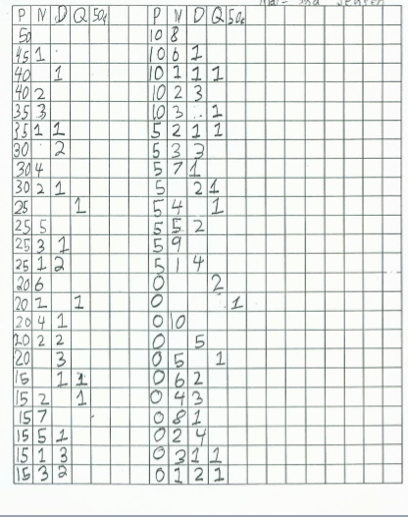
Computational fluency is a tougher nut for an author to crack and I would say that in most cases it should not be the goal of a non-fiction author unless her paycheck comes from a textbook publisher (in which case, she probably doesn't write on this blog!). But I won't disallow the possibility of "procedural skill and fluency" being a side benefit to a "real" book. Take If You Made a Million, my book for young children about the math of money. Five coin combinations equivalent to a quarter are given (one quarter,  two dimes and a nickel, three nickels and a dime, five nickels and 25 pennies). Does that mean there are only five? One second grader explored this question -- and found thirteen. Two students in the same  class determined that there are 49 coin combinations that equal fifty cents. ("We were proud of our work because we finally finished it," they wrote.) Think of all the basic skills practice that went into that determination! It didn't feel like drudgery because it wasn't. But the skills were basic just the same.
So, as is often the case (especially around this blog!), non-fiction is the answer. By no means is it all that's needed to meet the Common Core math standards, but it sure can help the stool stand up proud, tall and well balanced.


Tuesday, June 18, 2013

Helping Kids Nurture Their Inner Ratters

Last July 8, a Cairn terrier came into our lives. We had been without a dog since Tinka, our beloved Golden Retriever, died in 2004. While in Pennsylvania for a party, we heard about a dog who needed a home, and even though we debated for seven years whether or not we could have a dog in the city (we lived in Bucks County, PA, during the Tinka years), we have not looked back. Ketzie is, as I tell her often, a value-adder in our lives. 
     There is only one time when I feel at all doubtful about Ketzie. And that's the last walk of the night. Not because I'm too tired, but because the last walk of the night has become THE RATTING WALK. 
     Before you get too grossed out (or maybe too excited), see below for one of the cuter aspects of the dog being a ratter. Here she is hiding under our bed. "Hiding." Why is she hiding? She has a new toy bone, and she doesn't want us to get it. OR rather, she'd like for us to try to get it, but she wants to put up a fight. She knows it is safe under there. 


(Why are there books there? Our bed is a little bit broken. Until we can get our friend Keith to make us a new one, we have to prop it up with something. We have more books than we have space for, so.....) 

Where we lived in Pennsylvania, there were mice and moles and skunks and deer. Where we live now, there are rats. Mostly they are hidden. But once in a while, at night, one will scamper across the street or sidewalk in front of us. While my instinct is to jump back, Ketzie's instinct is to become very alert. She assumes a posture we don't see any other time: alert in every cell of her body. It's as if her ratting genes coming to ATTENTION. Cairns were bred to get rats out of cairns (or maybe, truly, out of homes made of stones). And at night, just outside our lovely apartment building, Ketzie is ready to be OF SERVICE. 

I don't think we're going to train her to be on the rat-hunting squad.  Yes. There is a rat-hunting squad in NYC and that link is to an article and a video about it. Please watch the video. It's only a minute and a half, and so worth it. I'll wait until you come back. 

Right? Ketzie really should be on that squad. But considering every night we're (husband and I) terrified she will catch a rat, I don't think it is in her future. 

When we have to force her to come back inside--Cairns are stubborn!-- I feel like we're thwarting her most basic nature. Which makes me sad. 

Tinka, our Golden, did not understand fetching in our Buckingham back yard. But the first time we threw a stick into the ocean, in Nova Scotia, she swam in, retrieved it, and laid it at our feet. Another clear sign of genes being able to express themselves. 

As parents and teachers and writers it is our job to help kids find their true selves. To help them express who they are, who they were meant to be. People who live their lives letting their innermost selves guide what they do are the ones we admire the most. Often those people have to fight inner and outer battles to do so. Paul Erdős was one of those people. He was so lucky that his mother (and later his father) nurtured his love of math, and understood his true nature. Mama let Paul be home-schooled until he was ready for school. She challenged him with math from the time he showed the great interest and ability (when he was four). Later on, the love and support he got from his parents, and the great foundation he had in math, allowed him to go out into the world--on his own terms. 

(Shameless and excited plug: THE BOY WHO LOVED MATH is coming out next Tuesday. Check out my website for news, etc.) 

Even if we are not math prodigies or ratters or retrievers, we each have inborn strengths and talents that should be nurtured. We each have problems to overcome; everyone has to learn strategies for how to fit into the world. Some, like Paul Erdős, have more of a challenge than others. But with adults in their lives who understand their needs, they have a greater chance at success and a happy life

As parents, teachers, and dog-owners, we do the best we can. Even though I don't let Ketzie go after rats, I do buy her a new toy every time she destroys her current favorite. I think--I hope--that along with about an hour and half's worth of walks every day, good food, and lots of attention, that's enough. She seems pretty happy, and at home. 


Friday, April 19, 2013

Feed Your Brain: Eat Your Math! (A guest blog by Ann McCallum)

A guest post—with recipe!—by Ann McCallum, a pal of mine from the Children’s Book Guild of Washington, DC. Ann's latest book is Eat Your Math Homework: Recipes for Hungry Minds.


As a kid, I thought that math was bland—unappetizing worksheets and heaps of boring word problems. Those were the worst, the word problems: Disjointed scenarios that you had to sit with until you were done.

I fell in love with math after college. Not a case of love at first taste, it was more an awakening of the senses. A realization that there was pattern and meaning to all those seemingly random numbers. Like a well-made dish, the ingredients aligned so perfectly when I finally understood. The steps were meaningful, too—not a series of machinations to memorize, but a logical process of creating. With my new-found appetite for math, I knew I had to share.
Pairing food with math was a fluke, really. It started with a math project for my students (I was teaching 5th grade at the time). It was nearly winter break, and I had my students make mathematical gingerbread houses. I didn’t provide many instructions—just, you know, make one of those graham cracker houses glued together with icing and be prepared to talk about how you used math. The results were far richer than I had anticipated. Students shared innovations such as polygon windows and doors, candy tessellations, the perimeter of roofs, and the length of icing pathways. I was so excited, I went home and made multiplication meatballs! Okay, maybe not right away, but the idea was there. Food, I figured, was a perfect medium for getting kids to love math.
What followed was a series of yummy experiments: Estimation Cookies, Fibonacci Snack Sticks, Variable Pizza Pi . . . Fun, oh fun! Finally, here was a connection to some of math’s tough concepts, but with a delicious new twist. It made so much sense to learn math by using food.
Eager to share this idea beyond my students, I sent a book proposal to an editor and was accepted—but not for a math cookbook. Instead, I was engaged to write “The Secret Life of Math” which is a history/project book about math for kids (I was allowed one recipe:
Mayan Number Cookies). I went on to write two math fairy tales, but I still kept coming back to the math cookbook idea. I tried again. This time, a second editor accepted my proposal for “Eat Your Math Homework: Recipes for Hungry Minds” and I was thrilled. I went back to the kitchen to perfect my math recipes.
   One of my favorite math authors, Theoni Pappas, says it best: “The joy of mathematics is that it is everywhere.” I’ll add to that: Even in cupcakes!
Happy eating—happy math!
Recipe→ Common Denominator Cupcakes
These math goodies have a common denominator. Before baking, place an Oreo cookie in each cupcake cup, and then spoon the dough on top. Bake, bite in, and work out approximately what fraction of the cupcake is the Oreo cookie.
What you need:
½ cups butter
1  ¼ cups white sugar
2 large eggs
1 cup milk
1 teaspoon vanilla
2 cups flour
1 teaspoon baking powder
½ teaspoon baking soda
½ cup rainbow sprinkles
Oreos (one for every muffin cup)

What you do:
1.     Cream butter, sugar, vanilla, and eggs.
2.     Mix in flour, baking powder and baking soda, alternating with milk.
3.     Stir in the colored sprinkles.
4.     Grease a muffin tin (or use cupcake papers) and place one oreo cookie in every muffin cup. Pour dough on top so that each muffin cup is ¾ of the way full.
5.     Bake for about 30 minutes in a 350° F oven.
 

Monday, March 25, 2013

Happy Pi Day!

I am writing this on Pi Day + 10, which = March 24. On this blog three years ago, I wrote about Pi Day, a "holiday" that was cooked up about a quarter-century ago by the Exploratorium in San Francisco. (I live in Oakland, which is across a bridge and through a snarl of traffic from that splendid hands-on/minds-on museum.) I've decided that in honor of Pi Day 2013, I will rerun my earlier post, below.

This year, I've been thinking about Pi Day and some of the school celebrations I've seen, which could better be described as Pie Day. The connection between the irrational number and the circular comestible is fun (and tasty) but when pi becomes a mere garnish to the main course of pie, I have to question the approach. I'm reminded of the kid I know who memorized pi to something like 200 digits to recite for his Bar Mitzvah: an impressive act of memory training but is it math? (I guess he never said it was, so I should hush up before I disturb the congregation.)

Do my doubts make me a fun-challenged curmudgeon? I hope not, because I love some good mathematical fun, especially when I can eat it!  I'm just asking for balance. And I found it in the video link on this page of numberphile.com in which Matt Parker, the numberphile, calculates pi with pies.  (I only hope he found some hungry middle schoolers to devour the leftovers after they had done their geometrical duty.) Of course Matt could just as well have used Frisbees or even rectangular wooden blocks, so long as they were all the same length, but he got into the spirit of Pi(e) Day by using the genuine article to derive the essential meaning of pi. (Well, pretty close.)

So what does this have to do with children's non-fiction? Just wait and you'll find out. I'm writing to my agent today.

Read on for my Pi Day post of March 22, 2010. (My posting date on the INK blog is the fourth Monday of the month, which is why I am doomed to miss Pi Day by about a week and a half.)


In case you missed it, March 14th was an important international holiday. Every year, math enthusiasts worldwide celebrate the date as Pi Day. March 14th. 3/14. 3.14. Pi. Get it? If you'd like a higher degree of accuracy, you can celebrate Pi Minute at 1:59 on that date (as in 3.14159). Or why not Pi Second at 26 seconds into the Pi Minute (3.1415926)?

“It’s crazy! It’s irrational!” crows the website of the Exploratorium, San Francisco’s famously quirky hands-on science museum. The Exploratorium invented the holiday twenty-one years ago. In a delightful coincidence, Pi Day coincides with Albert Einstein's birthday. Exploratorium revelers circumambulate the "Pi Shrine" 3.14 times while singing Happy Birthday to Albert.

Pi Day celebrations have spread to schools. Just over a year ago, I visited Singapore American School to give a week's worth of presentations and I found parent volunteers serving pie to appreciative students whose math teachers were trying to sweeten their understanding of the world’s most famous irrational number. Just as pi is endless, so is the list of activities, from memory challenges and problem solving to finding how pi is connected to hat size ... and writing a new form of poetry called “pi-ku," which uses a 3-1-4 syllable pattern instead of haiku’s 5-7-5.

It's Pi Day!
Learn
math's mysteries.


It is indeed the mysteriousness of pi that makes it so fascinating. For 3,500 years, according to David Blatner, author of The Joy of Pi, pi-lovers have tried to solve the "puzzle of pi" -- calculating the exact ratio of a circle's circumference to its diameter. But there is no such thing as "exact." No matter how successful, pi can only be estimated.

A refresher course for the pi-challenged: The 16th letter of the Greek alphabet, π or “pi,” is used to represent the number you get when you divide a circle’s circumference (the distance around) by its diameter (distance across, through the center). Try it on any circle with a ruler and string and you'll get something a little over 3 1/8 or approximately 22/7 (some have therefore proposed the 22nd of July for Pi Day). Measured with a little more precision, the ratio comes out to 3.14. But don’t stop there. Pi is an irrational number, meaning that, expressed as a decimal, its digits go on forever without a repeating pattern. Hence the obsession of some with memorizing pi to 100, even 1,000 places. As a Pi Day gift from 5th graders at a school I visited this year on March 15th, I received a sheet of paper with pi written out to 10,000 digits. In 2002, a computer scientist found 1.24 trillion digits. Never mind that astrophysicists calculating the size of galaxies don't seem to need an accuracy of pi any greater than 10 to 15 digits. Playing with pi offers endless hours of good, clean mathematical fun. So what if it's irrational.

Happy (belated) Pi Day, everybody!

Sunday, February 24, 2013

Panama Numbers, Panama "Wow!"

I've been wondering: Can raw numerical facts be the raw material for creativity in the minds of children? If we just set  them loose on a set of data as if it were paint or clay, and we encourage them to find ways to use that data, will they come up with something that will make them, and you, say "Wow!"? 

Today I went to the Panama Canal. Sounds like a nice Sunday excursion, doesn't it? I am in Panama for school visits next week, and thanks to the generosity of Kathryn Abbott, her husband Tim and their son Alan (an International School of Panama student), a visit to the Gatun Locks was on today's itinerary. Here's proof:
So here are some numerical facts associated with the Panama Canal:

-- Twelve to fifteen thousand ships per year pass through the canal.
-- The 22.5 mile passage takes two hours and saves the ship 7,872 miles and three weeks of sailing around Cape Horn.
-- The London-based ship called CMA CGM Blue Whale, which I watched pass through Gatun Locks, held 5,080 containers. On the basis of its capacity, it paid a toll of $384,000.
-- the lowest toll ever paid was 36 cents. It covered the passage of author-adventurer Richard Halliburton, who had an appetite for publicity stunts. He secured permission to swim the length of the canal in 1928, but no exemption from the toll, which was assessed on the basis of his "tonnage." (I wrote about Halliburton in the March, 1989, issue of Smithsonian magazine.) He swam alongside a rowboat manned by a sharpshooter who kept an eye out for crocodiles. It took him 10 days to complete the passage.
-- 1.8 million cubic meters of concrete were used to construct the Gatun Locks, one of the three lock systems of the canal. 
-- About 5,000 workers lost their lives building the canal in the early 20th Century. Eighty percent of them were Black.
-- The locks lift each ship 85 feet to the highest elevation of the canal (Gatun Lake) and then back down again. Many of the ships weigh 60,000 tons or more.
-- Filling each lock chamber drains 26.7 million gallons of water from Gatun Lake. When the chamber is emptied, the water goes to sea. (The ongoing Panama Canal Expansion Project will change the system so that the water will be recycled.)
-- The width of the locks limits the size of ships that can pass through the canal. This distance, 110 feet, is called "Panamax" and it dictates the dimensions of ships worldwide.  CMA CGM Blue Whale is 106 feet wide. (Locomotives called mulas, mules, ride on tracks alongside the lock, pulling the ships with taut cables that also center the ships in the passageway. These seagoing behemoths must never, ever touch the sides of the lock!) 

There are many, many more but that's enough to run my experiment. The question is: can students take these figures and run with them to discover something interesting, something "Wow!" They can make assumptions. For example, they could assume that the ship I saw is typical of those that pass through the canal. Thus, to use a simple example, they might calculate the annual revenue of the canal by multiplying the toll paid for the Blue Whale by 12,000 or 15,000 (or something in between). Then they could put that into some kind of context. (How many teacher salaries would that pay?)

Here's what I did as an example, using the last bulleted item listed above:

The ship I saw is 106 feet wide and the lock is 110 feet wide, so the clearance is four feet, or two feet on each side. What does that mean in terms we can relate to?  

I scaled the Blue Whale to the size of my kayak, which is about two feet wide. The ship is 50 times as wide as the kayak. So I divided the ship's clearance of 2 feet per side by 50 to find out what my kayak's clearance would be: about half an inch! So... a 110-foot wide ship passing through the lock with two feet of clearance on each side is like my kayak passing through a concrete-walled chamber with a half-inch of clearance on each side, not touching either side, not even once, not even for a zillionth of a second! Is that a "Wow!" moment or what? 

I find it way cool that math can turn a raw fact into a wowful wonder. Of course I'm already planning a book. Maybe teachers of upper elementary, middle school or high school students can plan a class around this. Make it open ended. Give the kids facts, calculators, internet access to look up information, and the time to play. Show them books that turn facts into "Wows!" (May I recommend my If Dogs Were Dinosaurs and How Much Is a Million? for starters, but don't stop there.) See if your young mathematicians can be creative artists. Wow!


Monday, November 26, 2012

Googol On!


I had just given an evening program for families at a school in Berkeley when a parent named Steven Birenbaum came up to tell me something remarkable. During the presentation I had introduced my book G Is for Googol: A Math Alphabet Book by projecting this inequality on the screen. (The slashed equal sign means "does not equal.")


No one who has tapped a computer keyboard in the past ten years needs an explanation of the word on the right. The less-known word on the left is the name for the number one followed by one hundred zeros and it appears in the title of my book. Googol, the number, is of enduring interest to myself, to many children and adults who love thinking about big numbers, and to Steven Birenbaum. He is the great-great nephew of Edward Kassner, the mathematician in the story I had told about how this un-numberlike name had been invented:

"A mathematician wrote a one with a hundred zeros after it and showed it to his nine-year old nephew. 'What do you think we should call this number?' he said. The nephew thought a minute and said, 'Googol!" I have no idea why the mathematician asked the question or why the boy answered the way he did, but his name stuck and ever since then we've called this giant number 'googol.'" 


After speaking with Mr. Birenbaum I now know why the storied mathematician was seeking a fanciful name for this enormous number and I have a pretty good idea of why the winning name was "googol."

The mathematician was Edward Kasner, who taught at Columbia University for 39 years during the first half of the 20th Century. He was looking for a striking way to make a point about all whole numbers, no matter how large, because he had been irked by the way people (even scientists) used the words "infinite" and "infinitely" as synonyms for "enormous" or "numerous." In a published lecture, Kasner observed ruefully that people commonly said things like, "It is so large that it is infinite."

Kasner wanted the world to know that no matter how large something may be, "large" cannot mean infinite!

I am reminded of my sixth grade teacher who said, "Tell me any number and I'll tell you one bigger." Whatever number we proffered, he just appended "and one" to it, and he had a bigger number. If you thought the biggest number was "gazillion," he would ask, "What about gazillion and one?" His point was that there is no such thing as the biggest number. Infinity, on the other hand, is not countable and is not a number. As I sometimes tell upper elementary kids in presentations, "Infinity is not a number but numbers are infinite."

Back to Kasner. He wanted an easily-remembered monicker for a gigantic number so he could talk about it. He presented the challenge of naming it to his two young nephews Milton and Edwin Sirotta during a walk in Palisades Park, near Manhattan. As the story goes, Milton blurted out "Googol!"

A few years ago, when the internet company Google* was holding its initial public stock offering, the Wall Street Journal ran a profile of Kasner by Carl Bialik. (You can read it here.) From the article I learned that some of Kasner's living relatives believe that the two brothers should be given equal credit for a collaborative effort. (A number that big can stand to have two namers, I guess.) Denise Sirotta, daughter of Edwin, not only makes that case based on family lore, but she sheds light on the question of why "googol"? She says her father told her that Kasner wanted "a word with a sound that had a lot of O's in it."

Think about it: "googol." Not only is the sound rich with O's but so is the look. Notice those letters. Every one of them except the "l" has an "O" in it (yep, even the "g's").

So, thanks to the serendipity of my encounter with Steven Birenbaum, both of my public musings earlier in the evening—why did Kasner want a name for this basically useless number and why did the boy(s) say "googol"?— have been answered.

I have to mention one other thing about Kasner, which I learned from the Wall Street Journal article. The mathematician never had children but he was adored by his nieces and nephews. It is said that on a walk with some of them in the Palisades, the party encountered tea kettles and matches that he had hidden under rocks and teabags that he had hung from trees. They stopped to make tea!

No wonder Kasner was described by Time magazine in 1940 as a mathematician who was "distinguished but whimsical." What a noble combination!

Googol on!

* Google, the company, is said to have derived its name from "googol," as an implicit reference to the enormous amount of information on the internet. Whether of not the founders changed the spelling deliberately or mistakenly is an open question. But there is no question that the company's headquarter complex is named for another number that the Sirotta boy or boys named: The Googleplex. A googolplex (note the spelling) is a one followed by a googol zeros. Try writing them all.

Monday, September 24, 2012

The Problem With Word Problems

Greetings from Lima, Peru. I’m here for a tour of three international schools (in Caracas, Lima and Santa Cruz, Bolivia). I had an experience in Caracas that I’ve had many times before in the USA and it has me thinking… and now blogging.

On a screen, I showed a group of 2nd graders a page from one of my “Look Once, Look Again” books. The idea of that series is that you see a close-up photo of part of an animal (or plant) and text that hints about its identity. Then you turn the page to see the whole organism, and learn a bit about it.

Here’s the text: “This looks feathery but it is not from a bird. It belongs to an animal that flutters around at night.”

Many of the second graders at Escuela Campo Alegre in Caracas said the same exact thing that second (and other) graders at schools all over the United States have said: “Owl.” If I ask what kind of animal an owl is (and I always do), the same child will quickly answer, “A bird.” And if I ask, “What did the book say about it being from a bird,” he or she will recall, “It is not from a bird.”


Yet, they almost always say that this is from an “owl.” The “flutters around at night” seems to overpower the “is not from a bird.” 

Why? I have no answer.


Here’s another one, also shown to second graders. It’s a graph showing how many legs are on the various animals in my book Where In the Wild? Camouflage Creatures Concealed…and Revealed. I’m happy to say that, by and large, with a little guidance second graders everywhere can understand the basics of the graph. When I say, “What number of legs appears most often,” they usually answer, “Four.” My next question, “How many animals in the book have four legs?” usually generates the correct answer, “Five.” Good, they do seem to get it that you look along the “X” (horizontal) axis to see how many legs and you look on the “Y” (vertical) axis to see how many animals have that number of legs. Correct answers to other questions confirm that they get it.


Then comes the stumper. I designed it to be a little harder, but not that hard. “Are there any animals in the book with an odd number of legs?” They almost always say, “Yes.” (I have confirmed that in most cases, they do know the odd numbers from the even numbers.) When I ask a follow-up question, like “How many?” or “What odd number of legs does an animal in the book have?” there is no clear answer. They don’t have one, yet they were quick to say “Yes.”

Why? I have no answer.


I do have a hunch, though. My hunch is that they fail to understand the question, not the graph. I am reminded of a professional book by Char Forsten called The Problem With Word Problems Is the Words. Great title. And so true. Students need to understand the words, deeply and fully, before they can answer word problems.

And how do students get fluent in understanding words? The answer is no secret and no surprise: by reading. And especially by reading non-fiction. Complex non-fiction. The Common Core State Standards place a great emphasis on reading complex non-fiction and informational texts, reading them deeply and integrating related works on the same subject. It is estimated (though no hard data exists) that in elementary schools, children read 80% fiction and 20% non-fiction. Perhaps moving that ratio closer to 50:50, as the CCSS suggests, would help students figure out that the thing that looks feathery but is not from a bird cannot be from an owl but is, in fact, an antenna of a moth … or that no animal in Where in the Wild? (or anywhere, as far as I know) has an odd number of legs.


Wednesday, April 18, 2012

Too Much Information?

When my first picture book was published in 1985, getting feedback from a reader usually happened via a fan letter or while I was visiting a school. In our wonderful new digital world, authors can interact with their readers by means of email, blog posts, comments, tweets, videos, review sites, and whatever the tech-genuises will think of next. The reviews so far for my new picture book Seeing Symmetry have been very positive except for one blogger who commented that the book has “too much information.” The image below shows the opening spread, which has fewer images than some of the other pages, but gives the general idea:
A 2-page spread from Seeing Symmetry ©2012
There are many possible reasons for the statement…the blogger was probably looking for a much simpler book for very young children. But hey, what about all the older children, what are they going to read? One very good reason for creating the book at a higher level (that I wasn’t aware of at the time) is that the Common Core State Standard for line symmetry is in 4th grade. Do you want to know what it is? Thought you’d never ask:
4.G.3 Recognize a line of symmetry for a two-dimensional figure as a line across the figure such that the figure can be folded along the line into matching parts. Identify line-symmetric figures and draw lines of symmetry.

The question of how much to include is always an issue for authors. We do the research, compile a zillion things, and reluctantly pare it all down as much as possible. I did “cheat” a little bit by having a couple of pages of notes in the back. And perhaps a Simple Symmetry book is in my future…wouldn’t want to leave out the little guys!

Getting back to the original complaint, that there is “too much” information in this book, I can see how it might be difficult to get through many nonfiction books that are loaded with factoids. Here is a blog post on the Children’s Books and Reading blog that has a good approach using sentence starter cards to help kids process the information better… Non-Fiction Books: Putting Words Into Their Mouths. In short, the adult makes cards with phrases such as “I can see…” and “I can hear…” The adult and child take turns pretending to be a person in the book, the idea being to put yourself into the page and take the time to observe what is going on. There is no need to finish the entire book in one sitting, perhaps one page at a time is just right.

If anyone would like further immersion in the wonderful world of symmetry, I have been having a fabulous time compiling all kinds of symmetrical images on Pinterest. Amazingly, over 800 hundred people are following my symmetry board:
From a rotational name activity to “squish paintings” to Mexican paper banners to student self-portraits, there are all kinds of great ideas to engage kids in the topic. To check it out, please click here.

Too much information…? That's impossible!

Loreen

Wednesday, February 15, 2012

Have you seen any SYMMETRY lately?

Spring must be early this year, because my "spring" book Seeing Symmetry is already in the warehouse in February (yay!) The subject of symmetry had percolated in my mind for several years before I settled on a way to present it in picture book form. The trailer/book talk gives a sense of the broad scope of the topic:

Unlike most of my other books, the artwork is rendered in a realistic style. It was tough to decide what to include or leave out because there are so many wonderful examples of line and rotational symmetry in the world, from creatures great and small to kaleidoscope images to quilt blocks to King Tut. The page below shows some of the variety of art and craft work (which could have filled up the entire book):
What delights me the most about symmetry is that it perfectly embodies two subjects that are rarely paired up: Math and Art. In order to create or recognize symmetrical images, children (and the rest of us) must understand equal vs unequal, comparisons, repeats, rotations, reflections, and other basic math concepts in vivid, visual form.

Creating this book has certainly left a permanent impression on me because I "see symmetry" everywhere now, from decorated cakes to crocheted doilies to wrought iron gates to Mardi Gras masks…hopefully, the readers of this book will, too!

Loreen
My web site
My symmetry activities

Monday, January 23, 2012

Got a Second?

You’d better use your extra second while you can, because it might just disappear.


I’m talking about the leap second. Leap seconds are a little like leap years but shorter. A lot shorter. (Actually, a “leap year” really should be called a “leap day,” IMHO.) And they are an endangered species.


It’ll take me just a few leap seconds to explain. Once upon a time, time itself was measured by the rotation of the earth. There are 24 hours in a complete rotation (aka one day), 60 minutes in an hour and 60 seconds in a minute, so a little arithmetic tells you there are 24 X 60 X 60 = 86,400 seconds in a day. You could set your clock by it. Actually, your clock was made to show it. This was all fine and well and if anyone was late for church on his wedding day, he really couldn’t blame the clock. But scientists weren’t satisfied because it was hard to be sure of the precise duration of a second, so in 1967 they put official timekeeping in the hands of the hand-less atomic clock. An atomic clock relies on the oscillation frequency of a certain type of atom known as cesium-133. Atomic clocks may be cumbersome on your nightstand, but they sure are accurate. After 100 million years, give or take, an atomic clock will be off by one second. In the techno-world beginning to emerge in the 1960’s, precision in timekeeping was of great importance. Imagine how grumpy networked computers might get if different parts of the network were off by a second here, a second there. Atomic clocks solved that problem, and traditionalists couldn’t complain because the atomic clocks were pegged to the earth’s rotation. A“day” on an atomic clock and a “day” defined as a single rotation of the earth were the same. All was well in timekeeping.


Eventually, something was found to be rotten in Denmark and everywhere else on the planet: the Earth does not run like clockwork. Its rotation is gradually slowing down. Rather than losing a second in 100 million years, it loses a second every few years. In an average human lifetime, the earth might lose 15 or 20 seconds. (Think of what that poor average human could have accomplished with an extra time.) So to keep the world’s atomic clocks in sync with the actual earth, the leap second was born. Because the rate of slow-down is not perfectly predictable, the insertion of a leap second is not on a regular schedule like leap years, which synchronize our calendar’s annual cycle with the earth’s revolution around the Sun by inserting February 29th every four years (with some carefully worked out exceptions). The International Telecommunications Union, an agency of the United Nations, announces leap seconds on an as-needed basis. The last one was in 2008 and there will be another on the night of June 30th of this year. The extra second will be added before July 1st rolls around. Start planning this gift of time before the summer rush.


But now there’s talk of the leap second’s demise. The extra second on June 30, 2012, is secure, but the ITU will meet in Geneva next month to decide whether to keep or kill future leap seconds. The United States wants to do away with it but the leap second has some heavyweight defenders including Canada, Britain, China and a few other countries that consider extremely punctuality in their national interest. I won’t go into the arguments pro and con, but there was a good article about it in the New York Times last week (Jan 18, 2012). I must say I am leaning toward the side of leap second defenders because leap seconds tie the time of day to the rising and setting of the sun (quaint as that notion may be). If we abandon the leap second and just let those atomic clocks run nilly-willy while the hapless earth slows down, we will get to a point when sunrise would come at the strike of noon. (It’s impossible to predict exactly when this disruption to your lunch plans will occur because, according to the Times, it will be “not more than 100,000 years from now” so please be forewarned.)


So what, if anything, does this have to do with children’s books? For one thing, I am not aware of any book on the leap second or even a book on time that mentions it. (OK, commenters — tell me about all the books I missed.) More importantly, I have confession: In all of my non-fiction science and math books I have simplified some concepts to make them age-appropriate for what I see as the book’s readership. Or I have left them out altogether if I thought an adequate explanation would be too long, too difficult or too uninteresting. This is a judgment call, of course.


Sometimes I have regretted my judgment. There are millions of things you can measure, and time is one of them but in Millions to Measure I did not include the measurement of time. This is probably because I had an axe to grind about the archaic system of measurement still used in the United States. I wanted to concentrate on showing how the metric system works and how much more sensible it is than our uncoordinated system of feet, pounds and fluid ounces. (In fairness, I should disclose that we aren’t the only country using this system. Last I checked, it was also the norm in Liberia and Myanmar.) So in a book comparing metric (technically known as Système International, or SI) units with “customary” (American) units, there was no need to talk about time because — guess what — time is measured the same way in all nations. Amazing but true: everyone uses the same years, days, hours, minutes and seconds! But now that there’s a brouhaha brewing over the leap second, I wish my book had prepared users to understand it. I wish I had included cesium clocks because they are kinda cool (and wouldn’t kids think so, too?).


And one more mea culpa: I even wish I had come completely clean on the mighty meter itself. I stuck with the original definition — one ten millionth the distance from the equator to the North Pole. Eventually, the meter was standardized to a very special piece of metal kept at a constant temperature in Paris, available to be measured any time you needed to check it against your own meter stick (if you had train fare and the right ID). But for much the same reason that time is now measured by atomic oscillations, the world’s leading unit of length is now tied to a measurement that labs around the world can perform if they want to: the wavelength of emissions from atoms of krypton-86. (Common sense tells us that krypton must be related to Superman’s kryptonite, and if it’s good for Superman, it’s got to be good for you and me, dontchathink?)


I imagine all authors of non-fiction for young readers must decide whether content is “too hard” or “not too hard”? It might be an interesting panel discussion subject: how do you decide? Do you just have a hunch or do you use guidelines of some kind? Is there such a thing as “too hard” at all? Can any subject be made accessible in the hands of a master?


While you’re pondering that, I’m going to think about what I’ll do with my leap second on June 30th because it may be my last.