Showing posts with label US History. Show all posts

Thursday, December 5, 2013

Ask a Slave

One of the great pleasures of researching a book can be the people you meet along the way. I met Azie Dungey a few years ago, when I was doing research at Mount Vernon, George Washington's Virginia plantation. At the time, Azie was working as a "living history character" on the estate. Azie played a slave. She interpreted the role of Caroline, an enslaved woman who worked as a housemaid for George and Martha Washington. In this role, Azie talked to hundreds of people a day about what it was like to be black in 18th-century America.

Azie Mira Dungey
After she left Mount Vernon, Azie looked for "a way to present all of the most interesting, and somewhat infuriating encounters that I had, the feelings that they brought up, and the questions that they left unanswered." The result is her hit comedy web series "Ask a Slave." 

In "Ask a Slave," Azie plays Lizzie Mae, a fictional housemaid to the Washingtons. Her deadpan delivery is hilarious, but the series addresses serious issues about race and gender and power--and historical ignorance.

If you haven't seen "Ask a Slave," check it out! I'll make it easy for you. Here's the first episode, "Meet Lizzie Mae." Teachers, you'll want to preview the series before sharing it with students. Some of the later episodes get a little raw. But I'm betting most high-schoolers will dig this edgy satire, and it might just nudge them to think a little deeper about our country's history. Way to go, Azie!

Monday, February 18, 2013

Presidents Day

     So, today's the 497th anniversary of the birth of England's Queen Mary, Elizabeth Tudor's miserable, "bloody" half-sister and golly, what a sad and dreadful, star-crossed bunch there's was. How sane and lucky many another family is by comparison, no?  It was on this day in history that physicist Alessandro "Mr. Battery" Volta was born, in 1745, a good 103 years before Louis Comfort Tiffany came into the world.  February 18 marks the deathdays, too, of lovely painter  Fra Angelico  and revolutionary Martin Luther, who exited the world through the celestial door marked 18 Feb, in 1455 and 1546, respectively.  Just for you to know. A pair of the best character actors ever to glower down from the silver screen, Edward Arnold and Adolphe Menjou, were both born on the 18th of February, 1890, two years before that glad-hander Wendell Wilkie was born, only to be well and truly thrashed by FDR in the 1940 election.. 

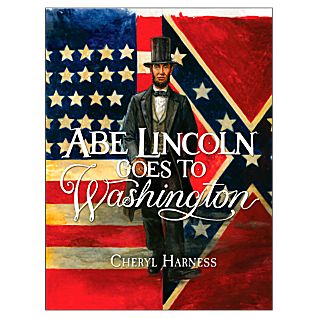
And speaking of Franklin D., it appears to be Presidents' Day, splitting the difference as we do between the commemorations of the great No. 1 and No. 16.  In the stores, the tired Valentine candies are discounted. Soon there'll be green shamrocks, pastel eggs and bunnies. Here's a slim window in the culture's cavalcade; today there will be a pause in the beleaguered postal service. There will be silly Abes and Georges in advertisements for furniture, cars, and appliances. Behind and beyond it all were the steadfast pioneer of untrodden ground, of revolution and dare I say it: nation-building.  And the grievous, complex stalwart who held it all together for a little while longer. I cannot help but think of all of the other gents who've held the office, each of whom represents a chapter in our ongoing, bumptious experiment in self-governance.  And anyway, so the world turns and the calendar continues,  And every day of it is a chance to remember those who've gone before. So let there be books, all of our books in which the stories of those vanished lives are shown and told, pictured and explained, again and again for our young readers, for our ever-renewing citizenry. Long live the republic.

Monday, January 21, 2013

Inauguration No. 57

           So: A worship service at St. John's Episcopal Church not so very far from the White House.  The old church, once attended by James Madison and buxom Dolley (I wrote a book about her; I could tell you how many times it's been rejected, but I won't), was designed in 1815 by handsome Benjamin Latrobe whose daughter Lydia married an inventor Nicholas Roosevelt, whose great-grand-nephew, Theodore Roosevelt would have one heck of an uproarious Inauguration Day of his own in 1904, complete with Rough Riders and an enforced appearance by the old Apache warrior, Geronimo. And, just for you to know, 93 years earlier, Nicholas and Lydia went on one heckuva steamboat ride down the Mississippi River just in time for the New Madrid Earthquake. Yes, Dorothy Patent, noodling one's way through the winding pathways one's research takes one is a purely engrossing pastime.)  .

         • A procession to the U.S. Capitol, also designed by Mr. Latrobe.  At least President O. doesn't have to worry about having a godawful ride like FDR had with furious, worn-out HCH back in '33.    
         • Joe Biden (born 20 Nov 1942, not long after Allied Forces landed in North Africa, just a few days before a hellacious fire broke out at Boston's Cocoanut Grove and killed 487 night-clubbers...Happy Warrior 'Smiley' Joe shares a birthday with Robert F. Kennedy, Alistair Cooke, and the astronomer Edwin Hubble), the 47th U.S. Vice President, once more will be sworn in to office.

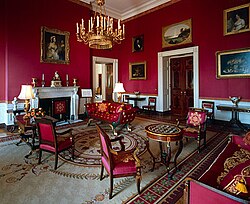
         • [the program]  U.S. President No. 44,  Barack Obama is scheduled to take his ceremonial Oath of Office at 11:30 A.M., having taken his official O. of O. yesterday, in a private ceremony on January 20, the official I. Day. So it was for Rutherford B. Hayes, in 1877, and Ronald Reagan, too, in 1985, being as their Inaugurals fell on Sundays.  As a matter of fact, Mr. Hayes was sworn in in the W.H., a presidential 1st, in the Red Room, where charming Dolley Madison once held her popular Wednesday evening receptions before the whole joint was torched by the Redcoats.

         • Then Mr. Obama gives a speech - no, make that an address.  Think about it, Citizens: What would you say to your divided, somewhat disheartened nation?   (What would I say? Read a book. Heck, read a LOT of books. Learn what we Americans have - and haven't -  been about all these years and think about what you read, for crying out loud. And just for a change, listen and THINK about what we have in common. Our history, for one thing. Our scary future, for another.)
        • There's a luncheon. Click HERE for the menu!  (sounds a good deal fancier than the tortilla/melted cheese & handfuls of 1. cherry tomatoes and 2. MandMs I've got planned. ) 
The Inaugural Parade of FDR, 1941,   Frank Wright 
        • PARADE! 
        • BALLS.   (What would I wear? What would I wear? Gownless Evening Strap? Could we have, like, an  Author Prom,  a BiblioBall  or something, PUH-lease??? I totally want to see Jim Murphy in a tuxedo.)
       Aren't we thankful for the 20th Amendment? If only for the fact that it isn't the 2nd Amendment, which I am WAY sick of hearing about, at least the part of the argument that comes from these automatically-armed-to-the-teeth blowhards? Because at least we're not having to wait until the 4th of March for all of this hoohah.  All of this glorious hoohah, celebrating that for all our bloody-minded, well-intentioned, noble, greedy, bumptious, wonderful/horrible goings-on, we Americans have managed this banged up but unbroken chain of power passing to power.   
       And in the spirit of that old saw, that trite-but-true wheeze about this being the first day of the rest of OUR lives, how in the heck are we going to inaugurate it? What are we prepared to do? (Despite opposition, fear, inertia, the tough, fast-changing marketplace) Ponder on our intentions. Ask what we can do for our country. And do it. 
        So help us God.  

Friday, December 7, 2012

Legacy? Never Mind


I don’t know if people are willing to admit it, but many of us, and I suspect especially those of us who write books, have given some thought to what our legacy will be. I know I have. Since I am childfree—a term I recently heard for the first time—I won’t be leaving any progeny to carry on the family name. But I will be leaving my books to inform future generations. Even if libraries purge their holdings to make way for newer volumes, I’m thinking (hoping) that some of my writings will survive on the dusty shelves, or at the very least, in Cyberspace. I know it won’t really matter to me after I’m gone, but right now, I find the thought comforting.

Perhaps that’s why I had such a visceral reaction to the Gilda’s Club brouhaha that erupted last week. For those who don’t know, Gilda’s Club is a community organization with more than 20 affiliates that is dedicated to offering support to people who are living with cancer, and their loved ones. It was founded in the 1990s in honor of Gilda Radner, one of the original “Not Ready for Prime Time Players” on Saturday Night Live, who died of ovarian cancer in 1989. During her illness, Gilda found encouragement and solace at a California organization called the Wellness Community. Gilda’s Club was modeled after that group. (The name refers to Gilda’s quote that “having cancer gave me membership in an elite club I’d rather not belong to.”)

In 2009, Gilda’s Club Worldwide merged with the Wellness Community to create the Cancer Support Community. After the merger, the home office decreed that affiliates could determine which of three names worked best for them: Gilda’s Club, the Wellness Community, or the Cancer Support Community. A few weeks ago, the affiliate in Madison, Wisconsin, held a ribbon-cutting ceremony to celebrate its new name, the Cancer Support Community Southwest Wisconsin. The executive director, Lannia Syren Stenz, told the Wisconsin State Journal the name was being changed because the population they serve is getting younger. "One of the realizations we had this year is that our college students were born after Gilda Radner passed," she said. "We want to make sure that what we are is clear to them and that there’s not a lot of confusion that would cause people not to come in our doors.”

Coverage of this event jumped from the Wisconsin State Journal to Gawker.com and pretty much all over the Internet, thanks to Twitter and Facebook. Fans of Gilda, and common sense, pointed out that it would be more meaningful to teach people who Gilda was than to obliterate her from the organization that was founded in her name. Toward that end, actress Martha Plimpton tweeted that she had ordered five copies of Gilda’s moving memoir, It’s Always Something, to be sent to the Madison chapter. Others pointed out that few of us know who Mayo was, or Sloan and Kettering, or Dana and Farber, but we still can find our way to their hospitals when necessary. Among the hundreds of comments on the Madison branch’s Facebook page (now taken down) was this one: "The only educating you're doing is teaching kids that when they die from cancer, their name will be erased from history in 20 years because the next generation doesn't know who they are. Way to give them hope!"

While the Wisconsin affiliate doesn’t seem to have been swayed by the petitions, tweets, and articles blasting their decision, other branches were quick to reassure the public that they had no intention of changing their name. “As the flagship Clubhouse, we value our brand and our association with Gilda Radner,” the New York club posted on their Facebook page. The Chicago branch tweeted, “Gilda’s Club Chicago will remain Gilda’s Club Chicago in honor of the courageous way Gilda, and all of our members, live with cancer.”

Just two months ago, I blogged about the importance of naming buildings and public memorials after women, so there’s no mystery about where I stand on this matter. I was also a big fan of Gilda, who had the guts to bare her soul in the process of reaching her audience. (Just watch this clip from her movie, Gilda Live, to see what I mean.) She did the same in her book, an admirable, intimate account of her struggle with cancer which is back in print with a new Resource Guide and a new chapter on Living with Cancer. And besides all that, she was really funny. Just check out these clips of her characters Roseanne Roseannadanna and Emily Litella.  

I joined the New York chapter of Gilda’s Club when a close friend was dealing with cancer. The other day, she reminded me that not too long ago, cancer was something you didn’t discuss. Friends would shy away from you if they knew you were sick and you pretty much suffered in silence. Thanks to Gilda and the movement she inspired, people with cancer have a place to talk about what the “civilians” in their lives might not want to hear, the gritty details of survival. Helping each other empowers them in their own fight. That's why if people don’t know who Gilda Radner was, they sure as heck should find out.

Monday, April 16, 2012

Pioneer


“Without any of the modern instruments, in a plane which was hardly more than a winged skeleton with a motor, and one, furthermore, with which she was totally unfamiliar, to cross the Channel in 1912 required more bravery and skill than to cross the Atlantic today." Amelia Earhart

"Life is a risk. The people that take a chance have a chance."
Harriet Quimby

5:30 A.M. Tuesday. April 16, 1912.
While the survivors of the RMS Titanic shivered and wept aboard the RMS Carpathia, as 1,513 souls were orienting themselves to the Afterlife – 'So this is Heaven! Good gracious, is that Clara Barton?' (The celebrated "Angel of the Battlefield," had just arrived four days earlier, Earth Time.) a lone pilot took off from Dover, England, bound for Calais, France.
It wasn't as if no one had ever flown over the English Channel. Jean-Pierre Blanchard and Dr. John Jeffries spent two & a half chilly hours crossing the Channel on January 7, 1785, in the basket of a hot-air balloon.
When Louis Bleriot took off from France on July 25, 1909 and landed in sight of Dover's famous Castle and its chalk cliffs 37 minutes later, he accomplished the FIRST flight of a heavier-than-air craft over a significant - not to mention cold, rough, deep, and suffocatingly wet - body of water. And what a glorious picture book his flight inspired!
Just a few days earlier, on April 2, dashing Gustav Hamel had flown from England to France, along with Eleanor Trehawke-Davies, making her the FIRST woman to fly over the Channel. Please note that Miss T-D. was a passenger; (Here are the two of them in this grainy, itty-bitty photo.)


Harriet Quimby certainly did. A galling bit of thunder-stealing as far as she was concerned
She had already written several screenplays, working with silent film pio pioneer,
She had established herself as a photojournalist, writing for the very popular Leslie's Weekly.
In August 1911, she had become America's first female licensed pilot, then began showing up, at one sensational air show after another (in her trademarked purple satin flight suit - talk about branding!), for thousands of spectators. Now, in mid-April, she was determined to be the FIRST
woman to fly across the English Channel. She secured a monoplane from Louis Bleriot. Check out this video to get an idea of this tiny dragonfly of an aircraft. (Gustav Hamel made a gallant offer: He would dress up in a purple suit and make the flight for her. She could come out of hiding in France and accept the world's plaudits. Non, merci.}

"In a moment [Harriet wrote] I was in the air, climbing steadily...I was up 1,500 feet within thirty seconds...In an instant I was beyond the cliffs and over the channel."
"My hands were covered with long Scotch woolen gloves, which gave me good protection from the cold and fog; but the machine was wet and my face was so covered with dampness that I had to push my goggles up on my forehead. I could not see through them."
"I dropped [through the cold clouds, engine racketing, oil blowing back in her face, roiling waters down below] from an altitude of about two thousand feet...The sunlight struck my face and my eyes lit upon the white and sandy shores of France....rather than tear up the farmers' fields I decided to drop down on the hard and sandy beach."

According to Britain's Daily Mirror, April 17, 1912, "The Channel air route has now been conquered by a woman. To Miss Harriet Quimby, a young American lady journalist, belongs the distinction of being the first woman to fly alone in an aeroplane from England to France." But most of the front page was taken up with the shattering news about the Titanic. "TEAR-STAINED WOMEN'S WAIT FOR GOOD TIDINGS. Harrowing scenes at All the White Star Line Offices."
A hundred years ago today. So long ago and so not.
Not to put a damper on her huge achievement, I've got to tell you that less than three months later, Harriet Quimby, 37, was as dead as Julius Caesar. An accident - screaming, falling - in the air over the "Third Annual Boston AVIATION MEET."
It was a time of adventure. I reckon it still is, no?

I know that there are some handsome books about this talented, beautiful, ambitious, independent, brave, dead-way-too-soon person, but if you're reading this, you know where to find them.
"Something tells me that I shall do something great someday." Harriet Quimby

Tuesday, March 13, 2012

The Eternal Student

Recently, I was watching Page do laps in the backyard (at 5 AM!) when I started thinking about how most of my book projects have begun. Usually in odd, strange ways.*
*
Once (and this was years ago) I was in the Newark Library doing research when I spotted an open book on a table. It was there in the morning, at noon, and in the afternoon and I never saw anyone actually reading it. It looked kind of lonely and since the library was (is) understaffed and underfunded, I decided to reshelf the book. So I picked it up and headed into the dusty stacks and hunted until I found the exact spot where it belonged (there was even a perfect space between two other books just waiting for this volume to return). Which was when I finally looked at the book.*
*
Turned out to be the Civil War memoir of a young soldier, Elisha Stockwell, Jr. When I glanced at the introduction I found out he was 15 when he enlisted. I almost immediately thought, gee, I didn't know kids that young actually fought in the war. Mind you, this was at least eight years before the Ken Burns' documentary let us see and hear Civil War soldiers old and young, so it was a revelation to me. And then that little light in my brain lit up and I thought, well, maybe young readers would like to know about this, too.*
*
So I took the memoir home and read it and loved it. Maybe there's a book idea here, I wondered. But to be sure, I had to do research. Lots of it. I began what turned out to be an endless quest for information: about the Civil War, about what a soldier's life was like, and about what young soldiers experienced. And here is where a confession is necessary. I was never a big fan of the Civil War. I read a little about it, but never really delved very deeply into it. History texts always seemed to be about the important players (military and political) and whenever these individuals wrote about the war their writing always seemed pompous and stilted and distant. And the battles were always described in dry, technical terms. But reading Stockwell's memoir and discovering other underage soldiers who left written accounts of their time in the war was an eye-opener. What they described was immediate and emotional and vivid and very often humorous. And it made me want to know more.*
*
It took about eight years, but eventually The Boys' War was published (during the same week that the Ken Burns' CW documentary first appeared. Talk about riding long coattails!). Other books had unusual beginnings as well. The Last Dinosaur was born out of my reading an article (obit, really) about a species of bird that was the last of its kind and held in captivity for years while scientists searched for a mate. Very sad. Inside the Alamo came about because a friend sent me an article that suggested that Davy Crockett had tried to escape the Alamo massacre by dressing as a woman (Not true, but it would have made for some interesting headlines). All of these titles (and others I've done) have something in common; when I began my research, I really didn't feel I knew enough about the subjects to write a book.*
*
So each required that I, in effect, create and give myself an intense and lengthy course on the particular subject. And I never stopped researching even when I began the actual writing, or even after I submitted the ms. Or even when the text went off to the printer. I kept trying to learn more; I needed to know more -- in part because I wanted the most up-to-date information or take on the subject, but mostly because I loved the subjects. And that love never dissapated as I dug deeper into the subject and learned more and more about it.*
*
I think this passion for learning about a subject gets passed along to the readers in the resulting text. Listen to this, I hope my writing is saying, it's a weird story but really cool and not too many people know about it. I want to take readers along on the voyage of discovery, of coming across an unusual character, an extraordinary detail or scene and realizing that history is coming alive in their mind. This not only keeps readers engaged and turning the pages, but it might just ignite a real interest in knowing more about the subject or about history in general. Hey, stranger things have happened.

Monday, March 12, 2012

Have you ever waited at a bus stop? Waited and waited at a bus stop? You watch cabs rolling by, watch buses going the other way, watch your watch with increasing irritation. Finally your bus does come--with two or three other buses right behind it. A herd, a pod, a troup of buses. Very annoying, isn’t it?

A similar thing has happened to me in the publishing world, but I’m not sure whether it’s annoying or not. In 2004, I had five books come out in one year. And, up until a few months ago, I thought I would have four coming out in 2012.

How does this happen? I’ve never written four or five books in one year, so how do they get bunched up on the other end like buses? Good question. Some books go into production relatively quickly, while others take a long time to write. For example, I wrote a book called Skyscraper that chronicled the making of the Random House Building and I couldn’t write any faster than the construction. It had a four-year gestation period and came out in 2004 along with Choppers! that took about two years from research to release. Other reasons? Editors have babies. It can take a while to find the right illustrator or to wait for an illustrator to finish two other projects before starting yours or the illustrator goes on strike. The economy tanks and publishing houses thin their seasons and spread out the books so your pub date jumps a year or so into the future.

Let me be clear, I’m not complaining, really. I know having a bevy of books is an embarrassment of riches. It’s certainly better than no books at all, or a surfeit of buses traveling in a pack. But what are the pros and cons for the author—and the books?

In the old days, the perception was: bringing out more than one book a season or a year meant the author was competing against herself. Mark that down as a notch in the “con” section. Of course in the old days, most authors published with only one house so the publisher would be competing against itself too; they controlled supply and demand.

Today many children’s book authors work with several houses. We cannot act as traffic cops giving Simon & Schuster the green light for one season and putting Penguin on hold. Now publishers are competing against each other. Has that changed the model? Does it help or hurt the author? And given the increased avenues of media, does having multiple books out at the same time increase buzz? Advertising wisdom says the more consumers hear something, the more likely they will remember it, perhaps become interested and start word-of-mouth.

In 2004, I decided that if there was any time to hire a publicist, having five books come out was it. Susan Raab and I concentrated on three of them. Susan was great and responsible for a good deal of the media coverage they received. So having that many books in one year pushed me to hire a publicist. Having her work on three in one year was also cheaper than if I had hired her for each separately. Furthermore, it may have garnered more results. If a journalist wasn’t interested in one, Susan had an opportunity to mention two others that might be more tempting. Three checks for the “pro column.”

There is another serious con, however. Just as a band of buses assures someone is going to have to wait a long time before the next clutch arrives, if you have four or five books come out in one year, chances are, it will be a while before the next release date. And if it’s quite a while, you feel the effects. Without something new in the offing, your name isn’t as much in the public eye as a reminder of your whole body of work. You get fewer invitations to speak at conferences during the lull. You, or at least I ended up feeling de-energized, even though I knew I had “books in the bank.”

That’s why I was so easygoing when my editor called a few months ago to say we had to delay my fourth 2012 release, How Do You Burp in Space?, a kids’ tourist guide to space travel. I was gracious and calm in response to a conversation I’m sure she had dreaded having. After all, I’m an experienced professional who knows that these things happen.

And now I also have a book coming out in 2013!

Here's my 2012 line up:

Monday, February 20, 2012

Holiday


So. Happy Monday.
What shall we celebrate?
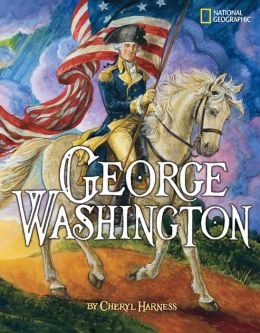
Happy President's Day, as it were. Not George Washington's birthday anniversary, as that was either on the 11th (the day before the anniversary of the birth of the other President whose day is no longer set aside) or will be day after tomorrow, depending on what century you're in, by what calendar you order your days, but the Virginian's well worth the celebrating, whether or not you note his existence by cutting cherries from red construction paper or simply spend a moment pondering his genuine valor. Untrodden ground and all that.
I've a book just published four days ago - that's something. Didn't write it so it's not really mine. After all, in the beginning was the wordnot the illustrations. But I scribbled, drew, studied grainy copies of long-ago photographs and paintings, wondered about those vanished worlds, what the people and really looked like in life, laughing and speaking; erased, drew, went over the lines in pen, erased, went over the pen-lines with watercolor, popped the color with colored pencil and pastel, and had a fine time doing it.
And this wonderful blog, this ongoing conversation, has gone on for four entire years – that IS indeed something. How did I come to be a part of it? I was in Warrensburg, Missouri, at a children's literature festival, sitting across a table from Jan Greenburg, who suggested I contact somebody named Linda Salzman, thank goodness and bless 'em.
And, AND, it was half a century ago this very day, after countless months of preparation, less than 60 years after Kitty Hawk, that a blue-eyed aviator was strapped in for a completely unprecedented flight. Wahoobaybee – man oh man, it's worth it, being this old to have the memory of that day.
17,500 MPH! Thrice around the planet. I hope the angels got a message to George Washington, another fellow deeply possessed of the right stuff. He'd have gotten a bang out of that.
God speed, John Glenn.

Monday, January 16, 2012

A Couple of Gravely Endangered Humans


"The function of education is to teach one to think intensively and to think critically. Intelligence plus character – that is the goal of true education."
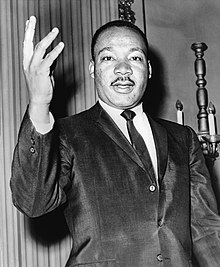
Dr. Martin Luther King, Jr. , who might have been celebrating his 83rd birthday with his children and grandchildren. He might well have taken time from the festivities to accept an invitation to one or another of the Sunday morning TV talkfests this past weekend to talk about the candidates and the issues faced in the upcoming primary in South Carolina. Would that we could've seen the old warrior, note the whiteness of his hair, how four score and three years were reflected in his face, and heard what scorching words he'd have chosen to say about them and the state of the nation. Would've But no.

"The mountain gorilla faces grave danger of extinction, primarily because of the encroachments of native man upon its habitat – and neglect by civilized man, who does not conscientiously protect even the limited areas now allotted for the gorilla's survival." Dian Fossey, a.k.a. Nyiramachabelli (Her nickname, given to her by her native Rwandan neighbors, means "the woman who lives alone on the mountain."), from her article, Making Friends With Mountain Gorillas, National Geographic, published in January 1970, back when I was a college dork and Richard Nixon was in office. (Doesn't it just knock you out that that wily old politician would have turned 99 just the other day? It does me.) In a kinder, gentler world, the old warrior woman would have been celebrating her 80th birthday today, but no.
Our world is not without gentility and kindness, but because we are capable of self-interested, cruel, and nasty impulses, Dr. King and Dr. Fossey are not among us, the living, today, because they were murdered by their fellow humans. Because they are well worth knowing, many a handsome book has been written about them, their works, and their valiant lives, cruelly cut short.
For instance:
Doreen Rappaport's life of Dr. MLK, Martin's Big Words, illustrated by Bryan Collier.
AND – if I hadn't been writing this blogpost today, I might never have known about this beautiful book. Gee whiz Cheryl, wake up & smell the coffee, why doncha – My Brother Martin: A Sister Remembers Growing Up with the Rev. Dr. Martin Luther King Jr., by Christine King Farris, with handsome illustrations by that smartypants genius Chris Soenpiet.
As to books about Dian Fossey, do check out the Nat'l Geographic's completely gorgeous photobiography, Light Shining Through the Mist.
There is Heidi Moore's book, too, in Raintree's "Great Naturalists" series, and, of course, absolutely, turn to Gorillas in the Mist. Dr. Fossey's own book begins with these words: "I spent many years longing to go to Africa..."
Ah well. Thence to heaven.
Once a long time ago, Martin and Dian were winter babies, brand new and unaware. Read about them today, tell about them today, lest they be forgotten in this mean old world.

Monday, December 19, 2011

Picture This


My fellow INK-ers have been writing some well-considered, provocative, and inspiring posts about the travails of writing and keeping the inner fires stoked. Blowing on the coals. I'm reminded that it surely is and has been a whole lot easier to get down to work when the work to be done involves the illustrations. Mainly because, for me, one needn't have silence when one is drawing. When writing, let all be still, which requires the will to turn off the radio, the discipline to do that every day until the manuscript is done. Only then can I be considering the knowledge gained from research, distilling it down, and combining it with my imagination. So I can let my informed daydreams speak and report on what they say. A romantic notion, but there you are. You have to ponder: What did they know? What was it like for the Adamses of Braintree, for instance?
Sure, the text comes first, book-wise. As it says in the Bible, 'in the beginning was the Word,' NOT the pictures, but of course I'm ever mindful of the images as I've written my manuscripts. I'm figuring out what elements of the story they will show and tell. So, by the way, it came as a shock when recently I was told, having sold a manuscript, that some art director preferred anyone's illustrations but mine. But that's another story, one that a discreet person would not disclose, in the spirit of not letting others see one pout.
Kids often ask me, 'which do you like better, writing or illustrating?' I'll tell them that writing is harder, requiring, as Mr. Murphy and Ms. Stone and the other INK-ers have pointed out, constant recharging, offering up your daily silence, flowers, and boxes of chocolates to the Muse. You have to be quiet and think, but it's ever so satisfying - shoot, it's a thrill! – when that discipline is repaid in those moments in which you find yourself having typed out words that sing, that are smarter than you know yourself to be. Thanks, Gracious Muse.
Then the pictures. I tell those little squirts, bless 'em, illustrating's easier for me because I've had so much more practice, but that's not the whole story. As it is in the writing, I have to be still when I'm composing the rough drawings. It involves a lot of staring at a blank pad of tracing paper on which I've ruled out the borders. I'm surrounded with library books, propped, kept open with bulldog clamps. Photographs of the Adamses' homestead, of their old portraits, of 18th century costume, reenactors walking about at Historic Williamsburg. You do a great deal of scribbling, tracing over and refining those scribbles. Ah, but then comes the painting. It's rather like driving across town and having arrived at your destination, you don't remember the mechanics of driving, those thousands of decisions made with a different part of your brain.
Painting a picture makes for a long day, a week's worth of long days for just one spread. Charging up for that requires only this: Fix a cuppa coffee. Fill the water jar. Open up the battered paintbox I bought for Mr. Ellis's watercolor class in the summer of 1971. Pop a cassette or CD of whatever recorded book I'm listening to and go into a dream. Paintbrush in the water, in the scumble of paint, into the penciled outline on the pristine, bleached cardboard. First a wash of color then another darker bit where the imagined sunlight does not fall. And pretty soon there are people there, at least their images, of what storied John and Abigail, their four children, their uncomfortable, smelly, candlelit world might have been like.
At the end of the day, often well past midnight, my hand hurts, that upon which I've sat hurts as well, and I look pretty dreadful, but the blank rectangle of illustration board is filling with color. I can't wait to get back to it next morning. It's as if the lights go down in the theater and the imagined world comes alive.
Gosh, I've loved it.

Friday, December 9, 2011

My History

Last week, I took a trip down memory lane when I attended the annual convention of the National Council for the Social Studies (NCSS) in Washington, D.C. It was my first NCSS conference since 1977, when I was a recent college graduate doing research for an American history textbook that Scholastic was planning to publish. The book was written and field tested, but never saw the light of day, due to the company’s change of heart about entering the basal social studies market. I soon moved on to Scholastic Newstime, a newsmagazine for sixth graders, and eventually, to the company’s math and science publications.

My excitement at being surrounded by social studies teachers again after going to a few dozen math and science teacher conferences was tempered by the news I received on Saturday that a former Scholastic colleague had passed away. Eric Oatman was the editor of Search magazine in the late 1970s and early 1980s, and he was the first person to pay me to write about American history. Besides hiring me as the freelance writer of the teaching guides and reproducibles that accompanied the magazines, Eric also assigned me the articles and history plays that nudged me toward my current career as an author focusing on history. I wrote articles about men who hauled freight across the Old West; an oral history project with World War II Rosie the Riveters; the influenza epidemic of 1918-1919; and the spirit of exploration in America. My classroom plays dramatized the exploits of a former slave who spied for the Americans during the Revolutionary War; the kidnapping of Daniel Boone’s daughter in 1776; and a family’s westward journey during the Gold Rush.

Writing for Search allowed me to indulge my endless curiosity about the people who were left out of the American history textbooks I read when I was growing up. It also gave me the chance to earn a little extra money as I established my independence. (I still have the reclining chair, lovingly called my “Search chair,” that I bought with my first $300 check.) Eric was a wise and enthusiastic editor, offering a guiding hand but letting me go where the stories took me. I also appreciated that he was not without a sense of irony. In 1983, when Search and Senior Scholastic were folded into a new publication, Scholastic Update, Eric assigned me to write the magazine’s last play. It followed Amelia Earhart’s preparations before she set out on the 1937 flight from which she never returned.

Fortunately, Search did return when Scholastic resurrected it a few years later for another run under three different editors. By then, Eric had moved on to start the company’s sponsored publishing program, setting the standards that guided it in its early years. (He later became a news and features editor for School Library Journal.) And I had become entrenched in math, thrilled to be part of a dynamic editorial team dedicated to making number sense and problem solving relevant to young lives. But the seed had been sown. I longingly read the new Search, occasionally contributed short articles to it, and wondered if writing history was what I was meant to do. I guess it was, because I eventually found my way back. So thanks, Eric, for starting me on my journey.

Note: The Search cover above is from 1980, but it asks a question we could very well ask today.

Monday, November 21, 2011

Those Pilgrims


"From my years young in days of youth,
God did make known to me his truth,
And call'd me from my native place
For to enjoy the means of grace.
In wilderness he did me guide,
And in strange lands for me provide.
In fears and wants, through weal and woe,
A pilgrim, passed I to and fro."
William Bradford of Plymouth Colony (1590~1657)

So, it was a work of historical fiction that set me to doing the sort of picture books I've done over these past twenty years. On my first trip to call upon editors, back in the spring of 1985 – how grateful I was not to have wound up dead a dumpster somewhere in tremendously frightening NYC – I got an assignment to do cover art for a new paperback edition of Patricia Clapp's first novel, Constance: A Story of Early Plymouth. Constance Hopkins, the book was about. Fourteen years old she was, the year Constance came to the New World and what a wretched adventure it had to have been. Being a sissypants myself, never would I have set foot on the Good Ship Mayflower. Then again, did Constance (Connie to her friends?) or any of the other womenfolk have any say in the matter? Not likely. And being a timid sort, I was so knocked out by the courage of these seafaring pioneers ("Mayflower-cruising, Jesus freak corn rustlers," according to smartypants Sarah Vowell on the Daily Show last week, in the course of which she calls attention to NY's Evacuation Day, 1783), that I was inspired to do my own book about them. Of course I visited "Plimoth Plantation" in the course of my research. (Do check out this link to the glorious living history operation. Do, if you haven't, pay the place a visit.) Sure I hit the library pretty hard, research-wise, AND I watched MGM's 1952 Technicolor take on the Plymouth Adventure ( I don't care if it DID feature always-good Van Johnson, the great Spencer Tracy and not-so-great-but-boy-howdy-what-a-beauty Gene Tierney - that was one ghastly movie. Ms. Tierney played Wm. Bradford's wife Dorothy, who actually did either fall or jump off the Mayflower into the drink, poor soul. I'm amazed that more of them didn't. It's suggested in the movie that she went overboard rather than give into her lust for Mr. Tracy, who played the ship's master.)
As for other books about the wayfarers:
Pilgrims of Plymouth, by that brilliant Susan E. Goodman. The National Geographic also published the handsome Mayflower 1620: A New Look at a Pilgrim Voyage (Peter Arenstam) and 1621: A New Look at Thanksgiving (Catherine O'Neill Grace). And a blockhead I would be if I didn't mention The Adventurous Life of Myles Standish and the Amazing-But-True Survival Story of Plymouth Colony, 144 pp., "painstakingly written and illustrated" by me, in part in order to tell the Pilgrims' back story and what happened after that so-called First Thanksgiving.

As for Thanksgiving, I count those of you reading this and my fellow INK-ers among my many blessings. And do be singing this (to the tune of We Gather Together...) with your dear ones on Thursday these new lyrics I wrote:

Thank you for turkey and plenty of stuffing

Of giblets, chopped onion and bread, sage, and thyme

And mashed potatoes, marshmallows, sweet potatoes

Hot gravy and carrots and corn and green beans.

Thank you for hot buttered rolls, jam, and jelly

Glass dishes of celery and pickles and beets.

We all will make merry with sauces of cranberry

And if there’s still room, we will have pumpkin pie.

Thank you for friends and our family here gathered

For all of our blessings, protection divine

For these years of living we all are thanks-giving,

For whipped cream & hot coffee & cold pumpkin pie.