Tuesday, January 20, 2009

Party! (and win a free book)

It is a day worthy of grand celebration. Lets party the interesting nonfiction for kids way!

First of all, we’ll need some party hats. Paper Plate Crafts by Laura Check can show us how to make party hats using only paper plates. For example, you can never go wrong with a chicken hat. Note—I’m not certain the chicken hat is from this book; just another example of how creative you can be with a paper plate.

Food? Of course, we’ll let the kids cook some up themselves. Mollie Katzen’s Honest Pretzels should be all we need to get them set up on their own. With 64 concise, easy to follow recipes there are more than a fair share of snacks and desserts just as it should be.


OK, now what should we do? Lets play some games! Forget the Wii, we want games like when we were kids, with just a concrete sidewalk and perhaps a new pink spaldeen to amuse ourselves. Jack Maguire's Hopscotch, Hangman, Hot Potato, and Ha Ha Ha is an essential addition to fun party planning magnificence. From Red Rover to Marbles the games are all here. They don't all have the same names that I used to call them but I found some version of every schoolyard game I looked up.


John Lithgow is our kind of party guy. Lets invite him and have him bring a copy of his book,A Lithgow Palooza. 101 Ways to Entertain and Inspire Your Kids. We’ve paloozed quite a few times at my house. From charades to one man bands to poetry slams, it’s all great fun. And he even has sidebars that list “Good Books.” Now that’s thinking like an I.N.K. partier.


The best kids party game I've ever found is from a book called, I Saw a Purple Cow by Ann Cole, Carolyn Haas, Faith Bushnell, and Betty Weinberger. The game is called Cats and Dogs. We’ve played this game at my kids parties for years. It’s now considered mandatory by all of their friends.

Here are the instructions directly from I Saw A Purple Cow.


You need: wrapped candy, peanuts or pennies; 2 small paper bags or juice cans (one marked “Cats,” the other “Dogs”)
1. Hide the candy, or nuts or pennies around the room or yard before the guests arrive. (*We usually use plastic easter eggs. They're easy to find and can be purchased cheaply in large quantities.*)
2. Divide everybody into 2 teams: the Cats and the Dogs. Have the Dogs practice saying “woof woof” and the cats “meow meow”
3. Choose a captain for each team and give him his “team bag.”
4. At the “go” signal, everyone hunts for the hidden objects. When a player finds one, instead of picking it up, he must meow if he is a Cat or bark if he is a Dog, until his captain comes to put the candy into the “team bag.”
5. When all the goodies have been found, count them: the team with the most wins. The captains then divide the winnings among their teammates.
If you’ve never been to a party where all the guests are barking and meowing at once, you’ve really got to try it.


I Saw a Purple Cow has many other wonderful games, crafts and ways to explore the natural world. I love this book so much that when I saw a copy of it in the remainder bin at a library sale, I had to rescue it even though I already owned my own copy.

In the party spirit, I’ll send my library copy of Purple Cow to any I.N.K. reader who will use it well. Just leave a comment. If there is more than one person interested, we’ll have to think of a game to pick the winner.

Party on.

*Edited to add--looks like we'll be playing a party game! Please check next Tuesday, January 27th. I'll come up with a game and pick a winner. More party participants welcome until then.

Monday, January 19, 2009

From There To Here

Tomorrow’s blog would write itself; the inauguration of America’s first Black president is ripe with meaning and historical parallels would beg to be told. But here I am, assigned this entry, a day shy of the big event. (Writing about the inauguration now would be like shooting fireworks on the 3rd of July: it’s more about noise than celebration.)

So, as a kind of counterpoint to tomorrow’s shining moment, let me offer a distinctly grubbier instance from our past: NYC at the turn of the last century.

Machine politics ran the City, Tammany Hall ran the Machine, and (mostly) Irish Democratic politicians ran Tammany Hall. (The City was so pervasively Celtic that Italian and Jewish crooks felt compelled to take on Irish monikers to get ahead. On the other side of the law was a police department that was ¾ Irish.)

Among the Tammany Hall “stars” were:

Big Tim Sullivan who collected tribute from gambling halls and shook down honest business people, using the money to buy votes. His realm, lower Manhattan, was solidly Democratic. Despite his crooked ways, he was known for his generosity, setting out, for example, Christmas dinner for 5000 Bowery bums.

Big Bill Devery was Chief of Police who sold police protection to crooks. His corrupt behavior inspired the NY legislature to abolish his office. To this day, there is no NYPD Police Chief. Deverey and a couple of his cronies brought the baseball Yankees to New York.

Boss Croker dealt in graft, enriching Tammany Hall and himself. Ostensibly only a humble civil servant, he accumulated two NYC houses, another in Tennessee, three in England, and mansions in Palm Beach and Ireland. His lavish life style included raising thoroughbreds. He stipulated that Orby, his favorite racehorse, should be buried next to him.

And my point?

First, is to remind us that we’ve managed to come from Boss Croker to Barack Obama. Of course, the path hasn’t been straight; the last 8 years have certainly been a costly detour. But we still managed to get here.

Secondly – and perhaps more apropos to this blog – is that villains can still make great stories.

To learn more read Luc Sante’s Lowlife and Mike Dash’s Satan’s Circus.

Happy Inauguration Day.

Friday, January 16, 2009

Hello 2009. A Sad Farewell to Blog.

This blog marks a full 12 months of INK Blogs by yours truly and it will sadly be my last, at least for the time being. I have very much enjoyed participating in INK and have learned a lot from my nonfiction colleagues. I especially appreciate Linda’s vision for the site and everyone’s passion for great nonfiction. To be honest, though, I’m about out of things to say right now and thought it would be a good opportunity to step aside for a fresher voice. I’d like to part with a few 2009 observations.

As this new year arrives, children’s nonfiction—like the rest of publishing—is facing scary times. Sales are down. Publishers are cutting staff, canceling projects, and delaying others. Proposals that would have been no-brainers a year ago are being turned down. All of these things affect writers as well as the books you’ll see coming out in the coming years. I’m guessing series and library publishers will keep doing their thing, but I expect trade nonfiction to be hit especially hard. The number of quality trade nonfiction books will probably fall and some of us will no longer be able to make a living at this.

The tendency I’ve observed in such times is for publishers to grow more conservative and look only for what’s been successful before. In doing so, they end up putting out weaker work, but they also shoot themselves in the foot. It’s only by taking chances, after all, that a publisher comes up with the next great thing, the next big—or moderate--hit. For those of us that like to work on a large variety of different work, this can be discouraging.

Instead of getting depressed, however, I’ve decided to use this down period to a) survive and b) invest in myself. That second part is especially important. Not being on the treadmill to meet deadlines and get out proposals gives a writer a real freedom to try new things. As anyone reading this blog knows, there are so many ways to present nonfiction that now is a good time to mess around with new approaches. Sure, they won’t all work, but I learn from each new thing I try—and some things will lead to better, more interesting books.

It also is a good time to diversify, something I’ve talked about before. One neat project I’m working on now is an environmental book for a curriculum company. After stating in my last blog that I probably wouldn’t write a global warming book, guess what this new book is about? It’s a neat project for several reasons. First, I really like the people I’m working with. They are much more down-to-earth and responsive than the harried, overworked staff of most large publishers. Second, I get to write about things that would never make it into a trade book on the same subject.

So, in saying “mas tarde” to my fellow bloggers and readers here, I’d like to wish you a wonderful 2009, but especially hope that you find the many silver linings in the world’s present situation. It’s these kinds of conditions that give rise to great art, new opportunities, and more meaningful relationships.

Thursday, January 15, 2009

On This Day

Nonfiction books need compelling beginnings. And on this day, January 15, there are many from which to choose. In honor of Martin Luther King, Jr.’s birthday, here are a few momentous moments in history. The books shown complement these moments. (Note: Try as I might, I could not get the sizing right, my apologies!)

On this day in 1810, American abolitionist and feminist Abigail Kelley Foster was born. Her 1850 quote from the Woman’s Rights Convention hangs in my office: “Sisters, bloody feet have worn smooth the path by which you come here!”

On this day in 1896, Matthew Brady, American photographer, died. Think of how different our knowledge of American history and the Civil War would have been without him. His work birthed the entire field of photojournalism.

On this day in 1777, my now-home state of Vermont declared its independence from Great Britain.

On this day in 1870, cartoonist Thomas Nast drew a donkey to symbolize the Democratic Party. It stuck.

On this day in 1997, Princess Diana called for an international ban on land mines.

And on this day in 1929, Martin Luther King, Jr. was born. I will not attempt to do justice to his life by summing it up so briefly here, but instead will leave you with this MLK quote, delivered upon his acceptance of the Nobel Peace Prize in 1964.

“I refuse to accept the view that mankind is so tragically bound to the starless midnight of racism and war that the bright daybreak of peace and brotherhood can never become a reality.”

Personally, I cannot think of a better time to let those words ring in our ears, as we issue in a new political day in our great nation. Think of all the compelling beginnings yet to come.

Tuesday, January 13, 2009

Random Facts

As I held my mouse today and stared at a blank screen for a few minutes in my typical pre-blog-writing ritual, I was reminded of a cartoon I saw years ago in The New Yorker. There were two frames. In the first, a man sits before a typewriter that holds a blank sheet of paper. He is staring out a window. The caption reads “Temporary writer’s bock”. In the second frame, the same man sits in the same position staring out a similar window, but this time he wears an apron and the words “Butcher Shop” appear on the glass in front of him. The caption reads “Permanent writer’s block.”

Since I am not wearing an apron, I’m confident that what I’m experiencing is only temporary. Still, there is a deadline.

So, I’ve decided to share a few entries from a list of things I routinely paste into a document eloquently titled “book idea random facts.” These are tidbits about the natural world that I have found especially interesting. So interesting, in fact, that entire books could be written about each of them. Wait. . . someone’s already done that?

But not the book I’d write. That’s why I don’t mind sharing. It’s an open-source approach to non-fiction writing, the only kind there should be. Besides, you might not even be interested.

I have added attributions and links with more information to a few items, where I could find them.

Here goes, in no particular order:

It’s difficult to imagine an animal of one species giving birth to one of another species, but if you think one generation at a time, you’ll recognize an unbroken link from child, to parent, to grandparent and so on from yourself back to the first unicellular life forms.

Humans did not evolve from modern apes, but humans and modern apes shared a common ancestor, a species that no longer exists. — National Academy of Sciences: Science and Creationism: A View from the National Academy of Sciences

There are fossils on the summit of Mount Everest. OK, this doesn’t come as a complete surprise, if you know a little bit about geology — specifically plate tectonics. Still pretty interesting. On a related note, my father, a physicist and astronomer who enjoys making calculations about this sort of thing, figured that if, as a surprising number of people assert, the flood in Genesis is the explanation for these fossils, and that the water covering Mt. Everest evaporated and is now part of the atmosphere, the earth’s atmospheric pressure should be about 900 times greater than it actually is.

An average person has ten times more bacteria cells living in their intestines than there are human cells in their body (which contains 10 trillion to 100 trillion human cells).

All living humans are the descendants of a single woman who lived in Africa between 100,00 and 200,000 years ago.

A piece of matter the size of a pea from a neutron star weighs far more than an aircraft carrier.

Roughly 100,000,000 neutrinos — tiny high-energy particles produced by stars — pass through each square centimeter of your body every second. On average, however, only once in a human lifespan there will be a collision between a neutrino and an atom in your body.

It’s so cold on Pluto that when the former planet is in the part of its orbit that is more distant from the sun its atmosphere — probably methane and nitrogen — freezes and falls to the ground.

Most of Earth’s biomass - the weight of all living things on earth - may exist in the form of subterranean bacteria.

Your probability of dying from an asteroid collision with the earth is about the same as that of perishing in a commercial airline accident.

The Andromeda galaxy and our own Milky Way are likely to collide in about three billion years. Not to worry. If you happen to be around to observe the collision, the stars in each galaxy are so spread out that you probably won’t be affected.

Life as we know it would be impossible without supernovae, since elements heavier than iron (many of which are required for life) form only when stars collapse and explode.

It’s likely that the eye has independently evolved at least 40 times throughout the history of life on earth.

Fold sheet of paper on itself 100 times, and the result will be an object thicker than the diameter of the known universe.

If a grain of sand represented all the matter in the universe, it would float in an otherwise empty box 20 miles on a side. (
an Isaac Asimov paraphrase)

If a star is a grain of salt, the observable stars (naked eye) will fit into a teaspoon. All the stars in the universe will fill a sphere 8 miles across. — Stephen Hawking, A Briefer history of Time

There are many more molecules in a glass of water than there are glasses of water in the sea. There are also, to give another example, more cells in one finger than there are people in the world.
— Lewis Wolpert


I hope there was something here that made you stop, for just a moment, and gaze out that window. The one without “Butcher Shop” written on it.

Monday, January 12, 2009

What’s New for 2009, or “How Weird Is It?”

Trust Kathryn Lasky to be first up with what may end as one of the year’s best— One Beetle Too Many: The Extraordinary Adventures of Charles Darwin. It’s a sumptuous party for He-Who-Must-Not-Be-Named in certain swaths of the population. The title (which, with a vowel change, could have been One Beatle Too Many: The Story of Pete Best) refers to the famous incident in which young Charles found himself with three rare beetles and only two hands. Showing his dedication early on, he popped one bug in his mouth until he could get to his collecting bottle. The text goes on to shape Darwin into a flesh-and-blood being, and explains the “evolution” of his theories in ways that go down easily. Despite an abrupt ending (without even an author's note to provide more context), this scores points for addressing head-on how evolution fit in with Darwin’s religious beliefs, what creationism is, and the controversy hinted at by Lasky’s dedication: “In celebration of children, whose boundless curiosity gives them a right to know their history on Earth.” Matthew Trueman’s illustrations in mixed-media (the media including weeds and wildflowers) are to drool over (Candlewick, ages 9-12).

Among the millions and billions of Lincoln titles (of which I will have one, Abraham Lincoln Tells a Joke, in 2010), one of the most un-put-down-able is Chasing Lincoln's Killer. James L. Swanson has taken his adult bestseller Manhunt: The 12-Day Chase for Lincoln's Killer and refashioned it with verve for young adults. “Chase” is the operative word—this search for John Wilkes Booth and his conspirators moves at a rip-snorting clip, aided by lots of just-what-you'd-want-to-know details and an energetic design in sepia printed on creamy stock (Scholastic, ages 12 and up).

A big “wow” goes to How Weird Is It? A Freaky Book All About Strangeness by Ben Hillman. With alluring chapters like “Fungus Is Family” and photos cleverly Photo-shopped for maximum drama, this looks like a tabloid-y item you might hand to the most reluctant of reluctant readers. Surprise—it’s a science book. A real one, with unsourced but fascinating information about neutron stars, the Big Bang, dark energy, plagues, ghost particles, bizarre animals, what Martians might look us (us), all the latest hot topics in science. For any reader, reluctant or otherwise (Scholastic, ages 8-12).

Finally, we say farewell to 2008 titles (while wondering if the ALA committees will reward any of them come January 26). My apologies to the ones I didn’t get to, like Brenda Z. Guiberson's purely poetic Ice Bears… the dreamy All About Sleep From A to Zzzz by Elaine Scott (drawings by John O'Brien!!)… the truly niche-filling Sing My Song: A Kid's Guide to Songwriting by Steve Seskin... Sandra Markle's innovative Animals Christopher Columbus Saw: An Adventure in the New World…. what else did I miss???

Thursday, January 8, 2009

No Rocks in Her Head

In my last blog entry, I asked what nonfiction kids books should be stocked in any self-respecting bookstore. Among the comments from readers (which were disappointingly few, I might add) was Marcia Calhoun Forecki’s suggestion of The School Children’s Blizzard by Marty Rhodes Figley and Shelly O. Haas and Blizzard: The 1888 Whiteout by Jacqueline Ball. Because every self-respecting bookstore should have at least 4 books on the 1888 storm, I added two more on the subject, Blizzard: The Storm that Changed America by Jim Murphy and a picture book by the author I’m writing about today, Terrible Storm by Carol Otis Hurst.

Carol was a friend of mine who, sadly, died two years ago. She was a teacher, professional storyteller, and language-arts consultant who, again sadly, did not start writing kids books until she was 70. She published several worthy novels. But I thought her strongest work was her nonfiction—the delightful Terrible Storm and the extraordinary Rocks in His Head, an ALA Notable and a Boston Globe-Horn Book Award Honor Book.


Both of these books combined everything Carol was good at. She had a wry but hearty sense of humor. She told the best story you ever heard with the right cadence and buildup that took you to a satisfying finish. And she had an amazing sense of place—both in her soul and in her writing.

I’m Jewish. Like most Jewish Americans my age, I had grandparents with accents and a family history that disappears into a genealogical black hole more than three generations back. Do I know what my great-grandfather’s life in the shtetl was like? No. And what were those priceless punchlines I missed when Bubbe made cracks in Yiddish?

Carol’s family wasn’t very fancy, but they had lived in Massachusetts since dirt—and I almost mean that literally. Let’s just say the DAR had nothing on her. Generation after generation living in the same place, knowing the land, knowing the culture and history, knowing each other. There was a lot of porch sitting in New England before TV and videogames so there were a lot of stories told.

Terrible Storm and Rocks in His Head are both grounded in all of this. The first is the story of her two grandfathers, how these very different men thought of and rode out the Blizzard of 1888. Rocks is the story of Carol’s father and what can sometimes happen when a dreamer follows his or heart and passion.

They are fine nonfiction. They are simple portraits of complicated people. They take place in important times of our history, their settings drawn with vivid detail. And they are wry but hearty stories with the right cadence and buildup that takes you to two satisfying ends.

Wednesday, January 7, 2009

Good Teaching--Bottled and Preserved


I’ve just finished reading Rafe Esquith’s Teach Like Your Hair’s on Fire. He teaches fifth grade in Los Angeles at a huge inner city school with remarkable results; his students routinely test in the top 5-10% while the average third-grader in his school tests in the bottom 20%. Rafe claims the difference is simply lots of extra time doing hard work. He and his kids are in his classroom from 6:30 am to dinner time every day, in a year round school, on weekends and during vacations. Everything they do, from performing Shakespeare, to class trips, to life in the classroom, is a teachable moment. Rafe’s students are, for the most part, the children of immigrants and his classroom is their escape route from poverty to the American dream. If all teachers were as dedicated as Rafe Esquith, education in this country wouldn’t be in trouble. If only there were a way to capture his essence, bottle it, bring it up to scale so that it was accessible to all teachers. But unfortunately, according to Rafe, there are no shortcuts. He can impact only about 30 students a year.


Like many other nonfiction authors, I started out as a teacher who wanted to share my enthusiasm for my subject with my students. As a young junior high science teacher, I had 150 students, 5 classes and 3 preparations a day. Teaching was a whirlwind job. There was never any time to stop and think how to present material so that my students would be blown away by the audacity of the ideas and concepts that scientists had labored so long and hard to produce. In fact, stopping and thinking doesn’t seem to be a part of the job description for most active teachers, Rafe Esquith excepted. And that explains why I became a writer.


It is our job to stop and think. We dwell on the big ideas. Just as there are no shortcuts to good teaching, good writing takes insightfulness, craft, knowledge of one’s readers, and above all time. It always amazes me that even when I write in white heat, when the words pour forth effortlessly, cooler reflection the next day shows me how to restate things with more clarity and power. And when words come like blood from a stone, when I’m just going through the motions to get something, anything down, I’m just as amazed upon rereading my efforts the next day to find that my words don’t seem labored.


Communication depends on shared humanity—the single passionate voice—of the dedicated teacher or the accomplished author. Who Rafe Esquith is as a human being is as important as the skills he teaches. Connecting with other people depends on a subtext of human emotion, where it’s clear that the teacher/author cares about both the subject and the student/ reader. No textbook, written by a committee to fulfill specific curriculum objectives will excite students any more than a fearful, limited and repressed personality can inspire a class. In fact, I think textbooks kill two birds with one stone: the desire to read and the desire to learn.
So, my friends, let’s keep up the good work. Our books are the essence of good teaching already bottled and preserved, ready to be consumed.

Tuesday, January 6, 2009

"Meeting" the Author

School visits are a great way for kids to connect with the authors and illustrators behind their favorite books. Author/illustrator presentations can inspire young writers and artists and enrich the curriculum.

But not every school is able to host book creators on a regular basis. And not all authors and illustrators are able to travel far from home to visit students. What’s the solution? Videos.

Seeing someone on screen isn’t quite as powerful as a live visit, but videos are a great option for schools that lack the time, resources, or funding to bring in authors and illustrators. They’re also a great way for any school to increase their students’ exposure to book creators. And because teachers can watch the video clips in advance, they can easily build lesson plans around the footage.

Inspired by the wonderful videos I saw on TeachingBooks.net, I hatched a plan to create a series of short videos that had a professional look without a professional price tag.

First, I organized a group signing event for seven authors and author-illustrators in my area. All of them had new picture books coming out around the same time as my title When Rain Falls.


On the morning of the event, I arranged for the local cable access channel to film 20-minute interviews with each participant. The interviewer was Sue Burgess, a children’s literature educator who taught at a local college for many years and is a former Regional Coordinator for the Society of Children’s Book Writers and Illustrators.

The cable people were happy because they used the interviews and footage from the signing event to create three separate one-hour programs. The authors were happy because they got some great local publicity, and each one received copy of his or her interview to use for promotional purposes.

Working with the clever folks at Winding Oak, who designed and maintain my website, I isolated about 6 minutes of the interview and converted the footage into three short segments and posted them on my website in a sort of jukebox format. The segments answer the questions students and teachers ask me most frequently.
I’m very pleased with the result. What do you think?

Monday, January 5, 2009

Twelfth Night

For most people, the holidays have staggered off into storage until next Christmas.  However, may I remind you that today, January 5, is actually Twelfth Night?  The twelve days of Christmas (so tediously!) recounted each December conclude today with the twelve drummers drumming in the feast of the Epiphany with a loud bang.  So don't put away the wrapping paper yet, folks, it's Three Kings Day!  

I have selected three books for the occasion:  

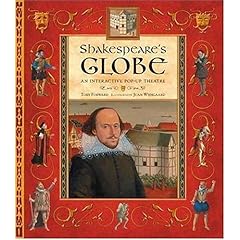
1. Shakespeare's Globe: An Interactive Pop-up Theatre, published by Candlewick.  Okay, it's not so much a book, but it is book-like.  For those who wish to carry the "Twelfth Night" theme in dramatic fashion.

Shakespeare's Globe: An Interactive Pop-up Theatre

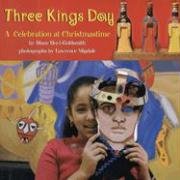
2. Three Kings Day: A Celebration at Christmastime by Diane Hoyt-Goldsmith and Lawrence Migdale, for those who want to note the day in an ecclesiastical fashion.

Three Kings Day: A Celebration at Christmastime

and lastly

3. Martin's Big Words, by Doreen Rappaport, illustrated by Bryan Collier, for those who want to celebrate the whole month, and not just today!  


Wednesday, December 31, 2008

Children's Nonfiction Book Lists

The last day of the year seems like a good time for lists. So I hope you will join me by posting lists of recommended nonfiction books.

Great nonfiction lists also make me think of the wonderful Coleen Salley, who passed away this year. She and Terry Young were among the first and most dedicated advocates of read aloud nonfiction. Coleen Salley was a great light in children's literature. Her joy was infectious and she had a gusto for life and literature that connected people in many parts of the children's book community. We just loved her in all her glory. Look up her name and "blog posts" and you will find a slew of great memories of her. Here's one that expresses her spirit, on Planet Esme.

Below is a link to some of those read aloud nonfiction lists Coleen and Terry compiled. I hope Terry will keep doing that work. He knows the field of science literature like no one else. He and Coleen put on some terrific "introducing science through literature" workshops at state and national conferences. Be sure to click the links on Coleen's site to find out more about her life and her books.

http://www.coleensalley.com/articles.htm

Below are some nonfiction-specific awards. Lists of their current and past winners can give anyone a great start on reading.

Robert F. Sibert Informational Book Medal
(Also check ALA's other awards for nonfiction as nonfiction is doing well in many categories these days!)
http://www.ala.org/ala/mgrps/divs/alsc/awardsgrants/bookmedia/sibertmedal/index.cfm

John Burroughs Award List of Nature Books for Young Readers
http://research.amnh.org/burroughs/young_readers_list.html

AAAS/Subaru/Science Books & Films Prizes for Best Science Books
http://www.sbfonline.com/prizes.htm

Horn Book List of Recommended Books
This divides nonfiction in the to following topics:
• American History and Biography
 • Astronomy, Chemistry, and Physics 
 • Human Body 
 • International History (includes some fiction)
 • Plants, Animals, and the Natural World
 • Prehistoric Life
http://www.hbook.com/resources/books/default.asp

I am sure there are many more lists that I have forgotten this morning. So feel free to speak up and add them.

Happy New Year to all!
April Pulley Sayre
http://www.aprilsayre.com/

Tuesday, December 30, 2008

Books I Gave for Christmas and Hanukkah

This year, as every year, I gave lots of books for holiday presents. I did buy other stuff too, but few people escaped without at least one book. This year, I’ve noticed that my list includes nearly all nonfiction, for children and adults.

My two- and five-year-old adorable great-nephews got a delicious new book, Jewish Holidays Cookbook: 50 festive meals for celebrating the year (DK Publishing) by Jill Bloomfield. This has the old standards as well as some new dishes, along with dollops of Jewish history. The book has lots of pictures and a handy spiral binding. (It reminds me of the old UNICEF children’s cookbook that was well spilled-upon by my children.)

My niece’s younger boy also got Susan Goldman Rubin’s beautiful art-board books, Counting with Wayne Thiebaud and Matisse: Dance for Joy (Chronicle.) These combine spare poetic text with gorgeous design and, of course, exquisite artwork. I gave the older boy a subscription to Ask magazine that delivers all sorts of nonfiction goodies with photos, drawings, and comic strips. The younger one got Ladybug, which mixes fiction and nonfiction.


Their parents, my niece and her husband, received two new books, I Love Dirt! 52 activities to help you and your kids discover the wonders of nature by Jennifer Ward, and The Creative Family by Amanda Blake Soule, full of indoor and outdoor arts, crafts, explorations, and family rituals. Both are from Trumpeter/Shambala.

My son, a Montanan and superb cook, got Montana Cooking: A Taste of the Big Sky Country (Glove Pequot/Three Fork) by Greg Patten, gourmet chef, and husband of INK guest blogger Dorothy Hinshaw Patent. Elk steak and huckleberry muffins, anyone? One more cookbook (and wine guide) made its way to Canada to my brother-in-law, another superb cook: Anything but Chardonnay: a guide to the other grapes (Stewart, Tabori, and Chang) by Laura Holmes Haddad.

My daughter, a Londoner, got a new book from the UK, written by a friend of mine: More Than Just A Game: Football v Apartheid (HarperCollins UK) by Chuck Korr and Marvin Close. This tells the thrilling story of a soccer league established by political prisoners at the notorious Robben Island prison in South Africa. I hope HC brings out a U.S. edition soon. Marvin tells me they are considering writing a YA version, though any soccer and/or politico teen could handle the adult book. Derelict London (Random House UK) by Paul Talling provides a funky alternative tourist guide to London history and architecture for the whole family – including me, in London as you read this.

My writer’s group exchanges already-read books at our December meeting. This year I offered the classic and classy Eats Shoots & Leaves by Lynne Truss – not my own copy which I refuse to relinquish, but a copy bought at my library’s book sale. There’s a children’s version meant for younger readers.

Regular shipments of library sale books cross the country during the year for my 97-year-old mother in law, an intrepid reader. She, the dedicatee of my biography of Jeannette Rankin, loves women’s history and so received not-so-current biographies of Abigail Adams and the wives of Henry VIII, along with a last-minute fictional find, Restoration, a delectable novel of 17th century England by Rose Tremain.

It says something about our times – or perhaps just my family – that men (and boys) got the cookbooks and women got history and sports. As for me, I read them all.

Happy New Year to nonfiction lovers everywhere!