I’m working on a picture book with a prehistoric theme, so have been on the hunt for good reference material. While there are zillions of books about the multitudes of fabulous dinosaurs, it’s been more difficult to find information about all those other intriguing critters from cyanobacteria to giant sea scorpions to Diictodon (“the gopher of the Permian,” i.e. a reptile that lived in burrows) to Ambulocetus (”the walking whale“) and many more. In addition to having a more inclusive view of all life throughout Earth’s prehistory, there had to be plenty of pictures, naturally. So here are a few books that include dinosaurs AND equally interesting non-dinos:
Super Little Giant Book of Prehistoric Creatures
by David Lambert and The Diagram Group
2006, 288 pages, 4" X 5".
This small book has clear illustrations, timelines, overviews of the major geological periods, and spotlights a good variety of animals with a description plus a summary of pronunciation of those tongue-twisting names, scientific classification, size, diet, location, and era.
The Complete Guide to Prehistoric Life
Tim Haines and Paul Chambers, the makers of the TV trilogy Walking With Dinosaurs/Beasts/Monsters
2005, 216 pages, 8.5" X 11.
This book has stunning digital illustrations with photo-realistic detail that bring the ancient world to frightening life. Presented in chronological order, there’s a written description of each animal and its lifestyle. From Thrinaxodon (a reptile with whiskers), to Giganotosaurus (the largest meat-eating dinosaur), to Entelodon (a rhino-sized pig) these are fascinating creatures to get acquainted with.
National Geographic Prehistoric Mammals
by Alan Turner, paintings by Mauricio Anton
2004, 192 pages, 8.5" X 11.25"
A splendid compendium starting with mammal-like reptiles then covering the major mammal groups such as marsupials, elephant relatives such as Deinotherium (nice chin tusks), primitive whales, tank-like Glyptodonts, bear-dogs, giant sloths, the largest land mammal (Indricotheres) and many more, including human ancestors. Many of the attractive illustrations also include the habitat that existed at the time.The World Encyclopedia of Dinosaurs & Prehistoric Creatures
by Dougal Dixon
2007, 512 pages, 7" X 9"
One of the largest guides I've found, with about 1,000 animals described and nicely illustrated. After summaries of the geological timescale, habitats, and the process of fossilization, the animals march in. Starting with early tetrapods (4-limbed descendants of fish), there are giant amphibians, early reptiles and mammals, ocean-dwelling reptiles such as plesiosaurs, flying pterosaurs, armored/grazing/meat-eating dinosaurs, almost-birds, early cats, dogs, camels, rhinos, primates... they’re all there and more in a mind-boggling parade of the incredible creatures that existed ages ago.
By the way, I haven't forgotten about prehistoric plants. There aren’t many books devoted to them exclusively, but many references include at least a token section about ancient flora. And not to neglect the wonders of the Internet... you can find recently unearthed discoveries too new to be in books by putting in search terms like “giant prehistoric rodent” and some cool critters may pop up.
The books above are for all ages, so here are a few picture books:
Prehistoric Actual Size
written and illustrated by Steve Jenkins 2005, 10" X 12", 32 pages with 2 gatefolds
By one of the I.N.K. blog’s own contributors, this book gives readers the opportunity to compare themselves to creatures depicted at life size, such a giant millipede, a three-inch shark, a chicken-sized dinosaur, and a terror bird. Like the books mentioned above, the featured animals include a nice diversity of prehistoric life in vibrant collage illustrations.
Bugs Before Time: Prehistoric Insects and Their Relatives
by Cathy Camper and Steve Kirk
This is one of the fews books that focus on prehistoric insects and other arthropods.
When Fish Got Feet, Sharks Got Teeth, and Bugs Began to Swarm: A Cartoon Prehistory of Life Long Before Dinosaurs
by Hannah Bonner
2007, 48 pages, 8.5" X 10.5 inches
also,
When Bugs Were Big, Plants Were Strange, and Tetrapods Stalked the Earth: A Cartoon Prehistory of Life before Dinosaurs
An introduction to life on Earth before dinos with a sense of humor.
For an incredibly comprehensive list of K-12 books about fossils, dinosaurs, and other prehistoric topics, check out the page compiled by retired science librarian Jack Mount.
As for the project that has inspired all this investigation, it’s in the dummy phase right now and may “evolve” a little or a lot before completion... anyway, here’s an excerpt:
Cocky
I am a little cockroach,
my family goes way back,
survival is our trademark,
despite nonstop attack.
Believe it or not, there are three more stanzas... look out world, she’s writing in verse!
Wednesday, June 18, 2008
Digging up Prehistoric Reference
Labels: Loreen Leedy, research, science
Wednesday, May 28, 2008
Oh, The Places You'll Go...
….. and the people you’ll meet when you write nonfiction! I know I’m not alone in loving – sometimes preferring – the research part of the job. Getting out of my head and on to the phone. Out of my office and into the big wide world.
People
Unless you’re writing about the president or a Beatle, you’ll probably find that the expert(s) on your subject are willing – nay, delighted – to speak to you. Most likely, they live in a rarified world with a few colleagues and a spouse who already know all their stories. You are a new audience, eager to hear what, how, and why their work is so fascinating and important. Of course you don’t begin by saying “Tell me about ______.” You read everything you can and formulate intelligent questions. What can they add that you haven’t already learned?
For my first book, The Wind at Work, Paul Gipe, a noted wind energy expert, invited me to his home for an interview and a look through his extensive photo collection. He let me use his photos free of charge. I also arranged a private tour of a wind turbine factory, got some free photos, and the company has been a loyal promoter of my book every since.
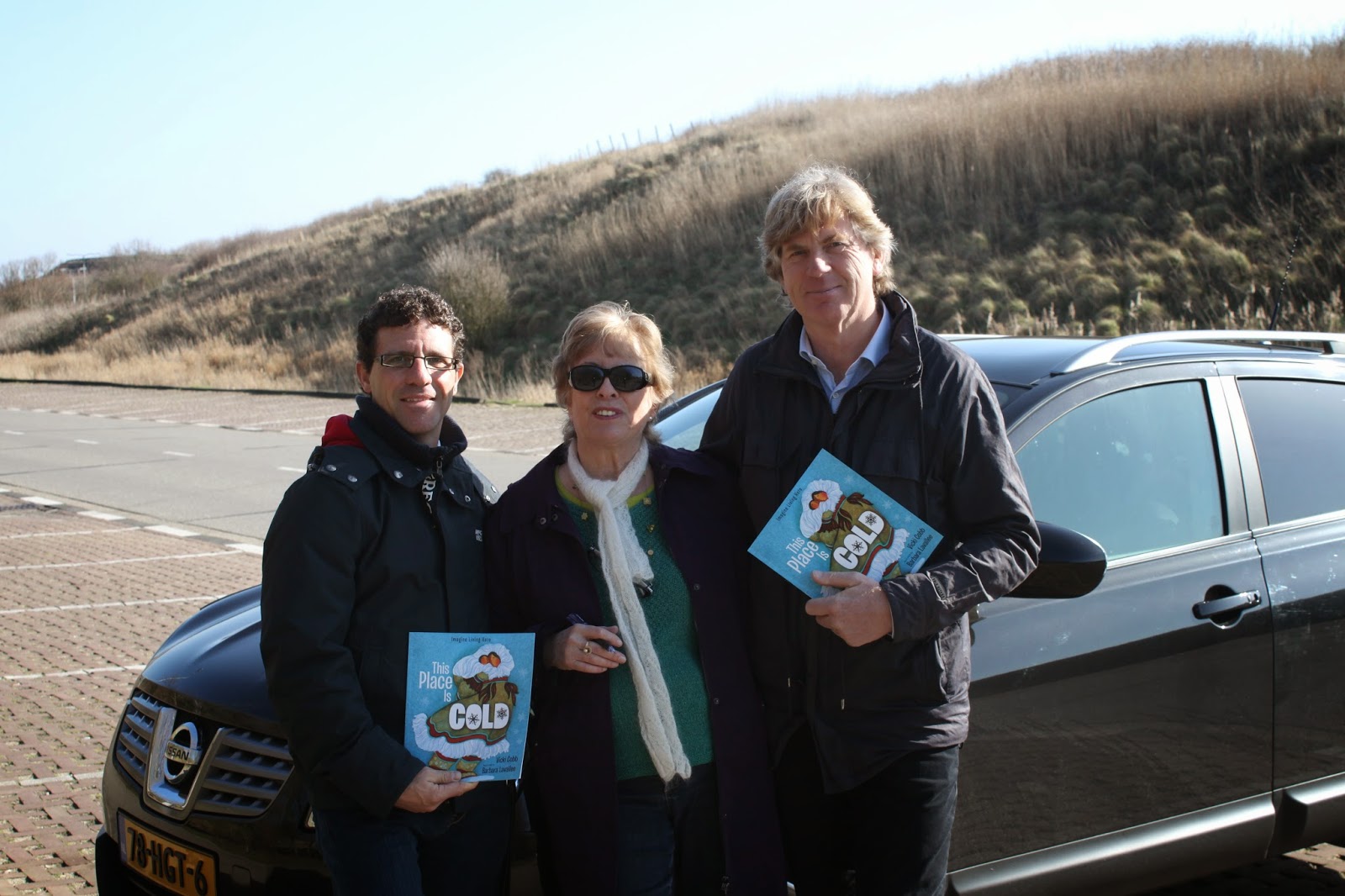
The Guild of Volunteer Millers in the Netherlands includes over a thousand windmillers and their apprentices. I visited one on a Sunday afternoon as he ran “his” restored windmill. Not only did I get a closeup look at and listen to the mill, but I learned that the windmills have to be operated regularly to prevent woodworm larvae from hatching in the beams. It's the vibrations that do that. A few miles away a tourist attraction with several windmills was jammed with people and busy millers. I had a windmill and a miller all to myself.
Not long ago I was researching a particular event in London in 1598. A new book came out that described the event in greater detail than I had found elsewhere. But still I had questions. I emailed the distinguished scholar/author and got a response within half an hour. The man mentioned his son as a prospective reader of my book.
Many towns have historical societies, or perhaps just a display case in the public library, with artifacts from the town’s past. Even more towns have one citizen, probably a native, who is the amateur historian extraordinaire. I’ve had many talks and walks with these folks, who proudly pass on countless stories about their native place. NB: Double the time you think the talk/tour will take. Recently I arrived mid-morning in a town in Norfolk, England for such a tour. I expected to be finished by lunchtime, after which I planned a leisurely drive to York for dinner with friends. I didn’t leave Norfolk until 4 p.m., and ended up dashing halfway up England well over the speed limit.
Places
My travel research began in the 1980s when I wrote for airlines magazines. I rarely took a trip I couldn’t deduct from my income taxes. Besides the pay and the deductions, I found that having a focus for the trip made it more fun. I can’t seem to break the habit – nor do I want to – now that I’m writing children’s books. My recent trip to England involved two talks/tours in two different towns with aforementioned amateur historians extraordinaire.
Then on to Paris where my subject had many adventures. I didn’t meet any experts there, but I did rent a bicycle and found the places he lived, worked, and was imprisoned – snapping photos along the way. I also took some guided walking tours that gave me more information, photos, and local color.
After Paris, I spent a week in the Dordogne region, exploring prehistoric cave art. On this rare occasion I had no research in mind, no story ideas. I didn’t even save my receipts. Then, touring the last cave on my last day, I heard an anecdote that sparked an idea. Aha! Now, home again, I’m contacting authors and curators who will, I hope, lead me to the bi-lingual world authority who can tell me where……. and on it goes.
As for those missing receipts, I’ll have to rely on my credit card bill to help me with the IRS. Luckily I charge everything to my card, which gives me miles to take more trips to research more books….
Now, tell me your exotic, adventurous, disastrous, serendipitous research tales.
Labels: Gretchen Woelfle, research
Wednesday, May 21, 2008
When Facts Change: Updating Nonfiction
Every author encounters facts that shift over time, from expected changes such as a new President to the unprecedented landing of an alien spacecraft on the White House lawn (theoretically.) When you least expect it, carefully researched details or large chunks of a book can be rendered obsolete overnight. As an example of the latter, remember when this graphic was ubiquitous on cereal boxes and school cafeteria walls across the U.S.?
In 1994 I had based a book on the USDA Food Pyramid, The Edible Pyramid: Good Eating Every Day, so it was a bit of a hassle when the USDA updated the program some ten years later, however welcome the changes were.
Since the point of the book is to explore the foods found within the various sections of the pyramid, the graphic was on most spreads. It's usually a fairly easy matter to update a book’s text, but artwork is another story. Fortunately we illustrators now have software such as Adobe Photoshop to assist in this task. The original illustrations were hand painted, so the production films were scanned and turned into digital files that I could then alter as desired.
The new pyramid included steps on the side to emphasize the need for daily exercise, so I wanted to create a new illustration showing the characters’ favorite activities. It was a reasonably easy matter to cut and paste to condense two spreads into one to gain the needed space. Making digital art match hand-painted art is a little trickier, but can be done. It was also nice to fix one small but annoying glitch in the original book... in the hand-lettered text the misspelled word “ravoli” has now been spelled correctly at long last. Note to self: don’t use painted lettering because it’s much more difficult to make changes.
Here is a click-through version of the revised book (click on the orange eyeballs for a larger version):
Another of my books was dealt a body blow by of all groups, the International Astronomical Union, who decreed in 2006 that Pluto is no longer a planet, but instead is a “dwarf planet.” One commentator I heard at the time asked, ”What's next, they‘ll take Yellow out of the rainbow?“ My contribution to the still ongoing debate is to say that a “dwarf tomato” is still a tomato....
The frustrating thing for me was that only six months before the IAU announcement I had already revised Postcards from Pluto: A Tour of the Solar System to include a variety of factual changes in the years since its publication. For example, in the first edition I had been too specific about the number of moons around various planets, a strategic error on my part since new ones are discovered fairly often. Of course, the fact that the very title of the book contains the not-a-planet-anymore Pluto means that no amount of updating may satisfy those curriculum makers who prefer the official planets and only the official planets. Sigh.
Another example of a changing fact in one of my books is New Hampshire’s famous rock formation and icon, The Old Man of the Mountain. I included an illustration of it on the state‘s page in my Celebrate the 50 States! Unfortunately, it collapsed in 2003 (the rocks, not the book!) In this case, it seems a fitting memorial to leave the page as is.
As these examples show, facts can behave like bucking broncos, and authors can’t always ride them for long. But that’s what web sites are for... to post corrections and updates, right?
Labels: Loreen Leedy, research, Writing Nonfiction
Monday, May 5, 2008
What I Wish I Had Known
Being book-oriented means I have always preferred doing my research at the library. Or in an easy chair in front of the fire. Sometimes, however, there is no substitute for direct experience. Depending on the topic of the research, however, there may not be an opportunity for direct research. Not many of us get to go into space, for example, so writing a book about space travel will have some unavoidable physical limits on the kind of research you can do.
Labels: Jennifer Armstrong, photographs, primary sources, research
Monday, March 3, 2008
Reading Between the Lines, Part 2
Using primary sources in the research process can be both rewarding and frustrating. Reading a letter or a diary can be exciting, but so often I find myself thinking "Why didn't he explain X?" -- or Y or Z? So much is left out that the original audience was expected to know without being told! My job is to figure out what went without saying, and to decide what the missing pieces might be. This requires a certain amount of confidence, and the willingness to make logical inferences.
Let me give you an example. While doing research for a book about the Civil War (Photo by Brady: A Picture of the Civil War), I ran across a fascinating battlefield tidbit (of course, I ran across dozens, but I'm just going to use one right now.) The tidbit was the information that at the end of a battle, sodiers' faces would be black around the mouth from gunpowder, because they had to bite off the ends of their paper cartridges, and in the frenzy of battle the biting and tearing got a little messy with gunpowder splashing and spilling.
Labels: Civil War, history, Jennifer Armstrong, primary sources, research
Monday, February 4, 2008
Reading Between the Lines, Part 1
A large part of what I do while researching historical documents or images is read between the lines, or draw logical inferences. Making historical information feel immediate and alive to readers means feeling my way into the material. This photograph from the Library of Congress website collection of Civil War photographs provides a good illustration. (Some details may be hard to see on your screen, so just bear with me. ) At first glance this photograph seems rather mute. Most kids seldom look at black and white images, and this picture might say nothing to a contemporary student. But with a little practice we can infer a great deal about the circumstances of this photograph, and paint a more colorful picture.We can infer, to begin with, that the time of year is not winter -- we see leaves on the trees. Okay. Can we pin it down further? Yes, I think so. You notice how dusty the road looks -- the wheel tracks are deep but dry. I don't think it has rained for several weeks. This suggests late summer, right? And the shadows are crisp and sharp, so it's a bright sunny day, and probably hot. All at once I can bring all of my experience of "hot bright late summer day" to this photograph, and I can hear the cicadas buzzing in the trees, and see the swallows swooping for mosquitoes over the creek, and smell the damp stones in the arches of the bridge. I don't need direct, documentary evidence of the cicadas or the mosquitoes or the swallows; indirect evidence abounds. In doing historical research the writer (of fiction as well as nonfiction) can safely extrapolate a great deal from available evidence.
Labels: Civil War, history, Jennifer Armstrong, photographs, research