Showing posts with label illustration. Show all posts

Monday, April 21, 2014

Ten Things I'd Have Done Differently

"With the benefit of hindsight we can all see things which we would wish had been done differently or not at all." 
Queen Elizabeth II 

Elizabeth Alexandra Mary Windsor, b. 88 years ago today,
April 21, 1926, exactly, by the way, 90 years after Sam Houston,
that tough old buster, led forces of theRepublic of Texas, 
(yelling 'Remember the Alamo!') in their defeat of those led by
 General Antonio Lopez de Santa Anna, another tough old buster, at the decisive Battle of San Jacinto
What better time than a round-numbered anniversary (30 years ago this coming summer since I started my climb into the world of books for young readers), to ponder all those roads not taken? 


1. Don't we all have a drawer of file full of nonfiction book ideas, each of which at first seemed glorious? But we set them aside, figuring no editor with two market-savvy brain cells to rub together would ever buy the projects? Andrew Jackson? Too obscure!'  'Victoria, Teenaged Queen? Whose overdressed, over-privileged, eccentric grandchildren populated the thrones of Europe - and ended up blowing it up. Or, in the case of Russia's weird, shy last czarina, shot in a basement? Who cares?' 'Savvy, bosomy politician Dolley Madison? How many times do kids want to read about her saving GW's portrait?' In hindsight, I figure we humans are a story-loving species and there's always an appetite for a good story well told - and illustrated. Maybe I wish I'd followed through.  

2. Speaking of which, I should have followed through with all the wisdom offered by inspiring, INK colleague, author/teacher/blogger, Vicki Cobb and learned to do video conferencing/presentations and availing myself of the MANY technological means and opportunities to make my presence known in the world in this here 21st century. ['21st century? Bah! I could pick a better century out of a hat!' I paraphrase: a quote from the good version of Sabrina, i.e. the one with Humphrey Bogart in it, the one where he says, 'I wish I were dead with my back broken.' Jeez, I can't be the only one who gets movie lines stuck in her head, can I?]  You know who else has lots of good ideas on teaching/self-promotion? Katie Davis.  They all make me tired. I mean, when it comes to self-promotion, doing all there is to be done, it's like what Erma Bombeck said: "Housework, if you do it right, will kill you." So, I figure, pick a few things and do them well, huh? And stick with them.

3. In further hindsight, I wish I hadn't been born into a family with such a wide streak of melancholy, backward-looking nostalgia and everybody so danged sensitive. Speaking of which, do check out this LINK. It'll take you to a story about what wonderful author Natalie Kinsey-Warnock is doing up in Vermont, encouraging young Vermonters to learn and record their families' stories, thus learning the stories of their neighborhood, their Green Mountainous state, and their nation. Did I ever tell you that my great-aunt Rebecca Amelia Brown volunteered her time to work with her eastern Pennsylvania neighbors on the Underground Railroad? Or that ancestors of mine, in the mid-1700s, made it their business to skedaddle for shelter from furious Native American raiders, in a forest stockade known as Fort Harness? Well, they did.

4. I'd have overcome my shyness and solitary nature and made myself network with other authors and illustrators in the SCBWI. So. I've re-upped my membership and we'll see.

5. I'd have updated my website more often, like, once in a while even. Offered a really snappy school visit packet, for instance and taken the time to check out other authors' sites. What works? What doesn't, so much? I'd be thinking about getting it properly, professionally redesigned if it hasn't been done since, say, Bill Clinton was in office. By golly, this - or some of this – I'm moving to the top of my TBD list.

6. Had I had the sense God gave a cuckoo clock and the discipline of HE/SHE gave a Canada Goose (quite a lot, actually, flying all that way here and there), I'd have saved ALL of the addresses of the wonderful people I've met over the years.

7. I'd have educated myself more deeply, made myself more aware of the glorious art that is being done in our world of books for young readers, really, the last great showcase for the art and craft of illustration. Should you have time and wish to treat yourself to a journey, do pay a visit to the Mazza Collection, on the campus of the University of Findlay [OH].  It is, I believe, America's largest repository of original art done for children's books. 
  And another thing, I'd have put more pieces on my portfolio, worked harder and more sensibly to make those with choosing power SEE it. 

8. Had I to do all of this over again, I'd have begun earlier. Too soon old. Too late smart. 

9. Okay, seriously, I'd have spent less time at this computer and exercised more. Spent more time outside with my dog(s), as Queen Elizabeth does.
My dog, Mimi.
Spent time with people in person. As Marvin Gaye (I think), once said, 'As long as you're alive, you might as well live.'


10. Definitely, I'd have read more books, but unless I get pasted by a bus or run off the road on my way to school visits down in Pittsburg, KS, later this week, by some lovelorn, world-weary white-tailed deer, I figure I have time. 

As long as I do, I reckon I'll pull up my socks, make a list, and get down to work on all that remains to be done, taking care of that which I can control, saying 'never mind' to that which I cannot, and cultivating the wisdom to know the difference. I wish you all the same, Dear Readers.

Wednesday, March 19, 2014

The Illustrator's Side of the Story

Today I’m giving my slot to Sarah S. Brannen, the uber-talented illustrator of Feathers: Not Just for Flying.

Birds and feathers go together, like trees and leaves, like stars and the sky.”

It had me at hello. I read the first sentence of the manuscript that would become Feathers: Not Just for Flying, and I wanted to illustrate it more than any book that had come my way before. I love drawing natural things like rocks, moss, bones, or feathers, but I hadn’t yet had the opportunity to illustrate the things I do best in a children’s book.

Several years went by before I was able to start; Melissa had to finish the book and get a contract for it, and the publisher, Charlesbridge, had to find me—I was eagerly waiting to be found—and spend some more time finalizing details. At last, in the fall of 2011, it was time to start sketching.

Although I had been wanting to illustrate this book for years, once I read the manuscript over a few times, I realized that it was going to be an unusual challenge. Each bird discussed had two separate pieces of text, which had to be presented separately. I was convinced that I couldn’t illustrate a book about feathers without drawing actual feathers, but because of the text, it was clear that each illustration would also need to show the bird doing the action described.


And I wanted to add another set of illustrations. The similes in the book compare feathers to blankets, cushions, matador capes, fishing sinkers, etc.; I felt that it would be necessary to illustrate some of the things a young child might not be familiar with, like a matador.

So each spread had five different elements; ten, in the cases of spreads that showed a different bird on each page. I couldn’t think of how to pull it all together in a coherent design. I went for a walk, as I always do when I have a tough problem to solve. I wish I could explain how I came to the idea of a trompe l’oeil scrapbook, but the idea just burst into my head full-formed, as I walked along North Road near my house.

Actually, my first idea was that each page would be the drawer in a curio cabinet, laid out like a collection, with the words written on a background, cut out of “magazines,” scribbled on sketchbook “pages,” etc. Then the main illustration could also look like it was a photo, or a piece of art, and the feather could lie on top.
Everyone liked the idea, although it eventually changed from a cabinet into a scrapbook.

I did a lot of research to find images of birds doing the things discussed in the text. I had been picking up feathers for over three years, hoping against hope that I would someday illustrate this book. I had to spend a lot of time identifying them, and figure out how to get feathers from some of the more unusual birds. A rosy-faced lovebird owner in Iceland sent me some feathers from her pet. A scientist in New York and a nature photographer in Australia sent me high-resolution photos of the club-winged manakin and the sandgrouse, respectively. The red-tailed hawk was easy… I was mowing the lawn one day and found a wing feather in the grass next to my house.

After all the research, the art went quickly and it was a delight. I loved drawing the feathers.


Along the way, someone mentioned to me that it was illegal to possess wild bird feathers. I didn’t believe them. But I told Melissa, and we looked into it, and discovered that under the terms of the 1918 Migratory Bird Treaty, it is illegal to possess feathers from a long list of native American birds. (It is legal to possess feathers of non-native species like peacocks, lovebirds, and mute swans; domestic fowl like turkeys are also okay).

I learned to draw feathers where I found them, and I’ve actually done a series of drawings of feathers on rocks, or sand, which turned out to add an interesting layer to the art.

However, the whole idea of the book was to encourage children to make a scrapbook of natural things, to study and learn. Obviously we couldn’t recommend that children engage in an illegal activity! The publisher talked to the Department of Fish and Wildlife and was told that although enforcing this aspect of the act was not a high priority, that it is illegal to possess the feathers of any bird on the list.

It may sound absurd, but when the law was enacted, many species were threatened by the fashion of wearing bird wings and feathers in hats, and egg collecting was very popular. Although picking up a feather a bird has dropped doesn’t harm the bird, there is no way to prove where you got a feather once it’s in your possession. So it does make sense, once you think about it.

Ultimately, it was decided to remove the tape which showed the feathers being mounted in the book. The scrapbook look remains, and the illustrations of the feathers accompany the illustrations rather than being intrinsically part of them. We had a slight story idea that was cut—there had been an illustration of a child holding the scrapbook on the original title page, and it was dropped.


It was a long, labor-intensive, complicated process, and the book was published over five years after I first saw the manuscript and fell in love with it. I’m very proud of how it turned out, and I can’t wait to share it with the world.
 

Wednesday, February 26, 2014

Alix Delinois

Last month  I promised an interview with Alix Delinois, the awesome illustrator of MUMBET’S DECLARATION OF INDEPENDENCE. But first I need to brag a bit about the review we got in the New York Times recently. Here it is

Now here’s Alix:

Illustrating Mumbet was a truly great experience for me. I was honored to be part of a truly inspiring story about an American pioneer whose story has been rediscovered.  I would like to thank/dedicate this interview to New York Public Library librarian Maira Liriano. Without Maira’s love, support, and professionalism I would not have been able to produce the level of work I did for Mumbet. Thank you Maira.


What attracted you to the story of Mumbet?

I was immediately attracted to the story of Mumbet because of her courage, the courage it must have taken for her to approach Mr. Ashley’s own lawyer to represent her against Mr. Ashley who happened to be the richest man in town. I was also attracted to Mumbet because she did not see her life as less than, even though she was born a slave. To have the imagination to secure her freedom was a great inspiration for me to be part of this amazing story. 


You traveled to Massachusetts to research the story. What you look for?

After reading the story I started to research Mumbet’s life and discovered that the home she was a slave in, has been turned into a museum. I thought the best way to bring authenticity to her story was to visit the place she called home. I also went to the cemetery to see her tombstone. I wanted to take in as much of the landscape as possible to incorporate the natural environment that I imagine Mumbet experienced.


How did you come up with the idea for the cover?


The cover was a joint effort between Carolrhoda editor Andrew Karre, art director Zachary Marell, and myself. We agreed that the cover should depict a strong and determined portrait of Mumbet. I painted the cover portrait with the words resilient, intelligent, brave, pioneer, and humbled in the back of my mind to try to illustrate Mumbet’s personality and character.


Nearly every page has at least a bit of landscape in it. What were you trying to express with this? 

I think the landscape of Massachusetts was particularly important in Mumbet’s story. I feel the landscape represented her strength, vulnerability and hopeful spirit. The words in the story also influenced my decision to include a lot of the landscape in Mumbet: references about how Mumbet associated the water flowing down the river with being free, and references about how the ice, snow, etc could not wear down a mountain. It seems to me that nature was a big inspiration to her to be free.


Your colors look so Caribbean! Are you influenced by your Haitian heritage?

I love colors and love to paint colorfully. My colors are influenced by my Haitian/Caribbean heritage, but also from living in Harlem. I grew up in Harlem in the 1980’s. In those days colors were everywhere and I must have absorbed a lot of the colors that I saw. I loved to walk through Harlem’s 125 Street and take in all the African/Caribbean styles and colors that were all around me.


Who are your favorite artists?

The list of artists that influence me is endless. But some of the artists that stand out immediately to me are Aaron Douglas, Edward Hopper, and Claude Monet. I love Edward Hopper’s compositions, and love the use of colors in the works of Aaron Douglass and Claude Monet. Some of the illustrators I am influenced by are John Steptoe and Leo & Diane Dillon. 

You’ve lived in New York City since you were a child. What do you think of New York and the opportunities for an artist there?

I think many opportunities exist for artists in NYC, even though there are many artists here. Ultimately you have to learn how to make your work stand out and be true to yourself. While there are many opportunities here in NYC for aspiring artists, artists have to make their own opportunities as well. For example, my first book deal came as a result of going to different book fairs and following up with contacts I was lucky enough to make with some of the editors. Opportunities exist in NYC, but hard work and flexibility is ultimately what worked for me.


Wednesday, December 11, 2013

Common Core & Nonfiction Photography Part II

PHOTOS CAN HAVE LAYERS OF CONTENT, JUST AS GOOD DRAWN ILLUSTRATIONS DO. 

You know all those little fun bits that illustrators tuck into their drawings and paintings? The birds that shows up in every illustration, the signs on every door, the meaningful numbers that make sense when you read to the end? Well, those features are a tad harder to plop into a photo. But photographers can seek to add those extra, nourishing elements, too, if they know ahead of time they are working on a book.  

When I photographed Rah, Rah, Radishes, I was just beginning to hone my photography and content in this way. For that book, I tried to photograph at booths that had signs that brought forth good math content, nutrition and farm messages. No, I did not write them. Those signs were there. Nonfiction photography is a matter of choice, as  my thousands of unused photos can attest.  But for the subsequent book, Go, Go, Grapes, I did more still lifes, here and there, to fill in produce that I could not find in the same photo in the markets and small stores. 


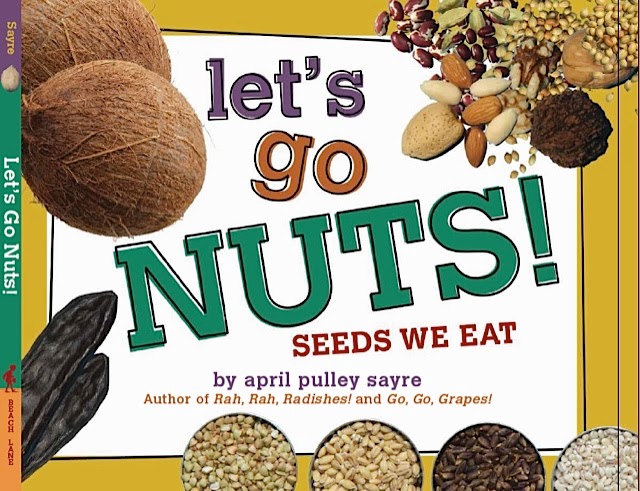
Yet I didn’t really understand the power of what I could do until I was in an IKEA in Chicago selecting some props for Let’s Go Nuts: Seeds We Eat. Perhaps it’s because I have so many math teachers in my life but when I saw the red measuring cups and spoons, I thought: AHHHH! Yes! That’s when I realized I wanted to add cool stuff whenever possible...math fractions, quantities, geographic context, cultural context. Things that would make bounce readers to fun activities.  I have only begun to push in this direction. It’s a matter of trial and error and learning what works for audiences at this young level. It’s not what a really cool graph can do for synergy but it is layering some more deliciousness into the work. 

Measuring cups are in the book!


After the measuring cup moment, I kinda went, um, nuts, organizing photos with extra content not covered in the text: extra information about patterns, foods, and eating local foods. (Note: only some were organized in this way. Many were photographed onsite at the market or store.) But if you look closely you will find mathematical patterns of repetition and grouping. 
Colors and patterns for early childhood teachers may use

At times, I inserted food made from the focal seed into the photo. Sometimes I overdid this. The cutting room floor is littered with photos I carefully arranged to show both coconut and coconut milk, both red bean and Chinese red bean bun and mung bean pastry, and the like.  (But even in the final book there are some of these extra bits for readers who want to extend. That page of rices has rice pastas of many sorts in it.)
Photo experiment discarded. Bean rolls, however, not discarded! Yum!
Experiments for various photographs
LAYERS OF CONTENT IN PHOTOS IN NATURE

Despite my journey into food chants, most of the photography I do is in the wild: out in nature, not in still lifes. But those book can have “extras,” too. Sometimes you find them by accident. Thanks to digital cameras, we can take thousands of photos and sometimes hit ones that have those “teachable nuggets” for a book or slideshow. Last week I was sorting hundreds of seagull photos when I noticed this one with a band.

Soon I found out that there’s a government site www.reportband.gov you can contact to report bird bands. Within a few days, they’d sent me this nice certificate and information that my bird, photographed at the ferry near Williamsburg, VA, had been banded in Quebec!

That was a lucky break. Mostly, layers in photography develop from sweat and time. You just have to be there, and stay there, and stand there, and walk there, until the right moment happens. 


For my latest book, Raindrops Roll, which will be out in 2015, I spent five months photographing raindrops. Raindrops on butterfly antenna, raindrops on soggy bees, raindrops on seedpods, and frogs, and the like. The text is simple. The bulk of what I wanted to say about scale, moisture, mass, weight, mushrooms popping up after rain and so on, will have to be carried by the photos because the editor and I edited some of that text out of the book. The photography took endless stomping in rain-filled boots, dripping with raindrops and my hair a rippled hygrometer from being out in humidity. I loved it.  A bit can be expanded in the endmatter but my hope is that the photos will carry the message the young, carved-to-the-bone text cannot contain. 
One of the things about picture book text and illustration is the immense love and care (obsessive need for perfection?) that goes into it. For illustrators, including photographers, the work takes gobs of experimentation.  Editors, designers, art directors often do their share of the tinkering, too. They give comments and they’ve been known to print out, tape up, move around things as part of the process. In a great team, everyone is on board, with that kind of care.  

For the photographer, the responsibility is to GET OUT THERE. And, of course, carry your camera.  Nothing replaces just putting in time. That’s the only way you’ll get something special: something that will help your reader find new colors and connections in your content. 


###

Tuesday, July 2, 2013

HOW TO WRITE NONFICTION BOOKS THAT CAN’T BE BEAT


By the time I wrote the following post 13 months ago, nonfiction authors and nonfiction readers were getting a lucky break.  Check it out and then go have yourselves an outstanding summer that might even include some great reading and writing....
_________________________________________________

 Who woulda thunk it?  Nonfiction is on a roll!  And it’s largely because of a big game-changer called the Common Core State Standards. What in the world is that?  Well, it’s an educational initiative that has already been adopted by every public school in 45 of these United States and in 3 territories to boot.  In my humble but admittedly prejudiced opinion, the best part is this:  The Common Core requires that by senior year in high school, 70% of the books students read throughout their entire curriculum have to be nonfiction.  Hoo-hah!!  Ladies and gentlemen, it is about time.

And there’s more.  Instead of writing dreary papers that imitate the facts kids have to learn for testing purposes, they are now being encouraged to write some truly interesting and thoughtful nonfiction literature of their own.  Here’s just one small example.  To tempt the Youth of America to dip their toes into nonfiction waters, the New York Times is holding its Third Annual Summer Reading Contest, in which young people aged 13 to 25 are invited to submit blog posts for possible inclusion on the Times’ educational site.  Check out last year’s winning post by Elisabeth Rosenthal and tell me this isn’t a great idea.  Here ‘tis: “Answer for Invasive Species: Put It on a Plate and Eat It”

But what if students like Elisabeth get psyched by reading some truly outstanding nonfiction (insert brazen hint about INK books here).  And what if they get enough of a kick out of writing brief nonfiction pieces that they want to write an entire book of amazing-but-true tales?  Or come to think of it, what if you want to write a nonfiction book your own self? 

I recently helped a couple of fourth grade classes at Bogert Elementary School in Upper Saddle River, New Jersey, to do just that.  The challenge was to take certain bland basic material from the school’s curriculum and let the kids work together to write and illustrate an exciting (and accurate) page turner that they would actually love to read themselves.  The kids came through like champs and had a blast. And in the process, they soaked up the material in their curriculum like a sponge.

Of course there’s more than one way to skin a cat.  But maybe I can entice somebody out there to walk down the author path by offering a few small tricks of my own for writing nonfiction books that (I hope) can’t be beat. 

1) PAIR YOUR TOPIC WITH A GREAT HOOK 

Whether you pick a topic that you’d love to know more about, or whether a teacher has assigned your kids to write about dry subjects from the school curriculum, any budding authors out there should try hard to write stories that fascinate.  How? One way is to find a great hook!  I write about history, and here are just a few of the hooks I’ve used ever since time immemorial for readers in different age groups:
  • Drawing colorful, complex picture mazes in which readers have to wend their way through the accurate but amazing scenery of America’s Wild West, say, or Europe’s Middle Ages in order to reach the next pages in the story.  
  •  Telling true tales from two completely opposite points of view.  
  •  Picking a genuine hero from the past and telling his story via his 13 great escapes from danger.  

2) BECOME A SPY

Everything in a nonfiction book has to be 100% true, and you can never ever put your own words into other peoples’ mouths either.  So to find the facts and to figure out what really happened and what people really said, you have to do tons of research.  That's when you get to become a spy!  Snoop around till you can quote from the original letters, diaries, speeches, and journals of your protagonists!  Bravely interview people who were on the scene during a terrifying event!  Or rustle your way through dusty ancient tomes written by responsible scholars until you uncover hidden clues. 
 
3) USE THE MEAT AND SALT METHOD

“Meat” equals the facts.  Make sure you have them down pat. “Salt” equals a tasty sprinkling of all the humor, interesting tidbits, unusual facts, and clever or creative ideas you can lay your hands on in order to bring your book to life.  I love the salt part.

4) WRITE A PAGE TURNER

Every single sentence you write has to be carefully crafted so that your readers can’t wait to see what happens next. Read what you wrote out loud to find out. Does it sound compelling enough? You may be surprised.

5) ADD PICTURES PLEASE

Everyone loves pictures, even grownups.  It doesn’t matter if you can't draw your own cartoons in a graphic novel.  Try adding a bunch of your best photos from your cell phone or create very some clever, colorful graphs with fancy lettering on a computer instead. Or if you have the chops, make Like Michelangelo. In other words, just add your best pictures to the mix and more people will be likely to read your book. 

And speaking of reading, read and READ and READ the best nonfiction books you can lay hands on.  Then pick your faves and try to figure out what it was about the authors’ writing styles that clicked inside of your brain.  That’s it.

6 comments:

Melissa Stewart said...
These are great tips, Roz. I especially like your term "salt and meat method." I might steal, er, I mean borrow it.
Linda Zajac said...
Wow, I didn't realize the numbers were as high as 70% NF reading overall. That's supreme! Thanks for spelling it out and making my day.
creatingcuriouskids said...
What a wonderful post. I like the "salt" part too. There are so many ways to tell a story, and when I hit on the right one, it's a major rush.
Jim Murphy said...
Great post, Roz. I learned a lot and was inspired. But where are the recipes for these invasive species?
Unknown said...
It's wonderful getting inside a creative mind--even just scratching the surface. Thanks for the tips.
Ellen Butts

Rosalyn Schanzer said...
Thanks, everybody! And Jim, I dunno about the invasive lionfish in that award-winning blog, but there's a huge ugly invasive fish species from China called the snakehead that's taking over the waters near DC, so they recently had a contest to see who could catch the biggest one. This sharp-toothed fish is a delicacy in China, so chefs around these parts are coming up with all kinds of creative ways to cook it; you can even Google the recipes!

Wednesday, January 23, 2013

Alexandra Wallner's Perspective


Following Deborah Heiligman's terrific post yesterday on spatial perspective in art and structural perspective in writing, I'm offering another sort.  Alexandra Wallner, writer and illustrator of dozens of children's books presents an historical perspective on writing, illustrating, collaborating, and publishing over the last four decades.

You’ve had a long distinguished career as a writer, illustrator, and collaborator with your husband, John Wallner.  How did your creative partnership come about?

John and I were freelancing in illustration in the early 1970’s. In the 1980s, John was offered an illustration job for a series of books by David A. Adler, the children’s book biographer. John was eager to do the series but the deadlines were very tight. I reasoned to John that if I helped illustrate the books, we could do it in half the time if I got equal recognition for my work. The editor agreed. That’s how it began and it has worked for many projects since, although we still do projects independent of each other.


How does this partnership work?  Do you work together on all parts of the process or do you have different roles?

I generally do all the research for the biographies. At first, we relied mostly on picture files at libraries and on books. In recent years, it has been easier to research on the internet. Then John sketches out all the spreads in a dummy. When the sketches are approved, I transfer John’s sketches onto Arches watercolor paper. Sometimes I paint all the backgrounds and he paints the figures and sometimes the other way around. We become a “third person.” The main goal is to have a consistent looking book at the end.


I reviewed your biography of J.R.R. Tolkien on this blog back in December 2011, written by you, illustrated by John. How did that collaboration work?

Since the life of Tolkien was rather dull in the physical sense and all the magic of his world came out of his imagination, John came up with the brilliant idea that he would incorporate a game board of imagination throughout the book to reflect what Tolkien thought and wrote. I think that is what really snapped the book up. Otherwise, we would have had scene upon scene of Tolkien in his study with paper and pen. I think John captured the spirit of Tolkien’s world really well. I am very pleased with the result.

Any dramatic disagreements working so closely with your husband?

When John and I work together, we are completely professional about it and always, always keep in mind the most important thing: the end product. I honestly can’t remember any major fights about the work. Of course, we have our disagreements! We’ve been married for 41 years and have shared studio space in all that time. Our biggest disagreements have been about travel. John does not like to travel at all but occasionally has made concessions to me. John loves to spend time in his studio among colored pencils, paints, brushes, and collage material. 


You illustrated my latest book Write on, Mercy! The Secret Life of Mercy Otis Warren. What attracted you to the project – and to other subjects you choose to illustrate?

I really enjoyed working on MERCY! First, it brought to every one’s attention an historic strong woman I was unfamiliar with. Mercy is a positive reinforcement for female roles in history, especially for children. I have written and illustrated books about female historic figures such as authors: Beatrix Potter, Louisa May Alcott, L. M. Montgomery, Laura Ingalls Wilder; a famous artist: Grandma Moses; political figures: Susan B. Anthony, Abigail Adams, Betsy Ross. I have also written and/or illustrated books about famous men, but the women are closer to my heart.

The Colonial American period is my favorite time period to illustrate. My kitchen has many pieces of crockery and some furniture from that time. I like the simplicity and classic lines of everyday objects from that time and really enjoy depicting them. I research my material carefully to make sure I have as much information about how things looked from any particular time period. It’s important to depict an accurate account of time periods, especially in children’s books.


Why the interest in American history?

My favorite subjects in school were history and literature. After World War II I emigrated from Germany, where I was born, with my parents who were Ukrainian and Bohemian, displaced by the war. I have always been fascinated by the United States and its history.

After living mostly in the northeastern U.S., you’ve migrated to Mexico. What drew you there? Do you enjoy a relaxed tropical lifestyle?

I live in Merida, Yucatan. Although it is EXTREMELY hot and humid in Merida in the summer, five months out of the year the climate is very comfortable. I love to swim and do so almost every day. John does not have to shovel snow anymore, which makes him happy. Our dining table is on the terraza and we eat in warm tropical breezes all the time.

Both of us are in our studios most of the day. John and I both go to a hotel health club where John works out in the gym and I swim. Then we come home for lunch, take a brief siesta, and go to our studios again for the rest of the afternoon. I meet with a writing friend for a “writer’s group” every couple of weeks. I stay in touch with close friends via Skype and email. It’s a pretty quiet lifestyle, although we are always busy on some project or other.

Has Mexico influenced your artwork?

Yes. I love my garden and I love cactuses. I have incorporated my garden into work, especially for Ladybug magazine. Also, Mexican color stimulates me and has influenced some bright new paintings.

You’ve been in the business since the 1970s.  How would you describe the high and lows of the children’s publishing industry since then? What is your opinion of the state of the industry today?

Wow! That’s a loaded topic! Lots of change! When John and I started illustrating, we had to work with pre-separation. That meant painting four separate paintings in black and white for each of the four colors that the printer laid over each other - black, red, blue and yellow – to make a colored picture to print.  Tons of work! I’m glad I was young with better eyes.

The industry used to be more personal, with more contact with art directors and editors. The art director invited us to see our books in the process of printing and we had control over the color. By the time John and I started working on the Adler biographies, four color printing was being used and all we had to do was one painting. Thank goodness! 

Then the publishing companies started to merge with media companies and everything was less personal. The biggest change came when publishers were taxed on the books in storage. Before, a book was kept in print for several years and had a chance to catch on with the public, but after that, if a book sold poorly, it was scratched from the list after a year or two after publication. It seems like children’s books changed from personal to big business in the last couple of decades.
 
I’m glad John and I had the chance to start and continue in the industry when we did. Holiday House, with whom we published many books, is still a personal place where we have a relationship with John Briggs, the publisher, and the staff. We are very grateful to them. We feel fortunate to have been a part of this industry for so long.

What are your present and future projects?

Right now I am writing a novel for adults. I am on my second or third draft. I’ve lost count, but hope to tie loose ends together this year and submit it for publication. After that, more painting, I think.


Tuesday, January 8, 2013

UNIMAGINABLE


Every single thing you take for granted can disappear in the blink of an eye and be replaced by something unimaginable.


When my own grandparents were born, there were no telephones, no refrigerators, no airplanes, and fewer than 25 automobiles on the planet. Talking to people hundreds of miles was away was UNIMAGINABLE. Where they lived, transportation without a horse and drinking fresh milk without a cow were unimaginable too.


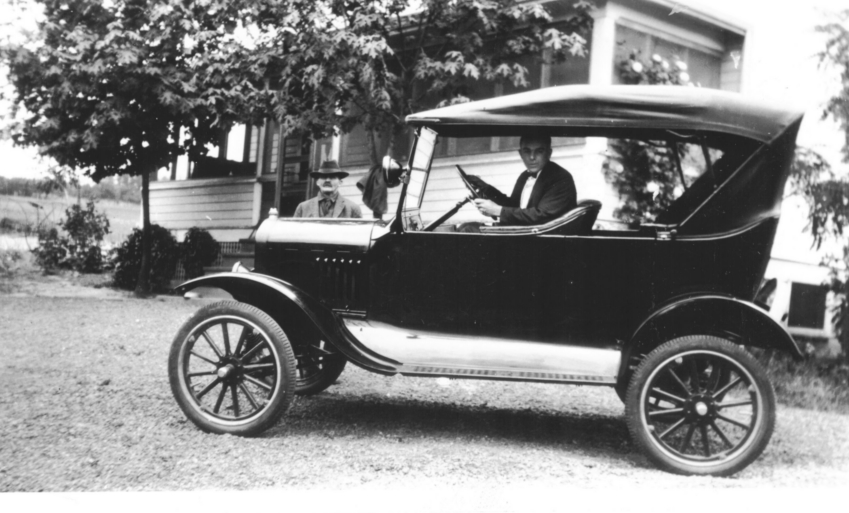
By the time my parents were born, people were driving around in Model T Fords. But everything from traffic lights, jet planes, and air conditioners to color photography, microwave ovens, and polio vaccine was UNIMAGINABLE.


When I was born, there was no such thing as power steering, rock and roll, credit cards, or TV (where I lived, at least). Rockets to the moon, e-mail, and gigantic full-color high-definition TVs with hundreds of channels were absolutely UNIMAGINABLE.


 When our kids were born, all the telephones were huge and had a dial. There was no hint of a little cell phone you could carry to the top of Mt. Everest if you were so inclined (even though an ancient comic strip detective named Dick Tracy used to wear a 2-way wrist radio). And what about GPS, YouTube, Facebook, Twitter, iPads and blogs like this one?  UNIMAGINABLE.


When my second granddaughter was born nine months ago, she could take all of this technology for granted, and you can bet your boots that unimaginable changes lie ahead.  But let’s talk about something else she sees every day--something that didn’t disappear and has stuck around for centuries. 
 

My granddaughter still owns real books; the delicious 3-D kind filled with magic and beauty and color.  Ever since papyrus scrolls and animal skins made way for parchment and paper, countless millions of us have loved reading books. A world without them seems UNIMAGINABLE. 


But in the blink of an eye, the unimaginable future of books as we know them is on the march.  High quality books made out of paper are at risk; for the moment, e-books seem poised to outsell them, and they can be sold ever so cheaply when the cost of paper, printing, binding, and glue is not an issue. 

Anything can happen. Right now, for example, digital picture book formats  have to adjust to another company's tiny online display area instead of using delicious  double page spreads.  Otherwise the type is too small to read. Popular previously published picture books can't always manage that and will be lost.  So illustrators and publishing venues will either have to find new ways to get around the restrictions without losing quality and creativity, or the artists will have to abandon their years of work, throw in the towel, and find another way to make a living.


Quality might suffer in other ways too. Anyone can publish a book online without being vetted by discriminating professional editors and art directors who know the difference between first-rate writing and junk.  Readers could drown in an overwhelming deluge of garbage. How will the cream rise to the top?  And how will the professional authors and illustrators make a living if all their hard work is sold for pennies (assuming that their readers can even find it)? 


Publishers seem to be up in the air about how to stay profitable, and you can be sure they are considering all the options as they get steamrollered by Amazon and bought up by conglomerates.  Professional authors and illustrators will do well to consider all of their options too. There's always a way. And the evolving changes and surprising results will be UNIMAGINABLE

So carry on, watch your backs, and stay tuned.