Showing posts with label biographies. Show all posts

Friday, November 15, 2013

Who was The Mad Potter of Biloxi?


Back in the 1980’s an art dealer in L.A.  invited me to see his collection of pottery by an artist named George Ohr, who had died in obscurity in Biloxi, Mississippi in 1918.  “Ohr called himself The Mad Potter,” my friend told me. “The ceramics establishment thought his personality, as well as his pottery, were too flamboyant. He was ahead of his time.” Fascinated by the Arts and Crafts Movement, I had started my own modest collection of green matte pottery from that era, which I found at various flea markets, “antique” malls and junk stores. But I’d never seen anything quite like the crinkled, wrinkled, distorted, abstract pots by George Ohr that lined the shelves of this man’s study. I ended up buying a small mug with a metallic glaze and a whimsical snake wrapped around it.


A few years later when Sandra Jordan and I began writing books together, we often took breaks by going on what we called “field trips.” Museums, galleries, movies, plays, bookstores, gardens, restaurants, even a party or two constituted these forays away from the computer, out of the study.  Wandering around flea markets or antique stores were favorite outings.  Sandra was on the lookout for glass fan vases, while I hunted green pots. In Lambertville, NY, after a presentation at a Children’s Literature Festival, we stopped by David Rago’s gallery and discovered we both were fans of George Ohr’s pottery.

And so the years went by, as we wrote twelve books on the arts and settled into a collaboration that sometimes makes us behave like an old married couple. At an ALA conference in New Orleans several years ago, a field trip in and of itself, we had a free day between an award ceremony and a panel, and decided to drive to nearby Biloxi, Mississippi, where the architect Frank Gehry (we’d written a book about him) had designed a museum in honor of George Ohr.  It had been leveled in 2005 by a gambling barge that had been lifted off its’ moorings during hurricane Katrina.
 
The Gehry museum buildings finally were in the process of being rebuilt. We’d been invited for a hardhat tour. There we discovered through vintage photographs and reference books that not only were George Ohr’s pots wild and interesting but so was his life.
 

Then there were coincidences, besides our shared interest, along with Frank Gehry, in Ohr’s work. When we researched Andy Warhol’s life for Prince of POP, we discovered Andy collected Ohr pots. Here is a photo of some pieces that were in his house in New York City.


 The artist Jasper Johns collects Ohr pots and even reproduces them into his paintings.
 

Now The Mad Potter: George E. Ohr Eccentric Genius is out and people are saying Who? Who is George Ohr? It seems like a remarkable turn of events to find out that he died in 1918, mostly unappreciated, and more than fifty years later was heralded  America’s most important turn of the century potter.  A tale of redemption for an artist, who, like Van Gogh, believed passionately in his own talent, worked hard, and finally received the attention he deserved.
 

FYI: If anyone happens to be in Pittsburg, visit the Carnegie International art exhibit, where a French artist, Pierre Leguillon, has created an amazing artwork, a vitrine filled with photos of George Ohr and pieces of his ceramics, placed on a sandy surface, perhaps a nod to the beaches of Biloxi. 


In Biloxi, Mississippi,  visit to the Ohr/ O’Keefe  Museum of Art  designed by Frank Gehry. https://www.georgeohr.org/

Wednesday, September 25, 2013

FAVORITE BOOKS: NOW AND THEN


This month INK bloggers are discussing favorite books from the past and present. First a present favorite…..

NEW BOOK/RAVE REVIEW
Good Prose: The Art of Nonfiction: Stories and advice from a lifetime of writing and editing by Tracy Kidder & Richard Todd. Kidder is one of my favorite authors; writers’ creative processes fascinate me; and learning how writers and editors work together is my version of People magazine. They had me at Good.

Kidder and Todd have a relationship that most writers can only fantasize about. They work together from vague idea through countless drafts to polished manuscript.  Each takes a turn in Good Prose to describe how that works. 

Kidder describes his problems with story, point of view, structure, and more, in his own books -- and his ways out of them. (His Vietnam memoir My Detachment, took him fifteen years to complete.) I noted dozens and dozens of quotes to use for this blog, but there’s too much good stuff to choose even one. Nonfiction writers and fans of Tracy Kidder: READ THIS BOOK!

FROM THE PAST….
Though I was an insatiable reader as a child, I mostly read fiction. The only nonfiction books I remember devouring were the orange-covered biographies, “The Childhood of Famous American Series” from Bobbs-Merrill. Today these would be called historical fiction, with their invented incidents and dialogue.

In the last few years I’ve found two rather shabby volumes at library book sales and I reread them this morning with some trepidation. But I did enjoy them and their striking silhouette illustrations, lo these many decades later. Abe Lincoln: Frontier Boy wasn’t too over-the-top-hagiographic, and Eli Whitney: Boy Mechanic included moral dilemmas, mistakes, and a dogged determination to “find a way.”

Footnote: Bobbs-Merrill is long gone, but after many mergers and buyouts, “The Childhood of Famous American Series” is still published by Simon & Schuster, with new and old titles.

…TO THE PRESENT
Perhaps those orange biographies did leave their mark. In the biographies I write, I try to include as many childhood experiences as possible.  I was lucky with Jeannette Rankin: Political Pioneer, because she gave long interviews to the Women’s Oral History Project at UC Berkeley, telling many stories of her growing-up years. 

I had much less information on Mercy Otis Warren’s girlhood, but I used what I had – her love of learning, reading, and writing – as the narrative arc for Write On Mercy! The Secret Life of Mercy Otis Warren.

A FEW FABULOUS NEW CHILDHOOD BIOGRAPHIES

Picture book biographies are enjoying a Golden Age right now – long may they reign!  Many recent ones show how the child is mother/father to the woman/man.

• Perhaps my favorite is The Boy Who Harnessed the Wind  by the boy himself, William Kamkwamba, and Bryan Mealer. This is a contemporary story of an impoverished African boy who curiosity and perseverance brought remarkable achievements. There's a YA version as well.


• Deborah Heligman: The Boy Who Loved Math: The Improbable Life of Paul Erdos. Words, numbers, and illustrations unite to tell a remarkable story.

• Deborah Hopkinson’s A Boy Called Dickens. The author invites us to follow her through the streets of London looking for little Charles. 

• Patrick McDonnell, Me…Jane. A brilliant example of the genre, for very young children. 

• Tanya Lee Stone: Who Says Women Can’t be Doctors?: The Story of Elizabeth Blackwell  and Elizabeth Leads the Way: Elizabeth Cady Stanton and the Right to Vote. Stone draws readers into the stories by asking  “What would you do?.... Who says?

ONE MORE FAVORITE
A few months ago I confessed my love of the OED [Oxford English Dictionary] on this blog. And so I was glued to my headphones this summer listening to David Crystal read his recent book, The Story of English in 100 Words. 

Much more than a traditional Latin-Saxon-Danish-Norman story of English, Crystal uses individual words (100 of them,) to dissect the influence of empire, social class, dialects, spelling, literature, technology, pop culture, etc. etc. etc. on our endlessly evolving language. Go forth, dear writers, and use it with panache!*

*OED: 1. A tuft or plume of feathers, esp. for a headdress or as a decoration for a helmet, hat, or cap.
2. fig. Flamboyant confidence of style or manner; dashing display; swagger 

Monday, September 23, 2013

Faction

This month's theme, I'm told, is Life-changing Nonfiction. My first thought being that ever-changing, all-too-real Life itself would certainly qualify. That which one avoids and/or tries to understand in order to survive and/or thrive until one is no longer alive.  But how? With books, of course. 

Being sort of an escape artist from way back, who grew up in a large, unharmonious, restless  – we're moving again? – family, when I went digging through our crowded bookshelves, I was looking for something that would take me AWAY. For me, generally, that meant fiction. Specifically, any and all books by Maud Hart Lovelace, to whom I was introduced by my cousin Myrna. AND the works of Laura Ingalls Wilder, to whom I was introduced by my third grade teacher, Mrs. Nichols.  But as Susan E. Goodman so wisely pointed out, Mrs. Wilder was good at explaining how things were done in the mid-19th century. Both  L.I.W. and M.H.L. were very good at explaining how ladies - the kind of long-gowned and petticoated ladies I liked to draw, on spare bits of paper and discarded Blue Bonnet margarine boxes – got dressed.  Then a couple of things happened. 

In second or third grade, I woke up to the splendid set of ENCYCLOPEDIA my folks had purchased once upon a time: The New Wonder World in 11 volumes. Pub'd in 1952 by Chicago's Geo. L. Shuman & Co.   Loaded with photographs, classic illustrations (I discovered the work of Walter Crane. genius pen-and-inkster), poems, folktales, and – oh baybee! – Articles such as "Child Life in Many Lands." Illustrated timelines: "Great Moments in the Story of Modern Europe." (teeny little Martin Luther, angry little people @ 1789, carrying heads-on-sticks, teeny little Hitler annexing Austria) Biographies. Histories.  Explorations. Glorious MAPS. All in all, an intoxicating dose of reality. 


I reveled in them. I took Vol. 7, The History Book, to school so other kids could revel in it, too. Mom made sure I wrote my name on the endpapers so the book would make it back home again.


And it was right around then, that grocery stores hereabouts began offering sets of encyclopedia. Mom would bring them home from the store, one volume at a time.  
One of the books that survived a great deal of hard usage.
First, came a set pub'd by Golden Book.   Then a shelf-ful of green and black Funk and Wagnalls.  Walter Cronkite made mention of Korea or Berlin or Sir Edmund Hilary? Look 'em up! Where are they? What happened? When was that? Why? What was the rest of the story? When did so-and-so kick the bucket? What in the heck led up to THAT, for crying out loud? 

And then, in the summer I turned ten, my mom and dad piled us (myself and three unrequested little brothers) into the old station and we went on a drive to Mansfield, Missouri. To the house where Laura Ingalls and Almanzo Wilder, a.k.a. Farmer Boy, REALLY LIVED. I saw the desk where Mrs. Wilder wrote her books. I met a woman there, who'd known her. For the first time, I saw photographs of  the Ingalls family. Found out what they really looked like, at least in that frozen moment. Both wonderful and devastating it can be, to discover an image to go with the stories, the facts, and the associations. I cannot be the only baby boomer who, having seen the  Doris Day musical, was startled to see a grainy photo of the genuine Martha "Calamity Jane" Canary, having looked her up in the encyclopedia. Then read what there is of the real story of her hard old life that's come down to us - an ever so much better, more adventurous story, however grievous.  
L>R: Ma, Carrie, Laura, Pa, Grace, Mary
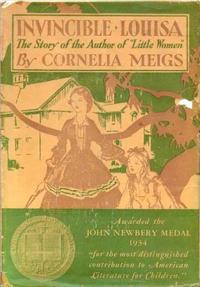
Truly life-changing it all was: finding out how to find out. Which only makes you want to find out more. Checking out Westward Movement in the encyclopedia, for one thing, and the history of costume and ladies' fashion, for another. Looking up maps to see where the Ingalls and Wilders lived.  What was the world like in the mid- to late 1800s?  Who was percolating in that world?  Adventuring? Ruling?  What painters were at work? What music, what books were being written? By other 19th century women, for instance? My eyes were opened to the works of Lucy Maud Montgomery (then to the M book), to Louisa May Alcott and to Cornelia Meigs'  Invincible Louisa.   


In any case, all of this leads me to the dog-eared book that's always right smack close to my worktable, along with my shelf of World Books. Oh sure, I Google plenty, but I just wouldn't be ME, such as I am, without a heavy, proper paper encyclopedia close by. And my tattered old Timetables of HISTORY: A Horizontal Linkage of People and Events  
Does anyone need to know that, in the year that Laura Ingalls came into the world, Arturo Toscanini and Marie Curie did too?  That North America's transcontinental railroad was nearing completion? That Johann Strauss II wrote The Blue Danube and Karl Marx pub'd  Das Kapital? That French troops were pulling out of Mexico and Russia sold us Alaska?  That Theo. Roosevelt was a precocious 9-yr-old and the Lakota Sioux still rode the prairies, rumbling beneath herds of bison. No, probably not.  But what might first appear to be an encyclopedic collection of factoids, trivial tidbits, and brief introductions is nothing less than a testament of the rich, unimaginably complex context that surrounds, colors, and shapes every individual. A bit of a life-changer, recognizing the juicy, harrowing hugeness of the world in which we humans live, have lived. In this here cockeyed caravan. 

And what small-minded soul ever chose to classify all of this human richness by what it is NOT? Non-fiction indeed! 

Thursday, September 12, 2013

Inventors Then and Now

This month, we INKers are highlighting books that influenced us. A Weed is a Flower by Aliki Brandenberg changed the way I read as a child and inspired the books I write today. 
I remember being riveted by the story of a small, weak boy named George Washington Carver, the son of slaves, who was kidnapped as a baby and orphaned. Plants and insects fascinated young George and he began observing life on the farm and in nature and asking questions.  This boy grew up to revolutionize farming in the south. George noticed that cotton depleted the soil and convinced farmers to grow peanuts by inventing clever uses for peanuts, including butter, paper, ink and shampoo. What a fascinating, quirky story, I thought.  Then I realized that this amazing story was all true. It was not made up! Yet I had never heard of George Washington Carver. How could that be?

A Weed is a Flower taught me, as a young reader, that there are many stories of fascinating, important people who we won’t read about in textbooks, who we won’t read about in newspapers and magazines, who won’t be on TV. But I could read all about them in books. I felt like I had discovered a mysterious, hidden world below or behind or under the worlds of school culture and popular culture.  I also learned that those books, called biographies, could be really interesting. Instead of just a list of facts or a boring summary, I could read a real story, a story as interesting and thought-provoking and gripping as A Wrinkle in Time or any of the other novels I devoured.

This is the very kind of book that I strive to write today. In fact, my newest biography, Electrical Wizard, just released two days ago, tells the story of another important inventor, someone whose ideas and inventions have transformed kids’ lives (and our lives) even more than peanut butter, if you can believe it.
When kids think of inventors, the first to pop into their minds is often Thomas Edison.  (Kids believe, because textbooks have told them so, that Edison invented the light bulb. But it turns out that Edison was just one of a number of inventors who contributed to the invention and development of the light bulb.)  I would argue that one of Edison’s contemporaries, a little known Serbian-American inventor named Nikola Tesla, has had a bigger impact on our lives.

After all, who invented wireless communication? Tesla.  Remote control? Tesla. Radar? Tesla. Neon lights? Tesla. The modern electrical motor? Tesla. The radio? Tesla. (Yes, textbooks are wrong. If you don’t believe me, ask the Supreme Court, which ruled that Marconi’s work was based on Tesla’s patents.)

Though Tesla has touched our lives in so many ways, Edison gets all the glory. A search on Amazon.com for Thomas Edison, under children’s science biographies, yields 115 titles.  The same search under the name Nikola Tesla yields just a dozen.  But one is not a book, it’s an Amazon page. In three books, Tesla shares billing with other inventors.  And FIVE of the books listed are actually biographies of Thomas Edison (I kid you not.)

I wanted to write a book that would begin to capture for young readers how Nikola Tesla has transformed our lives.  Tesla's most amazing contribution to our world, the thing that truly ushered in the electrical age, was so far-reaching and complicated that it would be hard to explain in a fun word or phrase like light bulb or remote control. It was an entire system of generating, transmitting and using alternating current to power EVERYTHING.* That’s right, we have Nikola Tesla to thank for having electricity in our homes, schools, and businesses.   But how could I distill Tesla’s mind-blowing electrical-engineering revolution into a story for young readers?

As a kid, I was always interested in what important adults did when they were young. So I started with Tesla as young boy. What inspired him? What did he invent or build as a kid? When did he get his first ideas about alternating current?  I wrote about Tesla watching lightning storms and wondering over the sparks he made while petting his cat. I showed him making water wheels and helicopters powered by bugs.  But I wanted kid to be equally interested in Tesla’s later work, too, so I employed the theme and language of wizardry to capture the magical quality of his genius. While sticking closely to the facts, I wove in words such as: conjured, enchanted, and entranced, miracle, magic, and mysterious.

All good stories have conflict, and Tesla’s quest to harness AC offered great fodder there. He faced poverty, anti-immigrant sentiments, and a popular, powerful enemy – Thomas Edison.  So those provided the rising tension in the story.

And Tesla won. He was a true underdog hero. His hard work and the power of his ideas overcame all the obstacles and provided a bright, brilliant climax and resolution. His AC system lit up the 1893 world’s fair, harnessed mighty Niagara Falls, and ultimately electrified New York City and the world.

One of the reasons I was drawn to Nikola Tesla’s story was that he was not trying to become rich and famous.  He worked for the betterment of humankind. George Washington Carver’s gravestone reads: “He could have added fortune to fame, but caring for neither, he found happiness and honor in being helpful to the world.” The same could be said of Tesla.

Thank you Nikola Tesla for powering the lights and tools of my life. Thank you Aliki for inspiring me to write stories that have been overlooked by school and popular culture.  And last, but not least, thank you to whomever invented peanut butter. When I reread A Weed is a Flower, I noticed that Aliki never said that George Washington Carver invented peanut butter. So I looked it up. Turns out peanut butter was likely created much earlier by the Aztecs. Different processes for making peanut butter were patented by several other inventors. So now I'm wondering, where did the peanut butter inventor myth come from? Why do people persist in thinking that Edison invented the light bulb and that Marconi invented the radio? How many more books do we need to get the record straight?

* Technically, AC doesn’t power everything. Generally, AC powers things that are plugged in while DC dominates battery-powered machines. But computers and rechargers and the like have AC-to-DC adapters, so they, too, can get juice from the AC system.

Tuesday, May 21, 2013

Compleat Biographer Conference, A Report: Sphinxes, Secrets, Virgin Eyes

This past Saturday, Susan Kuklin, Marfé Ferguson Delano and I were on a panel at the Compleat Biographers Conference here in New York City. Tanya Lee Stone was supposed to be with us, but unfortunately could not come. (We missed you, Tanya!) Thanks to Gretchen Woelfle for telling us about the call for YA biography writers.  This organization is relatively new (2010) but I think they have a good thing going. 

We had a fun time planning the panel Friday night over a lovely meal and a bottle of wine. We sat next to a man with very strange facial hair, just a line from his lower lip down his chin. Not a soul patch, more like a soul line. (That was a detail you needed, right?). 

Anyway, we decided that the best kind of panel is a conversation, not just talking heads. So we didn't over-plan--we wanted the conversation to be real, and it was. Marfé was the designated moderator, and she did a terrific job.  And it is always fascinating to listen to how Susan does her work. (There was an collective gasp in the room when she talked about interviewing a young man who had been on death row since he was a kid.) People asked really good questions. One question was, naturally, is writing a biography for kids different from writing one for adults, and if so, how? And our answers were—it isn’t different, it is different, and in the end I think we agreed that all writing is about choices and some of the choices we make when we write for kids we make because we are writing for kids—and for their gatekeepers.  But other than that, it isn't different at all. (Marfé wisely had started our session with an anecdote about someone saying she was sure writing for kids was easier than writing for adults. We dispelled that notion immediately.) 

There was one high school teacher in the audience and I found myself looking to her often for agreement, nods, approval. Do those of you who speak to audiences do that? Find one or two people you look at to gauge how you're doing? (It's much better, by the way, if you focus on the happy, nodding people rather than the bored, angry-looking, or sleeping people--if you have any of those. We didn't. But I've learned that nice little lesson over the years...) 

Happily, there was also another YA author in the room, Catherine Reef. Marfé had been on a panel with her at this conference in D.C. two years ago, and asked her to chime in. Catherine did, and she really added to our discussion! 

I left our panel feeling inspired and renewed, which is always a good thing. I left the conference, also, with nuggets of knowledge and inspiration, and I will share those I remember with you. Maybe Marfé and Susan will remember more... 

Nuggets:

*Will Swift presented the BIO AWARD to Ron Chernow. In his introduction Swift told that audience that we should all read the prologue to Chernow’s Washington book. I did and it's terrific. It's about Gilbert Stuart painting Washington's portrait, and is really an essay about writing biography, about how we try to capture real people, not just their likenesses.  I recommend it to you, too. (And now I really want to read the whole book.) 

*Swift said that Chernow is a master at shedding light on things that their characters are trying to hide from themselves.

*Interestingly, soon after Chernow himself said, in his speech, that writing a biography is an act of intellectual presumption!

*Chernow said truth will emerge in subtle ways even if the people we are writing about are evasive. So many of our subjects are sphinxes.  He said that he realized with the help of his late wife that Rockefeller was revealing who he was by trying to conceal.

*He also said, and I loved this especially, that when you are writing a biography you need to find the balance between writing the character from the inside out and from the outside in.

*In working on George Washington, the more Chernow read, the less familiar Washington seemed. There were dimensions of his life and personality (his meanness, his temper, his sensitivity) that previous biographers overlooked. Chernow decided that the 5% who knew him were more reliable than 95% who didn’t.

*He said he learned he had to look at Washington with virgin eyes.

After lunch we went to a panel about how to deal with black holes when writing a biography. It started out promising when the moderator said that you can have black holes in research, in periods of a person’s life, or in the understanding of our character. In secrets. Yes! Tell us how to deal with them, please! They didn't give us many answers, sadly.. but here are a few nuggets:

*When you read someone’s memoir or autobiography you have be suspicious and ask yourself what was the reason they were writing their autobiography or memoir. Look for what is not said.

*Mythologies make you want to find the real story.

*If there are people still living who knew the person you're writing about, go talk to them. You want the gossip. (Chernow's 5% or, if you're lucky, more.) 

*Writing a biography is really a group project—you are assembling all the voices of those who will help you.

*If there’s something important you don’t know, that’s part of the story. 

Maybe it was the lights going off and on in that room, or the daunting feeling of the black hole, but we three decided to leave the conference right after that panel. Somehow within fifteen minutes we found ourselves at The Algonquin Hotel, at a round table, having drinks. 

Thursday, April 11, 2013

I Can Just Ask!


Today’s post will be short and sweet, partly because I’m juggling a handful of projects (a process that deserves a whole post in its own right) and partly because I’m a little hyped:

For the first time in my nearly 20 years of working on biographies, I am working on a project about a live person.

Waterhouse Hawkins, Walt Whitman, Alice Roosevelt, Mark Twain and Susy Clemens, John Adams and Thomas Jefferson were all lively, and I tried to bring them to life on the page, but technically, they are no longer with us.

For the first time, I am working on a book about someone, happily, who is—who very much is.

Writing about someone long gone has its advantages. You can utilize the scholarship of others to help inform your understanding of primary sources. And it’s way easier to determine the lasting significance of someone’s accomplishments when you can see if it actually lasted.

But there is something amazing about thinking, “I wonder how she felt about x?” and then realizing, “Oh! I can just ask!”

I’m feeling a little giddy, like a kid in a pastry shop filling the box with more and more treats. Every day I seem to be emailing a dozen or so questions (though I was kind enough to give her the whole weekend off—both days) and then, in a little bit, getting answers.

Will everything make it into the book? Probably not. But the box is brimming over with treats, and I get to choose the ones I like best.

And then, even better, to ask for more. 

Wednesday, March 27, 2013

Biographers Club in London


Reading INK can lead you down all sorts of roads.  
Marfé Ferguson Delano’s 2011 post  on Biographers International Organization (BIO)  led to my joining the group, and recently in London, took me to Mayfair and the Savile Club......
 
......for the February meeting of BIO’s UK counterpart, the Biographers Club. 
Helen Rappoport, British historian and biographer,  spoke on 'The Search for a Subject: New Ways of Looking at Old Stories.' Defining biography as “exploring human lives against a background of human events,” Rappaport presented a lively illustrated talk using her own and others’ works to present novel approaches to writing a life. Most of the following books are British, but are also published in the U.S.

Objects as a Way In
• Paula Byrne has put a new spin on an old subject in her new book, The Real Jane Austen: A Life in Small Things, giving us Austen through everyday objects she lived with: a portrait, a shawl, a barouche (a sort of carriage.) These are the port-keys to personal, social, and even political history that impacted Austen’s life and work.
• The Hare with Amber Eyes: A Hidden Inheritance by Edmund de Waal, tells his family’s history on two continents over a century, through the lens of their collection of netsuke, small Japanese carvings.

Begin the Story from a Different Perspective
• Rappaport’s No Place for Ladies: The Untold Story of Women in the Crimean War, reflects the author’s penchant to “look at the little people,” in this case, the soldiers’ wives who followed their men to war. She had to describe the war itself – the Big Event – in order to interest a publisher, but she told a new story within that context.

Create a Countdown
To create dramatic tension, structure a biography around a single day, week, month, or year and keep the calendar in focus as the climactic event approaches.
• Rappaport focused on two weeks for Ekaterinburg: The Last Days of the Romanovs, which ends with the murder of the Imperial Russian family.
• James Shapiro’s A Year in the Life of William Shakespeare: 1599, recounts nearly daily happenings of that year. I jumped for joy when I discovered this book, just at the time I was writing All the World’s A Stage: A Novel in Five Acts, a middle grade novel about WS & Co., set in that very year.
• The Day Parliament Burned Down, by Caroline Shenton begins at 7am on October 17, 1834 and ends at 6am the following day. Not a biography as such, the book uses the dramatic device of a single day to present a wide picture of contemporary British politics and society.

Private Domestic Life
• In Lenin in Exile, Rappaport wanted to tell the story of the women who traipsed around Europe with Lenin as he plotted the Russian Revolution.  She knew that their stories alone wouldn’t sell the book, so she centered it around Lenin’s activities as she revealed the relationships with his wife, mother-in-law, mother, and mistress.
• Frances Wilson’s The Ballad of Dorothy Wordsworth, brings to light the Muse of her famous brother. True, it is Dorothy's relationship to a famous man that makes her story publishable, but it is a story worth telling.

True Thrillers and Crimes
• INK’s own Steve Sheinkin has unearthed some thrillers and true crimes to tickle our fancy.  His Bomb:The Race to Build and Steal the World’s Most Dangerous Weapon, the cover of which is littered with well-deserved medals, is a group biography of scientists, spies, and scientist-spies. His latest, Lincoln’s Grave Robbers, promises just as many dastardly villains and cliff-hangers.
• Kate Summerscale's Mrs. Robinson’s Disgrace: The Private Diary of the Victorian Lady, describes a divorce trial of an alleged adulteress. (I wonder if Simon and Garfunkel knew about this Mrs. Robinson.) Summerscale couches the scandal in a discussion of Victorian double standards and crackpot theories about women’s sexuality.

Bits and Bobs
Helen Rappaport ended with a quote from Hilary Mantel, double Booker Prize winner for her Thomas Cromwell novels, Wolf Hall and Bring Up the Bodies.  I googled the quote and found a whole interview. 

Mantel says, “Nothing touches me so profoundly as the traces the dead have left; it’s an intellectual fascination but also an emotional pull….I actually like the constraints, enjoy solving the narrative problems that arise when you have strict guidelines of fact....You can’t change the facts of an incident, but you can change its whole feel and meaning by the angle from which you report it.”

Just days later the Guardian newspaper published The Art of Biography is Alive and Well . Press on INKsters!
The March Biographers Club meeting included a delicious lunch at another posh Mayfair venue, Corrigan’s. 
Neil McKenna spoke about his new book, Fanny & Stella: The Young Men Who Shocked Victorian England. Their “crime?” Cross-dressing, but since that wasn’t actually a crime, when they were arrested, the court dredged up the seamier sides of gay Victorian London that "outraged public decency and corrupted public morals." (Spoiler alert: they were acquitted.) 

McKenna sees his subject as larger than the “doom and gloom, crime and criminality” of gay history. He wants to reclaim and reveal the “joyous, happy, effervescent” gay subculture that often created “pretend family relationships” to support a group that was victimized by the establishment. 

This reminded me that however poor and/or oppressed a group may be, they find joy and love in the midst of hardship. In writing their stories, I want to balance their struggles with their comforts and pleasures.

Upcoming CCSS Workshop

The Children's Literature Council of Southern California is holding a workshop called "“Embracing Your Core: Libraries Literature, and the New Common Core State Standards" on May 11, from 9-12 in South Pasadena, California.  Speakers are Roger Sutton, Editor of Horn Book, and Kristin Fontichiaro of the University of Michigan. Click here for more information.

Monday, March 18, 2013

Hear Me Roar/In Numbers Too Big to Ignore

As I write, it's the Ides of March, official anniversary of Julius Caesar's deathday (44 BCE) and the 246th birthday of cantankerous  Andrew Jackson. That is, if this U.S. President No. 7 hadn't been dead for years.  But this post  goes live on Monday the 18th and seeing as I'm a nonfiction author, given to enthusiastic bouts of looking things up – man oh man, the things there are to FIND OUT.   It turns out that a Scottish MP was born 18 March 1891. And on a September night in 1954,  during Alice Cullen's time in Parliament, hundreds of her young constituents (ages 4 ~ 14) had to be calmed down, and told to take their knives and sharp sticks and leave a huge old cemetery in Glasgow.  Why were they there?  Hints: 1. Vampires. 2. Comic books, 

In any event, if you're reading this, you may well know that Black History Month grew from the strong and certain belief of such African American scholars as Dr. Carter G. Woodson and  Dr. W.E.B. Du Bois that the history of their race was a rich subject for deep academic attention.   Out of this devout certainty came Woodson's brainchild, the first Negro History Week, born in February 1926.  Why shortish, mercurial February? Because African Americans had long been celebrating Lincoln's birthday and the one which Frederick Douglass chose for himself: February 14.  In 1976, America's Bicentennial, after 50 years of progress, protests, violence, and breakthrough civil rights legislation, the week was expanded to a month's worth of study, commemoration, and celebration. 

So how is it that March was set aside for making the citizenry aware of women's history?    Because of history, as you might expect.  Or "herstory," as we might have said back in the 1970s, if it hadn't seemed so pretentious, stilted & weird.  On March 8, 1857, just a few days after James Buchanan's inauguration,  New York City needleworkers  so badly needed to work fewer hours (10 hrs. per shift) in better working conditions, that they went on strike. Heavy-handed policemen, under orders, busted it up.  Even more violent was the garment workers' strike in 1908 - on March 8, in honor of those who'd gone before. So it was that the Socialists attending their International Congress  in Copenhagen, Denmark, chose March 8, 1910 as the first International Women's Day.   So, after 60-some years of parades, protests, the Vote, the Pill, and doors forced open, a group of Californians launched an official "Women's History Week" for the week of IWD, 3/8/1978.   That week grew to an entire month, to be proclaimed presidentially and noted nationally, as of 1987, by way of a joint U.S. Congressional resolution. (It's said that a Republican and a Democrat - Orrin Hatch and Barbara Mikulski – actually co-sponsored the legislation. Those were the days, my friend; we thought they'd never end.)

I Am Woman 

Check out these books ANY time of year, but especially now, in Women's History Month,  do avail yourself of this dozen-or-so books (to name but a few) about those who came into the world as girls.

•    Ballet for Martha [Graham], by Jan Greenberg, Sandra Jordan, and Brian Floca.    •   Lives of Extraordinary Women: Rulers, by Kathleen Krull and Kathryn Hewitt     •   Minette's Feast: The Delicious Story of Julia Child and Her Cat  and Clara Schumann: Piano Virtuoso, both written by Susanna Reich    •    What To Do About Alice? How Alice Roosevelt Broke the Rules, Charmed the World, and Drove Her Father Teddy Crazy by Barbara Kerley and Edwin Fotheringhan   •   Write On, Mercy!: The Secret Life of Mercy Otis Warren and  Jeanette Rankin: Political Pioneer, both by Gretchen Woelfle   •   Elizabeth Cady Stanton and Susan B. Anthony: A Friendship That Changed the World, by Penny Coleman   •   Bylines: A Photobiography of Nellie Bly, written by Sue Macy   •   Helen's Eyes: A Photobiography of Annie Sullivan, Helen Keller's Teacher, written by Marfe Ferguson Delano   •    Remember the Ladies: 100 Great American Women and  Rabble Rousers: Twenty Women Who Made a Difference,  both by Cheryl Harness      
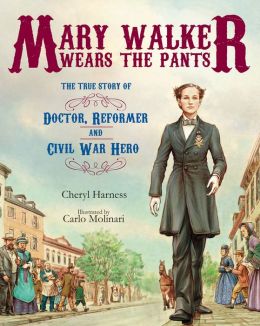
By the way, if it happens that you don't read my newest, Mary Walker Wears the Pants,  DO read someone's book about this real, live, courageous, idealistic, stubborn-as-all-get-out,  high octane woman, whose history is well worth the knowing. Pretty well summed up in the subtitle: "The True Story of Doctor, Reformer, and Civil War Hero."  DO read up on Dr. Mary Edwards Walker,  a valiant, eccentric Medal of Honor winner (only woman to whom it's been awarded), best known in her time as a cranky, outrageous  female, who was determined to free those of her sex from genteel purdah.  From steel-boned corsets and their long, heavy, unwieldy skirts and petticoats.   (Fun to wear once in a while - a reenactment deal or a school visit - like being a transvestite in a time tunnel. But every day? Just. Shoot. Me.)   

 So, regardless of their race or gender, grateful I am to those souls who braved the storms, walked the walks, and fought the fights.  They all deserve a medal.


Dr. Mary Edwards Walker