Showing posts with label activity books. Show all posts

Wednesday, January 8, 2014

Elementary Science Fairs in the Era of STEM and the Next Generation of Science Standards

As an author of science activity books for children, I've attended my share of elementary/middle school science fairs.  I cannot recall ever being surprised by a project or display that was particularly clever or original.  Mostly the exhibits are the predictable volcano models, electric circuits, acid-base changes detected by red cabbage juice.  Parent fingerprints are all too often all over the display and when I've asked the student about their work, they show little background or knowledge of the subject.  The “fair” aspect of the event is far more important than the science. I’d like to help change that.    Since most science fairs take place in March—two months away—NOW is the time to start.

First, there is a coming shift to looking at science as a process.  Juliana Texley, president-elect of the National Science Teachers Association, told me:
“The Next Generation Science Standards emphasize the practices of science. With respect to science fairs, the first six are most crucial: 
1. Asking questions (for science) and defining problems (for engineering)
2. Developing and using models
3. Planning and carrying out investigations
4. Analyzing and interpreting data
5. Using mathematics and computational thinking
6. Constructing explanations (for science) and designing solutions (for engineering)

 Tomorrow's science fairs will place less emphasis on winning, more on cooperation and on the pathways that were used to get to the products.”

I like the idea of kids working together.  After all, the body of knowledge we call “science” comes more from collaboration than competition.  When I researched my biography of Marie Curie, I was impressed with the eagerness she exhibited when a new journal came in the mail.  She couldn't wait to go to her own lab and repeat the experiments of colleagues in other parts of the world.  Science is the original wiki—a communal body of work. 

Playing with nature, asking testable questions, taking an initially informal, experiential approach to curiosity are the scientific behaviors that elementary students should be doing.  The formalization of experiments and the “scientific method” can be learned after there is some experience with just playing around.  My approach in my own books has always been to bring science into the world of children; let them learn something new about something familiar before subjecting them to the abstract, rigorous generalizations or laws of science that are the result of cumulative knowledge. One problem in elementary school science is that most teachers do not understand it well themselves.  They need to learn to listen to the questions of children so that they become aware of the questions that can be answered by doing something

The best science activity books for children give a reason or motivation for doing an experiment that goes beyond a “wow!” or a “so what.”  So if you’re looking for help, here are two books to get you started:  Prize-Winning Science Fair Projects for Curious Kids by Joe Rhatigan and Rain Newcomb. This book is a collection of experiments actually done by kids for science fair project that answer kid-friendly meaningful questions and show dramatic changes in otherwise ordinary items. 

My own book:  See for Yourself: More Than 100 Experiments for Science Fairs and Projects.  Projects are rated according to “challenge level” so there are quickies and then there are more ambitious projects. 

Here's a suggestion: since science touches every aspect of our universe,  find out what a child is interested in and Google it along with the word “science” and see what you get.  Experiment with other word combinations but always attach the word “science.”  Bring imagination and curiosity to the inquiry. If a question occurs to you or the child, don't dismiss it; think about it.  You just might be led down a path of creative discovery that shows you why scientists love science.

Note: I’m collecting a list of terrific science books to be published here on the I.N.K. blog at the end of January.  Please send your suggestions to me along with the link to the Amazon catalog page, a brief description of the book and an image of the cover:  email@vickicobb.com.


Friday, September 27, 2013

Life-changing Nonfiction Sparks Your Imagination

I hope all of you have been following along this month as the INK authors share the Life-changing Nonfiction from their childhood. While reading about each author’s background, I had to dig through the cobwebs to recall my own early nonfiction experiences. It found it fascinating that, as adults, all the INK blog authors now write about areas that we were drawn to as children.

During my author presentations, I share with the students my childhood and how I loved making things. I grew up sewing stuffed animals for my brother, designing Barbie clothes, making puppets, putting on shows and creating anything. I believed that every child did this. Fast forward several years where I found myself working at one of the largest toy companies in the world designing stuffed toys --- with my office right next to all the Barbie designers.

Thing is, I also would secretly write stories in my bedroom closet. I loved to read. 
Each week, my mom would drop me off at the Mount Washington Public Library, while she shopped at the local Krogers. By the time she came back to pick me up, I had a nice selection of titles to take home and explore. 

Here are a few of my favorite books that made a lasting impression on my life:
Toymaker's Book
by C. J. Maginley
Harcourt Brace and Co., New York, NY, 1948


Fun for one - or two: 200 activities for boys and girls
by Bernice Wells Carlson (Author) , Raymond Abel (Illustrator)
Abingdon Press, January 1954


Make it Yourself! Handicraft for Boys and Girls
by Bernice Wells Carlson
Abingdon Press, 1950


Better Homes and Gardens Junior Cookbook
by Editors of Better Homes and Gardens  January 1963
To be honest, I was fascinated by the little pear animals and the ice cream cones with sprinkles.


Nowadays, parents and kids can get a cornucopia of craft and recipe ideas on the internet. My daughter spends hours looking up things to bake and make on Pinterest. In fact, after searching everywhere for the vintage books that I listed above, my best source was Pinterest.

Today, most publishers have craft books that are very focused on one particular craft, such as, popsicle stick characters or rubber band bracelets. Toy and craft companies create kits where children make what is in the kit with all the materials provided for the project. There seems to be a connection missing somewhere. The creative component has been left out of the equation. Where is the experimentation? Where are the mistakes? Where is the trying of new ideas?

For several years, I have taught a Winter After School Enrichment class called Summer Arts and Crafts. Everything we make incorporates recycled items. Everything the students create is very open ended. I explain all the many ways that they can create projects using other recyclable materials from around their own homes.

The current craft nonfiction books that children can choose are well and good. I just think that there should be a few more books that lead students to think about what they want to create, rather than just telling them what to make.

A few new titles that I love are:
Martha Stewart's Favorite Crafts for Kids: 175 Projects for Kids of All Ages to Create, Build, Design, Explore and Share
by Editors of Martha Stewart Living
Potters Craft June 2013


Show Me a Story: 40 Craft Projects and Activities to Spark Children's Storytelling 
by Emily K. Neuburger
Storey Publishing August 2012


Made by Dad: 67 Blueprints for Making Cool Stuff 
by Scott Bedford
Workman Publishing Company May 2013


Wednesday, September 4, 2013

Reading to Do

               Welcome back everyone.  I hope you’re looking forward to the new school year where the focus is on nonfiction.  Here’s where you can learn how it can enhance your life and your students' from the people who eat and breathe it on a daily basis.
                How do you learn best?  When you know the answer to this question you have the secret to life-long learning and a rich life of discovery and skill acquisition.   There is, perhaps no more important knowledge for each individual to acquire.  I wrote a post about my process.  Since this blog's  theme this month is "Life Changing Nonfiction: Past and Present," I’m going to discuss one very important way of learning, the way I LOVE to learn and that’s by doing. I am the product of a progressive elementary school that emphasized experiential learning.  It carried over to my life at home as a parent, as a teacher and as a nonfiction author.
               
First, the past:
               When I was a kid, my mother made me stay in bed when I was sick.   I didn't mind because I loved to read, but more importantly, I loved to do projects.  The book I remember most was called Junior Fun in Bed and it was edited by none other than Virginia Kirkus, who started the "Kirkus Reviews."  I remember thinking that the title was odd.  Why did they have to put in the word “Junior,” which wasn't all that common back in those days?  Why didn't they just call it “Fun in Bed?”  Childhood back then was definitely more innocent!
                 You can still find it on Amazon where it now has the subtitle:  Making a Holiday of Convalescence that is absent from the original title and the jacket art.  But the original description is still there:  “….You'll discover that the authors have crammed the pages with pleasant ways of passing the time. There are dozens and dozens of magic stunts, puzzles, riddles, mazes, and indoor games, most of which you've never played before. There are limericks and cartoons and question-and-answer tests. There is a whole section devoted specially to hobbies and to the really useful things you can make indoors when you find time lying heavy on your hands…”
                This book  kept me busy.  The best things were the activities where I made something. In the process, I learned how to read to follow directions, an important life skill.
                Fast-forward to young adulthood:
                As a  mother of small children, I retired from teaching, and scrambled to earn money at home writing nonfiction for children.  My first books were literally First Books—on Logic, Cells, and Gases.  I had also written a book on economics: Making Sense of Money and navigation: Sense of Direction: Up Down and All Around.  Now, thankfully, all of them are out of print; I use them as excellent examples of  bad traditional writing. 
                              
        The book that put me on the map  was the sixth book I wrote: Science Experiments You Can Eat. It was my first activity book. As a NY State certified high school science teacher, I knew enough settled science to take a very creative approach to research—prowling up and down supermarket aisles and reading labels to invent experiments.   I did every experiment in the book, some of them several times to make sure that they gave results and to hone the procedures.  The purpose of this book is to teach basic science—chemistry, physics,  and biology—through  food and food preparation. It was an instant hit with its outside-the-box title and has had proven staying power because it is strong on content and stays true to its purpose. Published originally in 1972, it was revised once and has never been out of print. That's 41 years!  In preparing this post, I  read some of the recent reviews on Amazon from  many people who remember this book as a child and are sharing it with their grandchildren! There were also reviews by teachers who are still using it in class. 
                  I'm proud that it is still very relevant and providing as much fun as ever.  But it is not a book  just to read.  It's a book that calls the reader to do.


Wednesday, May 22, 2013

Interview with Chicago Review Press Publisher, Cynthia Sherry


I first visited Chicago Review Press, located in a vintage brick building not far from the Loop in 1996 to do some editorial work on my first book, The Wind at Work. At that time CRP occupied one floor of the building. I remember a delicious Italian lunch with the staff at a nearby restaurant. (LA doesn’t have an Italian population, so I hunt down the pasta in Chicago, Brooklyn, SF – and Italy too!)


Fast forward to Summer 2012, and another trip to Chicago. I had just flown in from New York, in time for a late lunch – French this time – with Cynthia Sherry, before she took me on a tour of the expanded offices of CRP – now filling the entire four-story building with Independent Publishers Group (IPG), its distribution arm. We talked about how Chicago Review Press had fared – very well, thank you – in the intervening fifteen years, and I’m pleased that they have just published an updated edition of The Wind at Work.

Cynthia Sherry, publisher of Chicago Review Press, has been with the company since 1989, where she acquires books, oversees the editorial and book production of about 65 titles a year, and manages a staff of ten. Cynthia is a graduate of Grinnell College in Iowa, where she majored in English and met her husband, musician Rick Sherry. They live in Chicago with their two daughters.

Tell me a little about the background of CRP.

Curt Matthews, a graduate student at the University of Chicago and poetry editor for Chicago Review magazine, had come across some wonderful works that were too long for the journal, and in 1973 he and his wife Linda decided to publish them out of their basement. They received permission from the University of Chicago to call their fledging company Chicago Review Press. The name had cachet and many of the early publications were Chicago-centric, including a very early graphic novel called Prairie State Blues.

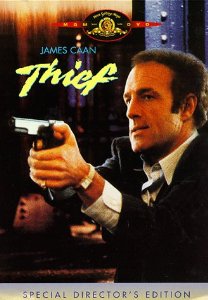
In 1975 the press published The Home Invaders: Confessions of a Cat Burglar, by Frank Hohimer, who was doing time at Joliet Correctional Center. CRP sold the film rights and the film Thief, based on Hohimer’s book, was released in 1981. Income from that film propelled the company forward. Four decades and many successes later, Chicago Review Press now publishes about 65 nonfiction titles each year and is a sister company to Independent Publishers Group (IPG), one of the largest book distributors in  North America.


Chicago Review Press has always focused on publishing titles of lasting interest. Some of our titles have been in print for more than 20 years. We also believe in developing new voices and taking chances on quirky and sometimes controversial subjects. With more than 700 titles in print and e-book formats, Chicago Review Press publishes history, popular science, biography, memoir, music, film, and travel, among others. Our award-winning line of children’s activity books and young adult biographies make up 25% of our list. The company is proud to remain independently owned and minded.

Why do focus on activity books for children? Who is your audience?

We generally focus on activity books because we feel that hands-on activities expand learning and are fun for kids. The primary audiences are educators, homeschoolers, librarians, and engaged learners ages 9 & up. We don’t dumb the material down for kids and we typically provide a lot of interesting sidebars that put the subject in the context of the era. Recently we launched a young adult biography series called “Women of Action” that has been well received, and we will likely expand in the coming years.

The first edition of The Wind at Work stayed in print for fifteen years! Other publishers whisk books out of print in a few years.  Why are you different?

We are very focused on publishing books that will backlist well and we are more patient than the larger New York publishing houses. Sometimes we publish a book that’s ahead of its time or for a niche market that requires more work and time to penetrate. Getting books into the National Parks, for example, can take a year or more because they want to see the finished book and they have review committees looking over the content carefully. Lots of children’s books will receive reviews months after publication and parents and teachers want to know that the material has been time-tested. The Wind at Work is an example of a unique book whose market grew over the years as wind technology became more prevalent.


Other publishers suffered in the 2008 economic downturn.  What happened at CRP?

We were large enough to withstand the economic downturn, but small enough to be flexible and make appropriate changes to our business model. We were quick to convert our backlist titles to ebooks. We have also been fiscally conservative over the years and that put us in a great position to build our business and invest in new technology while other companies were downsizing and retrenching. Also, we don’t pay large advances and that has protected us over the years from any big downsides in the risky business of publishing.

What are you doing with ebooks?

We embraced ebooks from the beginning and converted all of our backlist titles into the three ebook formats. It’s definitely a growing segment of the publishing business, but where it will level out is anyone’s guess. I think it will end up being at least 30% of the business, but perhaps as much as 50%. Ebooks currently represent about 20% of CRP’s overall sales, but I think there is a lot of growth potential as younger readers growing up with handheld devices become book buyers. That said, I also think that print is here to stay and that some books lend themselves better to a print format, namely picture books and heavily designed books.

What do you see in CRP’s children’s book future? 

We will likely branch out and try new things, but slowly. Right now we are working on developing a few new series like our “Science in Motion” series for ages 9 & up and our “Women of Action” biography series for young adults. We will pay attention to common core standards and STEM as we move forward and try to grow our library and education markets. We like science and building things, so activities will stay in the mix. As for now, fiction and picture books are still too risky for us, but who knows what the future will bring for CRP.

Wednesday, April 24, 2013

My Turn For The Next Big Thing


If you read Tanya Lee Stone’s INK blog in February, you know about The Next Big Thing. If you didn’t or if you forgot, it’s is an author blog tour. Each week a different author answers specific questions about his or her upcoming book. The answers are posted on authors’ blogs. Then we get to tag another author. On and on it goes.
I was tagged by Nina Kidd, member of my local critique group. She was tagged by Julie Williams. My tags are at the end.
And just in time because….  I’ve got a new book!
What is the title of your book?

The Wind at Work: An Activity Guide to WindmillsSecond Edition Revised and Expandedpublished by Chicago Review Press. For more on how I wrote the second edition click on one of my previous INK blog posts. 

Where did the idea come from for the book?

Way back in the mid-nineties, just when I started writing for children, I wanted to explore renewable energy.  Can’t remember why, but I chose wind energy and found a fascinating history of windmills that included not just the machines themselves, but the intriguing cultures of windmillers. They had their own idioms, jokes, folk tales, “signal codes,” and more.

What genre does your book fall under?

Nonfiction: part historical, part contemporary environmental, from middle grade to YA. Each chapter includes activities that can be performed at a younger or more advanced level.

Which actors would you choose to play your characters in a movie rendition?


And Ed Begley, Jr., Mr. Green himself, could be a wind turbine!

What is the one-sentence synopsis of your book?
1000 years of windmills: how they created a country, powered an industrial revolution, watered the American west, and offer a bright energy future.

Is your book represented by an agency?

I found Chicago Review Press on my own. They published the first edition back in 1997 and it has been in print for fifteen years! I can’t praise them enough. They have reprinted the book over and over, and were keen to do an updated edition. As well as the paper edition, they are publishing the new edition in three ebook formats: Kindle, epub, and pdf. 

How long did it take you to write the first draft of your manuscript?

I had published short stories in Cricket and Spider, but The Wind at Work was my first book. These days a book can take me years to write, but as a naïve newbie I plowed through it in about three months, as I recall. The activities, all the appendices, and photo research took a few more months.

What other books would you compare this story to within your genre?

Chicago Review Press has published dozens of history/activity books similar to The Wind at Work. Friends of the Earth: A History of American Environmentalism by Pat McCarthy is a nice complement to my book.  I’d also like to recommend The Boy Who Harnessed the Wind by William Kamkwamba and Bryan Mealer.  This is the amazing story of a young African boy who built himself a wind turbine. It’s out in a YA/adult version  and a picture book.  Both tell a terrific story in very different ways.

Who or what inspired you to write this book?
My interest in renewable energy got me going on the first edition. After the 2011 Fukushima nuclear disaster I contacted Cynthia Sherry, Chicago Review Press publisher, thinking that we’d have renewed interest in renewables. Cynthia reported that they were near to selling out the latest reprinting, and so I went to work. The difference between 1997 and today?  This time I did all the text and photo research online

What else about your book might pique the reader’s interest?
Check out the activities. I had so much fun with them. They range from science experiments to cooking, singing, writing, drawing, collage-ing, saving energy at home, researching local environmental issues, finding out how your politicians vote, and becoming a local activist. You can also plan a Global Wind Day celebration (June 15). There’s something for everyone here.

Now for the lucky taggee: Susan Kuklin