Showing posts with label American Revolution. Show all posts

Monday, June 17, 2013

On a Day Like Today

So, at the time of this writing, it is the 236th anniversary of that June day in 1777 (and the 66th anniversary of Flag Day, 1947: my folks met on a blind date - and should have kept on walking? I don't know, but sometimes I wonder...),when the gents at the Congress, in their smelly duds made of natural fibers, agreed – felicitous notion! – upon a new design for a flag. Yes, they'd keep the 13 stripes. But by now, it clearly did not do to have the standards of England and Scotland crisscrossing that blue field up in the corner. No, there must be 13 stars as well, a "new Constellation."   After all: thirteen States = one independent nation. That was the theory, and one that was in serious jeopardy. Even then, a flashy British general and sometime playwright, John Burgoyne, was up in Canada, fixing to raise the curtain on a pretty substantial invasion. And Ben Franklin was in Paris, in the last glittering and glorious, fetid, filthy, unjust decades of l'Ancien RĂ©gime, trying to wangle help from the French for the Americans' desperate enterprise. Which they, the people, got after word spread that General Burgoyne's play had flopped in the fall of '77 at Saratoga, NY. 
"Gentleman Johnny" Burgoyne


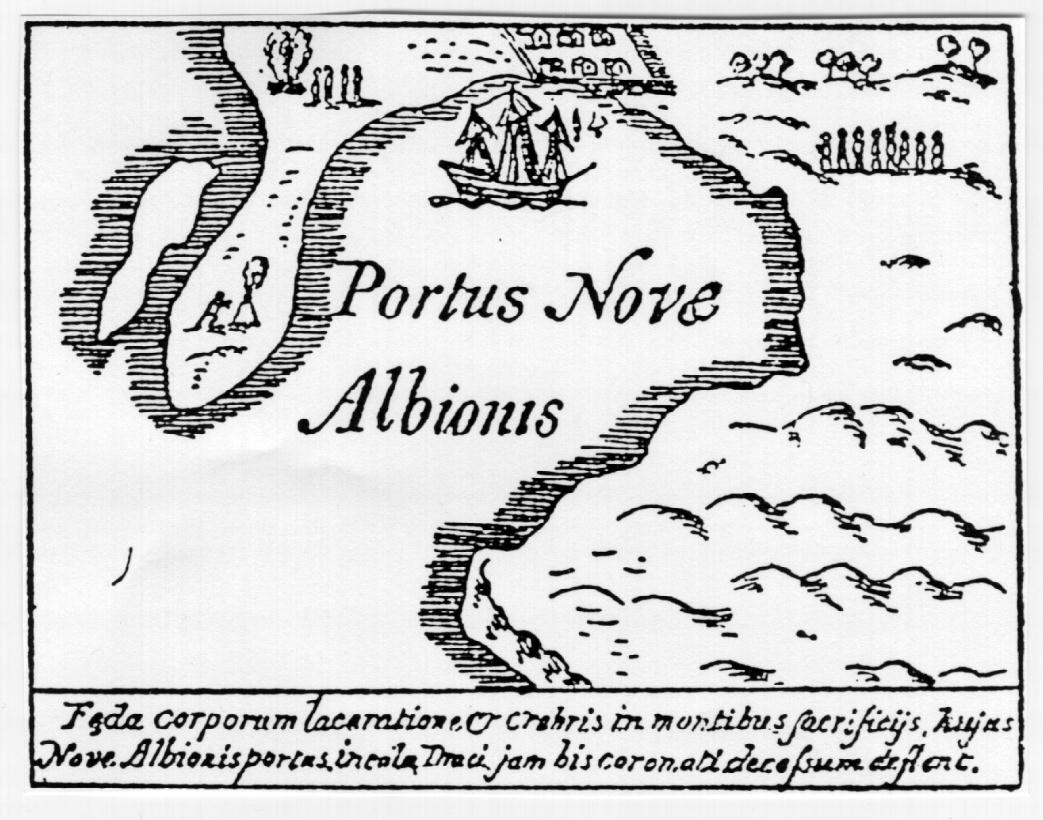
But if you're reading this, dear Lover of Factual Information, you probably already know this and plenty more bits of so-called "trivia."  How easy it is to dismiss a brief record of a time/space intersection as a mere "factoid." Each of which representing critical, complex moments in our all-too-human saga. It was on a mid-June day, maybe like today, when Sir Francis Drake [probably every bit as grubby as his crew]  sailed along the coast of northern California in 1579. When the ballsy [can I say that? probably not]  privateer claimed the land thereabouts for England and "Good [Spiteful, Determined] Queen Bess" and called it [never mind the resourceful hunters who already lived there] New Albion.  
It was June 17, 1882 when Igor Stravinsky came into the world. ('Twas May 26, 1913, by the by, when Stravinsky and Vaslav Nijinsky rocked and shocked Paris with the premiere of  Le Sacre du Printemps, the Rite of Spring?) And today marks 74 years since the last time French officials held a public execution by guillotine. Ever so much more humane than an axe, non?  (Thereafter these ultimate pains-in-the-neck were private.) Who was the man of the hour on that almost-summer day in Paris of 1939? Who took Parisians' minds off their war-worries?  A 31-year-old career criminal, Eugen Weidmann.  
The Battle of Bunker [Breed's] Hill, imagined by the great Howard Pyle


Just 106 years after Weidmann got it in the neck – two centuries + 38 years ago today – some 1,500 exhausted, filthy, cranky-but-determined colonial soldiers did battle north of Boston. All the day before and late into the night they'd been marching then digging,  piling up rocks and dirt, and building fortifications on Breed's hill (where most of the hot fighting would happen). Now,off to the south, a not-quite-8-year-old  held his mother's hand as they watched the flames, after the British put torches to Charlestown. 71 years later, old John Quince Adams remembered how he "saw with my own eyes those fires, and heard Britannia's thunders in the Battle of Bunker's hill and witnessed the tears of my mother and mingled them with my own..."

  Around 2,500 British soldiers, sweltering in their red wool coats, confronted some 1,500 'patriots.'  After all of the drumming, shooting, cannon thunder, shouts and screams, the 'redcoats' could claim a victory, but more than a thousand were hurt or killed. On a day like today, but decidedly not.

   Now I'd be remiss and will have been a twit if I did not mention a book or two. Or more.
   George vs. George: The American Revolution As Seen from Both Sides, written AND illustrated by brilliant Rosalyn Schanzer. 
  George Washington, Spymaster: How the Americans Outspied the British and Won the Revolutionary War, by clever Thomas B. Allen. 
   King George: What Was His Problem? The Whole Hilarious Story of the American Revolution, by that smartypants Steve Sheinkin (illus. by Tim Robinson).
  Fight For Freedom: The American Revolutionary War, by Benson Bobrick
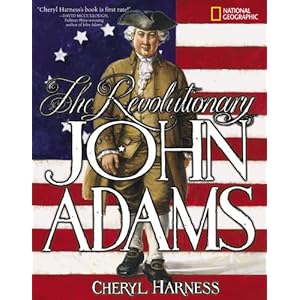
  The Revolutionary John Adams, George Washington, that I wrote and illustrated. Young John Quincy, too, but it's out of print, the world being rotten and unjust. 
  Johnny Tremain, by Esther Forbes.
The Astonishing Life of Octavian Nothing, vols. I & II, M.T. Anderson
  George Washington's Army and Me, written and illus. by Michael Dooling.


Thursday, May 30, 2013

An Hour with Benedict Arnold


About a week ago, in Williamsburg, Virginia, I the great pleasure of spending an hour with Benedict Arnold. Allow me to explain.

I was sitting outside the bookstore in the Colonial Williamsburg visitor’s center. This isn’t the ye olde part of Colonial Williamsburg, this is more like a little shopping mall, with gift stores, a theater, ticket counters, etc. So I’m sitting there at a table surrounded by tall stacks of my Benedict Arnold book, and sweaty tourists keep walking by without stopping, and I’m starting to feel that unique book signing version of lonely desperation.

And then Benedict Arnold strides up. I mean, he was seriously striding.

I’d heard a rumor that the actor who plays Arnold on the streets of Colonial Williamsburg might stop by, and here he was. He had the tricorn hat, the white wig, the heavy red coat of a British officer (this was the post-treason Arnold). He even walked with a cane and limp, as Arnold did after being wounded in battle at Saratoga.

“How do you do, sir?” he boomed.

I said something like, “Good. I mean, very well, general.” I gestured to the piles of books. “I wrote a book about, well… about you.”

“Yes, I’ve read it,” he said, picking up a copy.

I worried he might be offended by the title, The Notorious Benedict Arnold, but it didn’t seem to bother him. To my surprise, he sat down next to me. I smiled, but didn’t know what to say. My first thought was to tell I was a big fan of his. But do I mention my disapproval of the whole betraying your country for money thing?

A family walked by, slowing to look at us. A writer and a Redcoat at a folding table.

“Good day to you all!” Arnold called.

The dad stepped to the table. He looked back and forth from the cover of my Arnold book to Arnold. Then he said, “Could we get a picture with you?” He meant Arnold. Arnold stood and the kids posed with him and the dad took a picture on his phone.

Then Arnold sat back down, shook my hand, and introduced himself as Scott.

That’s when things got really fun. Turns out this guy is perhaps more obsessed with Benedict Arnold than I am, and knows even more. And he loves his job, says it’s the best gig in Williamsburg, because he’s such a controversial figure, and because he gets to ride around on a horse and harangue Americans.

Think of the dedication. I mean, we nonfiction writers spend a year or two trying to get into the heads of historical figures. But then we move on. He never does. He stays inside Arnold. Sometimes, when he’s in a hurry, he drives home dressed as Arnold. He’s even gotten gas as Arnold (yes, there were strange looks given).

For about an hour, we swapped theories on obscure points in Arnold’s story. I forgot all about trying to sell books, and was actually annoyed when people stopped by to talk (usually with him) or take pictures (always with him). When this happened, he snapped back into character and traded greetings, and sometimes witty insults, with the visitors. I just sat there, impressed and inspired. Here’s someone as skilled as any writer at making history engaging and memorable. And there’s no technology in sight—just the good old fashioned building blocks of story and character.

Some people enjoyed taunting Arnold, asking if he had any regrets, if he wished he hadn’t betrayed his country, stuff like that. But he had quick comebacks at the ready. The only thing that seemed to bother him was when a group of kids came up, giggling, waving plastic muskets, and asked, “Are you supposed to be George Washington?”

“No,” he said, frowning, recalling a painful scene. “I was once… an associate of his.”

The kids stopped laughing. They wanted to hear the story.

Thursday, March 8, 2012

My John and Tom (Part 3)


In January, in My John And Tom (Part 2), I shared a bit about what made Adams and Jefferson so different. In this third and final segment on Those Rebels, John and Tom, I wanted to share a bit about the themes that brought them together—and drive the narrative: commitment and compromise.

The whole time I’ve worked on the book, our current Congress has been…stalled. (OK, I must admit I debated which word to use here—there are so many to choose from! I read recently that the majority of Americans would prefer to have the current members of Congress replaced by names drawn randomly from the phone book.)

The state of today’s Congress is the perfect backdrop to appreciate all that the Continental Congress achieved.

They started in 1774—with nothing.

They had to decide everything. How would voting take place. Would voting be based on population or would each colony have one vote?

And that was just the start. In addition to the hours spent debating in Congress, there was all the committee work. In June of 1776, while Tom was busy writing the Declaration—in the hopes that Congress would vote yea—Adams himself was serving on 26 committees, prompting him to write to a friend, “I am weary, thoroughly weary.” Among his many duties, he chaired the Board of War—for while America had not yet declared independence, Americans under General George Washington were already fighting British troops.

This sense of commitment was epitomized by what Adams called “the greatest debate of all”—the life-or-death decision that Congress had to make. And I mean that literally—when the members of Congress voted for independence, they committed treason. If America had lost the Revolutionary War, the British could have hanged them all.

The men of the Continental Congress had such commitment to their cause that they were willing to die for it.

And yet, they engaged in this life-or-death debate in the spirit of compromise.

Sure, they didn’t have the two-party system with have now—there weren’t Democrats and Republicans back then.

But the delegates came from all over the colonies, and each colony had its own concerns. A lot of the delegates had never even met when they first arrived in Philadelphia. And yet, when it came time to decide the biggest questions, they set aside regional concerns and sought out compromises to answer those questions—for the good of the whole.

Those Rebels, John and Tom is an example of when Congress worked. It’s a timely reminder of how our government can and should work: not perfectly, not always easily, but always with our elected officials working together to move the country forward.

Commitment. Compromise. These are the themes of Those Rebels, John and Tom. (PS. A shout-out to Edwin Fotheringham, the illustrator of the book--aren't the illustrations great?!)


Thursday, February 9, 2012

My John and Tom (Part Almost 3)

I was all set to post the third installment of my FoundingFathersPalooza—an exploration into how I conceived, researched, and wrote Those Rebels, John and Tom, my book about Adams and Jefferson. And I’ll post the final installment next month.

But something wonderful happened a few days ago that fits in so nicely, I couldn’t resist talking about it. You see, in a couple of weeks, I get to meet John and Tom.

In person.

I’ll be participating in the John F. Kennedy Presidential Library and Museum’s “Presidents’ Day Family Festival” at the JFK Library in Boston, on February 21st.

And John and Tom are going to be there!

OK, technically, John Adams will be played by Thomas Macy and Thomas Jefferson will be played by Bill Barker – but take a look at the links. Don’t they look fabulous?! Both men are real history buffs and I know will do Adams and Jefferson proud.

We’ve been doing a bit of emailing, setting things up. Under the signature line for Thomas Macy’s emails are the quotes:

"Querulous, bald, blind, crippled, toothless Adams."
- Benjamin Franklin Bache
"I'm not crippled." - John Adams


And Bill Barker signs his emails:

Yr' hm'bl sr'vt,
Thos. Jefferson


I think this is going to be fun…

I am geeky excited. For someone who spent over a year working on the book, this is the next best thing to a time machine.

If you will be in Boston on Feb 21st, please join us, won’t you?

Thursday, January 12, 2012

My John and Tom (Part 2)


Last month, I answered the question, “Where do you get your ideas?”—for one book, anyway: Those Rebels, John and Tom.

Having grown up spending so much time with the characters of the Broadway musical “1776”, it’s not surprising I’d one day want to write my version of Adams and Jefferson.

But a picture book needs a tight focus, and so, early on into writing the book, I had to decide where to shine the spotlight on these two, remarkable figures.

My goal for Those Rebels, John and Tom was to give an inkling of who these two men were, how they worked together, and how much their partnership benefitted the country.

Writing about a famous person can be tricky, as they often have a kind of mythology tied to their fame. Those Rebels, John and Tom has not one but two famous people, stuffed into the same book. Talk about mythology! Jefferson is carved in stone on Mt. Rushmore—you don’t really get any bigger than that.

It’s the job of a biographer to dig deeper and present a richer portrait, to take readers past the myth to the man (or woman.)

How does a biographer do this?

Research.

Secondary sources are invaluable to paint an overall picture and provide a cultural and historical perspective. But my favorite source of information is primary sources—what I think of as ‘eyewitness accounts.’ That’s where all the juicy details come from.

And it was in primary sources that I found details to help uncover just who these men were.

And so, for example, we have Adams, detailing in his diary all the culinary wonders he experienced when he first came to Philadelphia in 1774:

“A most sinfull Feast again! Every Thing which could delight the Eye, or allure the Taste. Curds and Creams, Jellies, Sweetmeats of various sorts, 20 sorts of Tarts, fools, Trifles, floating Islands, and whippd Sillabubs.”

(I loved those last two names, by the way – floating islands and whipped syllabubs. As soon as I read them, I just had to find out what they were. The first is a meringue island floating on a sea of custard. The second is a frothy mixture of whipped cream, lemon zest, and wine. Delicious.)

Primary sources showed me that the champion of democracy had a real sweet tooth.

And it was in another primary source—Jefferson’s Memorandum Book—that I read his meticulous notes on his shopping trips in Philadelphia in 1775 and 1776:

“Paid Starr for shoes -- 21 shillings”
“Paid for handkerchiefs -- 6 shillings 8 pence”
“Paid for pair of gloves -- 7 shillings 6 pence”
“Paid Currie for leather breeches -- 35 shillings”
“Paid For a straw hat -- 10 shillings”

The author of the Declaration of Independence, I discovered, was a bit of a clotheshorse.

Biographies are built upon the whipped syllabubs and ten-shilling hats which take men and women off the pedestal (out of the portrait, off the face of Mt. Rushmore) and place them squarely before us, not to be admired as mythological figures, but to be understood as the extraordinary and yet all-too-human people they were.

One thing that struck me early on in the research process was how very very different John and Tom were. And there’s no easier way to see that than by comparing their homes.

Jefferson was born into Virginia aristocracy—and his house, Monticello, reflects that. Monticello is beautiful—and if you have never been, I recommend you go sometime.

But it was not in any sense a practical house.

Most wealthy people in Virginia built their mansions alongside a river, if they could. It made transportation issues simple as you could just float supplies to your doorstep. Alternately, they built their mansions on a road—again, simplifying the transportation of building supplies.

Tom did neither. He erected his mansion on top of a little mountain. He had to have roads cut through dense forest to haul the supplies up and up and up. When the building process started, there wasn’t even enough water onsite to mix the clay to form the bricks—it had to be hauled in from a stream.

Tom drew up the plans for Monticello himself, basing the design on a villa with grand stone columns. In fact, he was intimately involved in all aspects of the design and construction. And when I say “intimately involved” I mean just that—I mean intimately, meticulously, some might say obsessively involved.

Tom designed everything from the placement of those stone columns on the portico down to the size of the individual bricks, measuring and calculating, sometimes down to the ten thousandths of an inch. One of his calculations was a measurement for 1.89916 inches.

This, in an era where bricks were made by hand—filling wooden forms with clay, letting the bricks dry, and then firing them in brick kilns built onsite.

Not two inches; not one and three quarters. 1.89916

Tom liked to oversee the bricklayers’ and carpenters’ work closely, and I can only imagine some of the comments they must have made when he was out of earshot.

Monticello became a life-long obsession with Tom. He began working on the project in 1768 and was still working on it 40 years later—with additions, demolitions, and renovations in between.

The bulk of this work—the building and rebuilding—was done by his many slaves. Jefferson himself did not do manual labor.

Contrast all that to John, the son of a shoemaker.

John may have been a lawyer and Harvard graduate, but he was also a farmer. He prided himself on being hardworking and frugal:

He pruned his own fruit trees, cut his own hay, carted manure out to his fields, and split his own firewood. On occasion, he hired men to help him with the big jobs: building stone walls, digging up stumps, and plowing the fields to plant corn and potatoes.

When John inherited his modest, 100-year-old wooden home, he built a small addition onto the back—just a lean-to of a couple rooms—and then called it good.

He and Abigail lived there for the next 27 years.

John and Tom were certainly compelling characters to write about. And next month, in the third and final segment of this FoundingFathersPalooza, I’ll talk about the themes that brought these two very different men together—and drive the narrative.

Thursday, December 8, 2011

My John and Tom (Part 1)

I thought I’d do something a little different for the next few months, and spend a bit more time talking about a single project: where I got the idea, how I developed it, and what I hoped the story would accomplish. A beginning-middle-end, if you will.

It wasn’t hard to choose the topic, as my latest book is a story I’ve been waiting most of my life to tell.

So today, I’m beginning the first of a three-part discussion of my latest book. But first, let me introduce my dear friends, John and Tom.


I was first drawn to the story of Adams and Jefferson because I grew up in the suburbs of Washington, DC. My father worked at the State Department, and so I think I was more aware of government than a kid living somewhere else might have been. I went in to DC and saw places like the Capitol and the National Mall pretty often.

I turned sixteen the summer of the country’s bicentennial, and I remember going downtown: it seemed like there were a gazillion tourists and even more of those sidewalk stands selling little American flags and patriotic t-shirts.

But even before then, I was tuned in to celebrating America’s independence, and that was because my mom and dad were big musical theater buffs. They had a whole cabinet full of Broadway recordings, and they listened to them almost every night. The musical “1776” was one of their favorites.

“1776” is the often funny and often quite moving story of the Continental Congress as they grappled with the enormous question of whether to remain a British colony or to declare independence—committing treason in the process.

The musical premiered on Broadway in 1969, and I think my parents must have bought the record shortly thereafter—when I was about ten years old. Many nights at bedtime *it* was the album I’d ask my dad to put on in the living room downstairs, so I could listen to it upstairs. I fell asleep listening to John urging Congress to “Vote YES” and to Tom wooing his wife on the violin.

I fell in love with the musical “1776.” It was my first glimpse that history could be just as exciting and engaging as any novel or movie.

So, in a sense, I grew up with John and Tom, and it’s not surprising that one day I would tell *my* version of their lives: Those Rebels, John and Tom.

Next month, I share a bit about researching and writing the book.

Monday, March 14, 2011

The Whole Truth

In my somewhat new Monday slot, more of my posts fall on holidays (duh!) and I have just let them pass. Last month, for example, Valentine’s Day came and went, but my heart wasn't in it.

Today, however, I’d like to celebrate this week’s unofficial holiday that, in my opinion, deserves to become official--the onset of Daylight Saving Time (DST). What an emotionally lifting gift—especially to New Englanders who have been battling the suicidal impulses that accompany a 4:30 sunset. For months we have tried to keep our spirits up as the light inched back a minute at a time. Then PRESTO CHANGO! In just one day, arbitrary magic multiplies the jump times 60. We get a whole new hour of light—and life becomes brighter in every way. If only Zoloft worked so well.

As nonfiction writers we are obligated to tell the truth and nothing but the truth, right? What about the whole truth, though? In this case, I would have to admit that DST causes increased danger of traffic and pedestrian accidents during its first week because of sleep cycle disruption. It was never created to help the farmers or reinstated more recently to save energy. In fact, farmers hate it and many experts believe it increases energy costs: electricity for air conditioning and over $100 million a year for the airlines.

Why did this idea gain purchase? Some British golfer in 1907 realized that if one hour of sunlight was switched from the sunrise side to sunset, he’d have time to get to the back nine. In fact, when the 1986 Congress debated the issue of extending it into March, the golf lobby went to town. According to Michael Downing, author of Spring Forward: The Annual Madness of Daylight Saving Time, the golf industry estimated the extension of DST would increase their revenues by 400 million 1986 dollars, the barbecue industry over $100 million. In other words, if you give Americans the chance to go outside at any time, they will spend money.

Telling the whole truth about DST is not a horror. An ironic example of one of America’s worst traits, perhaps, but not a deal-killer. In the unlikely event that I ever wrote a book about DST, I’d “out” its origins with relish.

But what about other times, when telling the whole truth in our books for younger children is a lot more painful? Then how far do we go? I just attended a conference on sustainable energy this week where everyone had already accepted the devastating long range consequences of climate change as inevitable. Nobody was talking about getting better gas mileage or "clean coal." The focus was on how to think about reconfiguring communities in the Brave New World. I'm not considering a book about this subject either; but how do you give kids hope and this kind of information at the same time?

When I wrote See How They Run: Campaign Dreams, Election Schemes, and the Race to the White House, part of my goal was to provide the good, bad and ugly aspects of our electoral process. This included cutting a few Founding Fathers down to size. Washington buying an election for the Virginia State legislature by treating voters to 160 gallons of alcohol? No problem. Letting kids know that Jefferson paid a newspaper editor to write propaganda against Adams--a touch worse.

But when I read an accusation that Lincoln only granted passes to Republican soldiers to leave the battlefields to go home and vote, I felt sick to my stomach. At that moment I understood that the adult me had gotten more sophisticated, even cynical, but my feelings about certain subjects or heros had remained frozen as developed in childhood. I thought about burying that Lincoln fact for a few weeks, then started looking for the evidence. You don’t know what a relief it was to talk to the curator of the Lincoln Library and several scholars, who convinced me it wasn't true. But if they hadn't...????

Anyone out there have examples of times when you agonized over what information you included in a book—or excluded? Do you have second thoughts about how you handled it?

Two short self-promotional announcements:
Tomorrow, February 15th at 7:30 p.m., fellow I.N.K. author Deborah Heligmann, Loree Griffin Burns and I are on a Foundation for Children’s Books panel, entitled, Tell Me a Story and Make it True: Three Authors Discuss Writing Narrative Non-Fiction. If you live in the Boston area and are interested, we’d love to see you.

Perhaps some of you remember that I am currently an author-in-residence in an urban school right across the street from construction that’s renovating Old Colony Housing Project in South Boston. Last week and this one are a particularly exciting time on our blog. The kindergarteners have been given the opportunity to name a huge crane (ala Mike Mulligan and Mary Anne) and are learning the democratic process in the bargain. It’s a good time to check it out and subscribe for a week (or more!).

Monday, October 18, 2010

A Dear John Letter

Dear John Adams, you've got a birthday coming up, on the 30th of this month, to be exact. On the 19th, by the old reckoning, set aside when you were not quite 18. It will be your 275th. Wait – let me imagine the glorious light of 275 candles, set into a spice cake, and the breath required to extinguish them. Make a wish, I'd hope you would, for this governing machine that you helped to invent, this ongoing experiment in participatory democracy. I'm imagining what an old Braintree lawyer/farmer/orator/public servant such as yourself would make of the republic for which you and your 'Dearest Friend,' – please pardon me the liberty for thus referring to Mrs. Adams – gave so much. I'm imagining what you'd look like now. I'm thinking of Sam Jaffe as the remarkably well-preserved High Lama in the 1937 Frank Capra film, Lost Horizon.
I doubt you'll read this, having other things to do in the Blue Beyond, but you might wish to know that, though there's no great stone monuments or temples to you in Washington, D. C., you've been the subject of many a heartfelt book, including a couple of mine. More about them later. I was introduced to you, your ebullience and stubborn earnestness in a fine work of historic fiction, Irving Stone's Those Who Love (1965; A book club sent it to my folks when I was 14.) and in Catherine Drinker Bowen's 1950 biography, John Adams and the American Revolution, found in a used bookstore. These as well as Jos. J. Ellis's The Passionate Sage (1993) and David McCullough's John Adams (2001), but how about books for young citizens?
There's John and Abigail Adams:An American Love Story, by Judith St. George (2001); certainly Abigail Adams: Witness to a Revolution, by my friend Natalie S. Bober (1998); and this year's handsome Picture Book of John and Abigail Adams, written by David A. Adler, illus. by Michael S. Adler. But allow me to write a bit about how I went about writing and illustrating the pair of books I did about the Adamses.
In 1994 Bradbury Press published Young John Quincy (Out of print it's been for years, the title being unclear and the world being unfair, as you well know.) It was followed nine years later by The Revolutionary John Adams (National Geographic). The happy problem, in the latter, was distilling your long adventurous life into 48 pages. I pored over said bios along with Esther Forbes' book about Paul Revere - excellent for the feel of your time and place. Not being able to go to your time, I did manage to go to your place, your house, which still sits beside your folks' house, in which you were born.
They were farmhouses in the 1700s. Folks walked or rode their horses or jostled along the country road between Boston and Plymouth. Now they're surrounded by every sort of business, jammed side by side in modern Quincy, Mass, cars, trucks rumbling by. Still, a big fat thrill it was to walk about in your quiet, empty house, straining to imagine your family there, especially in those months and years that you were away. I drew out a floorplan. I drew out a grid: 48 squares and planned out the pages, envisioning which part of your story would go on each page. Such a book as this, I was telling a bunch of kids just day before yesterday, is an imagination/education combination. In the outlining, one is already imagining the writing. It took me a couple of weeks to write. One must be accurate, concise, and engaging. Make it snappy. The illustrations took ever so much longer. They always do.
I studied the paintings and engravings of you, your times, and books about clothing and transportation, as these were fashioned in the 18th century. I set to drawing, in pencil on tracing paper, on which I'd drawn the margins. Reference books clamped open with bulldog clips, propped on the edge of the table, an old oak library table (used furniture store in Colorado Springs.) One has to write first, I tell kids, so you know what the words say AND so you know how much space the words require on the page. It's as if you're choreographing a dance between the words and the pictures.
I photocopy the drawings. Mr. Adams, how you would have reveled in the ease of a copy machine! I tape the copies together into a dummy, transfer the drawings to illustration boards. Watercolor. Ink. Colored pencils. I use them all, mostly the paints, each painting taking a full week of 12 to 18-hour days. In particular I remember your book, Mr. Adams, of all the books I've illustrated. There was an ice storm, knocking out the power for 8 days. I'd have to heat up my hands in warm water to keep on painting and knock off work when the sun set - all the better to appreciate your efforts!
In any event, that book seems a long time ago. It was, from my vantage point. Long, long, longer ago are you, but you're still fresh in my imagination. Honored I would be if some young American would discover you in a book of mine, but if they'd understand their nation and its beginnings, find you they must, in whatever book. After all, your story and the stories of all your countrymen and women are each chapters in the story of the republic. Happy birthday, dear John Adams. May you not be forgotten.


Revolutionary John Adams