Borrowing the clever format used by Laura Purdie Salas and Fiona Bayrock over at Bubble Stampede!, Susan Goodman and I have decided to chat about Kids Heart Authors, a New England-wide book signing event on February 14, 2009. We will both be at the The Blue Bunny in Deadham, Massachusetts.
Masterminded by fabulous multicultural author Mitali Perkins with a whole lot of help from independent publicist Deborah Sloan, Kids Heart Authors is a celebration of children's books, independent booksellers, authors and, of course, our young readers.
Melissa: I think Valentine's Day is a great time to have a book signing, especially since it falls on a weekend this year. I love what I do. Writing books for kids is the best job I can imagine. And I've met plenty of kids who say they love my books.
But I also love the independent booksellers in the Boston area. My trade books are published by small publishers, so the large chains don't always give them a chance. But Porter Square Books in Cambridge, MA, The Wellesley Booksmith in Wellesley, MA, and The Concord Bookshop in Concord, MA, have all been very supportive. They know the books in their stores, and they take the time to know their customers. That allows them to be matchmakers, pointing each child toward the perfect book.
Susan: Thanks for thinking up this great idea Melissa. I second everything you've said so far. All writers should support the independents in return--as authors and as customers. I think nonfiction writers for kids also owe a special debt to the independents, who proportionally stock more nonfiction than the chains--and sometimes even in terms of just plain numbers!
I hope that the bookstores benefit by it. I know we authors do. And kids do too, especially the ones who like to gobble up information as much as stories. How many parents and teachers have heard, "I don't like to read," from a child, only to later learn that what he or she really means is, "I want to read about something," i.e., a nonfiction subject of interest.
Melissa: You're right, Susan. In fact, studies have shown that having a rich supply nonfiction available for students in grades 3 to 5 significantly increases the likelihood that children will become life-long readers. Of course, many students prefer fiction, and some like both. That's why I'm so glad that this Kids Heart Author event includes a wide selection of fiction and nonfiction titles. There will be 115 authors and illustrators signing books at 40 independent booksellers across New England.
Another great thing about an event like this is that authors and illustrators get to meet each other and see old friends. Most of us spend our days working alone in our home offices.
Susan: Absolutely--it's nice to get out of the house and have a reason to also get out of sweat pants or pjs. Not to underestimate the effort it took to come up with promotional materials and team up so many bookstores and authors but, thanks to the Internet, this event came together so quickly. And, it got a fair amount of attention as it was picked up by blogs and newsletters.
It raises the question: What else can we authors and independent booksellers do to help ourselves? What kind of events and/or attractions can we come up with besides traditional signings that will attract an audience of readers? Anybody out there have any ideas?
Tuesday, February 3, 2009


Monday, February 2, 2009
Blogaversary!
This week we celebrate our one-year blogaversary! Presents are nice, of course, but what we’d really like are your constructive comments. Please leave a comment this week telling us what you like, what you’d like to see more of, how often you read the blog and how you use it.
In our second year, we’d like to push our boundaries even further. Our main objective is to foster more discussion. We will try to add more diversity to the voices you read here and hope that you, our readers, will join in. To this end, if you are a teacher, homeschooler, librarian, editor, parent, etc. who might be interested in writing a guest blog please send me an email at the address listed in the sidebar. We won’t make any promises but we’re open to hearing from people from all corners of the nonfiction for kids community.
I want to thank all of our I.N.K. bloggers for a fascinating year of blogging. I’ve had a sneak peek at February and March and I can say confidently that there are many more interesting things to come. Stay tuned.
Thursday, January 29, 2009
Nonfiction for Teens to Ignite a Creative Spark
After hearing this lecture by Sir Ken Robinson, I began my campaign to share it with the world. In my opinion, the title, DO SCHOOLS KILL CREATIVITY?, should be changed because it appears to be a negative discussion about our schools - but it's not. Sir Ken Robinson is a very smart and entertaining speaker, and all his points about creativity and our kids are exactly what I believe. It takes about 20 minutes to watch this, but you'll be entertained and inspired.
I would love to hear any thoughts in the comments.
To continue this creativity theme, here are some great art books for teens I recently discovered.
200 Projects to Strengthen Your Art Skills: For Aspiring Art Students
Valerie Colston
Barron's Educational Series 2008
Last year on the YALSA listserve, someone asked for recommendations of good books about art for teens and this was one of the books suggested. Always loving a good art book, I had to hunt it down. What a perfect book for teens. I wish I had this book in high school. I had one book on painting and one book on illustration - both very worn out now. 200 Projects is one of the most comprehesive, clear, and concise art books on the market.
Art and Sole
InterCity
Laurence King Publishers 2008
I gave this book to my extremely "well-soled" 14YO son this year for Christmas. His father thinks my son has way too many shoes but, hey, there could be worse problems. While purchasing this book, I was a little afraid that the book wouldn't cool enough. Ya never know. Well, guess what? Art and Sole was one of my son's favorite gifts this year and the book has earned the "sole book on the nightstand" honor.
(By the way, please don't let it slip to my son that he was mentioned in this post.)
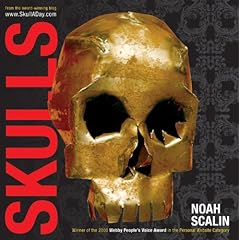
SKULLS
Noah Scalin
Lark Books 2008
I drive through the high school parking lot everyday. Based on that, this book has to be popular with teens. SKULLS is very well done and extremely creative.
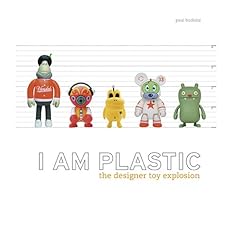
I Am Plastic: The Designer Toy Explosion
Paul Budnitz
Harry N. Abrams 2006
Paul Budnitz is the founder and creative director of Kidrobot, the ultimate of what's cool in this house. This book has a broad appeal for teens of many different interests. Toys equal fun!
The Big-Ass Book of Crafts
Mark Montano & Auxy Espinoza
Simon Spotlight Entertainment 2008
What a fun, entertaining book packed with cool crafts! The visual design of the pages work well because they're clean and easy-to-follow. Being a visual person, a page that has a fun, artsy layout helps in the right-brain experience. Oh, and chapter one is titled Artsy Fartsy. Doesn't get any better than that.
I would love to hear any thoughts in the comments.
To continue this creativity theme, here are some great art books for teens I recently discovered.
200 Projects to Strengthen Your Art Skills: For Aspiring Art Students
Valerie Colston
Barron's Educational Series 2008
Last year on the YALSA listserve, someone asked for recommendations of good books about art for teens and this was one of the books suggested. Always loving a good art book, I had to hunt it down. What a perfect book for teens. I wish I had this book in high school. I had one book on painting and one book on illustration - both very worn out now. 200 Projects is one of the most comprehesive, clear, and concise art books on the market.
Art and Sole
InterCity
Laurence King Publishers 2008
I gave this book to my extremely "well-soled" 14YO son this year for Christmas. His father thinks my son has way too many shoes but, hey, there could be worse problems. While purchasing this book, I was a little afraid that the book wouldn't cool enough. Ya never know. Well, guess what? Art and Sole was one of my son's favorite gifts this year and the book has earned the "sole book on the nightstand" honor.
(By the way, please don't let it slip to my son that he was mentioned in this post.)
SKULLS
Noah Scalin
Lark Books 2008
I drive through the high school parking lot everyday. Based on that, this book has to be popular with teens. SKULLS is very well done and extremely creative.
I Am Plastic: The Designer Toy Explosion
Paul Budnitz
Harry N. Abrams 2006
Paul Budnitz is the founder and creative director of Kidrobot, the ultimate of what's cool in this house. This book has a broad appeal for teens of many different interests. Toys equal fun!
The Big-Ass Book of Crafts
Mark Montano & Auxy Espinoza
Simon Spotlight Entertainment 2008
What a fun, entertaining book packed with cool crafts! The visual design of the pages work well because they're clean and easy-to-follow. Being a visual person, a page that has a fun, artsy layout helps in the right-brain experience. Oh, and chapter one is titled Artsy Fartsy. Doesn't get any better than that.
Wednesday, January 28, 2009
Children’s Nonfiction Magazines – Part I
Happy 1st Birthday INK! And all praise to Linda Salzman for her indefatigable devotion to the cause of nonfiction. This past year we’ve read about dozens of good nonfiction books for kids. But there’s another source of great nonfiction – kids’ magazines. I want to spend my next two blogs reviewing some of them, and hope that readers will add even more. This month I will focus on history and culture, next month on science and nature.
Carus Publications, founder of the venerable Cricket magazine group which mixes fiction and nonfiction, publishes the also-venerable Cobblestone group. While these magazines are naturals for classrooms and libraries, they also bring a wide variety of colorful and up-to date information and activities to kids at home. Each large-format issue focuses on one theme, with short and long articles, sidebars, activities, and plentiful illustrations.

A recent issue of APPLESEEDS , meant for grades 3 and above, focused on food. Its 32 pages of articles ranged from nutrition, to how food is digested, to schoolyard gardens, to international food-aid groups. World-wide food culture was highlighted in features on bread, pizza, noodles, and what kids from various countries eat for breakfast and lunch. History, science, and social studies are well-served. Future 2009 issues will cover poetry, robots, Jane Goodall, spies, and more.

COBBLESTONE focuses on U.S. History for grades 4 and up. An issue on Voices for Peace traced grass-roots opposition to every war in our history – from the Quakers in the Revolution, to Congressmen in the Mexican American War, to nuclear disarmanent in the 1950s, Vietnam in the 1960s, and Iraq today. Features on forming a peace group and using the web are presented, and a resource page of books, websites, and places to visit prompts further research. COBBLESTONE themes, while always historical, are not all political. Upcoming issues will focus on the Brooklyn Bridge and baseball.

Exploring world history, is the sub-title of CALLIOPE, written for grades four and up. A recent issue called A World of Faith featured several articles on each of five major religions, describing history, theology, practices, and holiday celebrations. Further resources, including previous CALLIOPE issues are listed. Themes for future issues include people (Queen Isabella and Michelangelo,) places (Great Wall of China, the Pathenon,) and miscellaneous (meaning of numbers, Aesop (did he exist?) and his fables.)

FACES, for grades 4 and up, also offers an international cultural perspective, but emphasizes contemporary life. Many issues focus on one country. The current Brazil issues present national heroes, favorite sports, food, Carnival, and efforts to save the Amazon rain forest. An ongoing series “XX Around the World” chooses themes like music, play, family life, and food.
My intention in reviewing these magazines is not just to let teachers and librarians know about them, but to encourage writers to write for them. www.cobblestonepub.com gives editorial and illustration guidelines, and lists of upcoming themes and deadlines for queries. You can also browse through an entire issue of each magazine on the website. Unpublished authors may find it easier to sell a magazine article than to sell a book manuscript, since many articles are needed for these monthly and bimonthly magazines. A few such credits on your résumé will impress book editors as well. As a published author, I have been able to write on topics I have already researched, and thus get a little more publicity for my book on the same subject.
Whoever you are – reader, teacher, librarian, or writer – explore the wonderful world of kid’s nonfiction magazines. And do leave your comments about these or other history/culture magazines.
Tuesday, January 27, 2009
Purple Cow Book Contest


To anyone who left a comment on last Tuesday's post about the Purple Cow book:
Each egg has a piece of paper in it. One of these says "winner." Tell me which colored egg is the winner. First one to comment with the winning color wins the book.
Good luck!
Monday, January 26, 2009
The Popcorn Factor
 I know how to get kids really excited about math. Show them popcorn. Lots of popcorn. It’s one of my math props when I speak at schools. I pull out bags of popcorn that grow by powers of ten from one to ten to one hundred to one thousand and so on. Are you wondering how big the bags get? That’s exactly what the kids are wondering, and they’re at the edge of their figurative seats waiting to find out (I say “figurative” because they’re usually sitting on the floor). Their growing excitement is abated only momentarily when I tell them they won’t get to eat my popcorn (and wouldn't want to eat it because I popped it in 1985). They groan but immediately go back to screaming with delight as a bag of popcorn ten times larger than the last one appears before their eyes.
For years I’ve been using popcorn to demonstrate various math concepts as I act out the plot, if you can call it that, of On Beyond a Million, my powers-of-ten counting book. The popcorn almost never fails to excite children from grades K to 5 or 6, whether they are urban or rural, rich or poor, white or black, X or Y. On several occasions I dropped the popcorn from my presentation, but I had to put it back because it’s so popular.
The fact that 21st century children go wild over popcorn as a math prop encourages me wildly. Why? Because popcorn is so simple. It isn’t a coveted, rare treat that they hardly ever get to see (or taste). They haven’t been barraged by commercials touting its pleasures. There’s nothing high-tech about my bags of popcorn, and no special effects. There isn’t even an on/off switch. Yet kids love it because of the way the bags’ growth in size appeals to their senses and their emotions.
 Much has been written recently about the current plugged-in generation that can’t have fun without electric outlets at hand and electronic devices in hand. Richard Louv’s best-selling book, Last Child in the Woods: Saving Our Children from Nature Deficit Disorder, sounds an alarm that children who are alienated from nature suffer in many psychological and physiological ways. Elementary school curricula may teach students all about the Amazon rain forest’s endangered species but do not encourage them to interact with the natural world outside their classroom, says Louv. That interaction, when it does occur, has a wealth of salubrious effects.
I am encouraged by the popcorn. If kids can get so excited about something as simple as my popcorn, then there is hope. For instance, if adults simply expose children to “nature play,” they will drink in the benefits.
Something else without an on-off switch comes to mind: books. In recent years, pundits have predicted death knells for the paper-and-ink variety of reading material but I don’t see it coming. Like big bags of popcorn, books are too much fun to hold and behold. They’re going to stick around for a while. Furthermore, as an author, I find the popcorn factor instructive. It says I can stick with the basics. By basics, I don’t mean what that word has come to mean in the politicized world of education and testing. I mean the basic and universal emotions and responses in children (shared by adults who haven't lost the basics). One of the most valuable pieces of advice I ever got from an editor was in reference to a fiction manuscripts, Super Grandpa, but I think it applies to non-fiction as well. This editor told me to “cut to the emotional core of the story.” The emotional core of powers of ten is that every time you add a zero to a number, it gets ten times bigger and that’s WAAAAAAAAAY bigger. “WAAAAAAAAAY bigger” is the emotional core. It’s exciting. If I can get to that in my readers (or audience members), I've reached them. Just pop up some corn and you’ll see what I mean.
Sunday, January 25, 2009
Win the Purple Cow Book
Reminder to leave a comment on last Tuesday's post (1/20/09) if you would like to play along this Tuesday (1/27/09) and possibly win a free copy of I SAW A PURPLE COW. AND 100 OTHER RECIPES FOR LEARNING.
Friday, January 23, 2009
Take Me Back to the Classroom
Whenever I log into I.N.K., I’m always fascinated by the various activities authors, librarians, and teachers create based on biographies and other non-fiction books. One of my New Year’s Resolutions is to visit more schools in the coming months. Last year I spoke at conferences and museums, which I love, but I didn’t have a chance to visit many classrooms. Looking back at the first non-fiction books Sandra Jordan and I wrote, The Painter’s Eye and The Sculptor’s Eye, I remember how often we visited schools to make sure the language of art we were introducing to young people was clear. We wanted to inspire them to begin a dialogue with contemporary American art. The books were based on my teaching in the Aesthetic Education M.A.T. at Webster University, on discussions with Sandra in museums and galleries, on our research into various approaches developed by art educators across the country, and on our interviews with artists. We often receive letters and e mails from teachers, as well as school librarians, who use our books to stimulate perception in the arts and to enhance basic skills. Over the years, they’ve shared some wonderful lesson plans about the artists and artworks we’ve highlighted. Sandra and I have created teachers guides, as well. So today I want to share some classroom activities based on our book Action Jackson (illustrated by Robert Andrew Parker). In the Responding to Art section, we begin by posing questions, following the line of inquiry we developed in our first two books. It works when talking about an abstract painting, in this case Lavender Mist by Jackson Pollock, or a more traditional, realistic artwork.
Begin by reading Action Jackson. You can read it out loud, have the children take turns reading it aloud, or allow them time to read it to themselves.
Then let everyone take a good look at the reproduction of Jackson Pollock’s painting, Lavender Mist. Children should also have the chance to look at any work of Pollock’s that you have in your library.
RESPONDING TO ART:
What do you say after you say, “I like this painting” or I don’t like it”? For a moment, forget how you feel about the painting and think about what feelings the painting expresses. You can figure this out by answering some questions:
1. Do your eyes travel all around the painting or focus on one spot in the center? Is there a repeated pattern?
What do you see? Is it a house or a tree or a design without a recognizable image?
Sensory words refer to qualities in the painting that appeal to your five senses: sight, touch, smell, sound, or taste. What are some sensory words to describe the elements of color, line, shape, or texture in the painting?
Are the colors bright or dull, soft or garish?
Are the lines straight or curvy, wavy or angular?
Is the paint thick or thin? If you put your hand on the surface would it be flat or bumpy?
What kind of shapes do you see?
If you were to step inside the canvas, would you move slowly or quickly? Would it feel as if you are walking on a soft cloud, on rocks, or through syrup?
What is the mood of the painting as expressed by the colors, lines, shapes, and texture.
What kind of music would you choose to go with the painting? Jazz, rock and roll, or classical?
Pretend you are holding a paintbrush or a stick. Move your arms following the lines of the painting as if you were a conductor leading an orchestra.
TAKE ACTION
Spread a sheet of brown paper on the floor. Moving around the painting with a paintbrush or a stick dipped in black paint, make swooping lines from one edge of the surface of the paper to the other. Let the paint dry. Add a new color. Use different arm motions – long and sweeping, short and quick. Notice that the way you use your arm changes the lines on the paper. Walk around the painting, working from all sides. You can let bare patches of brown paper come through. Make a handprint or two in the corner.
Put on some music and paint in rhythm to the music. Now you will have an idea of what it felt like to be Jackson Pollock working in that quiet barn.
By the way, last week when my daughter Jeanne visited the kindergarten classroom of her daughter Clara (my grandchild, of-course!!), she read Action Jackson. With Miles Davis playing in the background, ten six-year-olds made a group drip painting. Jeanne claims she was a big hit and the teacher didn’t kick her out for making such a mess on the floor. She advises to put lots of newspaper down.
Wednesday, January 21, 2009
“Being Smart is Cool!”
So said the voice on the radio* amidst a discussion about our new President and First Lady, how they embody the principle that getting an education can lead to great heights. With the Obamas as such wonderful role models, how will children be inspired and enabled to follow in their footsteps? How do you get to be smart?
* The speaker was on All Things Considered, but unfortunately I didn’t catch his name.
An interesting Scientific American article, The Secret to Raising Smart Kids, suggests that keeping the focus on EFFORT, rather than “intelligence” or “talent” can make a big difference. It seems that students who coast through their early education may stumble when the going gets tougher if they haven’t had reinforcement of the skill of stick-to-itiveness. Students who were only praised for being “gifted” or “bright,” tended to give up easily when faced with a challenge... "I must be dumb after all." The research indicates that parents and teachers should emphasize the value of working hard and seek to create a problem-solving mindset in students... it will serve them well when they encounter difficult subject matter.
With the above caveat in mind, let’s look at some books that will inspire kids to grow their grey matter. Where better to start than with a man whose mother used to wake him up for study sessions at 4:30 in the morning? A few months ago I couldn’t find more than one or two biographies of Barack Obama for young readers. Perhaps the publishers were waiting for the outcome of the election. More books are starting to appear, though as of this date the pickings are still pretty slim. Presumably a few are in the works!
 Barack Obama: Our 44th President
By Beatrice Gormley
Age 9-12, 176 pages
A detailed account that includes how his mother’s interest in social issues inspired Barack’s interest in politics.
 White House Q&A
by Denise Rinaldo
Age 5-9, 48 pages
This Smithsonian book gives an insider tour of President Obama’s new digs, has loads of fun historical facts and photos, and answers questions such as “What happens when you write to the White House?”
 What Lincoln Said
by Sarah L. Thomson, illustrated by James E. Ransome
Age 4-8, 32 pages
The story of how Lincoln’s determination led to his great achievements, incorporating many direct quotations.
 Phillis's Big Test
by Catherine Clinton, illustrated by Sean Qualls
Age 6-9, 32 pages
Based on the life of Phillis Wheatley, the first African American to publish a book of poetry. In 1772 at the age of 17, she had to prove that despite being a slave, she was indeed the author of her poems.
 One Hen: How One Small Loan Made a Big Difference
by Katie Smith Milway, illustrated by Eugenie Fernandes
Age 7 and up, 32 pages
Based on a true story about a Ghanan boy who used a small loan to buy first one hen, then two, then a flock of chickens to fund his schooling after his father died.
 Nibbling on Einstein's Brain: The Good, the Bad and the Bogus in Science
by Diane Swanson, illustrated by Francis Blake
Age 9-12, 112 pages
An updated edition that helps readers distinguish between good and bad science by using logic, asking questions, and maintaining a healthy skepticism. The principles it discusses can be applied to other subject areas as well.
 Bones, Brains and DNA: The Human Genome and Human Evolution
by Ian Tattersall
Age 8-12, 40 pages
Based on the new Hall of Human Origins in the American Museum of Natural History, this book explores how scientists study human origins, including how we got so smart.
 Philosophy for Kids : 40 Fun Questions That Help You Wonder About Everything!
David A. White
Age 10 and up
Intriguing questions are raised such as “Can you think about nothing?”
As a brilliant I.N.K. reader, the following probably has already occurred to you:
Reading ANY Nonfiction Book Will Make Kids Smarter!
Right? This list just scratches the surface, but it was fun to find books that help kids build their brainpower. Please add your suggestions!

Tuesday, January 20, 2009
Party! (and win a free book)
It is a day worthy of grand celebration. Lets party the interesting nonfiction for kids way!
First of all, we’ll need some party hats. Paper Plate Crafts by Laura Check can show us how to make party hats using only paper plates. For example, you can never go wrong with a chicken hat. Note—I’m not certain the chicken hat is from this book; just another example of how creative you can be with a paper plate.

Food? Of course, we’ll let the kids cook some up themselves. Mollie Katzen’s Honest Pretzels should be all we need to get them set up on their own. With 64 concise, easy to follow recipes there are more than a fair share of snacks and desserts just as it should be.

OK, now what should we do? Lets play some games! Forget the Wii, we want games like when we were kids, with just a concrete sidewalk and perhaps a new pink spaldeen to amuse ourselves. Jack Maguire's Hopscotch, Hangman, Hot Potato, and Ha Ha Ha is an essential addition to fun party planning magnificence. From Red Rover to Marbles the games are all here. They don't all have the same names that I used to call them but I found some version of every schoolyard game I looked up.

John Lithgow is our kind of party guy. Lets invite him and have him bring a copy of his book,A Lithgow Palooza. 101 Ways to Entertain and Inspire Your Kids. We’ve paloozed quite a few times at my house. From charades to one man bands to poetry slams, it’s all great fun. And he even has sidebars that list “Good Books.” Now that’s thinking like an I.N.K. partier.

The best kids party game I've ever found is from a book called, I Saw a Purple Cow by Ann Cole, Carolyn Haas, Faith Bushnell, and Betty Weinberger. The game is called Cats and Dogs. We’ve played this game at my kids parties for years. It’s now considered mandatory by all of their friends.

Here are the instructions directly from I Saw A Purple Cow.
You need: wrapped candy, peanuts or pennies; 2 small paper bags or juice cans (one marked “Cats,” the other “Dogs”)
1. Hide the candy, or nuts or pennies around the room or yard before the guests arrive. (*We usually use plastic easter eggs. They're easy to find and can be purchased cheaply in large quantities.*)
2. Divide everybody into 2 teams: the Cats and the Dogs. Have the Dogs practice saying “woof woof” and the cats “meow meow”
3. Choose a captain for each team and give him his “team bag.”
4. At the “go” signal, everyone hunts for the hidden objects. When a player finds one, instead of picking it up, he must meow if he is a Cat or bark if he is a Dog, until his captain comes to put the candy into the “team bag.”
5. When all the goodies have been found, count them: the team with the most wins. The captains then divide the winnings among their teammates.
If you’ve never been to a party where all the guests are barking and meowing at once, you’ve really got to try it.
I Saw a Purple Cow has many other wonderful games, crafts and ways to explore the natural world. I love this book so much that when I saw a copy of it in the remainder bin at a library sale, I had to rescue it even though I already owned my own copy.
In the party spirit, I’ll send my library copy of Purple Cow to any I.N.K. reader who will use it well. Just leave a comment. If there is more than one person interested, we’ll have to think of a game to pick the winner.
Party on.
*Edited to add--looks like we'll be playing a party game! Please check next Tuesday, January 27th. I'll come up with a game and pick a winner. More party participants welcome until then.
Monday, January 19, 2009
From There To Here
Tomorrow’s blog would write itself; the inauguration of America’s first Black president is ripe with meaning and historical parallels would beg to be told. But here I am, assigned this entry, a day shy of the big event. (Writing about the inauguration now would be like shooting fireworks on the 3rd of July: it’s more about noise than celebration.)
So, as a kind of counterpoint to tomorrow’s shining moment, let me offer a distinctly grubbier instance from our past: NYC at the turn of the last century.
Machine politics ran the City, Tammany Hall ran the Machine, and (mostly) Irish Democratic politicians ran Tammany Hall. (The City was so pervasively Celtic that Italian and Jewish crooks felt compelled to take on Irish monikers to get ahead. On the other side of the law was a police department that was ¾ Irish.)
Among the Tammany Hall “stars” were:
Big Tim Sullivan who collected tribute from gambling halls and shook down honest business people, using the money to buy votes. His realm, lower Manhattan, was solidly Democratic. Despite his crooked ways, he was known for his generosity, setting out, for example, Christmas dinner for 5000 Bowery bums.
Big Bill Devery was Chief of Police who sold police protection to crooks. His corrupt behavior inspired the NY legislature to abolish his office. To this day, there is no NYPD Police Chief. Deverey and a couple of his cronies brought the baseball Yankees to New York.
Boss Croker dealt in graft, enriching Tammany Hall and himself. Ostensibly only a humble civil servant, he accumulated two NYC houses, another in Tennessee, three in England, and mansions in Palm Beach and Ireland. His lavish life style included raising thoroughbreds. He stipulated that Orby, his favorite racehorse, should be buried next to him.
And my point?
First, is to remind us that we’ve managed to come from Boss Croker to Barack Obama. Of course, the path hasn’t been straight; the last 8 years have certainly been a costly detour. But we still managed to get here.
Secondly – and perhaps more apropos to this blog – is that villains can still make great stories.
To learn more read Luc Sante’s Lowlife and Mike Dash’s Satan’s Circus.
Happy Inauguration Day.
Friday, January 16, 2009
Hello 2009. A Sad Farewell to Blog.
This blog marks a full 12 months of INK Blogs by yours truly and it will sadly be my last, at least for the time being. I have very much enjoyed participating in INK and have learned a lot from my nonfiction colleagues. I especially appreciate Linda’s vision for the site and everyone’s passion for great nonfiction. To be honest, though, I’m about out of things to say right now and thought it would be a good opportunity to step aside for a fresher voice. I’d like to part with a few 2009 observations.
As this new year arrives, children’s nonfiction—like the rest of publishing—is facing scary times. Sales are down. Publishers are cutting staff, canceling projects, and delaying others. Proposals that would have been no-brainers a year ago are being turned down. All of these things affect writers as well as the books you’ll see coming out in the coming years. I’m guessing series and library publishers will keep doing their thing, but I expect trade nonfiction to be hit especially hard. The number of quality trade nonfiction books will probably fall and some of us will no longer be able to make a living at this.
The tendency I’ve observed in such times is for publishers to grow more conservative and look only for what’s been successful before. In doing so, they end up putting out weaker work, but they also shoot themselves in the foot. It’s only by taking chances, after all, that a publisher comes up with the next great thing, the next big—or moderate--hit. For those of us that like to work on a large variety of different work, this can be discouraging.
Instead of getting depressed, however, I’ve decided to use this down period to a) survive and b) invest in myself. That second part is especially important. Not being on the treadmill to meet deadlines and get out proposals gives a writer a real freedom to try new things. As anyone reading this blog knows, there are so many ways to present nonfiction that now is a good time to mess around with new approaches. Sure, they won’t all work, but I learn from each new thing I try—and some things will lead to better, more interesting books.
It also is a good time to diversify, something I’ve talked about before. One neat project I’m working on now is an environmental book for a curriculum company. After stating in my last blog that I probably wouldn’t write a global warming book, guess what this new book is about? It’s a neat project for several reasons. First, I really like the people I’m working with. They are much more down-to-earth and responsive than the harried, overworked staff of most large publishers. Second, I get to write about things that would never make it into a trade book on the same subject.
So, in saying “mas tarde” to my fellow bloggers and readers here, I’d like to wish you a wonderful 2009, but especially hope that you find the many silver linings in the world’s present situation. It’s these kinds of conditions that give rise to great art, new opportunities, and more meaningful relationships.
Subscribe to:
Posts (Atom)