Thursday, December 4, 2008

Holiday Shopping Recommendations

As I posted on my own blog last week, this year I'm mostly buying books for the holidays. And I got to thinking about some of my favorite nonfiction offerings this year. Not that these are the only nonfiction books out there, naturally, but here are some that I found to be knockouts:

For the youngest readers

Swing! by Rufus Butler Seder. I'm counting this one as nonfiction because it accurately depicts the actions taken in a variety of sports. I give this book the highest sort of recommendation: Within hours of its arrival in my house, it was gone, sent off into the world with my children's brother-from-another-mother, who is nearly four. B was willing to hand off his Thomas the Tank Engine trains in order to carry the book, which he has since spent lots of time happily looking through, watching as the player hits a ball and the ball comes right at you, or as the skater pirouettes upon the ice, or the boy shoots a foul-line throw. High praise indeed. This one is a line-blurrer, since it's really for kids older than the baby set. Great for toddlers and the preschool set, as well as young school students.

Attention sports fans

We Are the Ship: The Story of Negro League Baseball by Kadir Nelson. Award-winning illustrator Kadir Nelson proves that he's equally talented as an author. A must-read for anyone with an interest in the history of America's favorite pastime or in the Civil Rights movement, since the book focuses on what the Negro Leagues were, and what it felt like to be a part of them, including being the brunt of name-calling and being subjected to the thousand cuts of segregation (not all of them being small cuts, by the way). For those interested, Nelson offers signed copies of his book on his website at list price, and "remarqué" copies for $100, which feature both a signature and an original piece of artwork.

Civil War/Lincoln buffs
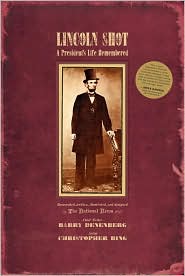
Lincoln Shot: A President's Life Remembered by Barry Denenberg, illustrated by Christopher Bing.

If you're going to buy one new children's book about Abraham Lincoln this year, this is the one to buy. Be prepared to make space for, it, though, because this book is TALL, measuring a foot wide by 18" high. It contains 40 pages, conceived as a newspaper representing the one-year anniversary of Lincoln's assassination and the search for and capture of the assassins, this book looks and feels like nothing you've seen, and will grab and hold your attention start to finish. Wanna see an inside page? Cool, yes?

Recommended for anyone over the age of 8 or so with an interest in American History, particularly the Presidency, the Civil War and/or Abraham Lincoln.


Books for those interested in the Revolutionary War and/or feminism
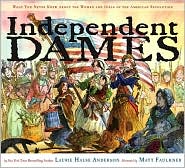
Independent Dames: What You Never Knew About the Women and Girls of the American Revolution by Laurie Halse Anderson, illustrated by Matt Faulkner. My full review can be found elsewhere, but in short, here's what I liked about this history book: All told, 89 women and girls are profiled in the book, including African American and Native American women who fought for the Patriot's cause, whether in word or deed, as well as devoting a bit of attention to the Loyalists as well. This book contains a tremendous amount of information, and it has quite a bit going on in it, but the genius of its set-up is that it never feels heavy or pedantic.

Books for a good cause

Our White House: Looking In, Looking Out is the creation of the National Children's Book and Literary Alliance (NCBLA), and contains contributions by 108 children's writers and illustrators, along with content from a bunch of other folks, including Robert Kennedy's comments following the death of Dr. Martin Luther King, Jr., an essay by Lynda Bird Johnson about her bedroom in the White House, and words from a number of presidents, including Jimmy Carter and George H.W. Bush. Pretty much my only criticism of the book has to do with the failure to include these other folks in the headcount on the front of this wonderful book, which relates the history and stories of the White House.

Wednesday, December 3, 2008

I Love Librarians!

I’ve just come back from two conferences with librarians. The first was the SLJ Summit in Hollywood, Florida. It was a small but mighty conference, with only about 250 attendees. Many of the participants were in charge of whole school districts. Their mission: to find the most powerful ways to promote literacy. Naturally, they love books. They get it that books give the most coherent and lucid explanations of complicated issues. But they are also on the cutting edge of technology. Most school librarians are also their district “techies” and are responsible for spending portions of their budget for computers, software, and digital materials. They must also keep up with the internet sites kids are accessing as well as the games they are playing. This was reflected in the panel discussions: “Creating and Managing Digital Video Content,” “Can You Hear Me Now? Exploring the Audio/Ebook Experience,” “Reference in the Digital Age, ” “Digital Books for Children: Blessing, Bane or Both?” and the panel I was invited to speak on, “Opening the Book: Matchmaking Nonfiction Books and Educational Technology in the Digital Age.” Marc Aronson, the moderator of my panel, wanted us to show how other media enhanced the power of a book. It is clear that the book is not dead, but it is also clear that the future involves lots of integration between the printed word and other technologies.

The second conference, four days later, was the Mississippi Library Commission, in Jackson Mississippi. These were public librarians (mostly in children’s services) whose whole mission in life is to get patrons into the library and to get kids into books. To do this, they put on programs: story times, read alouds, movies, craft activities, even science (hence my invitation). My job was to empower them to bring in kids using science. Instead of using high tech, public librarians rely on their own personalities and interests to “sell” kids on books. So I gave them lots of hands-on activities, which they enthusiastically threw themselves into. In fact, I’ve never seen a group have so much fun. They were an extraordinarily extroverted bunch, with no shyness about volunteering, sharing or speaking up. I stayed for story-teller
Dianne de las Casas’ session. She uses her dynamic presentation to create a participating audience, which was not a stretch for this group. These women (there don’t seem to be many men in this profession) were particularly uninhibited about acting out parts of a story or singing aloud. And this was well before happy hour!

Both authors and librarians are thinking seriously about the future of the book. There is no question that other media compete for time in the busy lives of today’s kids. How do you introduce kids to unfamiliar subjects and kindle further interest in a topic? How do you get kids to apply themselves to something that requires discipline and effort as opposed to the enticing path of least resistance (video games, for example)? The answer is: revealed humanity through the single passionate voice. This is something that librarians seem to have in abundance. Each individual librarian has her own idiosyncratic way of revealing her passion to connect children and books. It is also what creates literature out of the best authors’ endeavors. Revealed humanity, whether through print or personal connection, is the subtext of all authentic communication. It is behind librarians’ recognition of our voices as authors. And it is behind their courageous and fervent fight for literacy. This is a profession that is often below the radar of public recognition. But obviously not in my book.

Monday, December 1, 2008

What I'm Studying Right Now

Quantum mechanics. Yes, that's right. I should sell tickets to this show: I read, I scratch my head, I reread the same paragraph. My head drops forward onto my chest: a sign that my brain is on the run. I am watching, for the second time, a twenty-four lecture series on Einstein and the quantum revolution. I'm okay with Newton, and a clockwork universe. I can handle Gallileo. I can even manage to wrap my head around special relativity and curved space-time.

But the statistical probability of matter just freaks me out. Before observation, contradictory possibilities exist simultaneously; the act of observation forces one possibility into existence, and eliminates the other. So I am forced to consider that while I'm sitting at my desk, the black kitten named Mimi is behind me, watching me, and at the same time, upstairs asleep on my daughter's bed. Both possibilities (and more besides!) are real. It's not just that both are possible. Both are equally real until I check. It gives me the creeps -- should I turn around and check, or just sit here, wondering, trying to trick quantum physics by looking -- really fast! -- and then turning back and hoping the universe didn't see me peek?

One of the attractions of nonfiction (for me, at least) is the comfort of knowing that things are real. Either a historical event happened or it didn't. Either a bat is a mammal or it isn't. The maybe-ness of quantum mechanics has thrown a big monkey wrench into my Weltanschauung. I have the sensation of moving inside a bubble that consists of the possibilities I drove into existence by my observation; my bubble is floating through a gray, multi-dimensional miasma of contradictory possibilities which are all co-existent because I haven't observed them yet. What is this sensation, this head-spinning, stomach-lurching sensation? Oh, I remember now: this sensation is poetry. Or something like that.

Strange, isn't it?

Thursday, November 27, 2008

Thankful Books: Celebrating Byrd Baylor

When I think of thankfulness and books, I think of author Byrd Baylor. She writes both fiction and nonfiction. But all of her books are full of truth—resonant truth that bubbles up out of her clear prose. Her books, such as THE WAY TO START A DAY have been around for a while. But read them or re-read them and I think you'll find they hit home. They give thanks, for life and nature, at an elemental level.

THE TABLE WHERE RICH PEOPLE SIT is a perfect book for this economy and this particular November day. THE WAY TO START A DAY is a celebration of life and worth savoring. EVERYBODY NEEDS A ROCK is one of my favorites as a lover of science and rocks. I know the deep, intimate process of finding THAT rock. It is an essential way to connect in a sensory way with Earth.

For educators, Baylor's books are a terrific introduction to nonfiction voice. She is a master of both intimate storytelling and exposition. Her books show the power of unhurried prose. She doesn't throw something in your face and demand you love it. She shares. She calls on touchable, tastable details that bring big concepts to small fingers and hearts.

I call on her publisher to re-issue a Byrd Baylor collection. I'll buy it and tell everyone I meet about it. Her voice, as a nonfiction writer, is something special. I didn't come across Baylor's work until I'd been writing and publishing picture books for quite a while. But when I found them . . . ah. Her books are the kind that make me hug them to my chest and just sigh. After reading, I look around with new eyes. Wherever you are, Byrd, thanks for your work.

Happy Thanksgiving, all!

April Pulley Sayre
http://www.aprilsayre.com/

Wednesday, November 26, 2008

My Fifteen Minutes


Andy Warhol’s allotment of fame came in two installments for me this fall. My latest book, Jeannette Rankin: Political Pioneer has gotten nice attention this year: several notable lists, two awards, and one finalist. Who knew when I began writing it several years ago that this would be the year of the political woman? Not I.

The Children’s Literature Council of Southern California’s award ceremony was preceded by a scrumptious brunch at the Bowers Museum of Art in Santa Ana. Masks and sculptures from Oceania lined the room; a wall of window looked out onto an Asian-themed garden. Then we processed to an auditorium where authors and illustrators of various genres gave five-minute award acceptance speeches, mine for an Inspiring Work of Nonfiction.

As a member of this congenial group of librarians and authors for the last decade or so, I’d harbored a secret wish to win their award – and now I had done it. I’ve been a public speaker for decades. I’m at ease speaking to kids in schools, college students in classrooms, the general public in all sorts of venues. But this was different. I surprised myself by getting choked up as I spoke to my peers who were honoring me and my work.

Five minutes and it was over.

Two weeks later, the Simon Wiesenthal Center/Museum of Tolerance gave me the first Once Upon A World Award for young adult literature. (Their picture book award is thirteen years old, won this year by Ellie Crowe for Surfer of the Century: The Life of Duke Kahanamoku.) This was an afternoon event, open to the public and filled with winning-book-related events. Children made campaign buttons in an art activity room. (Jeannette Rankin was our first Congresswoman.) A storyteller narrated some of Rankin’s life in another room filled with beanbag chairs.


At the ceremony itself I did a ten-minute monologue as Rankin, wearing period hats. Then came the award and photo-op (no choking-up this time,) followed by a reception [see recipe below] and signing, then a dinner party at the elegant home of the award’s sponsor. And my book now wears a gold seal.


5 minutes + 10 minutes = my 15 minutes

Between those two events, I traveled to Missoula (Rankin’s hometown) for the Montana Festival of the Book, a fun-filled two-day event featuring talks, panel discussions, readings, and signings by 140 authors, mostly Montanans who knew each other. Film screenings, art exhibits, and a poetry slam provided entertainment in the evenings. I spoke on two panels with biographers, novelists, and librarians – and paid a school visit to students who, unlike most kids, had already heard of Rankin, a Montana heroine. All that and gorgeous autumn weather -- golden glowing cottonwoods and larch trees -- made for a memorable weekend. (Hanging out with my son, who lives there, was an added bonus.)

I love talking about books. I love being surrounded by other writers and I was happy to be just one of 140 in Montana. But every once in a while I do like that dollop of icing on the cake – see below – when I and my books are the center of attention.

Recipe for Literary Icing
The folks at the Museum of Tolerance created a Jeannette Rankin edible book cover cake! Here’s how they told me you do it:
1) Scan the book cover.
2) Print it onto a sheet of edible rice paper (with edible food coloring.)
3) Lay carefully over a large sheet cake.
4) Eat!

Tuesday, November 25, 2008

Texting

True conversation overheard at dinner one night in suburban NYC.

Teen H.S. student: “I have to go finish my homework. I still have twenty pages to read in my history textbook. It’s the most boring piece of crap ever.”

Teen’s father, graduate of top academic high school in NYC: “Oh, you must be using the same textbooks we did.”

Teen’s younger brother: “Well, my history textbook still calls Russia the USSR.”

(names have been withheld to protect blogger from family's wrath)


What's with the boring, outdated nonfiction?
If we hope to successfully analyze how we can make nonfiction more appealing, our first step needs to be acknowledging what nonfiction kids are actually reading. Most school age children read nonfiction every night. It's true. They do their homework(usually) and they read their textbooks. The sad reality is this is often their only form of nonfiction reading and, it can be argued, a primary reason they don’t pursue nonfiction further.

As the above conversation references, we need to seriously consider textbooks as well as school and library editions-- forms of nonfiction that dominate the school environment --because this is how children are exposed to nonfiction. It starts early in kindergarten and first grade, where the classrooms offer less expensive, paperback library nonfiction. Then it’s on to textbooks which have been known to actually cause a child to loose interest in a subject. No matter how creative nonfiction writers get, the truth is that kids first and predominant exposure to nonfiction has not had any significant improvements in the last thirty years. Or is it longer?

I read an interesting article recently about a watchdog organization devoted to trying to help journalists approach their topics from a position of knowledge and understanding. Its goal is to find ways for journalist to become more educated on the subject matters they cover so that their articles have the depth and understanding of someone who is actually involved in education, the environment, politics or whatever subject they are writing about.

Perhaps children’s publishing could benefit from a similar approach. There is currently a lot of “we only do literary fiction” or “we publish solely for the library market” kind of isolating talk and behavior. Kids don’t break down their reading habits in this way; it doesn’t serve them well that the professionals do. If nonfiction is going to really push through the old barriers, we have to look at the bigger picture. If we understand what they read, required and otherwise, from an early age then perhaps we can understanding how to keep them interested as they grow older.

Kids today are still going to spend a lot of time texting and instant messaging. But it still might be possible to engage them with a new, improved old school kind of text.

Monday, November 24, 2008

It's "Math-Lit" But Is It Good Lit?

I am just back from San Antonio, where I spoke at NCTE (National Council of Teachers of English). An annual appearance at NCTM (National Council of Teachers of Mathematics) has been on my agenda since 1996 but this was my first NCTE. I started thinking about similarities and differences between the two organizations in how they encourage teachers to use literature, and I mostly came up with similarities. And then I remembered a book on my shelf at home that makes that point exactly, focusing on mathematical literature. Appropriately, the book is published jointly by NCTM and NCTE. If I could put just one resource in the hands of a teacher wanting to mine the many treasures of “math-lit” as a teaching tool for both mathematics and language arts, this would be the book.

New Visions for Linking Literature and Mathematics by David J. Whitin and Phyllis Whitin is more than a resource book about using math-related literature in the classroom. It does indeed illustrate a myriad
ways that teachers can use a wide range of quality b
ooks to support both math and literacy. But note the word “quality.” In addition to providing examples (plenty!) and illustrating how teachers have used them (impressive!), it tells you how to judge mathematical literature. That’s where New Visions differs from any other resource book I’ve seen. “Many (math-related books) seem more like workbooks than stories,” write the Whitins and I agree wholeheartedly. “Some give detailed prescriptions for reading, much like a teaching manual for a basal reader, while others mask doses of ‘skills’ with comical illustrations or popular food products…” Bottom line: not all math lit is created equal, and New Visions shows you how to evaluate. It even shows why some books just don’t make the grade, and it does name names. Harsh! But someone had to do it.

The Whitins put forth four criteria as a guide for judging mathematical literature as worthy. They then select one book as exemplary, showing how it makes the grade in all four areas. More on that later. Here are their criteria with an example of a book that stands out in each category.

1. Mathematical integrity Stories and literature have enormous value when they inspire children to apply mathematical ideas to the world around them, but for that to happen, the math in a book should be not only accurate, but should be presented in a context that is believable, not forced; it should be presented in an accessible way; and it should “promote healthy mathematical attitudes and dispositions.”

The Whitins give several examples, including Ann Whitehead Nagda’s Tiger Math: Learning to Graph from a Baby Tiger, which provides both an exciting non-fiction narrative with photographs and statistical data from the true, suspenseful story of a motherless tiger cub being raised at the Denver Zoo. Data (such as weight gain over time) is expressed in a variety of useful graphs. It’s an engaging book that connects math to the real world in a way children find spellbinding — and educators find supportive of the standards they are trying to teach.

2. Potential for Varied Response. Children’s books should not be worksheets. Instead of being didactic, they should encourage children to think mathematically and invite them to “investigate, discuss, and extend… (and to) engage in research, problem posing and problem solving.” Readers are not directed. They are invited.

Readers of the charming Grandpa’s Quilt by Betsy Franco, are easily tempted to find their own solutions the problem that faces the book’s characters. The 6-square by 6-square quilt does not cover their grandfather’s feet so they must rearrange its dimensions. Children are likely to explore factors of 36 and to get a feel for the relationship between perimeter and area. And the mathematical “invitations” go on from there.

3. An aesthetic dimension “Good books appeal to the emotions and senses of the reader, provide a fresh perspective, and free the imagination.” Here the Whitins look at how well the written language is crafted, along with the quality of the visuals and whether the book actually inspires a greater appreciation of the wonders of the world (including the human world). To earn our respect, the words and visuals of a work of mathematical literature must be just as compelling as those of any other literary genre. Claiming "It's just a math book!" doesn't cut it.

In their unique counting book, Spots: Counting Creatures from Sky to Sea, author Carolyn Lesser and illustrator Laura Regan use vivid, evocative language and stunning paintings to inspire awe and appreciation of nature — as well as the mathematics that is so often useful in describing and explaining the natural world.


4. Racial, cultural and gender inclusiveness. My first reaction to this criterion was a bit dismissive. “Doesn’t that apply to all books?” I asked. Of course it does, but we should be especially careful not to let the
mathematical component of literature that perpetuates stereotypes blind us to an unfortunate sub-text. There is a huge push now to attract women and members of ethnic minorities to careers in mathematics, science and engineering, and children’s books can help promot
e equity. There is more to it than counting boys vs. girls or white children vs. black or brown children in the illustrations. As one of several fascinating examples, the Whitins sing the praises of The History of Counting by eminent archaeologist Denise Schmandt-Besserat, a non-fiction picture book that celebrates the contributions
of many cultures over many centuries in developing diverse number systems.

New Visions for Linking Literature and Mathematics goes on to provide myriad examples of books for a wide range of ages, strategies for using them to teach math, and an outstanding annotated bibliography called “Best Books for Exploring.”

Now about that exemplary book the Whitins chose to feature in the opening chapter. I held off identifying it until now for fear of seeming self-serving, but in the interest of full-disclosure, I should say that it’s my book If You Hopped Like a Frog. I’ve written about it in earlier posts so I won’t summarize it now and it would really feel way too “me”-focused to list the ways the authors of New Visions found that it met their four criteria. Instead, I’ll close with a passage from an article published in Horn Book in 1987, quoted by the Whitins. I can think of no better summary of their feelings and mine:

“You can almost divide the nonfiction [that children] read into two categories: nonfiction that stuffs in facts, as if children were vases to be filled, and nonfiction that ignites the imagination, as if children were indeed fires to be lit.” (Jo Carr, “Filling Vases, Lighting Fires” Horn Book 63, November/December 1987.)

Friday, November 21, 2008

Photography and Nonfiction Kids' Books

Today, I realized with surprise that only a couple of posts have dealt with photography in nonfiction children’s books. Especially for books beyond grades 3 or 4, photography plays a huge role in both the effectiveness and success of a book. How does an author get the photos he or she needs?

In some cases, publishers do the work. With my “American Heroes” biographies and my book Pocket Babies, for instance, I have been fortunate to work with publishers that do a wonderful job at photo research. Taking my own photos, however, has been pivotal to the some of my most successful books. And yet, I do not consider myself a professional photographer. How does that work?

Well, the answer is that back in 1994, I bought a camera system that is smarter than I am. Before that time, I tried to take professional-grade photos using a manual 35-mm Olympus system. Just couldn’t do it. Even though I spent a great deal of time trying, the photos always came out slightly out-of-focus or with the wrong metering. Today’s cameras are so good, though, that they solve most of these issues. Still, that doesn’t mean that I’m home-free.

Most books require a few specialized shots that someone like myself just cannot get. So a key for me is recognizing the kinds of photos I can take myself. I limit myself, for example, to subjects that are close and holding still. Fortunately, that includes 90% of most photos I ever need for a book, from plants and landscapes to insects and people. Another big key is using a tripod. Even on a well-lit, still day, a tripod is almost essential for getting that crispness that I must have to make a picture publishable.

For the other photos I need, I just plan on obtaining those elsewhere. People I am interviewing for my books often have these available. For my new book Science Warriors: The Battle Against Invasive Species, I was able to obtain some key close-up—and gruesome—photos of flies emerging from an ant’s head from a scientist who works with this system. For my book The Prairie Builders, the refuge I featured had a number of historical photos in their collection I could use.

While part of me dreads getting photos together for a book, a larger part really enjoys the process. Documenting a research trip with photos actually helps me a lot with the writing process. And you just can’t beat being right in a place taking the pictures you need. BTW, I use a Canon system with a macro lens, a wide-angle lens, and a zoom 50-300 mm. And don’t faint now—I still shoot film! That will surely change with the next big photo book, but for now, it’s all worked remarkably well—and enriched my entire writing process.

Thursday, November 20, 2008

Passionate Nonfiction and Staying True to Your Readers

I tried to post this before leaving for San Antonio this morning for the NCTE/ALAN conference, but it didn’t work. I’m hoping I can tap into the wireless during my next layover and send this off to cyberland from Newark. If you’re reading this, I have succeeded.

The topic our NCTE (National Council for Teachers of English) panel will be discussing is how we, as nonfiction writers, remain a reliable source of information while sharing our passion and point of view on a topic with young readers. It’s a very good question and one that I, like my fellow panelists—Marc Aronson, Elizabeth Partridge, and Tonya Bolden—and other nonfiction writers spend a great deal of time thinking about and incorporating when we transfer our thoughts to the page.

There are many factors that come into play, especially when writing for an audience that is older than the picture book crowd. When I delve into a topic I try to learn as much as humanly possible on a subject. This means that I sometimes uncover issues that not be entirely positive or may be difficult to address with kids. But it certainly doesn’t mean that I avoid those issues. For example, while researching Ella Fitzgerald for my Up Close: Ella Fitzgerald book, I discovered that there were many half-truths or misperceptions perpetuated in books about her over the years. Figuring out that some of that information was related to the fact that Ella had a particularly rough childhood and was a homeless teenager for a time was something I felt important to disclose to young readers even though there had been historical attempts to keep this under wraps. Ella’s past speaks directly to the type of strong, tenacious woman she was and illustrates for kids that she was able to overcome adversity and follow her dreams to success. This kind of information gets us closer to our subjects; closer to the truth of who they really were. And isn’t that the point?

At other times in my research, I have uncovered what I like to call “American heroes behaving badly.” Uh-oh. What’s a writer to do? Tarnish the reputation of a well-known figure? Maybe. Gloss over it and fail to bring it to the reader’s attention? Ignore it and hope it goes away? Of course not. But to tread here, one must do so attentively. With thought and care. I feel I have a duty to my young readers to tell them the truth about the world as I see it. Of course, my way of seeing it is as unique to me as yours is to you. But that’s all any of us have to work with. That, and integrity and ethics. If I tell readers the truth as I see it, and give them as much context as I can so that they can see things for themselves as well, all the while staying as true and honest as I possibly can, I have done my job. This was my goal in my forthcoming book Almost Astronauts: 13 Women Who Dared to Dream, which is about the 13 courageous women in 1961 who excelled at astronaut testing and continued to push onward even when NASA did not let them into the space program.

I can tell you right now that you will read about a few beloved American heroes behaving badly in this particular episode of history. But I can also assure you that, in addition to my deep personal feelings about this story, I have been fair and honest. I have taken multiple perspectives into account. Including my own.

Some may say that nonfiction should stick only to the facts, but I disagree. The kind of nonfiction I most enjoy reading, and that I believe young readers get the most out of, is the kind of nonfiction that is as alive as the people whose stories are being told. That’s what makes history exciting and that’s what gets kids excited about reading.

Wednesday, November 19, 2008

Crazy About Similes!

My fall book tells a tale using only similes as the text. The easiest way to get a sense of it is to watch this video preview. The impetus to create Crazy Like Fox: A Simile Story was to follow up on a previous book of sayings (There’s a Frog in My Throat) while using a different format. Frog is a compendium of over 400 sayings; Crazy tells a story as well as having several similes on each page. Every time a character is compared to something, he or she turns into it. For example, when Rufus is sleeping like a log, on the next page he becomes a log (and even snores like a chain saw.) This enabled me to have tons of fun with the illustrations. It’s been well-received, with a starred review from Kirkus.

I’m not aware of any similar book where the text consists of only similes, but please let me know if there is one for curiosity’s sake. The title was the first simile chosen, and the plot needed to explain what “crazy like a fox” means. So, Rufus the fox had to act weird for some reason that would make sense by the end of the story. In the manuscript’s early stages, he was jumping as high as a kite to get over a fence, running as fast as the wind to escape some critter, and finally building a contraption to vault him across a river to get breakfast at Mama Somebody's Cafe. The ending seemed a tad flat, though.

Meanwhile, I was busy collecting similes. If there’s some master web site full of zillions of ‘em, I never found it. This one has a fair number (you have to scroll down a bit.) But mostly, I had to compile a list using various general idiom or cliché sites. One of my favorites is this one that you can search by key word. Of course, only a small percentage of any group of sayings are similes, so it took awhile to get a reasonable number to “audition” as part of a potential text. After amassing quite a few, for the sake of organization they had to be put in alphabetical order by first key word. Thus, as tall as a giraffe came before as tough as nails. For Frog I had made a database, but for this project a list worked fine. I did separate “like” from “as“ similes to make it easier and to ensure there was a good balance of both forms in the book. Also, I left out similes that were obviously unsuitable because they were too antiquated (as mad as a hatter), inappropriate for young children (like a bat out of hell), or probably wouldn’t fit into the story. Whatever the story turned out to be, that is.

Eventually the idea popped into my head for Rufus to pick on his friend Babette the sheep, and thus lure her into chasing him all the way to her own surprise birthday party. The party is as noisy as a herd of elephants, so of course the guests turn into... elephants! If you’ve never seen a possum, a crow, a ladybug and several other critters transformed into long-trunked proboscideans,
this is your chance.

In the book biz, snags can crop up anywhere, and towards the end there was suddenly a title problem. Namely, the publisher wanted me to jettison the title Crazy Like a Fox and call it Simply Similes. Rather than freaking out (my first impulse,) I sent them a list of the pros of keeping the title as it was, plus the requirements for any alternate title (has to be catchy and fun, inspire kids to read it, tie in with the story, and so on.) I also had the chance to mention the issue to a group of teachers who all were in favor of the original title, and POOF! that little issue went away (yay!)

Monday, November 17, 2008

Horn Tooting

My newest titles were published this Fall.

All Stations! Distress! about the Titanic and Let It Begin Here! about the Battle of Lexington and Concord are departures from my usual biographical-picture-books-for-younger-readers fare. Instead, they are longer format books aimed squarely at nine to twelve-year-old readers.

Whereas my picture books are studies in “reduction” – What can I leave out without damaging the narrative arc of the story or, worse, skewing historical accuracy – The longer text in the new books allowed me to explore details of the story as well as employ more complex sentences. (Even so, I’m still a sucker for the straight-forward declarative sentence.) And I could indulge in art more appropriate for an older audience, specifically of the ‘blood and guts’ variety.

All Stations! Distress! received starred reviews from the Horn Book and School Library Journal. SLJ also awarded Let It Begin Here! a starred review.


Friday, November 14, 2008

"Borrowing" Fiction to Create Nonfiction?

While working out this weekend, I watched a children's DVD about an artist that I've been researching and writing about. To get into a writing groove, I love to jump on the elliptical and watch an inspiring art video. It was a nice story about a famous painter and at the very end of the long list of credits, I read, "adapted from the O. Henry story The Last Leaf".

"Interesting," I thought. "I guess I should check out this O. Henry story."

The story about this famous artist on the DVD was exactly the story, The Last Leaf. So, to understand this correctly, if showed this DVD to an art appreciation class, I'd have to say, "Well, this is a story about ______ but it's not true. The artist and other characters in the story actually knew each other, but what happens in the story never happened. They borrowed it from a fictional short story from another author."

Now, I'm all for great stories about artists that illustrate for children the power of art. I'm all for using literary techniques to help creatively tell the story; i.e. complication/resolution, flashback, foreshadowing, and pace. But, is it just me? I felt misled by the use of another author's fictional story. I believed the story to be true. It wasn't until I read the credit at the end of the credits that I learned that the story was untrue (by the way, there was no mention on the cover or the beginning credits... only the DVD author's name, not O. Henry.)

To illustrate, suppose I write a children's book about Frida Kahlo and Diego Rivera. Frida and Diego want to give each other Christmas gifts but they don't have any money. So (can you guess where this is going?) Frida cuts her hair to sell to buy a watch fob for Diego and Diego, in turn, sells his watch to buy a beautiful clip for Frida's hair. To be fair, I'll add some art to the book. Nice story, huh? Is it okay to then add in the fine print at the end of the book, "Adapted from The Gift of the Magi by O. Henry"? Wouldn't you assume that the story actually transpired between Frida and Diego? I mean, they probably did buy each other Christmas gifts. Right?*

To give credit to the DVD, it was a nice reminder of the the power of art and it had cool computer graphics. I've purposely not mentioned the title so that someday it might not come back and bite me. And, sorry, if any other of my INKmates have "borrowed" from other famous works of fiction to tell a nonfiction story. Heck, maybe there are some award-winners that I'm not aware of that are "adapted" from other works of fiction. I don't mean to offend. It is my hope that other sage nonfiction writers would weigh in on this topic.

Anna rant is over. Please leave a nice, constructive comment.

*Ha! As I reread this, way, way back in my mind, I vaguely remember that Frida and Diego never exchanged gifts, but I may be wrong. I thought that was a little weird. Now, maybe, that would make an interesting story?