Contest ends next Friday, September 5th, midnight Eastern Time.
Please get your entries in now!
I.N.K.’s Spectacular Fifteen Book Blast Give-away.
It's a nonfiction give-away contest of gigantic proportions! To support the children's nonfiction community, our fifteen published authors have each agreed to DONATE A SIGNED COPY OF ONE OF THEIR BOOKS. That's FIFTEEN books all to ONE LUCKY WINNER.
Fabulous Books in our give-away by our wonderful I.N.K. bloggers include:
Jennifer Armstrong's title of the winner’s choice
Don Brown's title of the winner’s choice
Vicki Cobb's WE DARE YOU! HUNDRED’S OF SCIENCE BETS, CHALLENGES, AND EXPERIMENTS YOU CAN DO AT HOME (Skyhorse Publishing, 2008)
Sneed Collard's REIGN OF THE SEA DRAGONS (CHARLESBRIDGE, 2008) Susan E. Goodman's SEE HOW THEY RUN.CAMPAIGN DREAMS, ELECTION SCHEMES, AND THE RACE FOR THE WHITE HOUSE (Bloomsbury, 2008)
Jan Greenberg’s SIDE BY SIDE: NEW POEMS INSPIRED BY ART FROM AROUND THE WORLD (Abrams, 2008)
Steve Jenkins’s SISTERS AND BROTHERS:SIBLING RELATIONSHIPS IN THE ANIMAL WORLD (written with Robin Page)(Houghton Mifflin, 2008) Kathleen Krull's THE ROAD TO OZ. TWISTS,TURNS, BUMPS, AND TRIUMPHS IN THE LIFE OF L. FRANK BAUM. (Knopf, 2008) or any other title of the winner's choice
Loreen Leedy's MISSING MATH. A NUMBER MYSTERY (Marshall Cavendish, 2008)
Sue Macy's SWIFTER, HIGHER, STRONGER. A PHOTOGRAPHIC HISTORY OF THE SUMMER OLYMPICS (National Geographic, 2008 Edition)
April Pulley Sayre's TROUT ARE MADE OF TREES (Charlesbridge, 2008) David Schwartz's WHERE IN THE WILD? CAMOUFLAGED CREATURES CONCEALED. . . AND REVEALED (Tricycle Press, 2007)
Tanya Lee Stone's ELIZABETH LEADS THE WAY. ELIZABETH CADY STANTON AND THE RIGHT TO VOTE (Henry Holt, 2008)
Gretchen Woelfle's JEANNETTE RANKIN. POLITICAL PIONEER (Calkins Creek, 2007)
Karen Romano Young's ACROSS THE WIDE OCEAN. THE WHY, HOW, AND WHERE OF NAVIGATION FOR HUMANS AND ANIMALS AT SEA. (Harpercollins, 2007)
We'd love to hear from teachers, librarians, homeschoolers, writers, or anyone else from across the country who is promoting nonfiction.
Here are the rules. Each entry must consist of two parts: 1. In one sentence or less, tell us why you read the I.N.K. blog. 2. In as much space as you need, describe what you've done to support and encourage nonfiction in your classroom, library, home, or community. Photos are a plus. We will select the winner based on the strongest, most original and all encompassing approach to getting nonfiction noticed. All entries should be submitted by email to: interestingnonfictionforkids at gmail dot com. We will send you an email letting you know we’ve received your entry. Entering the contest implies your consent to use the contents of your entry on our blog for promotional purposes.
The deadline to enter is Friday, September 5th. The winner will be announced on the I.N.K. blog.
Good Luck to everyone!
Friday, August 29, 2008


Thursday, August 28, 2008
Voices in Childen's Literature and Wordworks
Writers, educators, and children's literature enthusiasts...heads up! These two conferences have accomplished nonfiction authors speaking as well as some big fiction names...Avi, Sara Weeks, Richard Peck, Pam Muñoz Ryan. Please pass this information on to other listservs, websites, writer friends, and educators. They are young conferences so not everyone is aware of them yet and they should be. Be sure to sign up early to reserve spaces.
Voices In Children’s Literature 2008 and Wordworks 2008 are in Atlanta, Georgia. Information on both is at http://www.voicesinchildrensliterature.com/
Wordworks 2008
Friday, November 7
8:15-4:45, Georgia Perimeter College at the Clarkston Campus, Atlanta, GA
Wordworks is an inspiring and instensive day-long workshop on writing children’s books. Four published authors and one New York editor will share specifics on how to craft books, both fiction and nonfiction, that will resonate with children for years to come. You can choose among picture book, novel, and nonfiction intensive sessions. Join us for a day dedicated to help YOU write and market your best work! Faculty will be Kathi Appelt, Lola Schaefer, April Pulley Sayre, Rebecca Kai Dotlich, and Harpercollins Editor Anne Hoppe.
Voices in Children’s Literature
Saturday, November 8
8:15-4:45, Georgia Perimeter College at the Clarkston Campus, Atlanta, GA
Voices in Children’s Literature is a day devoted to teachers, librarians, parents, and writers, young and old. It is an opportunity to discover the stories behind the stories – and understand the decisions that authors, illustrators, and editors make about character, style, information, plot or format. Come join us for an incredible day of Authors Reader Theater in the morning and an in-depth examination of the craft that creates the best of good books in the afternoon. A.R.T. authors appearing will be bestselling authors Richard Peck, Sarah Weeks, Pam Muñoz Ryan, and Avi.
Faculty for craft sessions will be Kathi Appelt, Rebecca Kai Dotlich, April Pulley Sayre, Lola Schaefer, and Susan Rosson Spain.
Register early as space is limited. For more information, and to sign up, check http://www.voicesinchildrensliterature.com/
Voices In Children’s Literature 2008 and Wordworks 2008 are in Atlanta, Georgia. Information on both is at http://www.voicesinchildrensliterature.com/
Wordworks 2008
Friday, November 7
8:15-4:45, Georgia Perimeter College at the Clarkston Campus, Atlanta, GA
Wordworks is an inspiring and instensive day-long workshop on writing children’s books. Four published authors and one New York editor will share specifics on how to craft books, both fiction and nonfiction, that will resonate with children for years to come. You can choose among picture book, novel, and nonfiction intensive sessions. Join us for a day dedicated to help YOU write and market your best work! Faculty will be Kathi Appelt, Lola Schaefer, April Pulley Sayre, Rebecca Kai Dotlich, and Harpercollins Editor Anne Hoppe.
Voices in Children’s Literature
Saturday, November 8
8:15-4:45, Georgia Perimeter College at the Clarkston Campus, Atlanta, GA
Voices in Children’s Literature is a day devoted to teachers, librarians, parents, and writers, young and old. It is an opportunity to discover the stories behind the stories – and understand the decisions that authors, illustrators, and editors make about character, style, information, plot or format. Come join us for an incredible day of Authors Reader Theater in the morning and an in-depth examination of the craft that creates the best of good books in the afternoon. A.R.T. authors appearing will be bestselling authors Richard Peck, Sarah Weeks, Pam Muñoz Ryan, and Avi.
Faculty for craft sessions will be Kathi Appelt, Rebecca Kai Dotlich, April Pulley Sayre, Lola Schaefer, and Susan Rosson Spain.
Register early as space is limited. For more information, and to sign up, check http://www.voicesinchildrensliterature.com/
Wednesday, August 27, 2008
New Hooks for an Old Era
Lately I’ve been doing research on the American Revolution for several biographies I’m writing. (I find that research for one subject often turns up the next subject.) While the same information shows up in many of the books I’ve read, I’m intrigued by the novel approaches nonfiction authors find to resuscitate the old facts and figures.
Finding the way into a story – the “hook” – often takes me two or three (or more) drafts. Surrounded by alluring anecdotes, details, and theories, I will hack my way through my overly-dense early drafts until I begin to recognize the story I want to tell. Why couldn’t I see it from the first? Other authors must surely do it better and more quickly than I do? Will practice make it easier? Rhetorical questions these. On I bushwhack at my own sluggish pace.
Meanwhile, other authors have come up with some great hooks on the Revolution.
I mentioned Don Brown’s LET IT BEGIN HERE last month – full of personal stories of the Battle of Lexington and Concord. What Brown does for one event, Steve Sheinkin does for the whole period in KING GEORGE: WHAT WAS HIS PROBLEM? Short sections describe dozens of events, laws, battles, etc. and virtually every one gives us lively on-the-spot quotes and experiences of famous and not-famous people who took part. This is the human side of history and it’s one great story. (Sheinkin’s TWO MISERABLE PRESIDENTS tells the same sort of story of the Civil War.)
Thomas Flemings’s EVERYBODY’S REVOLUTION describes how many different ethnic groups fought for independence, not just English-Americans, allowing children of more recent immigrants to relate to that far-off era. Laurie Halse Anderson’s INDEPENDENT DAMES focuses on the feminine patriots who advanced the American cause, often in unconventional ways. The Brown Paper School USKids History BOOK OF THE AMERICAN REVOLUTION combines essays, fictional pieces, games, recipes, and crafts to draw readers into the fray. Guilio Maestro’s illustrations in LIBERTY OR DEATH show us battle formations, maps, uniforms, and portraits of the major players, enlivening the traditional text by Betsy Maestro.
GEORGE VS GEORGE: THE AMERICAN REVOLUTION AS SEEN FROM BOTH SIDES by Rosalyn Schanzer, while rooting for the Americans, does give us a glimpse of the British perspective. Another side of “our” George (Washington) is revealed in Peggy Thomas’s FARMER GEORGE PLANTS A NATION. Who knew he was an inventor, barn designer, and proto-environmentalist with his compost experiments and “make and buy local” policy? Perhaps my favorite view of the Revolution came from Thomas B. Allen’s GEORGE WASHINGTON, SPYMASTER: HOW THE AMERICAN OUTSPIED THE BRITISH AND WON THE REVOLUTIONARY WAR. This story of spies, counterspies, covers, moles, double agents and cut-outs is a thrilling one, full of twists and turns, codes and ciphers, traitors and heroes that don’t make the ordinary history books.
Slipping across the border into fiction, I must mention Kay Winters’ COLONIAL VOICES: HEAR THEM SPEAK. Though the dozen or so “voices” are her own creations, she takes us to Boston on December 16, 1773 from dawn to dusk, to witness the historic Boston Tea Party. And since I’m on “the other side” I have to mention two new Revolutionary War novels with slave protagonists. Laurie Halse Anderson’s CHAINS, gives us a girl in British-held New York – with an ending that hints at a sequel. M.T. Anderson’s second volume of THE ASTONISHING LIFE OF OCTAVIAN NOTHING transports a Massachusetts slave to the British Army in Virginia. And wandering a bit farther afield, I just read a terrific picaresque adult novel I must champion: JOHNNY ONE-EYE: A TALE OF THE AMERICAN REVOLUTION, by Jerome Charyn. It will change your view of George Washington forever.
All my reading shows me that history can be revived again and again in the hands of a good writer. And my latest book hook….. still working on that.
Finding the way into a story – the “hook” – often takes me two or three (or more) drafts. Surrounded by alluring anecdotes, details, and theories, I will hack my way through my overly-dense early drafts until I begin to recognize the story I want to tell. Why couldn’t I see it from the first? Other authors must surely do it better and more quickly than I do? Will practice make it easier? Rhetorical questions these. On I bushwhack at my own sluggish pace.
Meanwhile, other authors have come up with some great hooks on the Revolution.
I mentioned Don Brown’s LET IT BEGIN HERE last month – full of personal stories of the Battle of Lexington and Concord. What Brown does for one event, Steve Sheinkin does for the whole period in KING GEORGE: WHAT WAS HIS PROBLEM? Short sections describe dozens of events, laws, battles, etc. and virtually every one gives us lively on-the-spot quotes and experiences of famous and not-famous people who took part. This is the human side of history and it’s one great story. (Sheinkin’s TWO MISERABLE PRESIDENTS tells the same sort of story of the Civil War.)
Thomas Flemings’s EVERYBODY’S REVOLUTION describes how many different ethnic groups fought for independence, not just English-Americans, allowing children of more recent immigrants to relate to that far-off era. Laurie Halse Anderson’s INDEPENDENT DAMES focuses on the feminine patriots who advanced the American cause, often in unconventional ways. The Brown Paper School USKids History BOOK OF THE AMERICAN REVOLUTION combines essays, fictional pieces, games, recipes, and crafts to draw readers into the fray. Guilio Maestro’s illustrations in LIBERTY OR DEATH show us battle formations, maps, uniforms, and portraits of the major players, enlivening the traditional text by Betsy Maestro.
GEORGE VS GEORGE: THE AMERICAN REVOLUTION AS SEEN FROM BOTH SIDES by Rosalyn Schanzer, while rooting for the Americans, does give us a glimpse of the British perspective. Another side of “our” George (Washington) is revealed in Peggy Thomas’s FARMER GEORGE PLANTS A NATION. Who knew he was an inventor, barn designer, and proto-environmentalist with his compost experiments and “make and buy local” policy? Perhaps my favorite view of the Revolution came from Thomas B. Allen’s GEORGE WASHINGTON, SPYMASTER: HOW THE AMERICAN OUTSPIED THE BRITISH AND WON THE REVOLUTIONARY WAR. This story of spies, counterspies, covers, moles, double agents and cut-outs is a thrilling one, full of twists and turns, codes and ciphers, traitors and heroes that don’t make the ordinary history books.
Slipping across the border into fiction, I must mention Kay Winters’ COLONIAL VOICES: HEAR THEM SPEAK. Though the dozen or so “voices” are her own creations, she takes us to Boston on December 16, 1773 from dawn to dusk, to witness the historic Boston Tea Party. And since I’m on “the other side” I have to mention two new Revolutionary War novels with slave protagonists. Laurie Halse Anderson’s CHAINS, gives us a girl in British-held New York – with an ending that hints at a sequel. M.T. Anderson’s second volume of THE ASTONISHING LIFE OF OCTAVIAN NOTHING transports a Massachusetts slave to the British Army in Virginia. And wandering a bit farther afield, I just read a terrific picaresque adult novel I must champion: JOHNNY ONE-EYE: A TALE OF THE AMERICAN REVOLUTION, by Jerome Charyn. It will change your view of George Washington forever.
All my reading shows me that history can be revived again and again in the hands of a good writer. And my latest book hook….. still working on that.
Tuesday, August 26, 2008
Truth or Fiction by Jan Greenberg
Jan Greenberg is on vacation. Please enjoy a summer repeat of her first post from back in March.
This morning in the New York Times I read about another outed memoirist, Margaret B, Jones, whose account of life as a foster child growing up in the drug infested L.A. projects, Love and Consequences, turns out to be pure fiction. This follows on the footsteps of another recent fabrication, Misha Defonseca’s Misha:A Memoir of the Holocaust, which includes a story about being raised by wolves. Wolves? Did anybody who read it believe this?
Meanwhile I’m slogging away with my writing partner Sandra Jordan, trying to copyedit for the twentieth time every detail, including a complicated List of Artworks, Bibliography, Quotes, text and more of a non-fiction project Christo and Jeanne-Claude:Through Tthe Gates and Beyond, scheduled to be published sooner rather than later. It might have been easier to write a novel based on these fascinating, strong-minded artists. But it is not a novel. It is non-fiction.
The beauty of biography lies in digging deeply into the life and art of someone else and getting it right. The challenge in writing about living artists is telling a vivid story that does not begin “They were born” and ends “They died.” We cannot put words in the subject’s mouth or invent the action. Frankly if I were writing about myself, I would turn it into fiction, as I did in my first autobiographical novel A Season In-Between, back in 1979. It was more fun that way. Jones’ editor, who recalled all the books, says there were other ways to tell that story instead of lying about it. The book might have been a terrific novel..I wonder what others think about this?
Let me pose a question. If you were writing a memoir, would you feel it was proper to sometimes exaggerate or embellish the facts of your life?
My new book, Side by Side: New Poems Inspired by Art from Around the World, an anthology that I edited, will be published in April.
This morning in the New York Times I read about another outed memoirist, Margaret B, Jones, whose account of life as a foster child growing up in the drug infested L.A. projects, Love and Consequences, turns out to be pure fiction. This follows on the footsteps of another recent fabrication, Misha Defonseca’s Misha:A Memoir of the Holocaust, which includes a story about being raised by wolves. Wolves? Did anybody who read it believe this?
Meanwhile I’m slogging away with my writing partner Sandra Jordan, trying to copyedit for the twentieth time every detail, including a complicated List of Artworks, Bibliography, Quotes, text and more of a non-fiction project Christo and Jeanne-Claude:Through Tthe Gates and Beyond, scheduled to be published sooner rather than later. It might have been easier to write a novel based on these fascinating, strong-minded artists. But it is not a novel. It is non-fiction.
The beauty of biography lies in digging deeply into the life and art of someone else and getting it right. The challenge in writing about living artists is telling a vivid story that does not begin “They were born” and ends “They died.” We cannot put words in the subject’s mouth or invent the action. Frankly if I were writing about myself, I would turn it into fiction, as I did in my first autobiographical novel A Season In-Between, back in 1979. It was more fun that way. Jones’ editor, who recalled all the books, says there were other ways to tell that story instead of lying about it. The book might have been a terrific novel..I wonder what others think about this?
Let me pose a question. If you were writing a memoir, would you feel it was proper to sometimes exaggerate or embellish the facts of your life?
My new book, Side by Side: New Poems Inspired by Art from Around the World, an anthology that I edited, will be published in April.

Monday, August 25, 2008
Wondering Whether the "Facts" are True
This is a repeat of my post on February 25, 2008. I have made some changes and added a few new pictures.
The opinions and questions of children often fascinate and delight me. As an author o f non-fiction children’s books, I receive many letters from young readers. One that stands out came from a nine-year old girl named Lisa who wondered about the accuracy of various statements in my first book, How Much Is a Million? I was thrilled to receive her letter, for I am always happy to learn that my books are being read critically.
Lisa wondered about the truth of my book’s claim that counting from one to one billion (saying each number individually) would take 95 years. After questioning a few other statements in my book, she closed her letter:
“I had mixed up feelings about your book. That’s where the magic comes from the world of books. The magic of books is not knowing whether the facts are true or not.”
In my presentations at schools, I often tell children, "Wondering is wonderful." I find it wonderful that Lisa is wondering about the truth of statements in my books.
I wish more readers of my books—of all books—would wonder about them the way Lisa does. Active minds read critically, questioning what they have read as the reader blends his or her own experiences, knowledge and observations with the author's raw ingredients. Critical readers ingest a nourishing stew that is more than a bowl of information.

I feel privileged to have seen many examples of readers extending or challenging statements in my books. The members of a 2nd/3rd grade class doubted that the average height of elementary school students is 4'8" (142 cm), as reported in the backmatter of How Much Is a Million? Using 4’8” as the average height, I had figured that average shoulder height would be about 4’, and I multiplied 4’ by 1,000,000 to estimate the height of a one-million child tower, which came out to about 757 miles (1,218 km): “If one million children climbed onto one another’s shoulders,” the book begins, “they would be taller than the tallest buildings, higher than the highest mountains, and farther up than airplanes can fly.”
The members of this particular class doubted that the average elementary school student is only 4’8” tall, and to prove me wrong, they measured every child in the school. They found the median, mode, and mean, and they graphed their data in several ways. Finally, they declared that the average height is only 4'4" (132 cm).
 But they didn't quit there. Like a journal article by professional scientists, the report included a section devoted to reflecting upon their results. Scientists would call it the “Discussion” section. In it, the students wondered aloud if there were a legitimate explanation for the four-inch discrepancy between the average height I reported and what they found. They proposed some possibilities: Their school stopped at Grade 5. Maybe I used data from an elementary school that went up to Grade 6 or 8. That might explain why my average height was higher than theirs. Alternatively, their school could have been shorter than normal... or perhaps mine was taller than normal. Or maybe I just measured a single child and declared him or her to be normal! “He’s 4’8” and he looks normal,” I might have said, “so that’s the average. Done!” I find their out of-the-box thinking quite impressive.

In If You Made a Million, my book on money (using United States currency), I write that one million dollars would be equal to "a whale's weight in quarters." A group of children wondered if a whale really did weigh the same as four million U.S. 25-cent pieces. They looked up the weight of a blue whale (appx. 60 tons or 54,400 kg) and calculated that the blue whale’s 60 tons is the weight of about 10 million quarters or $2.5 million— not $1 million, as my book says! They wrote to tell me their results, and in my reply I pointed out that the book does not name a particular species of whale. It simply says a million dollars is equal to “a whale’s weigh in quarters.” And in the back of the book, where I provide the calculations, I specifically note that the weight of a million dollars in quarters (about 50,000 pounds or 22,680 kg), is "the approximate weight of many kinds of whales, including the sperm whale." Then, as if anticipating their objection, I had added the fact that blue whales can be much heavier.
I thought my arguments had absolved me of error in their minds, but these students were not convinced. They sent me a color copy of the illustration in the book, with an arrow pointing to the blue-tinted caricature of a whale. Handwritten in thick block letters were their final words on the matter:“This is a blue whale!”
After recovering from laughter, I wrote back to suggest that they take it up with the illustrator, Steven Kellogg.

To me, the point isn't who is right and who is wrong. Often it’s a matter of interpreta-tion, as in the case of the whale. The point is that wonderful things happen when children wonder about what they have read. They can pursue their wonders through research and, if appropriate, mathematical calculations or estimations. As nine year-old Lisa wrote, “The magic of books is not knowing whether the facts are true or not.”
It truly is magical.
_______________________
________
* Note: I am using the American definition of “billion” as 1,000,000,000 or 109. Traditional British usage is different, although the American form is being used increasingly in Britain.
The opinions and questions of children often fascinate and delight me. As an author o
 f non-fiction children’s books, I receive many letters from young readers. One that stands out came from a nine-year old girl named Lisa who wondered about the accuracy of various statements in my first book, How Much Is a Million? I was thrilled to receive her letter, for I am always happy to learn that my books are being read critically.
Lisa wondered about the truth of my book’s claim that counting from one to one billion (saying each number individually) would take 95 years. After questioning a few other statements in my book, she closed her letter:
“I had mixed up feelings about your book. That’s where the magic comes from the world of books. The magic of books is not knowing whether the facts are true or not.”
In my presentations at schools, I often tell children, "Wondering is wonderful." I find it wonderful that Lisa is wondering about the truth of statements in my books.
I wish more readers of my books—of all books—would wonder about them the way Lisa does. Active minds read critically, questioning what they have read as the reader blends his or her own experiences, knowledge and observations with the author's raw ingredients. Critical readers ingest a nourishing stew that is more than a bowl of information.
I feel privileged to have seen many examples of readers extending or challenging statements in my books. The members of a 2nd/3rd grade class doubted that the average height of elementary school students is 4'8" (142 cm), as reported in the backmatter of How Much Is a Million? Using 4’8” as the average height, I had figured that average shoulder height would be about 4’, and I multiplied 4’ by 1,000,000 to estimate the height of a one-million child tower, which came out to about 757 miles (1,218 km): “If one million children climbed onto one another’s shoulders,” the book begins, “they would be taller than the tallest buildings, higher than the highest mountains, and farther up than airplanes can fly.”
The members of this particular class doubted that the average elementary school student is only 4’8” tall, and to prove me wrong, they measured every child in the school. They found the median, mode, and mean, and they graphed their data in several ways. Finally, they declared that the average height is only 4'4" (132 cm).
But they didn't quit there. Like a journal article by professional scientists, the report included a section devoted to reflecting upon their results. Scientists would call it the “Discussion” section. In it, the students wondered aloud if there were a legitimate explanation for the four-inch discrepancy between the average height I reported and what they found. They proposed some possibilities: Their school stopped at Grade 5. Maybe I used data from an elementary school that went up to Grade 6 or 8. That might explain why my average height was higher than theirs. Alternatively, their school could have been shorter than normal... or perhaps mine was taller than normal. Or maybe I just measured a single child and declared him or her to be normal! “He’s 4’8” and he looks normal,” I might have said, “so that’s the average. Done!” I find their out of-the-box thinking quite impressive.
In If You Made a Million, my book on money (using United States currency), I write that one million dollars would be equal to "a whale's weight in quarters." A group of children wondered if a whale really did weigh the same as four million U.S. 25-cent pieces. They looked up the weight of a blue whale (appx. 60 tons or 54,400 kg) and calculated that the blue whale’s 60 tons is the weight of about 10 million quarters or $2.5 million— not $1 million, as my book says! They wrote to tell me their results, and in my reply I pointed out that the book does not name a particular species of whale. It simply says a million dollars is equal to “a whale’s weigh in quarters.” And in the back of the book, where I provide the calculations, I specifically note that the weight of a million dollars in quarters (about 50,000 pounds or 22,680 kg), is "the approximate weight of many kinds of whales, including the sperm whale." Then, as if anticipating their objection, I had added the fact that blue whales can be much heavier.
I thought my arguments had absolved me of error in their minds, but these students were not convinced. They sent me a color copy of the illustration in the book, with an arrow pointing to the blue-tinted caricature of a whale. Handwritten in thick block letters were their final words on the matter:“This is a blue whale!”
After recovering from laughter, I wrote back to suggest that they take it up with the illustrator, Steven Kellogg.
To me, the point isn't who is right and who is wrong. Often it’s a matter of interpreta-tion, as in the case of the whale. The point is that wonderful things happen when children wonder about what they have read. They can pursue their wonders through research and, if appropriate, mathematical calculations or estimations. As nine year-old Lisa wrote, “The magic of books is not knowing whether the facts are true or not.”
It truly is magical.
_______________________
________
* Note: I am using the American definition of “billion” as 1,000,000,000 or 109. Traditional British usage is different, although the American form is being used increasingly in Britain.
Saturday, August 23, 2008
YOU'VE GOT TO ENTER TO WIN
HURRY, HURRY, HURRY!
CONTEST ENDS ON FRIDAY, SEPTEMBER 5TH--NO EXCEPTIONS
SOMEONE WILL WIN 15 BOOKS.
I.N.K.’s Spectacular Fifteen Book Blast Give-away. It's a nonfiction give-away contest of gigantic proportions! To support the children's nonfiction community, our fifteen published authors have each agreed to DONATE A SIGNED COPY OF ONE OF THEIR BOOKS. That's FIFTEEN books all to ONE LUCKY WINNER.
Fabulous Books in our give-away by our wonderful I.N.K. bloggers include: Jennifer Armstrong's title of the winner’s choice
Don Brown's title of the winner’s choice
Vicki Cobb's WE DARE YOU! HUNDRED’S OF SCIENCE BETS, CHALLENGES, AND EXPERIMENTS YOU CAN DO AT HOME (Skyhorse Publishing, 2008)
Sneed Collard's REIGN OF THE SEA DRAGONS (CHARLESBRIDGE, 2008) Susan E. Goodman's SEE HOW THEY RUN.CAMPAIGN DREAMS, ELECTION SCHEMES, AND THE RACE FOR THE WHITE HOUSE (Bloomsbury, 2008)
Jan Greenberg’s SIDE BY SIDE: NEW POEMS INSPIRED BY ART FROM AROUND THE WORLD (Abrams, 2008)
Steve Jenkins’s SISTERS AND BROTHERS:SIBLING RELATIONSHIPS IN THE ANIMAL WORLD (written with Robin Page)(Houghton Mifflin, 2008) Kathleen Krull's THE ROAD TO OZ. TWISTS,TURNS, BUMPS, AND TRIUMPHS IN THE LIFE OF L. FRANK BAUM. (Knopf, 2008) or any other title of the winner's choice
Loreen Leedy's MISSING MATH. A NUMBER MYSTERY (Marshall Cavendish, 2008)
Sue Macy's SWIFTER, HIGHER, STRONGER. A PHOTOGRAPHIC HISTORY OF THE SUMMER OLYMPICS (National Geographic, 2008 Edition)
April Pulley Sayre's TROUT ARE MADE OF TREES (Charlesbridge, 2008) David Schwartz's WHERE IN THE WILD? CAMOUFLAGED CREATURES CONCEALED. . . AND REVEALED (Tricycle Press, 2007)
Tanya Lee Stone's ELIZABETH LEADS THE WAY. ELIZABETH CADY STANTON AND THE RIGHT TO VOTE (Henry Holt, 2008) Gretchen Woelfle's JEANNETTE RANKIN. POLITICAL PIONEER (Calkins Creek, 2007)
Karen Romano Young's ACROSS THE WIDE OCEAN. THE WHY, HOW, AND WHERE OF NAVIGATION FOR HUMANS AND ANIMALS AT SEA. (Harpercollins, 2007)
We'd love to hear from teachers, librarians, homeschoolers, writers, or anyone else from across the country who is promoting nonfiction.
Here are the rules. Each entry must consist of two parts: 1. In one sentence or less, tell us why you read the I.N.K. blog. 2. In as much space as you need, describe what you've done to support and encourage nonfiction in your classroom, library, home, or community. Photos are a plus. We will select the winner based on the strongest, most original and all encompassing approach to getting nonfiction noticed. All entries should be submitted by email to: interestingnonfictionforkids at gmail dot com. We will send you an email letting you know we’ve received your entry. Entering the contest implies your consent to use the contents of your entry on our blog for promotional purposes. The deadline to enter is Friday, September 5th. The winner will be announced on the I.N.K. blog.
Good Luck to everyone!
CONTEST ENDS ON FRIDAY, SEPTEMBER 5TH--NO EXCEPTIONS
SOMEONE WILL WIN 15 BOOKS.
I.N.K.’s Spectacular Fifteen Book Blast Give-away. It's a nonfiction give-away contest of gigantic proportions! To support the children's nonfiction community, our fifteen published authors have each agreed to DONATE A SIGNED COPY OF ONE OF THEIR BOOKS. That's FIFTEEN books all to ONE LUCKY WINNER.
Fabulous Books in our give-away by our wonderful I.N.K. bloggers include: Jennifer Armstrong's title of the winner’s choice
Don Brown's title of the winner’s choice
Vicki Cobb's WE DARE YOU! HUNDRED’S OF SCIENCE BETS, CHALLENGES, AND EXPERIMENTS YOU CAN DO AT HOME (Skyhorse Publishing, 2008)
Sneed Collard's REIGN OF THE SEA DRAGONS (CHARLESBRIDGE, 2008) Susan E. Goodman's SEE HOW THEY RUN.CAMPAIGN DREAMS, ELECTION SCHEMES, AND THE RACE FOR THE WHITE HOUSE (Bloomsbury, 2008)
Jan Greenberg’s SIDE BY SIDE: NEW POEMS INSPIRED BY ART FROM AROUND THE WORLD (Abrams, 2008)
Steve Jenkins’s SISTERS AND BROTHERS:SIBLING RELATIONSHIPS IN THE ANIMAL WORLD (written with Robin Page)(Houghton Mifflin, 2008) Kathleen Krull's THE ROAD TO OZ. TWISTS,TURNS, BUMPS, AND TRIUMPHS IN THE LIFE OF L. FRANK BAUM. (Knopf, 2008) or any other title of the winner's choice
Loreen Leedy's MISSING MATH. A NUMBER MYSTERY (Marshall Cavendish, 2008)
Sue Macy's SWIFTER, HIGHER, STRONGER. A PHOTOGRAPHIC HISTORY OF THE SUMMER OLYMPICS (National Geographic, 2008 Edition)
April Pulley Sayre's TROUT ARE MADE OF TREES (Charlesbridge, 2008) David Schwartz's WHERE IN THE WILD? CAMOUFLAGED CREATURES CONCEALED. . . AND REVEALED (Tricycle Press, 2007)
Tanya Lee Stone's ELIZABETH LEADS THE WAY. ELIZABETH CADY STANTON AND THE RIGHT TO VOTE (Henry Holt, 2008) Gretchen Woelfle's JEANNETTE RANKIN. POLITICAL PIONEER (Calkins Creek, 2007)
Karen Romano Young's ACROSS THE WIDE OCEAN. THE WHY, HOW, AND WHERE OF NAVIGATION FOR HUMANS AND ANIMALS AT SEA. (Harpercollins, 2007)
We'd love to hear from teachers, librarians, homeschoolers, writers, or anyone else from across the country who is promoting nonfiction.
Here are the rules. Each entry must consist of two parts: 1. In one sentence or less, tell us why you read the I.N.K. blog. 2. In as much space as you need, describe what you've done to support and encourage nonfiction in your classroom, library, home, or community. Photos are a plus. We will select the winner based on the strongest, most original and all encompassing approach to getting nonfiction noticed. All entries should be submitted by email to: interestingnonfictionforkids at gmail dot com. We will send you an email letting you know we’ve received your entry. Entering the contest implies your consent to use the contents of your entry on our blog for promotional purposes. The deadline to enter is Friday, September 5th. The winner will be announced on the I.N.K. blog.
Good Luck to everyone!
Friday, August 22, 2008
Play - Interesting Nonfiction About and For Kids

This summer, my favorite read was The Case for Make Believe by Susan Linn. Her book is a must read for anyone involved with the growth and development of a child; teachers, librarians, parents, caregivers, etc.
Linn paints a picture of the culture we have created for our children and beautifully pleads the case for play, make believe, and creativity. Her words have stayed with me all summer. In setting out to write this end of the summer post, play wouldn't escape my thoughts. "How can we add more fun and play in our children's lives?" "How can we add more make believe and creativity in our children's lives?"
Here's what Linn says about reading and creativity:
Screen media is less apt to generate creativity and imagination than radio and books---which require more of us. Reading requires us to imagine both aural and visual images.

My good friend, Stevanne Auerbach, says in her book, Dr. Toy's Smart Play/Smart Toys:
Books may be the single most important part of playtime for children, but they are often forgotten, perhaps, because one seldom thinks of them as 'toys'. Yet their entertainment value (when used appropriately) cannot be surpassed, and they are essential throughout a child's development.
My word/mantra for 2008 is FUN. Since play is FUN, I asked, "Is there play in Nonfiction books? Are there books that you can play with? Are there Nonfiction books that foster make believe play?"
Here's a few great nonfiction books that add a sense of play and/or a touch of make believe :

Unplugged Play No Batteries. No Plugs. Pure Fun.
Bobbi Conner
Workman Publishing 2007
(From my bookshelves)
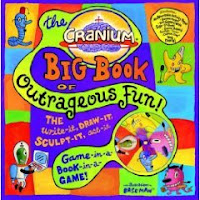 The Cranium Big Book of Outrageous Fun
Cranium
Little Brown and Company 2005
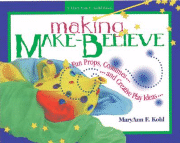 Making Make-Believe: Fun Props, Costumes, and Create Play Ideas
MaryAnn F. Kohl
Gryphon 1999
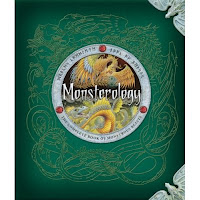 Monsterology: The Complete Book of Monstrous Creatures
Dr. Ernest Drake
Candlewick 2008

Pyramids and Mummies
Anne Bolton
Simon and Schuster Children's Publishing 2008

Dinosaur Hunters: Discover the Incredible World of Lost Dinosaurs
Jen Green
Running Kids Press 2007
 Disney Touch and Sound Pop-up Book
Anna M. Lewis
Mattel Infant/Preschool 1990
With the thousands of fantastic infant/preschool soft and board books for children, this book is my absolute favorite!
*Notice the author?
Anyone care to share some fun and playful nonfiction books?


Thursday, August 21, 2008
Coming to a Theater Near You
What’s a lightning-speed way to get a group of reluctant nonfiction readers interested in true stories? Take them to the big screen.
I was recently at the movies with a group of kids between the ages of 7 and 13, most of whom prefer fiction and tend only to read nonfiction when directed. Everyone got settled with their popcorn and drinks. Then, the lights went down. The previews began. And two sneak peeks stole their hearts.
The first one: The Express: The Ernie Davis Story. This feature film follows the courageous life of college football titan Ernie Davis, who was the first African-American to win the Heisman trophy. We adults already have the context of racial issues in the 1950s and 1960s in our consciousness. But contemporary kids do not necessarily have the sights and sounds of the Civil Rights movement at their fingertips. The kids I was sitting with were mesmerized—not by the football or the stellar playing of Davis—but by the very premise of this movie. They were outraged. Intrigued. They looked over at me with eyes wide open in disbelief. They wanted to know more. And then the preview ended. They started to fire whispered questions at me, but there was no time. Another preview trailer was beginning.
Flash of Genius. Another true story. This coming attraction is based on the story of Robert Kearns, a college professor and basement tinkerer who invented the intermittent wipers from blender parts, sold it to Ford, and then became a victim of the giant bully. This film took place about a decade later than the Ernie Davis story. Again, a time frame the kids are not as familiar with as the adults sitting in the theater. The kids watched in horror at the unfairness of the Ford car company stealing the invention right out from under a powerless individual. They sat at the edge of their seats watching the character's unfailing determination to change a wrongdoing back to right, cheered when the character's children told the father not to back down even though the family seemed to be going broke fighting the battle. “How could they do that?” the kids asked each other. To me: “That isn't fair. Did they get away with it? Did that really happen? Is that a true story? Did Kearns really sue Ford?”
“Hey,” I whispered, “After this, why don’t we go find out.” "Yeah,” said the boy sitting nearest me. “That looks really good. I can’t believe a true story could be so exciting."
“Welcome to my world, you guys.” They laughed and gave me those rare nods of “you old people aren’t so bad” I have come to adore.
Score!
I was recently at the movies with a group of kids between the ages of 7 and 13, most of whom prefer fiction and tend only to read nonfiction when directed. Everyone got settled with their popcorn and drinks. Then, the lights went down. The previews began. And two sneak peeks stole their hearts.
The first one: The Express: The Ernie Davis Story. This feature film follows the courageous life of college football titan Ernie Davis, who was the first African-American to win the Heisman trophy. We adults already have the context of racial issues in the 1950s and 1960s in our consciousness. But contemporary kids do not necessarily have the sights and sounds of the Civil Rights movement at their fingertips. The kids I was sitting with were mesmerized—not by the football or the stellar playing of Davis—but by the very premise of this movie. They were outraged. Intrigued. They looked over at me with eyes wide open in disbelief. They wanted to know more. And then the preview ended. They started to fire whispered questions at me, but there was no time. Another preview trailer was beginning.
Flash of Genius. Another true story. This coming attraction is based on the story of Robert Kearns, a college professor and basement tinkerer who invented the intermittent wipers from blender parts, sold it to Ford, and then became a victim of the giant bully. This film took place about a decade later than the Ernie Davis story. Again, a time frame the kids are not as familiar with as the adults sitting in the theater. The kids watched in horror at the unfairness of the Ford car company stealing the invention right out from under a powerless individual. They sat at the edge of their seats watching the character's unfailing determination to change a wrongdoing back to right, cheered when the character's children told the father not to back down even though the family seemed to be going broke fighting the battle. “How could they do that?” the kids asked each other. To me: “That isn't fair. Did they get away with it? Did that really happen? Is that a true story? Did Kearns really sue Ford?”
“Hey,” I whispered, “After this, why don’t we go find out.” "Yeah,” said the boy sitting nearest me. “That looks really good. I can’t believe a true story could be so exciting."
“Welcome to my world, you guys.” They laughed and gave me those rare nods of “you old people aren’t so bad” I have come to adore.
Score!
Wednesday, August 20, 2008
Finding Neglected Topics to Write About (Part 1)
In my early years as a picture book author-illustrator, I read some how-to books to learn more about the field. One had a statement to the effect that “there isn’t anything NEW you can do in children’s books, but try to think of a fresh angle” on the same old thing, presumably. It may be that whoever concocted that theory was thinking about fiction... there have been quite a few books about “the seven basic plots,” or whatever number an author comes up with. And heaven knows, the world surely doesn’t need another variation on the endless I'll Love You Till the Cows Come Home or the Sun Explodes, Whichever Comes First genre of picture book(!)
When it comes to nonfiction though, there are plenty of subjects that haven't been adapted for the picture book age. My first school visits inspired an idea...it became clear that writing was emphasized at an earlier age in the curriculum than during my elementary years, even in Kindergarten. The thought occurred to me that if these young students had writing skills, what could they do with them? How about making a newspaper? I checked in Children’s Books in Print, and there weren't any books for kids about it, except perhaps a documentary-style book about being a journalist. I wanted to show characters working together to create their own newspaper. That question, “what can kids write?” resulted in The Furry News: How to Make a Newspaper, then later books about writing letters and books.
I routinely research the competition (if any) to see if a subject has been done to death or not. Rather than a drive to the library to rummage through Books in Print, nowadays a search on Amazon quickly shows what has been published. (The Advanced Search limits titles to the 4-8 year range for picture books.) It’s not uncommon to find a topic that has only one or even zero picture books about it, which makes me more inclined to pursue it. Also, and this may be obvious, but Amazon or any search engine is the best way to test titles. For example, once I was considering When Pigs Fly as a title, but there were already several published books entitled with that phrase. No sense in confusing potential readers.
So how do authors find a neglected topic to write a book about? The classic method is to have an idea pop into your head seemingly out of nowhere. But if that fails, read on...
Often teachers, librarians, parents, and other book people can suggest ideas. “You should write a book about X.” These are often excellent leads, although despite several suggestions I have yet to attempt a book about Groundhog Day. When I send out my enewsletter, I always ask for ideas and usually get some good ones. Editors are another great source, naturally. My longtime editor (Margery Cuyler) once told me there weren’t many picture books about math and how about giving one a try? Which has turned into eleven books so far. Not every externally-generated suggestion will fit, which is the way it goes. But sometimes a not-so-good idea can spark a thought process that leads to a great one.
Checking out curriculum guides and/or standards can be intriguing, such as those developed by the National Council of Teachers of Mathematics. These can often be viewed or downloaded from the web sites of national associations, local school districts, or from a state level organization, such as this one for Florida. I don't know about you, but to me this practically pulsates with possibilities: Differentiate between living and non-living things.
(To be continued next month.)
When it comes to nonfiction though, there are plenty of subjects that haven't been adapted for the picture book age. My first school visits inspired an idea...it became clear that writing was emphasized at an earlier age in the curriculum than during my elementary years, even in Kindergarten. The thought occurred to me that if these young students had writing skills, what could they do with them? How about making a newspaper? I checked in Children’s Books in Print, and there weren't any books for kids about it, except perhaps a documentary-style book about being a journalist. I wanted to show characters working together to create their own newspaper. That question, “what can kids write?” resulted in The Furry News: How to Make a Newspaper, then later books about writing letters and books.
I routinely research the competition (if any) to see if a subject has been done to death or not. Rather than a drive to the library to rummage through Books in Print, nowadays a search on Amazon quickly shows what has been published. (The Advanced Search limits titles to the 4-8 year range for picture books.) It’s not uncommon to find a topic that has only one or even zero picture books about it, which makes me more inclined to pursue it. Also, and this may be obvious, but Amazon or any search engine is the best way to test titles. For example, once I was considering When Pigs Fly as a title, but there were already several published books entitled with that phrase. No sense in confusing potential readers.
So how do authors find a neglected topic to write a book about? The classic method is to have an idea pop into your head seemingly out of nowhere. But if that fails, read on...
Often teachers, librarians, parents, and other book people can suggest ideas. “You should write a book about X.” These are often excellent leads, although despite several suggestions I have yet to attempt a book about Groundhog Day. When I send out my enewsletter, I always ask for ideas and usually get some good ones. Editors are another great source, naturally. My longtime editor (Margery Cuyler) once told me there weren’t many picture books about math and how about giving one a try? Which has turned into eleven books so far. Not every externally-generated suggestion will fit, which is the way it goes. But sometimes a not-so-good idea can spark a thought process that leads to a great one.
Checking out curriculum guides and/or standards can be intriguing, such as those developed by the National Council of Teachers of Mathematics. These can often be viewed or downloaded from the web sites of national associations, local school districts, or from a state level organization, such as this one for Florida. I don't know about you, but to me this practically pulsates with possibilities: Differentiate between living and non-living things.
(To be continued next month.)
Tuesday, August 19, 2008
Rock Stars of the I.N.K. Variety
I'm on vacation! Here's a summer repeat of a post from back in April.
In his post entitled, History: What's the Point? Don Brown points out that many kids are bored when they study history in school because, basically, the presentation stinks. The world of children's nonfiction still has a long way to go in figuring out how to write and present information in a way that truly appeals to kids.
There are some bright spots to be sure. A couple of weeks ago I had the giddy- with- excitement treat of hearing a talk at the New York Public Library with two writers who are rock stars at making history interesting for kids.
Their names: James Cross Giblin and Russell Freedman.

That's Mr. Giblin on the left, Mr. Freedman on the right.
They don't look like rock stars at first glance? Well, apparently they've been friends since 1960 (they described each other as their oldest publishing friend) so they must have learned how to go incognito by now.
I thought I'd share some of what they talked about with the hope that we can all better understand how it is possible-- albeit time consuming, strenuous, and far from straightforward-- to make history a great read that can appeal to a wide variety of kids.
Here’s a bit of what they had to say. Questions were posed by John Peters of the Donnell Library Center of the New York Public Library.
How did you come to write about history?
JCG: When he started writing, he was already an editor. This gave him the luxury to write what he was interested in. He was a child of WWII and became interested in history that way.
RF: He was a history buff as a kid and read two books that taught him how interesting history could be.(The Story of Mankind by Hendrik Van Loon and This Believing World by Louis Browne). They both showed him the possibility of language and how well a nonfiction book could be written. He learned that it was impossible to tell the story without getting into the mind of characters (the beginning of his interest in biography). In addition, he learned that history lends itself to a narrative thread.
How do you approach biography?
JCG: He believes it always starts with character: getting to know them, what they did, etc. Out of that comes the narrative line. Then you find the character’s action line, in a similar way to a playwright.
RF: His philosophy: writing biography is like being married. He usually spends a year or longer on a book. He consciously chooses not to live with someone he thinks is despicable so he likes all the people he writes about.
JCG: He doesn’t mind writing about people he doesn’t like (for example, Adolph Hitler). He finds these kind of people complicated, sometimes contradictory, and thus good subjects for biography.
How do you approach your writing?
JCG: To begin researching, he reads as much as he can. He outlines a lot, overall and then chapter by chapter. He’s a very slow writer. Every sentence and paragraph must sound right before he goes on. Usually this produces one major draft,then touch ups, and then he's finished.
RF: He spends 3 or 4 months reading and researching before attempting to start writing. His first draft includes everything he can think of. He usually writes six or seven drafts. He feels a book is never really finished. He never achieves the ideal image of the book he had in mind when he started.
How did you become involved with photo biography?
JCG: RF claims JCG first mentioned the term to him years ago. RF then said the first subject should be Lincoln because he was the first President to be photographed. RF: He believes photos are an enhancement. The language must evoke the world and the person or else you are lost.
Best rock star advice in a nutshell for writers of history for kids:
When asked how they make their writing appropriate for children, RF responded, "You don't simplify, you distill."
A few examples of their work that has led to their well deserved rock star status:
James Cross Giblin:
The Life and Death of Adolph Hitler
Good Brother, Bad Brother.The Story of Edwin Booth and John Wilkes Booth
The Many Rides of Paul Revere
Russell Freedman:
Lincoln: A Photobiography
Eleanor Roosevelt
Who Was First? Discovering the Americas
In his post entitled, History: What's the Point? Don Brown points out that many kids are bored when they study history in school because, basically, the presentation stinks. The world of children's nonfiction still has a long way to go in figuring out how to write and present information in a way that truly appeals to kids.
There are some bright spots to be sure. A couple of weeks ago I had the giddy- with- excitement treat of hearing a talk at the New York Public Library with two writers who are rock stars at making history interesting for kids.
Their names: James Cross Giblin and Russell Freedman.

That's Mr. Giblin on the left, Mr. Freedman on the right.
They don't look like rock stars at first glance? Well, apparently they've been friends since 1960 (they described each other as their oldest publishing friend) so they must have learned how to go incognito by now.
I thought I'd share some of what they talked about with the hope that we can all better understand how it is possible-- albeit time consuming, strenuous, and far from straightforward-- to make history a great read that can appeal to a wide variety of kids.
Here’s a bit of what they had to say. Questions were posed by John Peters of the Donnell Library Center of the New York Public Library.
How did you come to write about history?
JCG: When he started writing, he was already an editor. This gave him the luxury to write what he was interested in. He was a child of WWII and became interested in history that way.
RF: He was a history buff as a kid and read two books that taught him how interesting history could be.(The Story of Mankind by Hendrik Van Loon and This Believing World by Louis Browne). They both showed him the possibility of language and how well a nonfiction book could be written. He learned that it was impossible to tell the story without getting into the mind of characters (the beginning of his interest in biography). In addition, he learned that history lends itself to a narrative thread.
How do you approach biography?
JCG: He believes it always starts with character: getting to know them, what they did, etc. Out of that comes the narrative line. Then you find the character’s action line, in a similar way to a playwright.
RF: His philosophy: writing biography is like being married. He usually spends a year or longer on a book. He consciously chooses not to live with someone he thinks is despicable so he likes all the people he writes about.
JCG: He doesn’t mind writing about people he doesn’t like (for example, Adolph Hitler). He finds these kind of people complicated, sometimes contradictory, and thus good subjects for biography.
How do you approach your writing?
JCG: To begin researching, he reads as much as he can. He outlines a lot, overall and then chapter by chapter. He’s a very slow writer. Every sentence and paragraph must sound right before he goes on. Usually this produces one major draft,then touch ups, and then he's finished.
RF: He spends 3 or 4 months reading and researching before attempting to start writing. His first draft includes everything he can think of. He usually writes six or seven drafts. He feels a book is never really finished. He never achieves the ideal image of the book he had in mind when he started.
How did you become involved with photo biography?
JCG: RF claims JCG first mentioned the term to him years ago. RF then said the first subject should be Lincoln because he was the first President to be photographed. RF: He believes photos are an enhancement. The language must evoke the world and the person or else you are lost.
Best rock star advice in a nutshell for writers of history for kids:
When asked how they make their writing appropriate for children, RF responded, "You don't simplify, you distill."
A few examples of their work that has led to their well deserved rock star status:
James Cross Giblin:
The Life and Death of Adolph Hitler
Good Brother, Bad Brother.The Story of Edwin Booth and John Wilkes Booth
The Many Rides of Paul Revere
Russell Freedman:
Lincoln: A Photobiography
Eleanor Roosevelt
Who Was First? Discovering the Americas
Monday, August 18, 2008
Happy Birthday, Alice Provensen
Alice Provensen turned 90 on August 14th.
She was born in Chicago but resettled in California. There she worked for Walter Lantz Studios of Woody Woodpecker fame. When World War Two started, the studio making training films for the military. While making one for the Navy, she met Martin Provensen, a Disney artist on loan to the Lantz studio. They married and moved to New York City, embarking on a joint career in children's book illustration.
They moved to rural Staatsburg, New York and converted a barn into a studio. The two collaborated on book after book. Their home inspired several books, including A Year at Maple Hill Farm. Although its roots in Fifties design are unmistakable, it still remains an engaging visual treat.
In 1884, Alice and Martin won the Caldecott Medal for The Glorious Flight: Across the Channel with Louis Blériot, July 25, 1909. The remarkable history book should remind everyone that liveliness and effervescence are not the sole domain of fiction. I have no doubt it inspired readers of all ages; It certainly inspired me to pursue a career in children's non-fiction.
In 1987, Martin died. Alice rejected the idea of retiring and in 1990 released The Buck Stops Here, a history of the American presidency. Combining her routinely superb art work with cleverly presented facts and information, the book was a well deserved hit.
Other books followed including A Day in the Life of Murphy, and Klondike Gold.
I hope she's still working hard at Maple Hill Farm, still setting the bar for excellence in children's literature.
Happy BIrthday, Alice!
She was born in Chicago but resettled in California. There she worked for Walter Lantz Studios of Woody Woodpecker fame. When World War Two started, the studio making training films for the military. While making one for the Navy, she met Martin Provensen, a Disney artist on loan to the Lantz studio. They married and moved to New York City, embarking on a joint career in children's book illustration.
They moved to rural Staatsburg, New York and converted a barn into a studio. The two collaborated on book after book. Their home inspired several books, including A Year at Maple Hill Farm. Although its roots in Fifties design are unmistakable, it still remains an engaging visual treat.
In 1884, Alice and Martin won the Caldecott Medal for The Glorious Flight: Across the Channel with Louis Blériot, July 25, 1909. The remarkable history book should remind everyone that liveliness and effervescence are not the sole domain of fiction. I have no doubt it inspired readers of all ages; It certainly inspired me to pursue a career in children's non-fiction.
In 1987, Martin died. Alice rejected the idea of retiring and in 1990 released The Buck Stops Here, a history of the American presidency. Combining her routinely superb art work with cleverly presented facts and information, the book was a well deserved hit.
Other books followed including A Day in the Life of Murphy, and Klondike Gold.
I hope she's still working hard at Maple Hill Farm, still setting the bar for excellence in children's literature.
Happy BIrthday, Alice!
Saturday, August 16, 2008
BOOK BLAST GIVE-AWAY
Only three more weeks to enter the contest!
If you know of a deserving library, school, community or family that could truly benefit from fifteen donated books, please help us spread the word. We've estimated the books are valued at $250!
I.N.K.’s Spectacular Fifteen Book Blast Give-away.
It's a nonfiction give-away contest of gigantic proportions!
To support the children's nonfiction community, our fifteen published authors have each agreed to DONATE A SIGNED COPY OF ONE OF THEIR BOOKS. That's FIFTEEN books all to ONE LUCKY WINNER.
Fabulous Books in our give-away by our wonderful I.N.K. bloggers include:
Jennifer Armstrong's title of the winner’s choice
Don Brown's title of the winner’s choice
Vicki Cobb's WE DARE YOU! HUNDRED’S OF SCIENCE BETS, CHALLENGES, AND EXPERIMENTS YOU CAN DO AT HOME (Skyhorse Publishing, 2008)
Sneed Collard's REIGN OF THE SEA DRAGONS (CHARLESBRIDGE, 2008)
Susan E. Goodman's SEE HOW THEY RUN.CAMPAIGN DREAMS, ELECTION SCHEMES, AND THE RACE FOR THE WHITE HOUSE (Bloomsbury, 2008)
Jan Greenberg’s SIDE BY SIDE: NEW POEMS INSPIRED BY ART FROM AROUND THE WORLD (Abrams, 2008)
Steve Jenkins’s SISTERS AND BROTHERS:SIBLING RELATIONSHIPS IN THE ANIMAL WORLD (written with Robin Page)(Houghton Mifflin, 2008)
Kathleen Krull's THE ROAD TO OZ. TWISTS,TURNS, BUMPS, AND TRIUMPHS IN THE LIFE OF L. FRANK BAUM. (Knopf, 2008) or any other title of the winner's choice
Loreen Leedy's MISSING MATH. A NUMBER MYSTERY (Marshall Cavendish, 2008)
Sue Macy's SWIFTER, HIGHER, STRONGER. A PHOTOGRAPHIC HISTORY OF THE SUMMER OLYMPICS (National Geographic, 2008 Edition)
April Pulley Sayre's TROUT ARE MADE OF TREES (Charlesbridge, 2008)
David Schwartz's WHERE IN THE WILD? CAMOUFLAGED CREATURES CONCEALED. . . AND REVEALED (Tricycle Press, 2007)
Tanya Lee Stone's ELIZABETH LEADS THE WAY. ELIZABETH CADY STANTON AND THE RIGHT TO VOTE (Henry Holt, 2008)
Gretchen Woelfle's JEANNETTE RANKIN. POLITICAL PIONEER (Calkins Creek, 2007)
Karen Romano Young's ACROSS THE WIDE OCEAN. THE WHY, HOW, AND WHERE OF NAVIGATION FOR HUMANS AND ANIMALS AT SEA. (Harpercollins, 2007)
We'd love to hear from teachers, librarians, homeschoolers, writers, or anyone else from across the country who is promoting nonfiction.
Here are the rules. Each entry must consist of two parts:
1. In one sentence or less, tell us why you read the I.N.K. blog.
2. In as much space as you need, describe what you've done to support and encourage nonfiction in your classroom, library, home, or community. Photos are a plus.
We will select the winner based on the strongest, most original and all encompassing approach to getting nonfiction noticed.
All entries should be submitted by email to: interestingnonfictionforkids at gmail dot com. We will send you an email letting you know we’ve received your entry.
Entering the contest implies your consent to use the contents of your entry on our blog for promotional purposes.
The deadline to enter is Friday, September 5th. The winner will be announced on the I.N.K. blog.
Good Luck to everyone!
If you know of a deserving library, school, community or family that could truly benefit from fifteen donated books, please help us spread the word. We've estimated the books are valued at $250!
I.N.K.’s Spectacular Fifteen Book Blast Give-away.
It's a nonfiction give-away contest of gigantic proportions!
To support the children's nonfiction community, our fifteen published authors have each agreed to DONATE A SIGNED COPY OF ONE OF THEIR BOOKS. That's FIFTEEN books all to ONE LUCKY WINNER.
Fabulous Books in our give-away by our wonderful I.N.K. bloggers include:
Jennifer Armstrong's title of the winner’s choice
Don Brown's title of the winner’s choice
Vicki Cobb's WE DARE YOU! HUNDRED’S OF SCIENCE BETS, CHALLENGES, AND EXPERIMENTS YOU CAN DO AT HOME (Skyhorse Publishing, 2008)
Sneed Collard's REIGN OF THE SEA DRAGONS (CHARLESBRIDGE, 2008)
Susan E. Goodman's SEE HOW THEY RUN.CAMPAIGN DREAMS, ELECTION SCHEMES, AND THE RACE FOR THE WHITE HOUSE (Bloomsbury, 2008)
Jan Greenberg’s SIDE BY SIDE: NEW POEMS INSPIRED BY ART FROM AROUND THE WORLD (Abrams, 2008)
Steve Jenkins’s SISTERS AND BROTHERS:SIBLING RELATIONSHIPS IN THE ANIMAL WORLD (written with Robin Page)(Houghton Mifflin, 2008)
Kathleen Krull's THE ROAD TO OZ. TWISTS,TURNS, BUMPS, AND TRIUMPHS IN THE LIFE OF L. FRANK BAUM. (Knopf, 2008) or any other title of the winner's choice
Loreen Leedy's MISSING MATH. A NUMBER MYSTERY (Marshall Cavendish, 2008)
Sue Macy's SWIFTER, HIGHER, STRONGER. A PHOTOGRAPHIC HISTORY OF THE SUMMER OLYMPICS (National Geographic, 2008 Edition)
April Pulley Sayre's TROUT ARE MADE OF TREES (Charlesbridge, 2008)
David Schwartz's WHERE IN THE WILD? CAMOUFLAGED CREATURES CONCEALED. . . AND REVEALED (Tricycle Press, 2007)
Tanya Lee Stone's ELIZABETH LEADS THE WAY. ELIZABETH CADY STANTON AND THE RIGHT TO VOTE (Henry Holt, 2008)
Gretchen Woelfle's JEANNETTE RANKIN. POLITICAL PIONEER (Calkins Creek, 2007)
Karen Romano Young's ACROSS THE WIDE OCEAN. THE WHY, HOW, AND WHERE OF NAVIGATION FOR HUMANS AND ANIMALS AT SEA. (Harpercollins, 2007)
We'd love to hear from teachers, librarians, homeschoolers, writers, or anyone else from across the country who is promoting nonfiction.
Here are the rules. Each entry must consist of two parts:
1. In one sentence or less, tell us why you read the I.N.K. blog.
2. In as much space as you need, describe what you've done to support and encourage nonfiction in your classroom, library, home, or community. Photos are a plus.
We will select the winner based on the strongest, most original and all encompassing approach to getting nonfiction noticed.
All entries should be submitted by email to: interestingnonfictionforkids at gmail dot com. We will send you an email letting you know we’ve received your entry.
Entering the contest implies your consent to use the contents of your entry on our blog for promotional purposes.
The deadline to enter is Friday, September 5th. The winner will be announced on the I.N.K. blog.
Good Luck to everyone!
Subscribe to:
Comments (Atom)