Showing posts with label Deborah Heiligman. Show all posts

Tuesday, March 25, 2014

VERY SAME TOPICS, VERY DIFFERENT BOOKS Rosalyn Schanzer


It's pretty impressive to see how many different ways nonfiction authors can present the very same subject matter or the very same people in their books. To get the gist, today I thought it might be fun to compare some examples of books on the same topic--mostly (but not entirely) by our own INK authors and illustrators. I'll be brief, I promise.  


So how about starting with our foremost founding father, George Washington himself. Each of these 3 authors has come up with entirely different hooks to pique your interest, so a young audience could get a pretty well-rounded view of our guy by checking out these true tales.


First up is The Crossing: How George Washington Saved the American Revolution by Jim Murphy.  His hook is to focus on Washington's growth as a leader, obviously leading up to the famous crossing of the Delaware on Christmas in 1776. He's used some very interesting artwork from the period to enhance the tale.

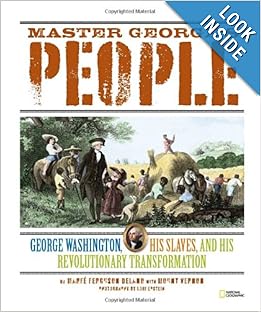
Next comes an entirely different take on George from Marfe Ferguson Delano. Her book, Master George's People, tells the story of George's slaves at Mount Vernon, and she has collaborated with a photographer who shot pictures of reenactors on the scene. 


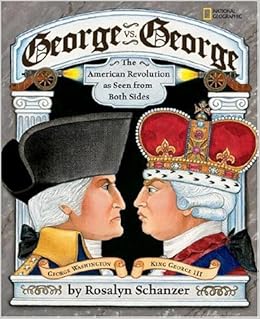
And this one is  (ahem) my version. George vs. George: The American Revolution as Seen from Both Sides shows how there are two sides to every story.  I got to meet George Washington and King George III and paint their pictures myself.
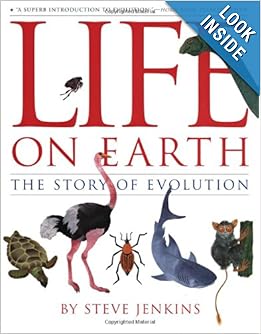
OK, on to the second set.  In one way or another, the next 3 books are all based upon Charles Darwin and his Theory of Evolution. Let's start with Steve Jenkins' handsome book Life on Earth: The Story of Evolution.  With a nod to Darwin, Steve has created a series of stunning collages along with fairly minimal text in order to focus on the history of all the plants and animals on the planet. 
And here's yet another nod to Deb Heiligman for her celebrated true tale of romance between two folks with opposite views of the world. Despite Emma's firm belief in the Bible's version of life on earth, she and Charles enjoy a warm and loving marriage.
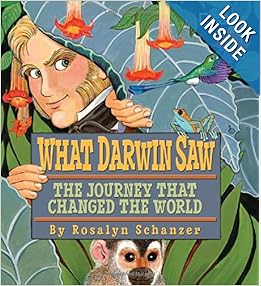
Mine again. What Darwin Saw: The Journey that Changed the World, tells about Darwin's great adventures as a young guy while traveling around the world. We're on board In this colorful graphic novel as he picks up the clues that lead to his Theory of Evolution and then does the experiments that prove it.
And here's series number 3.  Apparently these authors and illustrators were hard at work at the very same time on three very different picture books about the very same person; her name is Wangari Maathai, and she won the Nobel Peace Prize for bringing Kenya's trees back to life after most of them had disappeared. 

The artwork in all three books is outstanding, and each version is truly unique. The writing styles vary enormously too. I strongly recommend that you look at them side by side to prove that there's more than one way to skin a cat.  

Planting the Trees of Kenya was written and illustrated by Claire A. Nivola.


Wangari's Trees of Peace was written and illustrated by Jeanette Winter. 
And Mama Miti was written by Donna Jo Napoli and illustrated by Kadir Nelson.  
I'd bet anything that these folks didn't know they were creating books about the same person until all 3 versions were finally published....writing and illustrating books is a solo occupation if there ever was one. 

OK, that's it--though we could easily go on and on.  Here's hoping that if any kids examine a whole series of books on the same topic written and illustrated in such different ways, they can come up with some unique new versions of their own....and have some fun at the same time. 

Tuesday, March 18, 2014

Everything I've Learned About Interesting Nonfiction, Kids, Writing, and Life from I.N.K.

My sons went to a Quaker school, and every time they left meeting for worship they sang, As we leave this friendly place, and that's the song that's going through my head right now. I spent about half an hour trying to find a recording for you, but I can't.* I need a (Quaker) librarian to help me. (See below re librarians.)

I.N.K. has been a great place to hang around these past few years. I've learned so much from all of the other writers, from the teachers and librarians who've commented, and from writing my own posts.

So I thought I'd share with you some--no, not everything, of course--of what I've learned and give you some places to visit in the absence of I.N.K. Though I hope Linda will keep the blog up so people can dip into the archives.

1.Nobody knows kids like teachers. Stating the obvious, but I'm amazed by how much teachers know about children, about human nature, about different kinds of learning,  about what works and what doesn't. One of my favorite blogs is There's A Book For That, written by a woman who must be one of the best teachers ever. Carrie Gelson teaches a class made up of 2nd, 3rd and 4th graders in Vancouver. She's a great fan of nonfiction, of books, and, clearly, of children. I kind of want to pretend I'm 9 and go sit in her class.

2.Nobody knows books and research like librarians. Soapbox time. Every time I visit a school I am bowled over by how much librarians know. Which book to put in which kids' hands. Better than any Amazon formula, "If you liked Those Rebels John and Tom, you will probably like A Home for Mr. Emerson and  Handel, Who Knew What He Liked."  Ditto independent booksellers!

And whenever I need research help, no amount of futzing around on the internet will be better than asking a librarian. One hour of futzing around on the internet is worth 270 seconds with a librarian. There's nobody like a librarian and there's nobody like Betsy Bird. Visit her blog Fuse8 whenever you can. You won't be sorry! And there are so many more. In fact, HERE is a compendium of the best librarian blogs!

3. Nobody knows writing like authors.  Except when we're stalled or stuck or terrified. Then we go read what other authors have to say. I'm sort of addicted to the Paris Review interviews. If you go here you'll see Geoff Dyer saying all kinds of interesting things about nonfiction and how one can bend it and still have it be nonfiction! I've talked about John McPhee's interview before on I.N.K. in a piece I wrote about letting content dictate form. I intend to be addicted to the DRAFT column in the New York Times as soon as I'm done with my W.I.P. Check it out. It's a wealth of information--writers writing about writing.

4. There's nothing like having friends who do what you do. There are so many great authors on I.N.K. Great people. Having this blog has been like having a nation-wide support group. Teachers have the faculty room. Librarians have the water cooler. Writers can get lonely. Thanks to all you I.N.K. folks for hanging around the virtual coffee machine with me. Someone please pass the cookies. And while you're at it, please add to my list of what you've learned, and where we should hang out next.

*Ok, I found a recording. It's a real school singing it, and it's rough, but it brought a tear to my eye.

Here you go: As We Leave This Friendly Place.

Love,
Deb


Tuesday, November 19, 2013

Getting At The Truth

I've been thinking a lot about truth. I've been thinking (often at 4 a.m.) about how to get at the real truth of a person, or an event. I've been obsessing about it because of my work-in-progress, but the search for truth has been in the news a lot lately, too.

Election season always brings out the question of truth. But these days so do extreme weather events (yes, folks, global warming is real, and yes we will be having more and more of these heartbreaking disasters like the typhoon in the Philippines unless we deal with it!).

And the past few weeks our country has been looking again at John F. Kennedy, and his truths. This Friday is, unbelievably, the 50th anniversary of his assassination. As a country we are still fascinated with the man, and obsessed, some say, with his death. I think the reasons are obvious and reasonable, though one journalist argues that our obsession with him is just our obsession with ourselves--if we are baby boomers. But there are new sources (see below, On the Media), and new insights. And so new books keep coming out, textbooks are revisited, revisions made, appraisals rewritten.

You talk to some people of a certain age and they do not budge from how they felt about J.F.K. the moment they heard the horrible news on November 22, 1963. (See below, me.) You talk to others of that age, or a younger age, and you get an emotionless appraisal of a man who was President for a very short time. For a really good summary of  how we are looking at J.F.K. right now, including some newly-released tapes, listen to this week's "On the Media." That's one of my favorite N.P.R. shows, by the way, because they are always in search of truth and how truth is reported (or not reported).  I highly recommend it.

Those of us who write know that it is darn hard to get at the truth. I mean not only the facts, but the core truth, the deep essence of a person or an event or a subject. Sometimes it takes a lot of creativity to keep it nonfiction. And sometimes, writing it as fiction is the best way to go (see below, Monica Edinger's new book).

First, of course, you have to make sure your facts are correct. This sounds like stating the obvious, but I can't tell you how many experts I know who say that whenever they read a newspaper or magazine article in their field, they scream, "they never get it right!" We who write books have more time to make sure our facts are correct, though mistakes do creep in (oy!) but, thankfully,  are corrected in future printings. (Thanksgiving is on the fourth Thursday of the month, not the last Thursday, because sometimes there are 5 Thursdays in the month,  ahem, Deborah.)

Where was I?

Getting the facts right is just one part of telling the truth.  For one thing, when you write for kids, you have to tell the truth, but sometimes, depending on the age, not the whole truth. But getting at the truth is more complicated and complex than that no matter who your audience is. To get at the truth you have to sift through your own preconceived notions, your own bias, other peoples' bias, untruths perpetuated throughout the years, lack of facts, etc. And at bottom is the challenge of understanding what facts you have well enough to convey the truthful essence of a person or an event.

Over ten years ago, an editor asked me to write a book about John F. Kennedy. I said no. I didn't want to learn more about him. I was only five when he was killed, and I knew that if I wrote a book about him, I'd discover painful truths that would ruin the kindergarten perception I struggled to maintain. The editor, apparently desperate for the book,  and fast (so it would be published at the 40th anniversary) raised the advance she was offering (I didn't mean to be bargaining!), begged a little, made a strong case, and finally I said yes. I am not sorry I did.


Writing High Hopes was a great lesson in how to find the truth--or a truth--about a historical person who was iconic in my childhood.  As far as I know there are no mistakes in that book, although one review criticized it for being too awestruck. I was too awestruck by the man--when I started. If that reviewer only knew how much of my awe was struck down by research! And still, if I wrote that book today, with ten more years of distance from the trauma and ten more years of jaded experience or, er, wisdom, I would probably write a different book. Slightly different. More emphasis on his foibles maybe?  And since it is a different world today, I might have included a reference to his dalliances. Maybe. (I decided the fact that he hid his illnesses was a truth I should tell; the affairs ended up on the cutting room floor, for, I felt then, good reason.) But does that make my take on JFK in High Hopes less true? No, I don't think so. But that does not mean it was the only way to tell the story, or that my book shows the only truths about J.F.K. for 4th, 5th, and 6th graders. Yet ten years later, I am still proud of it, and grateful for the experience of writing it. And I still believe that I captured a true J.F.K.

[A brief pause to tell you two other reason why I'm so glad I wrote this book: In order to get permission to use the lyrics for High Hopes, I had to sing the song on the phone with the widow of the songwriter, Sammy Cahn. I also got a telemarketer who interrupted me while I was crashing out the book on a tight deadline to sing me her rendition of Marilyn Monroe's Happy Birthday, Mr. President.]

Sometimes you can't, as someone once said, let the facts get in the way of a good story. Or possibly in the way of truth. For what about getting at a truth when you don't know all the facts? Sometimes, I have learned, and seen, you have to turn from nonfiction to fiction. As I wrote a long time ago here, I had to jettison a story because the facts were just too elusive and mushy. I hope to turn that story into fiction one day, telling truths, still, but not relying only on facts.

As much as we are all about nonfiction on this blog, I'd like to put in a good word for great historical fiction. Sometimes the best way at a truth is through fiction. It just happens. Take a look at Monica Edinger's story about her road from nonfiction to fiction. And then take a look at her beautiful--and truthful--new book, Africa Is My Home. In it she shows us the real story of a real person, Sarah Margru Kinson, one of four children who forced to come to this country on the infamous slave ship, The Amistad.  I think this book should be taught alongside nonfiction about slavery and the Amistad. It gets at the truth the way Laurie Halse Anderson's brilliant Chains and Forge do. Sometimes the way to tell a truth is through meticulously researched historical fiction, as both Anderson and Edinger show. 


Now speaking of the truth and getting at it--I'm taking a break from I.N.K. blog posts to focus on getting my W.I.P. down on paper in the best and most truthful way that I can. I hope to be back by late winter or early spring. I'll keep reading I.N.K., of course, as I hope will all of you. 



Tuesday, October 15, 2013

It's All About George Clooney

This month on I.N.K. we're writing about George Clooney, and how the adoption of George Clooney standards by most US states affects the way we write our books, and I guess the way teachers use our books to teach. Well, I have to admit I'm a little puzzled by this. I mean, I think about George Clooney as much as the next person while writing my books. I mean, who can forget him in E.R.?

Not I, I tell you that. I mean, it's quite often that when I'm researching my current project, or thinking about my next book, I remember that moment when he tells Nurse Carol how much he loves her, something about the smell of her on the pillow next to him, remember...? I hope that when teachers teach significant George Clooney moments, they teach that. 

But lately, when I'm thinking about how to keep my book moving, how to make it interesting to kids while also fit into the George Clooney standards--nah, I don't actually think about George Clooney at THOSE moments. At those moments I think about plot arcs, and details that make me go, "oh wow," and that kind of thing. Maybe I should think about how teachers will use my book to teach to the GC standards at those times, though. Like in Gravity, when Matt tells Ryan to sip not gulp. That's a good standard when you're running out of CO2 I guess, isn't it? And maybe also when you're writing about something hard? Sip don't gulp. 

To tell the truth, usually I think about George when I'm stuck. Or worried that not enough people will read my book. Then I kind of wander into all kinds of dark places, like some of those weird scenes in  Men Who Stare at Goats. 
And I think, "well, it was a weird movie, but some people liked it, and I sure did, and I'm proud of those filmmakers for telling that story, no matter how quirky it was. And that movie was at least in part non-fiction, so that's cool and I wonder if anybody did actually walk through a wall." 

By the time I'm done with that line of thought, I've either come up with a good idea for the problem I was trying to solve, or I go make dinner. 

So, in sum, I'd just like to say that I don't actually think about George Clooney to do my work, but more as a distraction. And if it turns out that he likes my books, or that teachers can really use them for the George Clooney standards, well then I'm really hap-- what? -- It's not George Clooney Standards??--

It's Common Core Standards???!!

Holy Headlines, Batman. I need a superhero to save this post.


The thing is,  I'm not a teacher, never been one. I've been told my books are perfect for Common Core. But I don't know exactly how I'd use my books to teach the Common Core. And I'm not even sure if it's a good thing, or a bad thing. Of course I think that anything that gets kids to read more nonfiction is a good thing. To read more at all, is a great thing. I just hope that CC is not a flavor of the month, or that it turns out to be more work for teachers and less help to kids like No Child Left Untested has been. 

But I don't know. This is not my expertise. So here's my plan: I'm going to keep writing books to the best of my ability. Books about subjects that make me (and I hope Mr. Clooney) go WOW. And I will leave the Common Core stuff to the experts. 

But let me say this: other people here on I.N.K. seem to have good thoughts about and a good understanding of the Common Core. So please read the other really good columns about Common Core here on I.N.K.

And clearly, I better read my email more carefully. 

Yikes. Come to think of it, I hope my editor actually did agree to my new picture book about Robert Redford. 


Tuesday, September 17, 2013

Opening Worlds: Scientific, Religious, Secular

I write children's books because I truly believe that a book can change a child's life. I know, because it happened to me. Twice.  At least. 


I've written about the first time on I.N.K. before. If you go here, you can see that whole post. It's called Why We Write for Kids.  But here's the relevant part:

I remember the day I first discovered I could learn from books. And that changed my life.

For some reason in my school, Muhlenberg Elementary, in Allentown, PA, we weren’t allowed to check out books from the library until first grade. Maybe that was a good idea--we had to wait a whole year, and the anticipation was intoxicating. Then one day, we walked into the library—I can still see the beautiful wooden shelves, smell that old-book, old-paper, new-book, new-paper library smell. (I was back there for a school visit a few years ago and the library smells the same!) For some reason, maybe it was because it was straight ahead, I walked over to the non-fiction section and I pulled this book off the shelf.


And on that day, when I was six, as my mother read What is a Butterfly to me on my bed (I honestly remember this moment--my back was up against the wall, my legs too short to reach the other side of the bed), I discovered that a book could teach me things, a book could help me understand how the world works, a book could make me smart. It was my own personal (excuse me) metamorphosis. I returned What is a Butterfly and came back home with What is a Frog? then What is a Tree? and there was a whole series! 

That book, and series, opened up the world for me. And years later I would write a book called From Caterpillar to Butterfly, in the months just after my mother died. That book is part of a wonderful series called Let's Read and Find Out Science. From Tadpole to Frog by Wendy Pfeffer is one of my favorites. I would recommend it and that whole series for books that can change a kid's life, and open up worlds!  

The second time a book changed my life was in college. But I'm going to talk about it because I was still a kid. I was under 20. And in a very significant way it continued what What is a Butterfly started. It opened up whole new worlds to me. 

Here's the book, posing on my desk just minutes before I starting writing this post: 


Peyote Hunt? Yes. Let me explain. In doing so I'm going to be completely honest, and I hope I will not offend anyone. I grew up Jewish. Although we were Reform Jews,  we were what I would call observant Reform Jews. Sabbath dinner every Friday night, services most Friday nights, etc. I had many non-Jewish friends, but I was ensconced in the Jewish world. And I believed it was THE world. The RIGHT way to live and be. I felt kind of sorry for people who weren't Jewish. Take out the "kind of." I felt sorry for them. I knew we were right. It's not that I tried to convert anyone (oh, no, Jews don't do that! We're right about that, too!), but I just felt like our way was THE way. 

Then I read this book by anthropologist Barbara Meyerhoff. And it was as if not a light bulb, but an entire stadium full of lights lit up above my head. These Huichol Indians believed in their rituals and rites and peyote as much as I believed in mine. Who was to say I was right and they were wrong? Like a thunderbolt from above, I knew the answer was NOT ME. Not any more. And no, I wasn't upset. I was happy about it. Thrilled, even. 

I realized then, at the ripe age of 19, that there was a whole world out there to discover--worlds not only of science and nature, as those early books had taught me, but also worlds of religions and beliefs. And non-beliefs. I majored in religious studies. 

To this day I am fascinated by other people's beliefs, and foreign worlds, both religious and secular. (I'm fascinated by plumbers, for example. And mathematicians.) I love peeking into other people's lives. And I especially love celebrating the diversity on our planet.  Reading Peyote Hunt made this happen. 

This led, eventually, to writing books about religion, and religious beliefs.  I wrote ten books in a series for National Geographic (Holidays Around the World), and after that about a marriage between two people of different beliefs: Charles and Emma: The Darwins' Leap of Faith.  

You never know which books might open up worlds for a child. That's why it's so important to keep all of our libraries open, and to keep all books on the shelves.  Open libraries lead to open minds. 


Tuesday, July 16, 2013

Helping Kids Nurture Their Inner Ratters

Last July 8, a Cairn terrier came into our lives. We had been without a dog since Tinka, our beloved Golden Retriever, died in 2004. While in Pennsylvania for a party, we heard about a dog who needed a home, and even though we debated for seven years whether or not we could have a dog in the city (we lived in Bucks County, PA, during the Tinka years), we have not looked back. Ketzie is, as I tell her often, a value-adder in our lives. 
     There is only one time when I feel at all doubtful about Ketzie. And that's the last walk of the night. Not because I'm too tired, but because the last walk of the night has become THE RATTING WALK. 
     Before you get too grossed out (or maybe too excited), see below for one of the cuter aspects of the dog being a ratter. Here she is hiding under our bed. "Hiding." Why is she hiding? She has a new toy bone, and she doesn't want us to get it. OR rather, she'd like for us to try to get it, but she wants to put up a fight. She knows it is safe under there. 


(Why are there books there? Our bed is a little bit broken. Until we can get our friend Keith to make us a new one, we have to prop it up with something. We have more books than we have space for, so.....) 

Where we lived in Pennsylvania, there were mice and moles and skunks and deer. Where we live now, there are rats. Mostly they are hidden. But once in a while, at night, one will scamper across the street or sidewalk in front of us. While my instinct is to jump back, Ketzie's instinct is to become very alert. She assumes a posture we don't see any other time: alert in every cell of her body. It's as if her ratting genes coming to ATTENTION. Cairns were bred to get rats out of cairns (or maybe, truly, out of homes made of stones). And at night, just outside our lovely apartment building, Ketzie is ready to be OF SERVICE. 

I don't think we're going to train her to be on the rat-hunting squad.  Yes. There is a rat-hunting squad in NYC and that link is to an article and a video about it. Please watch the video. It's only a minute and a half, and so worth it. I'll wait until you come back. 

Right? Ketzie really should be on that squad. But considering every night we're (husband and I) terrified she will catch a rat, I don't think it is in her future. 

When we have to force her to come back inside--Cairns are stubborn!-- I feel like we're thwarting her most basic nature. Which makes me sad. 

Tinka, our Golden, did not understand fetching in our Buckingham back yard. But the first time we threw a stick into the ocean, in Nova Scotia, she swam in, retrieved it, and laid it at our feet. Another clear sign of genes being able to express themselves. 

As parents and teachers and writers it is our job to help kids find their true selves. To help them express who they are, who they were meant to be. People who live their lives letting their innermost selves guide what they do are the ones we admire the most. Often those people have to fight inner and outer battles to do so. Paul ErdÅ‘s was one of those people. He was so lucky that his mother (and later his father) nurtured his love of math, and understood his true nature. Mama let Paul be home-schooled until he was ready for school. She challenged him with math from the time he showed the great interest and ability (when he was four). Later on, the love and support he got from his parents, and the great foundation he had in math, allowed him to go out into the world--on his own terms. 

(Shameless and excited plug: THE BOY WHO LOVED MATH is coming out next Tuesday. Check out my website for news, etc.) 

Even if we are not math prodigies or ratters or retrievers, we each have inborn strengths and talents that should be nurtured. We each have problems to overcome; everyone has to learn strategies for how to fit into the world. Some, like Paul ErdÅ‘s, have more of a challenge than others. But with adults in their lives who understand their needs, they have a greater chance at success and a happy life. 

As parents, teachers, and dog-owners, we do the best we can. Even though I don't let Ketzie go after rats, I do buy her a new toy every time she destroys her current favorite. I think--I hope--that along with about an hour and half's worth of walks every day, good food, and lots of attention, that's enough. She seems pretty happy, and at home. 


Tuesday, June 18, 2013

Helping Kids Nurture Their Inner Ratters

Last July 8, a Cairn terrier came into our lives. We had been without a dog since Tinka, our beloved Golden Retriever, died in 2004. While in Pennsylvania for a party, we heard about a dog who needed a home, and even though we debated for seven years whether or not we could have a dog in the city (we lived in Bucks County, PA, during the Tinka years), we have not looked back. Ketzie is, as I tell her often, a value-adder in our lives. 
     There is only one time when I feel at all doubtful about Ketzie. And that's the last walk of the night. Not because I'm too tired, but because the last walk of the night has become THE RATTING WALK. 
     Before you get too grossed out (or maybe too excited), see below for one of the cuter aspects of the dog being a ratter. Here she is hiding under our bed. "Hiding." Why is she hiding? She has a new toy bone, and she doesn't want us to get it. OR rather, she'd like for us to try to get it, but she wants to put up a fight. She knows it is safe under there. 


(Why are there books there? Our bed is a little bit broken. Until we can get our friend Keith to make us a new one, we have to prop it up with something. We have more books than we have space for, so.....) 

Where we lived in Pennsylvania, there were mice and moles and skunks and deer. Where we live now, there are rats. Mostly they are hidden. But once in a while, at night, one will scamper across the street or sidewalk in front of us. While my instinct is to jump back, Ketzie's instinct is to become very alert. She assumes a posture we don't see any other time: alert in every cell of her body. It's as if her ratting genes coming to ATTENTION. Cairns were bred to get rats out of cairns (or maybe, truly, out of homes made of stones). And at night, just outside our lovely apartment building, Ketzie is ready to be OF SERVICE. 

I don't think we're going to train her to be on the rat-hunting squad.  Yes. There is a rat-hunting squad in NYC and that link is to an article and a video about it. Please watch the video. It's only a minute and a half, and so worth it. I'll wait until you come back. 

Right? Ketzie really should be on that squad. But considering every night we're (husband and I) terrified she will catch a rat, I don't think it is in her future. 

When we have to force her to come back inside--Cairns are stubborn!-- I feel like we're thwarting her most basic nature. Which makes me sad. 

Tinka, our Golden, did not understand fetching in our Buckingham back yard. But the first time we threw a stick into the ocean, in Nova Scotia, she swam in, retrieved it, and laid it at our feet. Another clear sign of genes being able to express themselves. 

As parents and teachers and writers it is our job to help kids find their true selves. To help them express who they are, who they were meant to be. People who live their lives letting their innermost selves guide what they do are the ones we admire the most. Often those people have to fight inner and outer battles to do so. Paul ErdÅ‘s was one of those people. He was so lucky that his mother (and later his father) nurtured his love of math, and understood his true nature. Mama let Paul be home-schooled until he was ready for school. She challenged him with math from the time he showed the great interest and ability (when he was four). Later on, the love and support he got from his parents, and the great foundation he had in math, allowed him to go out into the world--on his own terms. 

(Shameless and excited plug: THE BOY WHO LOVED MATH is coming out next Tuesday. Check out my website for news, etc.) 

Even if we are not math prodigies or ratters or retrievers, we each have inborn strengths and talents that should be nurtured. We each have problems to overcome; everyone has to learn strategies for how to fit into the world. Some, like Paul ErdÅ‘s, have more of a challenge than others. But with adults in their lives who understand their needs, they have a greater chance at success and a happy life. 

As parents, teachers, and dog-owners, we do the best we can. Even though I don't let Ketzie go after rats, I do buy her a new toy every time she destroys her current favorite. I think--I hope--that along with about an hour and half's worth of walks every day, good food, and lots of attention, that's enough. She seems pretty happy, and at home. 


Thursday, May 23, 2013

The Voices Made Me Do It


Last week I had the good fortune to be on the panel that Deborah Heiligman wrote about Tuesday. Preplanning conversations and postmortem drinks at the very literary Algonquin Hotel gave Deb, Marfe’ Ferguson Delano, and me plenty of time to talk about the writing process. These conversations got me thinking about “voice.” Finding the right voice for a nonfiction book fits somewhere in the scheme of things between the research and final draft.
            You know how writers of fiction and deranged people – that may be an oxymoron – say, “It’s the voices … it’s the voices that made me do it?” That makes perfect sense to me. My books, primarily based on interviews with young people, absolutely must be true to the people featured. So after an interview, I transcribe and replay their tapes over and over again as a way to get their voices into my ears. My journey to understanding “voice” in writing began as an act of embarrassment and humility.

My Confession:
Once upon a time, long, long ago, after photographing four children’s books, I decided to try my hand at writing as well as illustrating. My first, full book contract was about a thirteen-year-old foster boy who spent a year socializing and loving a puppy that would later become a guide dog for the blind. What made the boy unusual was that he himself was slowly going blind. The book was called Mine for a Year.

After the usual gazillion drafts, the manuscript was ready to meet its editor. At that time I knew very few children’s authors and needed a critical read. A magazine editor-cum-good friend, a brilliant writer himself, said he’d take a look at it. Before he could change his mind I was sitting in his office with my beautiful, perfect, gorgeously written first book. He turned to the first page. “WHAT IS THIS CRAP?” He didn’t say crap. “I’m not going to read this! There’s nothing happening here. There’s no voice! It’s not you. It’s not the kid.” I grabbed the pages and flew out of the office. I was devastated, furious, and very embarrassed.

Once home I spent weeks trying to figure out how to make this boy read real. What could I do differently? Why didn’t the photographs alone create the boy’s character? And what is this thing called “voice” anyway? A week or so later an Aha moment arrived. Since it was the boy’s story, why not let him tell it?

I rewrote everything in the first person, and interviewed the boy again to add material and to make sure what was written matched the way he spoke. We collaborated. We made changes together.
After more than a few drafts, it was back to the mag editor for round two. With one eyebrow raised - he never once looked up - he opened to the first page, and read it. Think long, horrible pregnant pause here. “Okay, now you have voice. Now I want to read this.” For the most part, I’ve been writing in first person ever since.

A number of INK writers have said how hard it is to come up with a topic each month. I for one would love to know how you treat voice in your books.