Wednesday, February 19, 2014

Photographing Beyond Magenta


After four years in the making, I’m absolutely thrilled to announce that my new book, Beyond Magenta: Transgender Teens Speak Out has just been published. I’ve been waiting for this month with anxious anticipation. Now that it's here I’m walking on air, soaking in all the love, care, and respect sent out to the six teens that participated in the book.

Usually my YA books have black and white photographs peppered throughout the text. But this time they are mostly in color and are a finely integrated part of each chapter.

Each teenager in the book is individual and distinct. They know who they are and what they need. They certainly know who they are not. My role was to represent these awesome kids through words and photographs.

One person in the book preferred not to have photographs at all, and another person’s mother did not want her son’s face shown. That left four chapters that needed separate photo essays.

The first teen I met was Jessy, who had just begun taking hormone therapy. I thought, and he agreed, that it would be interesting to photograph him every two weeks as his transition progressed. This is the first photo, taken with my cell phone because it never occurred to me that our first meeting would include a photo shoot. I referred to Jessy’s photo essay as  “Transition.” They are very casual and mostly shot in natural light.


This is from the final set of photographs of Jessy's transition at the time I turned in the book. In my view - and the art director’s - camera and lighting are somewhat better than the one with my iPhone.


The second person I interviewed was Christina. Christina loves to shop and is very, very good at it. I trailed along, feeling quite dumpy, as she methodically, elegantly went through every rack. We did two shoots, one when she was a strawberry blond and another when she was a brunette. This essay is called “Shopping Spree.”


Cameron, the third photo essay in the book, did a great job explaining gender fluidity. We decided that it would be best to “show AND tell.” I set up my studio with a crumpled white cloth background and large strobes that I usually use when photographing dancers. Cameron carried bags of clothing to my sixth floor walk-up studio. We did two sets of studio photography. This is “Variables.”


Nat, the fourth essay, is a fine artist and a wonderful violinist. We wanted to do something that married intellect and art. And that to me is Black and White photography. I suggested that I photograph them [Nat’s pronoun of choice] in the tradition of André Kertész, 1894 -1985, a photographer whom I greatly admire. Kertész focused on patterns, angles and space. Nat and I went up on the High Line early in the mornings when all the tourists were asleep in their beds. We did our interpretation of a Kertész photo essay. It became “The Long Road with Musical Interludes.”


The last chapter is devoted to Luke, [not his real name] a marvelous poet and actor. Luke’s mother did not want her son’s real name or face revealed in the book. When Luke is onstage he’s a whirlybird.  So I slowed down the camera and let his movement compliment his personality. Although his is not a true photo essay, the images are not like the other chapters.


This structure is not explicitly described in Beyond Magenta. But it's layers like these that add (subliminal) depth to our books. No one knows it, unless posted, but it's there. One of the pleasures reading INK is to learn the backstory, the layers, that go into creating books. 


I do love writing. I love being an author. But let me say, it feels really, really good to be back behind the camera. I continue to photograph Jessy and Christina as they grow into stunning adults.

Monday, February 17, 2014

Presidents' Day: Facts & Fantasy


Oh, I know how it is -  so soon after Valentine's Day, but here it is: Happy Presidents Day, INKsters! Insofar as it celebrates our nation's history as represented by our unbroken chain of elected executives, this holiday is second only to Independence Day in its importance to our democratic republic. 

An esteemed gaggle of early presidents
by way of Currier & Ives
Whether or not you'll be playing and marching in a band or doing last minute touches on your float or costume, enjoy your community's parades today and the fireworks tonight! Before this special day comes to an end, it's likely that you'll be gathered with your dear ones, sharing the usual Presidents' Day delicacies, such as hot dogs, like the ones FDR offered to Great Britain's royal couple in the summer of 1939, but if I were you, I'd skip the cottage cheese-and-ketchup, a favorite of Richard Nixon. For dessert? Maybe Ronald Reagan's jelly beans, but there's got to ice cream and of course,  cherry pie, which has come to represent our presidential pathfinder, George Washington.  

But mind your portions - else you'll wind up like President Taft!   And if you're inclined and of age, do be having a celebratory sip of hard cider. As John Adams wrote in 1765, "I drank this morning and yesterday morning about a gill* of cider; it seems to do me good."   Harry Truman felt the same way about his breakfast shot of bourbon and FDR about his late afternoon martini. But I digress
      *about 1/4 of a pint 
"Big Bill" Taft - more to him than a big belly! 

It's become customary for Americans to have their P. Day dinner while watching the annual White House Concert. As usual it will feature live broadcasts from some of the nation's many lighthearted and colorful Presidential/First Family Look-Alike contests, as well as the much-awaited announcement of this year's winner of the Presidential Essay Competition. Who will be covered with glory, patriotic and intellectual honors, the $5,000 cash prize, AND the invitation to the White House?  

Knowing that you share my love of American history – and if you're reading this, I'd bet money that you do – you may well have long since written and contributed your own entry,
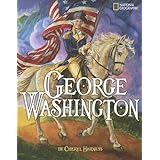
dated, but still a popular primer
on the presidents, their
House, and the presidency itself.
your own considered take on this year's topic:
The President We Most Need Today. If I'd written one - if there was any such event - I reckon I'd lean toward presidents who championed public education. Ike, for instance, the steely ex-general with the sunny smile.

For further thoughts on this issue, here's a good start. 

Because it's a worthy topic in this, our real, anxious, too-cool-for-school world, that has no such festive Presidents Day and never shall. Maybe just as well, given how money-corrupted the whole elective and legislative process has become, how it has so tarnished the Founders' Dream. Doesn't mean it's to be discarded, not celebrated. It only means it's to be clung to and fought for all the harder. The topic's been a hot one even before there was a republic for which we stand and throughout the days and years of our ever-contentious nation  What should be the role of our central government in our lives, in our classrooms?  
What are we prepared to do in order to be what we intend to be, as
individuals and as a nation? For one thing, read. Know what and who we've been, those whom we've championed to hold the standard.

Meanwhile, I need to go make sure to display my American Flag (the subject of my next book - did I tell you that? Did you know that 2014 makes 200 years since F.S.K. wrote his ode to the S.S'd. B.?), out by my front door because it's Presidents Day. 

And long live the Republic. Read on.


Monday, February 10, 2014

A-HA! The Eureka Moment


As the story goes, for Archimedes, it was the moment he sank into his tub.  For Newton, it was that falling apple.  Eureka!  Aha! In a flash, the answers (displacement and gravity) became clear.  To Archimedes and Newton, anyway.  For them, that lightning bolt of understanding was accompanied by joy and amazement.  Other people, half as brilliant or educated, might have simply thought, “Oy, I hope the water doesn’t overflow” or “Ouch, that’s what I get for sitting under a fruit tree.”

I’ve been mulling over Eureka moments lately.  Products of pioneering thinkers like Archimedes’ and Newton’s may corner the market, but epiphanies come in all shapes and sizes.  It doesn’t always have to be and original discovery that leads to Eureka.  A gifted explanation can go a long way to create an aha moment for others.  

An example was when physicist Richard Feynman appeared before the Senate Committee hearing convened to figure out what caused the Challenger Disaster.  If you remember, the
space shuttle Challenger exploded shortly after liftoff in 1986, killing all aboard.  The question was why and everyone dithered about it for months.  During his testimony, Feynman revealed the problem in moments.  He used a C-clamp to bend the type of rubber O-ring used to seal joints in the rocket, then plunked it into his glass of ice water.  He pulled it out, unscrewed the clamp and showed how the now 32-degree rubber was too cold to bend for valuable seconds.  It had been 32 degrees on launch day.  No effective seal, leaking gas, fire, death.  

Was this an epiphany for Feynman?  I have no idea; it might have just been a satisfying, logical conclusion.  But for the people who wanted to know what happened and couldn’t assemble, sort and understand all the factors, it was a mind blower. QED, game over.

As nonfiction writers, and especially as nonfiction writers for kids, wouldn’t it be great to be able to create aha moments for our readers and open up new parts of the world to them? Sorry, I wish I could simply print the recipe at the bottom of the page.  

The best I do is guess about the necessary ingredients.  Here are a few I’ve been thinking about:

1.  Curiosity—not just coming up with facts, but also a compulsion to flip them over in your mind and study them from every angle.  

2. Wonder—wondering about situation and having a sense of wonder about it so you might be able to get some poetry into the mix when you try to get the idea across.  

3. Expansion—somehow leaving enough room for a reader to get invested and involved and find his or her discovery amidst your own.

Anybody have a few more suggestions?  I’d love to hear (and use!) them.

Friday, February 7, 2014

Out and About with INK Authors

NEW BOOKS


BEYOND MAGENTA: TRANSGENDER TEENS SPEAK OUT by Susan Kuklin (Candlewick)


FEATHERS: NOT JUST FOR FLYING, by Melissa Stewart, ill. by Sarah S. Brannen (Charlesbridge)


MUMBET’S DECLARATION OF INDEPENDENCE by Gretchen Woelfle, ill. by Alix Delinois (Carolrhoda)


AWARDS

Sibert Honor Book
Jan Greenberg and Sandra Jordan, The Mad Potter: George E. Ohr, Eccentric Genius

Finalists for the Cook Prize for the Best STEM Picture Book:
Deborah Heiligman, The Boy Who Loved Math
Melissa Stewart, No Monkeys, No Chocolate

Finalist YALSA award for Excellence in NF for YA
Tanya Lee Stone, Courage Has No Color: The True Story of the Triple Nickles, America’s First Black Paratroopers

ALA Notable Books 2014
Jan Greenberg and Sandra Jordan, The Mad Potter: George E. Ohr, Eccentric Genius
Deborah Heiligman, The Boy Who Loved Math: The Improbable Life of Paul Erdös
Elizabeth Rusch, Eruption!:  Volcanoes and the Science of Saving Lives
April Pulley Sayre, ill. Steve Jenkins, Eat Like a Bear
Steve Sheinkin, Lincoln's Grave Robbers
Tanya Lee Stone, Courage Has No Color: The True Story of the Triple Nickles, America's First Black Paratroopers
  
EVENTS

Friday, February 7, Cheryl Harness will be speaking on “Creating Books for Young TimeTravelers” in Denver at the Colorado Council of the International Reading Association.

Saturday, February 8, Kelly Hall Milner, along with Kathleen Krull and Cindy Jenson-Elliott will address “Nonfiction v Common Core” at the California School Library Association Conference in San Diego.


Same day, same place, Gretchen Woelfle and Alexis O’Neill will talk about “Turning History into Story.”

Thursday, February 6, 2014

Something Entirely Different

Early last year, my editor asked if I would be interested in taking on a project very different from the narrative nonfiction books I've written. She asked if I would like to write the text for a baby book, a keepsake baby book, the kind in which parents can record the highlights of their baby's arrival and growth. But instead of being illustrated with the usual pastel drawings of bunnies, etc., this book would be filled with gorgeous photographs. The text needed to be lyrical and inspirational, with strong visual elements, she advised, and oh yes, it should also celebrate the natural world.

It was tall order! And it was unlike anything I'd done before. But it sounded like a great opportunity to stretch and challenge myself--not to mention earn some dough--so I took a deep breath and said yes to WELCOME TO THE WORLD: A KEEPSAKE BABY BOOK (National Geographic, March 4, 2014). I'm glad I did. Working on this book was a joy, from brainstorming with the editorial and design team, to looking through my own children's baby books and recalling their infancy and toddlerhood. I explored my feelings about motherhood and thought about my hopes and dreams for my children (now grown). I thought about my parents (both still going strong, I'm happy to say!) and my own childhood. I pondered the wonders of our world and tracked down--and verified--inspirational quotes to sprinkle through the book. Most gratifying, I discovered my poetic side as I crafted the text. 

My goal was to go beyond the traditional journal style of most baby books. I wanted to connect the birth and early days of a child's life to the beauty and wonders and possibilities of this amazing world we live in. I tried to do this with my text, but ultimately it's the stunning photographs--selected by Lori Epstein, a brilliant photo editor and very talented photographer in her own right--that really make this book special. The photos Lori selected not only delight the eye, they enhance and expand my words, creating layers of meaning I didn't even realize were there until I saw the pictures and words together. Some of them make me laugh out loud. Some bring tears to my eyes. It took a team of us to create and give birth to WELCOME TO THE WORLD. I can't wait to see how it fares.


Wednesday, February 5, 2014

Road Maps to the Common Core

Sometimes I get the feeling that any change in educational policy doesn’t matter to the providers of educational materials as long as change is mandated. Publishers of texts and testing products make money no matter what.  The objective of No Child Left Behind was basic literacy for all, period.  So the emphasis was on decoding skills.  It set the bar very low and generated lots of new materials to teach phonics, etc.  Now we have the Common Core State Standards which redefine an educated person as someone who can read a text and figure out the main idea, how it was put together by the author, and how knowledge and ideas are integrated.  Moreover, students are supposed to incorporate these standards into their own writing.  The pushback from the educational community is that now the bar is set too high; especially in light of the new standardized tests that show kids failing as expected.  Veteran educations shake their heads in bewilderment.  They know better than most that there is no single panacea for delivering high quality education.  Just ‘cause you state it as policy, doesn’t mean it will happen.
Vicki Cobb and Lucy Calkins
One such veteran educator is Lucy Calkins of Columbia’s Teachers College who is the founder and director of The Columbia Reading and WritingProject. She is an outspoken champion of the CCSS.  She sees it as an opportunity to introduce students to a wealth of nonfiction literature about the real world and she spoke about it at a TC event last week, which I attended.  After decades of imposing rules and packaged lesson plans on teachers, of bashing teachers as the primary problem with education, of sucking the joy of learning out of the classroom, and of attempting to standardize teaching as if children were widgets in a factory, some of us see the CCSS as an opportunity to bring creativity, collaboration, and autonomy back to the teaching profession.

Let’s hope it’s not too late.  Enter the realityof a teacher’s day.  The stress is enormous and now they have to do a great deal of paperwork to justify exactly how they are meeting the CCSS.  Their jobs are now dependent on how well their students perform on the standardized test. Many gifted teachers are speaking up  or throwing in the towel.  Lucy Calkins sees the CCSS as an opening for many approaches to instruction and a diverse curriculum—the opposite of standardization.  Since businesses now say they want creative, self-starting, innovative workers, we have to allow teachers to go back to being creative innovators themselves.  We also have to experiment with different approaches and ideas with the understanding that some will prove better and others and that not everything that is done will be a home run.  In other words, educators, themselves, need room to learn and grow. 

The Columbia Reading and Writing Program states, " ‘the Standards define what all students are expected to know and be able to do, not how teachers should teach’ (CCSS, p 6). What's needed is an all-hands-on-deck effort to study how best to create pathways to achieve the Common Core. There will be no one 'right answer' to the question of how a school or a district needs to shift its priorities and methods so as to bring its students closer to the expectations of the Common Core, as schools and classrooms will come from different places and will have different resources to draw upon.”

Teachers need interesting, well-written materials for the curriculum subjects they teach.  They can also teach reading and writing skills through “mentor” books that are about content.  In addition to books, teachers also need strategies for using books that don’t come with lesson plans.  They need support from curriculum people and from each other.  If the skills of the Common Core are our destination, (and there is no question that we’d have a very well educated nation if everyone met them) we need ways to implement them and try them out.  In other words, we need time to develop road maps through uncharted territory and stop asking, like an annoying  passenger, “are we there yet?”  


Tuesday, February 4, 2014

STRANGER THAN FICTION


OK history buffs (or non-history buffs) - which of the following wild assertions just so happen to be true and which ones are false? Since I have to write about this stuff all the time, I actually know the answers and don’t have to look them up.  See how many you already know….TRUE OR FALSE: 
   
1) Ben Franklin invented the fan chair, which was a rocking chair with a fan on top to blow away flies.

2)  Ben invented a musical instrument that caused dogs to run away and hide and also made people think there were ghosts in their room.

3)  Pocahontas was bald.

4)  She taught her boyfriend, John Smith, how to smoke tobacco.

5)  Before being captured and enslaved, John Smith won a Turkish fortress by making a bunch of explosives and catapulting them into the Turks’ camp while they slept.

6)  George Washington always wore a white wig in public, even as a child.

7)  George Washington chopped down a cherry tree, and when his dad asked him about it, he said “I cannot tell a lie, pa.  I did it with my little ax.”

8)  George Washington had scars on his face from a duel.

9)  During the California Gold Rush, a single piece of paper cost $150 but you could get 12 shirts washed and ironed at the Chinese Laundry for $3.

10) During this gold rush, cooks regularly checked chicken gizzards for small gold nuggets.

11)  Frenzied gold seekers from 37 different countries rushed lickety-split straight toward California to seek their fortunes.

12)  Cowboys traveling on The Old Chisholm Trail used to cross the muddy rivers by running on their cows backs.

13)  The trail was finally closed by barbed wire.

14)  Charles Darwin and Abraham Lincoln were born on the very same day just a few hours apart, and they didn’t always get along with their dads.

15)  When Charles Darwin journeyed around the world by ship, he caught a giant octopus and sent it back to England for scientists to study.

16)   Charles Darwin used to ride on horseback with a wild Gaucho cavalry, ride on the backs of gigantic tortoises, and ride in a box on the back of an elephant in true Indian fashion. 
  
17)  In Salem Massachusetts, some people made medicine by combining boiled snippets of children’s hair, spirits of mummies, and the brains of young men who had died a violent death.

18)  During the Salem Witch Trials, nineteen people were burned for the crime of witchcraft.

19) During this time, people of all ages were accused of turning into a ball of light the size of a bushel basket, choking a woman with nails and eggs, stupefying a boy for 12 years, making a wagon plump down into a hole on flat ground, and killing victims with their evil “eye beams.” (A ghost said so.)

AND THE ANSWERS ARE:

1)  False, but he did have such a chair inside his house.

2)  True.  It was called the glass armonica, and before it went out of style for hurting dogs' ears and sounding spooky during seances, it was so popular that Mozart and Beethoven wrote music for it.

 3)   True.  Pre-pubescent Powhatan Indian girls shaved the tops of their heads, and Pocahontas was between 10 and 12 years old.

4)  False.  Of course she was way too young to be John Smith's girlfriend, and besides, he thought smoking tobacco was disgusting.

5)  True, all true.  He was also great at making fireworks.

6) False.  George hated wigs even though they were in style.  If he absolutely had to, he would powder his hair instead.

7)  False.  Parson Mason Locke Weems made up that fake story to get kids to tell the truth like their hero.  Oh, the irony.

8)  False.  The scars were from smallpox.

9)  All true.

10) True again. One time a chicken gizzard panned out at $12.80

11)  False.  They came from more than 70 countries and set off one of the greatest mass migrations in history.

12)  Yup, that's true.  Those guys had talent.

13)  True.  Barbed wire smarts if you're a traveling cow.

14)  True. Their dads didn't seem to think they'd amount to much.

15)  False, false, false.  He did uncover plenty of humongous fossilized bones from extinct giant animals though.

16)  True.  Darwin perched these various backs in Argentina, the Galapagos, and the Isle of Mauritius.  

17)True.  Guilty as charged.

18)  False.  They were hanged, not burned.  A 19th guy was pressed to death by stones.

19)  True.  People really did tell all of these bald-faced lies in court.  AND THERE ARE NO WITCHES!!!

Didn't I tell you truth is stranger than fiction?  So how did you do? Feel free to try this on your students, friends, and enemies, and if they get all the answers right I will send them a lollipop.  (False.)


Monday, February 3, 2014

Biographies book list is up!

Barbara Kerley collated a list of suggested titles from some I.N.K. bloggers.

You can find it here.