Showing posts with label American history. Show all posts

Friday, May 16, 2014

Research Journeys--Hard Work, Yes, But Don't Forget the Luck!


Stubby's story appeals to all ages, from young...

One of the best parts about researching a book is that I don’t know what I’m going to find. Each project is like a mystery, and I have the fun of solving it. Researching my new twin titles about a World War I service dog named Stubby proved especially challenging because so much of his historical trail had gone cold. 

This stray dog turned soldier had gone from being one of the most celebrated participants in World War I to being forgotten by almost everyone. A few loyal fans have kept his story alive on the Internet--alive and evolving, I should add, which created one more layer of mystery--but most people who happen across Stubby's remains, which are mounted and on display at the Smithsonian, have no idea of his exploits. It became my job to sort fact from legend as I worked to revive the war hero's story.

...to young at heart (above, adult title).
My favorite surprise by far during my journey as history sleuth was the discovery that Stubby's best human friend, a fellow soldier named J. Robert Conroy, had descendants. When I began my research, I asked Smithsonian curators what they could tell me about Conroy. The answer, basically, was nothing. The museum had lost track of him after he’d donated Stubby and his belongings to the museum in 1956, and they’d barely learned anything about him even then. Other people had tried to trace him, I was told, but with no luck.

Research is not a particularly linear process. True, I may read a reference book from front to back, but the research threads I pick up in one source tend to fan out like rays to countless others. By the time I’m done, I haven’t so much connected the dots; I’ve more nearly created a web of facts. The stronger that web—the more connections and overlap that I uncover—the better I understand the history.

Those web-like rays inevitably lead me to unexpected places. One day a package of clippings arrived in my mailbox, as promised, from a librarian in New Britain, Connecticut. I’d tracked down the librarian by contacting the New Britain Public Library, and I’d contacted the library because New Britain was the city where J. Robert Conroy had grown up. I wasn’t the first person to inquire at the library about Stubby, and Patricia Watson kindly sent me her usual packet of clippings. One of those articles had been published in the 1990s and featured a quote from a man named Curtis Deane, who was cited as being the grandson of J. Robert Conroy.
Stubby on parade, 1921. LC-DIG-hec-31070

This was news. Up until that time, I’d found no references whatsoever to Conroy having any descendants. Now I’d found one, or at least found out about one. Fortunately, Curtis Deane hadn’t moved since he’d been quoted in that story almost two decades ago (a minor miracle, really, given how mobile people are these days). Before too long, I had been able to track him down by phone. “Can I call you back?” he asked, after confirming that, yes, he really was the grandson of J. Robert Conroy. He was digging out from three feet of snow, he explained, and he had been without power until that hour. “Sure,” I said, having learned that patience is an important part of the research and writing process.

True to his word, Curt Deane called me back the next day. We talked for 45 minutes and agreed to speak again soon. A number of conversations followed, and before long we’d made plans to meet in person. Other meetings followed as one thing led to another. The threads for that web stretched farther and grew thicker. Eventually Curt Deane introduced me to other family members, and I met more descendants of the soldier whose history I had set out to find. As we became better acquainted and I heard stories about the man these people had known as Grandfather Bob, Stubby’s best friend became as real to me as the dog that he had helped make famous. Their story became richer, and so did my ability to share it with readers. Best of all, I had made new friends—one more surprise, one more bonus, during the adventure of researching my books.

Posted by Ann Bausum during the release week for Stubby's new books. Follow his return to the limelight on my Facebook page.

Monday, February 17, 2014

Presidents' Day: Facts & Fantasy


Oh, I know how it is -  so soon after Valentine's Day, but here it is: Happy Presidents Day, INKsters! Insofar as it celebrates our nation's history as represented by our unbroken chain of elected executives, this holiday is second only to Independence Day in its importance to our democratic republic. 

An esteemed gaggle of early presidents
by way of Currier & Ives
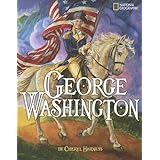
Whether or not you'll be playing and marching in a band or doing last minute touches on your float or costume, enjoy your community's parades today and the fireworks tonight! Before this special day comes to an end, it's likely that you'll be gathered with your dear ones, sharing the usual Presidents' Day delicacies, such as hot dogs, like the ones FDR offered to Great Britain's royal couple in the summer of 1939, but if I were you, I'd skip the cottage cheese-and-ketchup, a favorite of Richard Nixon. For dessert? Maybe Ronald Reagan's jelly beans, but there's got to ice cream and of course,  cherry pie, which has come to represent our presidential pathfinder, George Washington 

But mind your portions - else you'll wind up like President Taft!   And if you're inclined and of age, do be having a celebratory sip of hard cider. As John Adams wrote in 1765, "I drank this morning and yesterday morning about a gill* of cider; it seems to do me good."   Harry Truman felt the same way about his breakfast shot of bourbon and FDR about his late afternoon martini. But I digress
      *about 1/4 of a pint 
"Big Bill" Taft - more to him than a big belly! 

It's become customary for Americans to have their P. Day dinner while watching the annual White House Concert. As usual it will feature live broadcasts from some of the nation's many lighthearted and colorful Presidential/First Family Look-Alike contests, as well as the much-awaited announcement of this year's winner of the Presidential Essay Competition. Who will be covered with glory, patriotic and intellectual honors, the $5,000 cash prize, AND the invitation to the White House?  

Knowing that you share my love of American history – and if you're reading this, I'd bet money that you do – you may well have long since written and contributed your own entry,
dated, but still a popular primer
on the presidents, their
House, and the presidency itself.
your own considered take on this year's topic:
The President We Most Need Today. If I'd written one - if there was any such event - I reckon I'd lean toward presidents who championed public education. Ike, for instance, the steely ex-general with the sunny smile.

For further thoughts on this issue, here's a good start. 

Because it's a worthy topic in this, our real, anxious, too-cool-for-school world, that has no such festive Presidents Day and never shall. Maybe just as well, given how money-corrupted the whole elective and legislative process has become, how it has so tarnished the Founders' Dream. Doesn't mean it's to be discarded, not celebrated. It only means it's to be clung to and fought for all the harder. The topic's been a hot one even before there was a republic for which we stand and throughout the days and years of our ever-contentious nation  What should be the role of our central government in our lives, in our classrooms?  
What are we prepared to do in order to be what we intend to be, as
individuals and as a nation? For one thing, read. Know what and who we've been, those whom we've championed to hold the standard.

Meanwhile, I need to go make sure to display my American Flag (the subject of my next book - did I tell you that? Did you know that 2014 makes 200 years since F.S.K. wrote his ode to the S.S'd. B.?), out by my front door because it's Presidents Day. 

And long live the Republic. Read on.


Monday, January 20, 2014

We Bumble Onward

"Faith is taking the first step even when you don't see the whole staircase." 

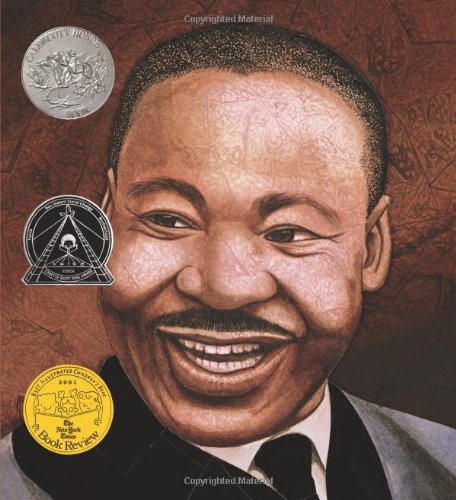
Certainly it is a day upon which I should make mention of such splendid books as Martin's Big Words: The Life of Dr. Martin Luther King, Jr.  
written by Doreen Rappaport
illustrated by Bryan Collier
And David A. Adler's A Picture Book of Martin Luther King, Jr. 
written by David A. Adler
illustrated by Robert Casilla 
And I Have a Dream, featuring the great man's words, along with Kadir Nelson's handsome illustrations. 
It is a noble day to remember that all for which the great man is known was once in the 
unimaginable future of a 
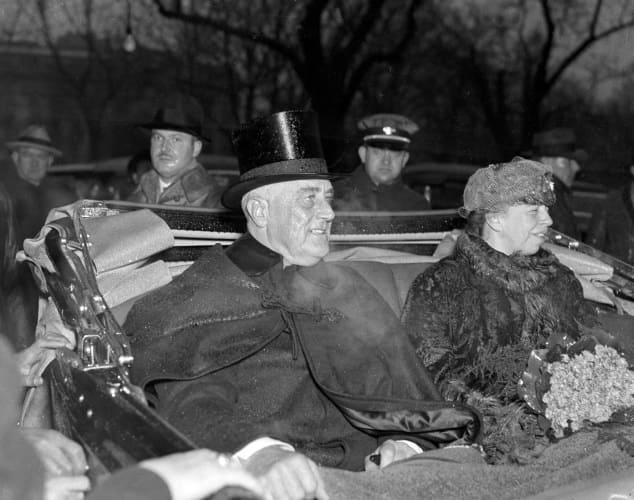
bright little boy in Atlanta, Georgia, in a very different America. And, on this here anniversary of Inauguration Day, please note that young Martin had just turned 8 at the time of President Franklin D. Roosevelt's second Inaugural, in 1937.
A freezing, rainy day for an Inauguration, January 20, 1937.
Never before had a U.S. president taken his Oath of Office on the 20th of January. (If you're reading this, it's likely that you know the big day used to be in March and had been since 1789.) On that raw winter day in Washington, DC, 1937. FDR
quoted a long-gone Victorian poet, Arthur Wm. Edgar O'Shaughnessy,  when he said "each age is a dream that is dying, or one that is coming to birth." It was a day to "reconsecrate our country to long-cherished ideals." 
And so it is with this very Monday, this holiday commemorating the words and deeds of an idealistic leader, this anniversary of commencements. It's a far out day for rededication, to our works, our books, our readers, our dear ones, our purposes, various and precious. Though this blog is coming to an end, I'd be willing to bet that I'm not the only author who could cheerfully quote Franklin Roosevelt's buddy, Winston Churchill: "We bumble onward." 


Tuesday, January 7, 2014

HUCK FINN, THE “N” WORD, AND ME


Wow.  During the past three weeks or so, I’ve been following an extremely passionate and thoughtful debate on the NCTE (National Council of Teachers of English) Discussion Forum.  English teachers and their students are currently discussing Mark Twain’s famous classic, Huckleberry Finn, a book that's included on required reading lists for schools all over tarnation. And it seems that every single teacher has a different way of dealing (or not dealing) with the ever-present “N” word in Huck’s tale. 


What do the teachers have to say?  You name it:

~So should the book be banned? 
~How dare anyone even think the book should be banned!! 
~Should the “N”word be repeated aloud in class? 
~Let’s put a less offensive word in its place!
~No way….that’s verboten
~How do I keep from offending my black students?
~We’re a bunch of white men, so maybe we’re unfit to discuss such things.  
~Can the word make for a teachable moment?
~Maybe there’s another equally good book that could replace Huckleberry Finn and still get Mark Twain’s points across without using politically incorrect language.
~Why would you want to do that?  
~Mark Twain just uses the "N" word to satirize the racists' immoral behavior. 
~Should we simply have kids read certain “safe” passages and ignore the rest?
~Why can’t they take a gander at the whole tamale?
~Can we as adult teachers even use the word “nigger” with each other in this forum?
~Yes, of course! 
~NO, most certainly not!


I just looked at Mark Twain’s book as I was typing this blog, and the word is all over the place; on the first page of Chapter XLII alone, it appears 14 times.  But what does all this have to do with yours truly?

Right now, a lot. I’m writing a nonfiction picture book about the Civil War for kids ages 10 and up, and to me, many of the most riveting, memorable, candid, and revealing quotes I have ever seen anywhere come from slave narratives compiled verbatim after these people were freed. 
  
If anyone wants to understand what life was really like for black Americans before and during the Civil War, they should see these unfiltered stories as experienced by the genuine human beings themselves. I’ve read slave narratives by the hundreds by now, and for that reason, I’m including a few of the strongest paragraphs in my (not yet finished) manuscript.  Or at least, that’s my full intent.  This is nonfiction, so the plan is to uncover the truth, not to Bowdlerize history.
  

The problem is that slave narratives are liberally peppered with the ubiquitous “N” word. It was an integral part of the language back then and appears on almost every page.  Of course I’m no Mark Twain—tis to laugh— but I’m already getting the same kind of push-back Huck Finn is getting for including the word (in its proper context).  You can find the warnings I’ve gotten in the list above, and I’m getting five more: 
 
1)  Your book will be banned if you use that word because you ain’t Mark Twain.
2)  Yup, Mark Twain was white like you, but he’s a famous dead guy and can get away with things you can't.
3) Have fun trying to get the word nigger past your publisher.
4) Be practical. If you include the word you won’t sell a single copy. 
5)  Look out for the hate mail. 


People, get in line.  I’ve gotten push-back for writing non-Bowdlerized history plenty of times already, so why stop now?  (Even so, I’d like to know what you think…..)

Monday, November 18, 2013

But I Digress

So, who were the Luddites anyway? I ask myself thus all of you, having called myself one of them after my third and, as you can see, successful attempt to give Google the code it required (so I could get into Blogger so I could write this post, which I should have done yesterday.) to ascertain that I am, indeed, myself, the sleepy woman glowering over her 
General Ned Ludd of Sherwood Forest

mobile phone, a dumb one, needless to say. According to Merriam-Webster a Luddite is "one who is opposed to especially technological change," but that's not me ('I' is correct, but how dumb and stilted would that sound? she asks, having chosen the colloquial over the correct) I swear! 

Who was Ned Ludd? Richard Conniff, in his Smithsonian article, wrote that Ned was an apocryphal apprentice from Nottinghamshire, sort of a Kilroy around whom the "Luddites" engineered serious protests. "But they were also making fun, dispatching officious-sounding letters that began, 'Whereas by the Charter' and ended 'Ned Lud's Office, Sherwood Forest.'  Invoking the sly banditry of Nottinghamshire's own Robin Hood suited their sense of social justice. The taunting, world-turned-upside-down character of their protests also led them to march in women's clothes as 'General Ludd's wives.'"  Whoa!  It's like Jean Fritz said: "History isn't boring once you know the people." And get a load of what all they did, I might add, and how they did it.  Of course I am no textile worker residing in Jane Austen's England at the time of the Napoleonic Wars. Nor will I getting together tonight with hundreds of cross-dressing buddies to go bust up the knitting machines at the local mill. Envision us all tramping along singing:

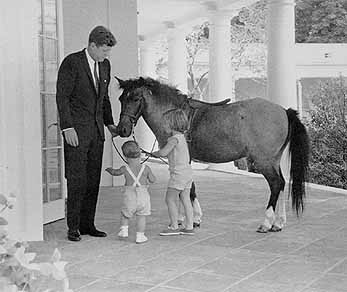
"And night by night when all is still, / And the moon is hid behind the hill, / We forward march to do our will / With hatchet, pike, and gun!"  (This from a Luddite song, quoted in another swell article I found.) Still, like them, we are living in uncertain times, in a difficult economy, rampant with technological advances, and we do desire respect and steady work with decent wages and better wages, don't we? But I digress. In fact, this entire post is a digression, a straying from the path, that being my intended subject, whatever that was.  So let it be. Here's the subject: Going off the rails, those unexpected investigations we nonfiction writers launch ourselves upon when our research leads us to a subject we'd never intended, one we'd never have known had we not been going along and got distracted.  'Let's see where this road goes!'  You start out reading about Abigail Adams and find yourself introduced to her friend, Mercy Warren.  You might well be watching one of the many documentaries this week about John F. Kennedy,
about his murder 50 - FIFTY? 50 years as in half a century ago? Even a cursory look into his short life and harrowing times will lead you to further reading about ballistics, JFK's desk with its splendid cubby and how the desk is linked to Queen Victoria and a doomed sailing vessel. Other presidents and the sad rogues who shot them,  Lee Harvey Oswald, for instance, that 'weak-chinned character' (so said Eric Sevareid), the White House's fascinating history, Richard Nixon's Cocker Spaniel, Checkers, LBJ's Beagles (especially the one with the sore ears, poor thing), t and  the Cold War, French couture/early 60s,  and Macaroni the Pony.
Should your curiosity be sparked and you dip into JFK's (and, to an extent, Ted Sorensen's) Profiles in Courage,  you'll learn more about Abigail's son, John Quincy Adams and you might be introduced to a stout-hearted Mississippian with a gloriously name and a most unfortunate beard. 

Sen. Lucius Quintus
Cincinnatus Lamar II


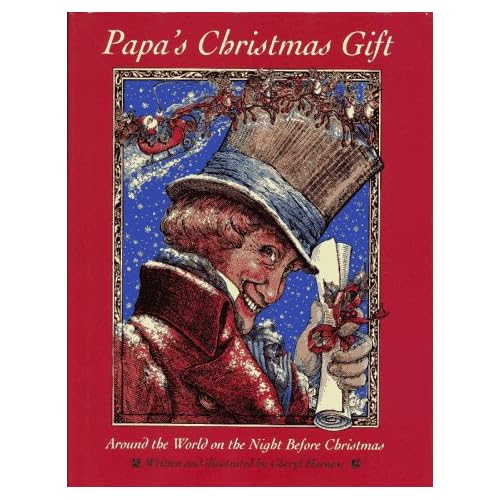
So it was when I was researching Clement Clarke Moore for a picture book [out of print now, the world being rotten] I was doing and I came across the fact that 'twas Washington Irving, who had originally come up with the notion of a stout, jolly St. Nick, who rode 'over the tops of the tress, in that self-same wagon wherein he brings his yearly presents to children.'  It wasn't long before I found myself doing another book. And now a couple of more, having to do with a couple of big fat anniversaries coming up next year, 2014. 
But I digress. I invite you to do the same! Oh the places you'll go, the people you'll meet, so somebody said or something like it. 


.